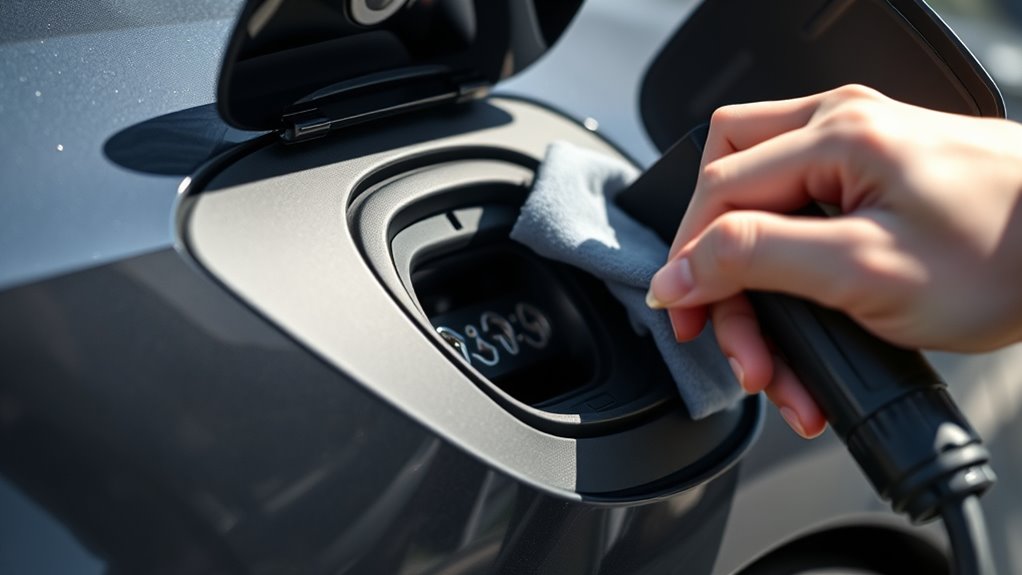

To keep your EV’s charging port clean and protected, regularly inspect it for dirt, dust, or debris, and gently remove anything that’s stuck using a soft brush or cloth. Use weatherproof covers when the port isn’t in use, especially if you park outdoors, and dry the port thoroughly after cleaning to prevent corrosion. Proper maintenance helps guarantee reliable connections and a longer lifespan—discover more tips on how to maintain your charging port in top shape.

Get backup power and energy gear delivered free with Prime
- Fast, free delivery on millions of items
- Prime Video, Amazon Music and more included
- Member-only deals all year
Key Takeaways
- Regularly inspect and clean the charging port with a soft cloth or brush to remove dirt and debris.
- Use a mild cleaning solution for stubborn grime, ensuring the port dries completely afterward.
- Protect the port with weatherproof covers when not in use to prevent dust, moisture, and environmental damage.
- Check seals and covers regularly for cracks or damage, repairing promptly to prevent water ingress.
- Park in sheltered or covered areas whenever possible to reduce exposure to harsh weather and prolong port lifespan.

Your electric vehicle’s charging port is a vital component that guarantees safe and reliable charging, so keeping it clean and protected is necessary. Proper maintenance ensures your EV connects smoothly with charging stations and prevents potential damage. One of the first things you should do is check the compatibility of your vehicle with various charging stations. Not all chargers are created equal; some may use different connectors or power levels. Confirming your port is compatible with the stations you frequent helps avoid frustration and potential wear on the connector. If you often charge at home, verify that your charging station matches your vehicle’s specifications and is rated for the appropriate power output. This minimizes stress on the port and prolongs its lifespan.
Next, focus on weatherproofing techniques to keep your charging port safe from environmental elements. Exposure to rain, snow, dust, or dirt can cause corrosion or electrical issues over time. To combat this, consider using a weatherproof cover or cap when the port isn’t in use, especially if your vehicle is parked outdoors for extended periods. Regularly inspect the port for any debris or moisture buildup, and gently clean it as needed. Use a soft cloth or a small brush to remove dirt, avoiding harsh materials that could scratch or damage the port’s surface. For stubborn grime or moisture, a slightly damp cloth with a mild cleaning solution works well, but make sure to dry the port thoroughly afterward. Additionally, incorporating proper maintenance practices can significantly extend the lifespan of your charging port and ensure safe operation over time.
In addition to cleaning, applying weatherproofing techniques can be highly effective. Some EV owners invest in protective covers designed specifically for charging ports, which shield them from rain and dust. If you notice any cracks or damage to the port’s seal, get it repaired promptly to prevent water ingress. Also, avoid leaving your vehicle exposed to the elements unnecessarily, especially during storms or harsh weather conditions. Parking in a garage or covered space not only offers physical protection but also helps maintain the cleanliness and integrity of your charging port.
Products Worth Considering

DEWALT 20V MAX Drill and Impact Driver Combo Kit (DCK240C2)

Milwaukee M18 FUEL 18V Lithium-Ion Brushless Cordless 1 in. Impact Wrench Extended Reach D-Handle Kit with Two 12.0 Ah Batteries

Chemical Guys 14-Piece Arsenal Builder Car Wash Kit with Foam Blaster
As an affiliate, we earn on qualifying purchases.
Frequently Asked Questions
How Often Should I Clean My EV Charging Port?
You should clean your EV charging port at least once every three to six months, depending on your driving environment. Incorporate this into your regular charging routine as part of your charging port maintenance. If you notice dirt, debris, or corrosion, clean it promptly. Following a consistent cleaning frequency schedule helps make certain of reliable charging and prevents damage, keeping your EV’s charging port in top condition for safe, efficient use.
Can I Use Water to Clean the Charging Port?
No, you shouldn’t use water to clean your EV’s charging port. Think of it like a delicate treasure chest; water can seep in and cause moisture risk, damaging sensitive components. Instead, use a dry, soft cloth or compressed air to remove dirt and dust. This gentle approach keeps your charging port safe, ensuring it stays protected and functions perfectly without risking moisture-related issues.
What Tools Are Safe for Cleaning the Charging Port?
You should use electrical contact cleaners designed for delicate electronics to clean your EV’s charging port safely. Pair this with a soft bristle brush to gently remove dirt and debris without damaging the contacts. Avoid using water or harsh chemicals, as they can cause corrosion or electrical issues. Always verify the port is dry before plugging in your charger, and follow the manufacturer’s instructions for using cleaning tools effectively.
How Do I Prevent Dirt Buildup in the Port?
Think of your EV’s charging port as a delicate garden needing protection. To prevent dust accumulation and moisture intrusion, keep it covered with a weatherproof cap when not in use. Regularly inspect for debris and wipe gently with a soft, dry cloth. Avoid harsh chemicals. This simple habit acts like a shield, ensuring your port stays clean and dry, ready to charge without issues.
Is It Necessary to Protect the Port From Weather Elements?
Yes, protecting your EV’s charging port from weather elements is essential for maintaining its durability. Exposure to rain, snow, and dirt can cause corrosion and damage over time. You should use a weatherproof cover or park in sheltered areas when possible. Regularly inspecting and cleaning the port also helps prevent moisture buildup, ensuring your charging port stays in good condition and functions reliably for years to come.
Conclusion
Keeping your EV’s charging port clean and protected guarantees reliable charging and prolongs its lifespan. Regular maintenance, like gentle cleaning and covering the port when not in use, can save you from unexpected issues down the road. Isn’t taking a few moments now worth avoiding costly repairs later? With a little effort, you’ll keep your EV ready for every journey, hassle-free. After all, a well-maintained port is the key to seamless electric driving.