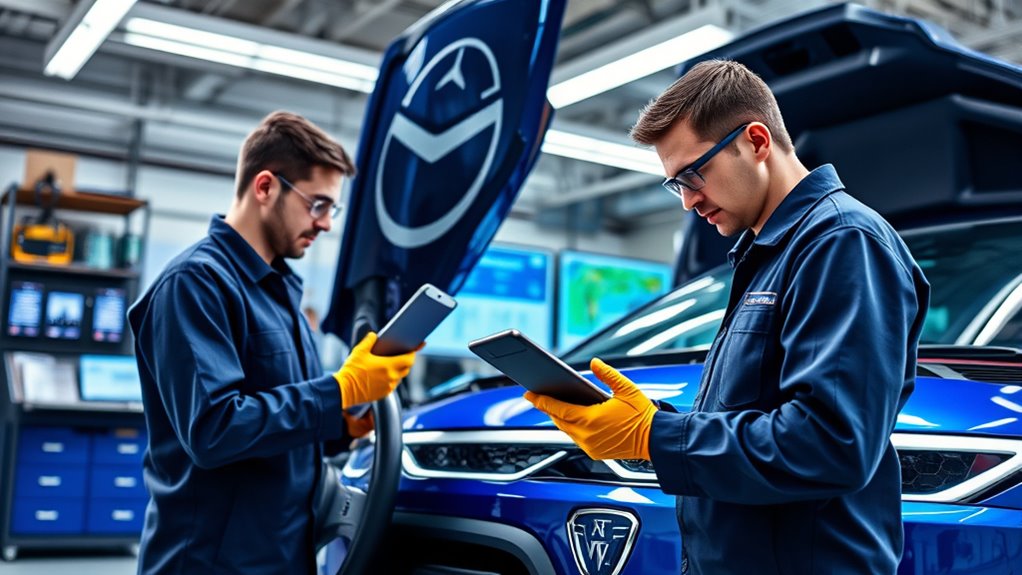

Your mechanic’s ability to fix your EV depends on their training and access to the right diagnostic tools. As EV technology advances rapidly, repair shops are increasingly focusing on specialized courses for charging systems, battery diagnostics, and electrical hardware. Ongoing support and updates are essential to keep skills sharp. If you want to understand how these trends impact your service options, you’ll uncover more insights ahead.

Get backup power and energy gear delivered free with Prime
- Fast, free delivery on millions of items
- Prime Video, Amazon Music and more included
- Member-only deals all year
Key Takeaways
- Technicians are increasingly trained in EV-specific diagnostics, battery health checks, and charging system troubleshooting.
- Ongoing education programs keep mechanics updated on evolving EV technologies and repair techniques.
- Advanced diagnostic tools and software are essential for accurate EV system assessments and repairs.
- Manufacturer and industry certifications ensure technicians have current expertise in EV maintenance and safety.
- Continuous support and training resources help mechanics adapt to rapid technological advancements in EVs.

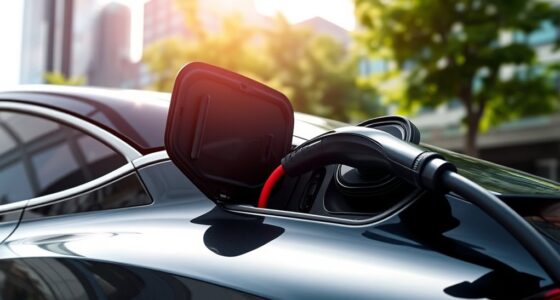
As electric vehicles (EVs) become more popular, providing effective training and support for EV repair is essential. If you’re wondering whether your mechanic is equipped to handle the unique challenges of EV maintenance, understanding the current trends in training is pivotal. One of the most important areas for EV repair involves understanding charging infrastructure. Unlike traditional vehicles, EVs depend heavily on charging stations, which vary widely in type and technology. Your mechanic needs to be familiar with different charging standards, such as Level 1, Level 2, and DC fast chargers, and know how to troubleshoot issues related to charging ports and connectors. This knowledge ensures that your vehicle can be charged safely and efficiently, preventing potential damage to the vehicle’s electrical systems. As charging infrastructure continues to expand, mechanics must stay updated on new developments, including integrated software systems that manage charging sessions and monitor vehicle health. Additionally, understanding projector technology and how it impacts image quality can be beneficial for technicians working with integrated multimedia systems in EVs, especially as automotive entertainment systems become more advanced. Battery diagnostics is another critical skill your mechanic must master. The battery pack is the heart of an EV, and diagnosing its health is essential for safety and performance. Proper battery diagnostics involve more than just checking voltage; it requires understanding complex data from onboard diagnostic systems and specialized tools that measure cell balance, capacity, and thermal performance. A qualified technician can identify early signs of degradation, prevent costly failures, and recommend maintenance or replacements before issues escalate. As battery technology evolves, so do diagnostic techniques, making ongoing training indispensable. Mechanics who stay current can accurately assess battery health, ensuring your EV operates at peak performance and safety. Training programs now emphasize hands-on experience with charging infrastructure and battery diagnostics. You’ll find many courses offered by manufacturers, professional organizations, and online platforms that focus on these areas. These programs aim to bridge the knowledge gap, especially for technicians transitioning from traditional vehicle repair. The best training includes practical exercises, real-world troubleshooting, and updates on emerging technologies. Support for EV repair also involves access to up-to-date diagnostic tools and software, which are increasingly integrated with vehicle systems. This ongoing education enables your mechanic to confidently handle the unique electrical and software components of EVs, ensuring they can diagnose problems accurately and perform repairs efficiently.
Products Worth Considering

DEWALT 20V MAX 1/4-Inch Impact Driver Kit with Battery and Charger (DCF787D1)

Autel 40A Level 2 EV Charger, 240V NEMA 14-50 J1772, WiFi, 25ft Cable

Milwaukee 2697-22 M18 18-Volt Lithium-Ion Cordless Hammer Drill/Impact Driver XC Combo Kit (2-Tool)
As an affiliate, we earn on qualifying purchases.
Frequently Asked Questions
Are EV Repair Certifications Widely Recognized Across Different Regions?
EV repair certifications are increasingly recognized across different regions, but their acceptance varies. Regional certification standards often influence how well these credentials are understood and valued locally. Some certifications have gained cross-border recognition, making it easier for certified mechanics to work in multiple areas. However, always check specific regional requirements, as recognition isn’t universal yet. Staying updated on certification standards guarantees your mechanic remains qualified and trusted across different regions.
How Often Do EV Repair Training Programs Update Their Curriculum?
EV repair training programs typically update their curriculum annually or biannually to keep pace with industry changes. You should expect modules on battery maintenance, software updates, and advanced diagnostics to be refreshed regularly. This ensures your mechanic stays current with the latest EV technology, enabling them to handle issues like battery health or software glitches effectively. Staying updated helps maintain your vehicle’s safety and performance over time.
What Tools Are Essential for EV Diagnostics and Repair?
You’ll need vital diagnostic tools like high-voltage testers, scan tools compatible with EV systems, and insulation resistance meters. Repair equipment such as specialized safety gear, battery management system testers, and torque wrenches for high-voltage components are also essential. These tools help you accurately diagnose issues, guarantee safety, and perform repairs efficiently. Staying updated on the latest diagnostic tools and repair equipment guarantees you’re prepared to handle EV maintenance confidently.
Do EV Repair Courses Cover High-Voltage Safety Procedures?
Think of EV repair courses as a safety net woven with high-voltage safety and certification standards. They definitely cover high-voltage safety procedures, making sure you understand how to handle dangerous systems safely. These courses are designed to meet rigorous certification standards, so you can confidently work on EVs without risking personal safety or vehicle damage. Proper training ensures you’re prepared to navigate the high-voltage landscape with skill and confidence.
How Accessible Are Online EV Repair Training Resources?
Online EV repair training resources are quite accessible, offering virtual labs and interactive modules that make learning engaging and flexible. You can easily find courses that simulate real-world scenarios, giving you practical experience without leaving home. These resources are designed to fit into your schedule, providing step-by-step guidance and safety protocols, including high-voltage procedures. Overall, they’re a convenient way to build your EV repair skills anytime, anywhere.
Conclusion
As electric vehicles become more common, it’s clear that staying ahead with proper training and support is essential. Don’t wait until you’re caught between a rock and a hard place—invest in learning now to keep your skills sharp. With the right resources, you’ll be better equipped to handle EV repairs confidently. Remember, it’s better to be safe than sorry, so take the initiative now and make sure you’re prepared for whatever comes your way.