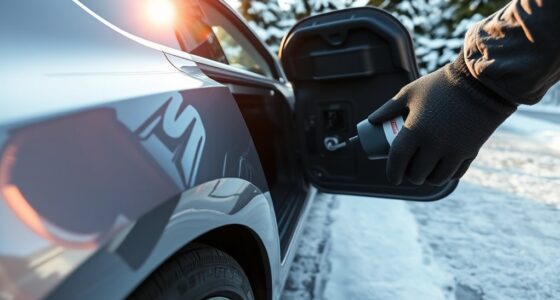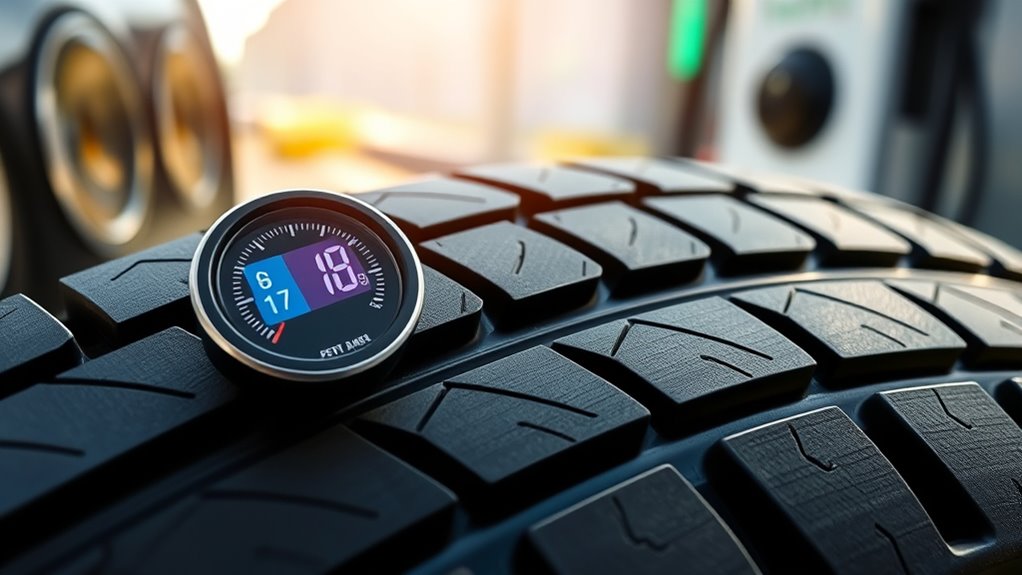

Keeping your EV’s tires properly inflated is key to safety, range, and performance. Check your tire pressure at least once a month and before long trips using a quality gauge; do this when the tires are cold for the most accurate reading. Follow your owner’s manual or sticker inside the door for the correct pressure. Temperature changes can affect pressure, so adjusting as needed helps maintain *best* efficiency. To learn how to master tire inflation, keep exploring these essential tips.

Get backup power and energy gear delivered free with Prime
- Fast, free delivery on millions of items
- Prime Video, Amazon Music and more included
- Member-only deals all year
Key Takeaways
- Always follow the EV manufacturer’s recommended tire pressure listed on the door sticker or owner’s manual.
- Check tire pressure when tires are cold, ideally once a month, for accurate readings.
- Adjust tire pressure seasonally to account for temperature changes that affect inflation levels.
- Properly inflated tires reduce rolling resistance, extending your EV’s driving range and improving safety.
- Use a quality gauge and keep a portable air compressor handy for regular, precise tire pressure maintenance.

Maintaining the correct tire pressure is crucial for EV owners because it directly affects your vehicle’s range, safety, and overall performance. Proper tire maintenance isn’t just about avoiding flat tires; it’s about optimizing efficiency and ensuring your EV runs smoothly. When your tires are underinflated, rolling resistance increases, which means your car has to work harder, draining your battery faster. Overinflated tires, on the other hand, can reduce grip, leading to a compromised safety margin and uneven tire wear. That’s why regularly checking and maintaining the right tire pressure is a must for every EV owner.
Proper tire pressure boosts EV range, safety, and performance—check regularly for optimal driving experience.
To keep your tires in top shape, it’s important to follow some basic inflation tips. First, always refer to your vehicle’s owner’s manual or the sticker inside the driver’s door for the recommended tire pressure. This information is tailored specifically for your EV’s weight, tire size, and load capacity. Use a quality tire pressure gauge to check the pressure when your tires are cold—preferably before you start driving in the morning or after the car has been parked for a few hours. Cold tires give the most accurate reading because heat from driving can cause the air inside to expand, leading you to overinflate unintentionally.
Incorporate regular tire maintenance into your routine, ideally once a month and before long trips. The frequency of checks might increase if you notice uneven tire wear, vibrations, or a drop in mileage. When inflating your tires, do so gradually, and ensure you reach the recommended pressure. Many EV owners also find it helpful to keep a portable air compressor in the garage or car for quick adjustments. Proper inflation not only improves efficiency but also extends the lifespan of your tires, saving you money in the long run.
Additionally, keep an eye on tire pressure during seasonal changes, as temperature fluctuations can cause pressure to shift. Cold weather tends to lower tire pressure, so you might need to add a little air to stay within the recommended range. Conversely, during hot summer days, tire pressure can rise, risking overinflation. Maintaining the correct tire pressure is a simple yet indispensable aspect of your EV’s upkeep, directly impacting your safety and driving experience. Being aware of how temperature fluctuations affect tire pressure can help you make timely adjustments to stay safe and efficient. By staying diligent with tire maintenance and following these inflation tips, you ensure your vehicle remains efficient, safe, and ready to perform at its best on every trip.
Products Worth Considering

Chemical Guys 14-Piece Arsenal Builder Car Wash Kit with Foam Blaster

Milwaukee 2697-22 M18 18-Volt Lithium-Ion Cordless Hammer Drill/Impact Driver XC Combo Kit (2-Tool)

DEWALT 20V MAX Cordless 1/2-Inch Impact Wrench Kit (DCF900P1)
As an affiliate, we earn on qualifying purchases.
Frequently Asked Questions
How Often Should I Check My EV Tire Pressure?
You should check your EV tire pressure at least once a month and before long trips. Regularly inspect your tires for proper inflation, tread depth, and signs of wear. Remember, maintaining correct tire pressure helps with safety and range. Also, consider rotating your tires and checking tread depth every 5,000 to 8,000 miles to ensure even wear and peak performance. Staying proactive keeps your EV running smoothly.
What Type of Tire Pressure Gauge Is Most Accurate?
Think of your tire pressure gauge as a trusted compass guiding your EV’s journey. Digital sensors often provide the most accurate readings, offering precise measurements at a glance. Analog gauges, while reliable, can be less exact if not read carefully. For the best accuracy and ease, choose a high-quality digital sensor gauge. Regularly checking with the right tool guarantees safer drives, better range, and peace of mind on every trip.
Can Low Tire Pressure Affect My Ev’s Battery Life?
Yes, low tire pressure can negatively impact your EV’s battery life. When tires are underinflated, you experience increased tire wear and reduced fuel efficiency, which forces your vehicle to work harder. This extra effort drains the battery faster and can shorten its lifespan over time. To prevent this, regularly check and maintain proper tire pressure, ensuring ideal performance, safety, and battery longevity for your EV.
How Does Temperature Impact Tire Pressure in EVS?
Think of your tires like a balloon—when the temperature drops, tire pressure experiences fluctuations, shrinking like a deflating balloon. Cold temperatures cause temperature induced pressure changes, reducing your tire’s pressure, which can impact safety and range. Conversely, warmer weather increases pressure. To keep your EV running smoothly, check your tire pressure regularly, especially during seasonal changes, to manage these temperature-related pressure shifts and guarantee ideal performance.
Are There Special Tire Pressure Considerations for Fast Charging?
Fast charging impacts your EV’s tire pressure by generating heat, which can cause pressure to rise temporarily. You should check your tire pressure after charging and make tire pressure adjustments if needed, especially before long drives. Regularly monitor your tires to make certain they’re properly inflated, considering the effects of rapid charging. Proper tire pressure maintains safety, optimizes range, and prolongs tire life in your EV.
Conclusion
Just like a well-tuned engine keeps your EV running smoothly, maintaining proper tire pressure guarantees safety and maximizes your range. I once forgot to check my tires before a long trip and ended up losing miles to underinflation—like trying to sail a boat with a leaky sail. Keep an eye on your tires, and you’ll enjoy a safer, more efficient ride. Remember, small adjustments can make a big difference on the road ahead.