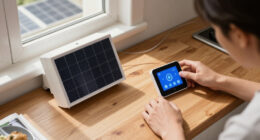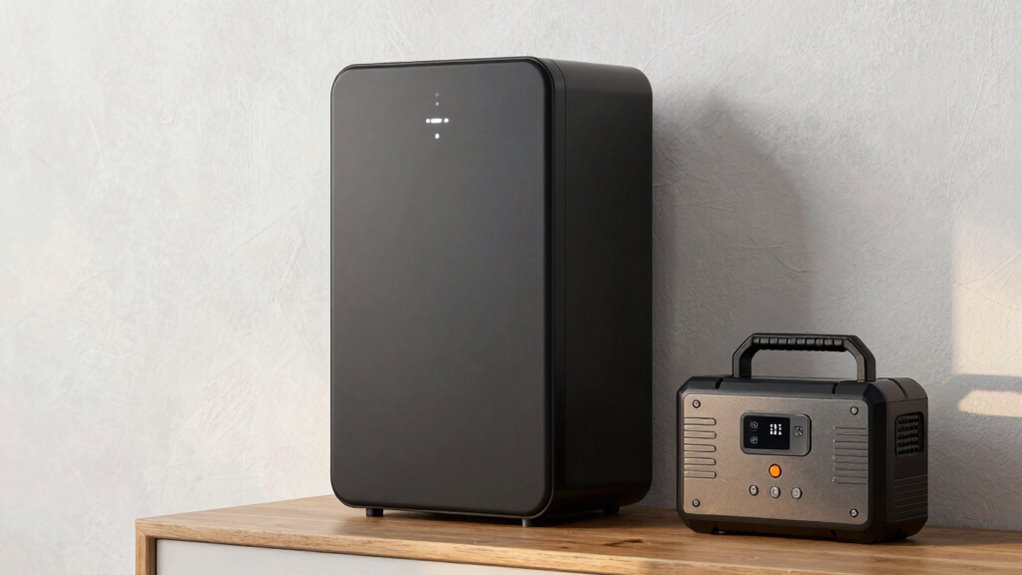

A home battery setup provides seamless, automated backup for your entire house, integrated with your electrical system and solar panels for continuous, reliable power during outages. It’s professionally installed, often with smart technology to optimize performance, and requires no manual intervention. In contrast, portable backup options are easier to set up but need manual deployment and don’t integrate with your home’s system. If you want to explore the differences further, you’ll find useful details hidden ahead.

Get backup power and energy gear delivered free — and shop member deals
- Fast, free delivery on millions of items
- Access to Prime Big Deal Days deals on October 6–7
- Prime Video, Amazon Music and more included
Key Takeaways
- Home batteries are permanently installed, often integrating with solar systems, while portable backups are mobile and standalone.
- Home systems require professional installation and electrical upgrades for seamless backup during outages.
- They offer higher reliability and energy independence compared to portable options, which lack seamless integration.
- Home batteries often include smart technology for system management, unlike basic portable backup devices.
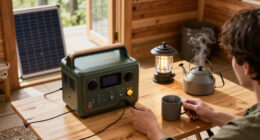
- Portable backups are simple, flexible, and require minimal setup but do not provide continuous, automated power supply.
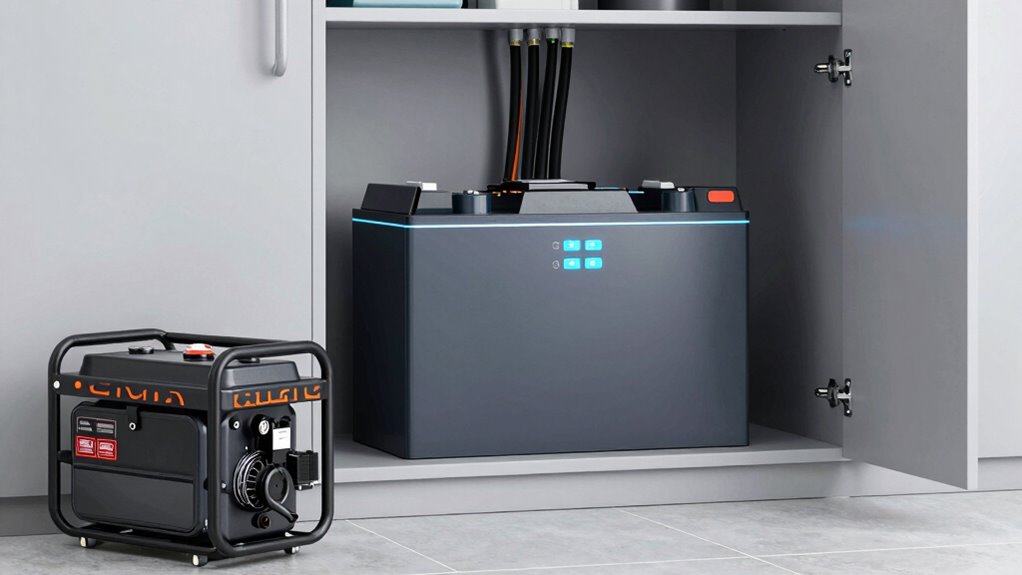
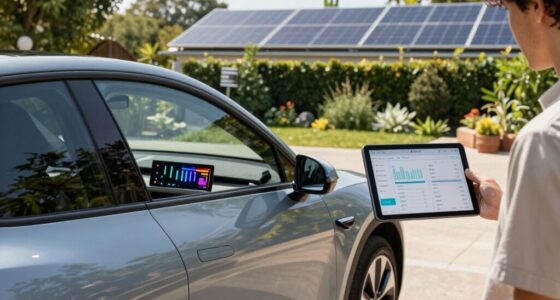
When choosing a backup power solution, you need to weigh the benefits of a home battery setup against portable options. Both serve to keep your essentials running during outages, but they differ markedly in how they operate and what they require. A home battery system is designed to provide you with greater grid independence, allowing you to store excess energy—often from solar panels—and use it when the grid goes down. This setup offers a seamless, integrated backup, meaning your entire home can stay powered without manual intervention. In contrast, portable backup options, like generators or smaller battery packs, are more about convenience and flexibility. They’re easy to carry around and can be used anywhere, but they don’t offer the same level of integration or continuous power supply as a home battery.
Home batteries offer seamless, integrated backup and greater energy independence during outages.
One of the key distinctions lies in installation complexity. Home battery systems usually demand a more involved process. They require professional installation, integrating with your electrical system and possibly your solar setup. This can involve electrical upgrades, permits, and careful planning to ensure safety and maximum operation. The investment in installation time and expertise can be substantial, but it pays off in reliability and convenience. Once installed, a home battery can automatically switch on during outages, providing a hassle-free experience. On the other hand, portable backup options are straightforward. You just plug them in or connect them as needed, with minimal setup. They don’t need permanent installation or modifications to your home’s electrical system, making them accessible for quick deployment and easy storage. Additionally, energy storage is a key component that differentiates these systems in terms of long-term sustainability and efficiency. Proper system monitoring can help optimize performance and lifespan, especially in outdoor or variable conditions. Understanding the differing capabilities of each system can help you make a more informed decision aligned with your energy goals. It’s also important to consider the weatherproofing and safety standards of backup options, especially if you plan to store or operate them outdoors or in variable conditions. Furthermore, the integration of smart technology can enhance the functionality and ease of use of home battery systems, making them even more appealing for modern energy management.
As an affiliate, we earn on qualifying purchases.
Frequently Asked Questions
Can Both Setups Power the Same Appliances Simultaneously?
Yes, both setups can power the same appliances simultaneously, but your experience depends on their battery capacity and portability concerns. A home battery setup usually offers higher capacity, allowing you to run multiple appliances longer. Portable backups have limited capacity, so they might only power essential devices for a shorter time. Consider your energy needs and portability concerns to choose the right option that can handle your appliances effectively.
What Is the Typical Lifespan of Each System?
You’ll find that home battery setups generally last 10 to 15 years, thanks to advanced battery chemistries like lithium-ion, but they require complex installation. Portable backups, often using simpler lead-acid batteries, typically last 3 to 5 years. While the home system’s longevity offers peace of mind, its installation can be intimidating. Portable options are easier to set up but need replacing more often, making longevity a key consideration.
Are There Any Maintenance Requirements for Home Batteries?
You need to perform minimal maintenance on home batteries, mainly monitoring their performance and ensuring proper ventilation. Regularly check for any signs of wear or damage. When batteries reach the end of their lifespan, responsible battery recycling reduces environmental impact, preventing harmful materials from polluting the environment. This eco-friendly practice helps you contribute to sustainability efforts while keeping your system running efficiently.
How Do Costs Compare Over the Long Term?
Over the long term, a home battery setup often proves more cost-effective than portable backups when you do a thorough cost analysis. While initial expenses are higher, you gain financial benefits through energy savings, incentives, and increased home value. Portable backups may seem cheaper upfront but lack the same energy efficiency and savings, making a home battery system a smarter investment for consistent power and long-term cost savings.
Can Portable Options Be Integrated Into a Home System?
Yes, portable options can be integrated into your home system, but system compatibility is key. You need to verify the portable battery’s connectors and output match your home’s electrical setup. Portable integration often requires adapters or additional equipment, which can complicate installation. While it’s possible, a dedicated home battery setup typically offers smoother integration, better stability, and more efficient energy management for your entire household.
As an affiliate, we earn on qualifying purchases.
Conclusion
Ultimately, choosing between a home battery setup and a portable backup depends on your needs. For instance, imagine you’re a homeowner who wants seamless energy during outages—installing a home battery provides a reliable, integrated solution. Conversely, if you’re camping or traveling, a portable backup like a power bank keeps your devices charged on the go. Understanding these differences helps you make the right choice, ensuring you’re prepared for any power situation.
As an affiliate, we earn on qualifying purchases.
As an affiliate, we earn on qualifying purchases.
Fall Picks
fall essentials
As an affiliate, we earn on qualifying purchases.