Energy monitoring helps you understand your EV’s real costs by showing how much energy you use for each trip and how efficiently your battery performs over time. It highlights charging costs based on different stations and times, allowing you to pick cheaper options. By tracking patterns, you can make smarter driving choices and maintain your battery better, ultimately saving money. If you keep exploring, you’ll discover even more ways to optimize your EV’s energy use.

Get backup power and energy gear delivered free with Prime
- Fast, free delivery on millions of items
- Prime Video, Amazon Music and more included
- Member-only deals all year
Key Takeaways
- Tracks actual energy consumption to reveal true driving and charging costs.
- Identifies inefficient patterns and battery degradation to prevent unexpected expenses.
- Helps locate cost-effective charging stations and optimal charging times.
- Differentiates energy use between daily commutes and long trips for accurate cost assessment.
- Enables real-time adjustments and proactive maintenance to maximize efficiency and savings.
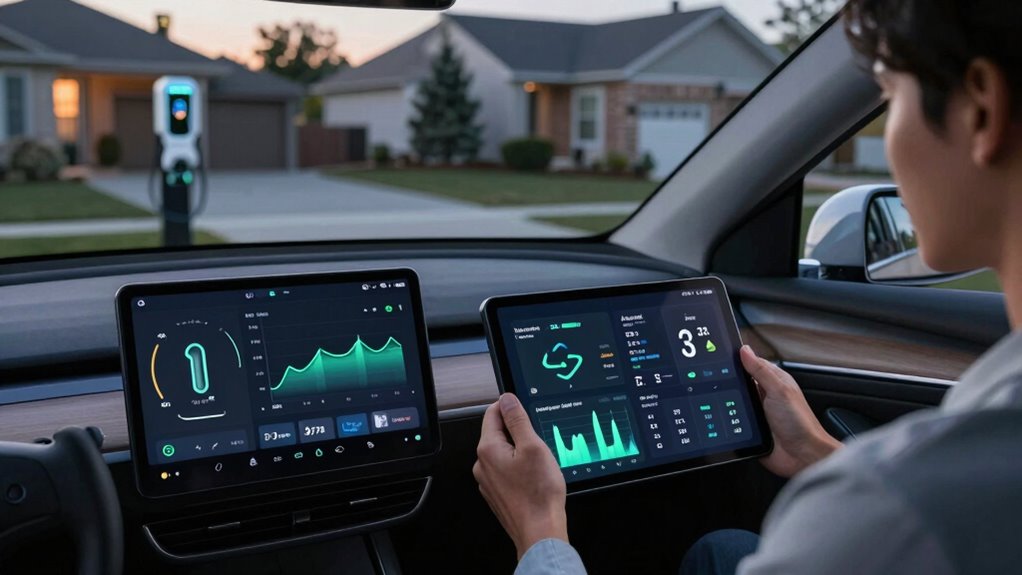
As electric vehicle (EV) ownership becomes more common, understanding how to monitor your energy consumption is essential for maximizing efficiency and saving money. When you keep a close eye on your energy use, you gain clearer insight into your actual costs and can make smarter decisions about charging and driving habits. One of the key factors influencing your costs is battery efficiency—how well your EV converts energy from the grid into usable power. If your battery isn’t operating at its best, you’ll need more electricity to cover the same distance, which directly affects your expenses. Monitoring tools help you track how your battery performs over time, revealing patterns that could indicate degradation or inefficiencies. This knowledge empowers you to adjust your driving style or schedule maintenance to keep your battery running at peak efficiency, ultimately lowering your energy bills.
Monitoring your EV’s battery efficiency helps optimize performance and lower energy costs over time.
Another critical aspect is understanding the charging infrastructure you rely on. Not all charging stations are created equal, and their energy costs can vary widely depending on location and provider. By monitoring where and when you charge, you can identify the most cost-effective options. For example, charging during off-peak hours or at stations with lower rates can markedly reduce your overall costs. Many EV owners use apps or built-in vehicle features to track charging sessions, providing real-time data on energy consumption and costs. This data helps you avoid unnecessary expenses and plan your charging around cheaper rates, which is especially helpful if you frequently travel long distances.
Furthermore, energy monitoring allows you to see the broader picture of your EV’s energy footprint. You can determine how much energy you consume during daily commutes versus longer trips, helping you optimize your driving routes and habits. For instance, gentle acceleration and coasting can improve battery efficiency, saving you money over time. With detailed insights into your energy use, you also become aware of any anomalies—like sudden drops in efficiency—that might indicate issues with your vehicle or charging setup. Addressing these early can prevent larger problems and unexpected costs down the line. Incorporating energy efficiency practices can further enhance your overall savings and vehicle performance. Additionally, understanding the energy consumption patterns of your EV can aid in planning more sustainable and cost-effective trips. Recognizing your vehicle’s energy management capabilities enables you to better leverage advanced features that optimize performance and reduce waste.
Using smart controls and other advanced monitoring tools can also help you optimize your vehicle’s performance by adjusting settings based on real-time data, leading to even greater savings.
Utilizing enterprise governance tools can further help manage and secure your EV data, ensuring your information remains protected as you optimize your energy use.
Ultimately, by actively monitoring your EV’s energy consumption, you’re not just tracking numbers—you’re gaining control over your expenses. You can better understand the true costs of your driving habits, make informed choices about when and where to charge, and ensure your battery remains efficient for longer. This proactive approach helps you maximize your investment in an EV, reduce ongoing costs, and enjoy the benefits of greener, more economical transportation.
As an affiliate, we earn on qualifying purchases.
Frequently Asked Questions
How Accurate Are Energy Monitoring Devices for EVS?
Energy monitoring devices for EVs are generally quite accurate, giving you a clear picture of battery efficiency and charging speed. They track real-time data, helping you understand how much energy your vehicle uses during charging and driving. While minor discrepancies can occur due to factors like temperature or device calibration, these tools provide reliable insights to help you optimize your EV’s performance and manage costs effectively.
Can Energy Monitoring Systems Track Charging Habits Over Time?
Yes, energy monitoring systems can track your charging habits over time. They record your charging patterns and usage trends, giving you insights into when and how often you charge your EV. This data helps you identify peak charging times, optimize energy use, and potentially save money. By analyzing these trends, you can better understand your overall energy consumption and make informed decisions about your EV’s charging routine.
Do Monitoring Tools Work With All EV Models?
Not all energy monitoring tools work with every EV model. Your EV compatibility depends on the device’s ability to integrate with your specific vehicle’s charging system, which varies by manufacturer and model. Before choosing a monitoring tool, check for device integration options and compatibility with your EV. This guarantees accurate tracking of your charging habits and costs, providing you with reliable insights tailored to your vehicle.
How Do Energy Costs Vary by Region or Provider?
Energy costs vary considerably by region and provider due to regional differences in electricity rates and provider variability. You might pay less in areas with abundant renewable resources or competitive markets, while rates could be higher elsewhere. Using energy monitoring tools helps you track these costs precisely, so you can understand how regional differences and provider variability impact your EV charging expenses. This insight enables you to optimize charging times and select better energy plans.
Are There Privacy Concerns With Energy Monitoring Data?
Yes, there are privacy concerns with energy monitoring data. You might worry about data security and how your user privacy is protected, especially since your energy usage patterns can reveal personal habits. To address this, providers should implement strong data security measures and transparent privacy policies. You should also check how your data is stored and shared, ensuring your user privacy remains protected while you monitor your energy consumption effectively.
electric vehicle battery health monitor
As an affiliate, we earn on qualifying purchases.
As an affiliate, we earn on qualifying purchases.
Conclusion
Just as Da Vinci studied nature’s secrets to master his craft, embracing energy monitoring lets you reveal your EV’s true potential. By understanding your energy use, you gain the power to drive smarter, save money, and reduce your carbon footprint—all while enjoying the journey. Keep an eye on your energy data, and you’ll find that, like a skilled artist, you’re creating a masterpiece of efficiency with every charge. The road to smarter driving starts with awareness.
EV charging station cost calculator
As an affiliate, we earn on qualifying purchases.
As an affiliate, we earn on qualifying purchases.
EV trip energy consumption tracker
As an affiliate, we earn on qualifying purchases.
As an affiliate, we earn on qualifying purchases.
Halloween Picks
halloween
As an affiliate, we earn on qualifying purchases.