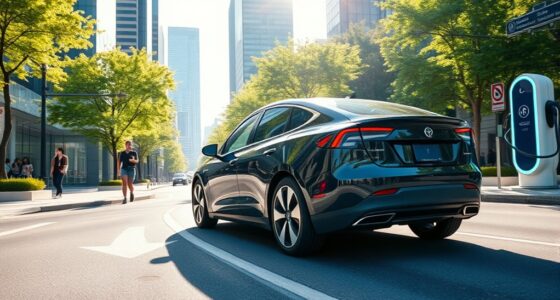
Electric cars are heavier mainly because they have large batteries that add hundreds of pounds to their weight. This extra mass affects how you accelerate, brake, and handle the vehicle, often resulting in longer stopping distances and different responsiveness. However, the heavy batteries also improve safety by providing impact absorption and stability. If you want to understand how this weight influences every aspect of driving and safety, there’s more to uncover.

Get backup power and energy gear delivered free — and shop member deals
- Fast, free delivery on millions of items
- Access to Prime Big Deal Days deals on October 6–7
- Prime Video, Amazon Music and more included
Key Takeaways
- Large, heavy batteries significantly increase the overall weight of electric cars.
- Extra weight affects acceleration, braking distance, and handling dynamics.
- Reinforced structures and safety features enhance crash safety but add to vehicle mass.
- The added weight improves traction but may challenge rollover and collision safety.
- Engineers optimize design to balance performance, safety, and the impacts of increased weight.

Electric cars tend to be heavier than traditional gasoline-powered vehicles, primarily because of their large batteries. This added weight isn’t just a minor detail; it markedly influences how the vehicle performs and how safe you feel behind the wheel. When designing electric vehicles, engineers pay close attention to battery weight and structural design to balance performance, safety, and efficiency. The batteries, which store the power that drives the car, are hefty components. They can easily account for a substantial portion of the vehicle’s total weight, sometimes adding hundreds of pounds. This weight impacts everything from acceleration to braking, and even handling. battery weight is a critical factor in vehicle design, affecting both performance and safety considerations.
The structural design of electric cars is adapted to accommodate this extra weight. Many manufacturers reinforce the chassis and use stronger materials to support the battery pack and ensure safety in case of a collision. This means that electric cars often have a more rigid frame, which can improve stability but also adds to the overall weight. You might notice that electric vehicles tend to sit lower or feel more planted on the road, thanks in part to this reinforced structural design. However, the heavier weight can influence how the car responds during cornering or quick maneuvers, making it feel different from lighter, traditional cars.
Your driving experience is affected by this extra weight in several ways. For one, the weight can improve traction, especially in front-wheel-drive models, since more weight presses down on the tires. That can be a good thing for grip and safety, particularly in poor weather conditions. On the flip side, the added mass means that your vehicle might require a longer distance to come to a complete stop. Braking distances tend to increase, so you need to be more mindful of your stopping power, especially in emergency situations. Additionally, the extra weight can make acceleration slightly slower compared to lighter counterparts, although the instant torque from electric motors usually offsets this to some extent.
Safety features are also influenced by the vehicle’s weight. The robust structural design necessary to protect the battery in a crash means electric cars often score well in crash tests. The heavy battery pack acts as a shield, absorbing impact and protecting occupants. However, the increased weight can pose challenges in rollover scenarios or during collisions with lighter objects, requiring careful engineering to mitigate risks. Overall, while the weight of electric cars can change how they handle and how safe they are, it’s a trade-off that manufacturers carefully manage through design and engineering innovations.
As an affiliate, we earn on qualifying purchases.
Frequently Asked Questions
How Does Weight Influence Electric Car Battery Lifespan?
Your electric car’s weight impacts battery lifespan because extra mass can cause more strain during driving, leading to faster battery degradation. Heavier vehicles generate more heat, so effective thermal management becomes essential to prevent overheating and extend battery life. By maintaining ideal temperatures and reducing stress on the battery, you guarantee better longevity, efficiency, and safety for your electric vehicle over time.
Are Heavier Electric Cars More Difficult to Handle?
Like a ship steering stormy seas, you might find heavier electric cars more challenging to handle. Their increased weight affects handling stability, making precise maneuvering tougher, especially in tight turns or sudden stops. While they offer a sense of grounded security, you could face maneuverability challenges that demand extra focus and skill. But with practice, you’ll adapt, and the added weight can also contribute to a smoother, more stable ride.
Does Increased Weight Affect Electric Car Acceleration?
Yes, increased weight can slightly reduce electric car acceleration because more mass requires more energy to move. However, powerful electric motors often compensate for this, maintaining quick acceleration. The extra weight can increase aerodynamic drag, which may slow you down at higher speeds. It might also impact ride comfort, making the ride feel stiffer or less smooth, especially on uneven roads. Overall, weight influences acceleration, but design and motor power help balance performance.
How Does Weight Impact Electric Vehicle Charging Efficiency?
Your vehicle’s weight can slightly diminish charging efficiency because it demands more energy during acceleration and driving. Regenerative braking helps recover some energy, but heavier cars need more thermal management to keep batteries cool during charging. This process can extend charging times. To optimize efficiency, you should minimize rapid acceleration, avoid high speeds, and ensure proper thermal management, which helps your electric vehicle charge more effectively despite its weight.
Are Heavier Electric Cars More Prone to Tire Wear?
Think of your electric car as a marathon runner with a heavier backpack; it puts more pressure on the tires. Yes, heavier electric cars are more prone to tire wear because of increased road contact and weight. This constant pressure can wear down tire durability faster, especially on rough roads. To keep your ride smooth and safe, regularly check your tires and consider upgrades for better durability.
As an affiliate, we earn on qualifying purchases.
Conclusion
Think of your electric car as a mighty elephant—steady and powerful, but carrying extra weight on its back. While that added heft might slow you down slightly or change how you handle turns, it also provides a sturdy foundation that can improve safety. Embrace this strength, knowing you’re driving a vehicle built with resilience in mind. Just like an elephant’s unwavering presence, your electric car’s weight offers stability, helping you stay confident and secure on every journey.
As an affiliate, we earn on qualifying purchases.
electric car handling accessories
As an affiliate, we earn on qualifying purchases.
As an affiliate, we earn on qualifying purchases.
Fall Picks
fall essentials
As an affiliate, we earn on qualifying purchases.