Solar-powered outdoor security cameras can reduce charging chores, but the right pick depends on coverage, storage, and how much sunlight reaches the mounting spot. I’d start with the Tapo C660 KIT for its 4K pan-and-tilt design, consider the eufy SoloCam S340 for dual-lens coverage, and look at the Tapo SolarCam C402 KIT if 1080p suits a simpler setup. Multi-camera kits can cover more of a property, while single-camera models are easier to place and manage. Solar power does not remove the need to plan for shade, battery use, Wi-Fi, and storage. Read on for the full breakdown of where each option fits and what you give up.

Get backup power and energy gear delivered free with Prime
- Fast, free delivery on millions of items
- Prime Video, Amazon Music and more included
- Member-only deals all year
Key Takeaways
- The Tapo C660 KIT leads on stated resolution: its 4K pan-and-tilt setup targets buyers who want detailed footage and movable coverage, while adding more complexity than a fixed-view camera.
- Dual-lens design is a distinct advantage for coverage: the eufy SoloCam S340 pairs two lenses, making it a different choice from single-lens pan-and-tilt models.
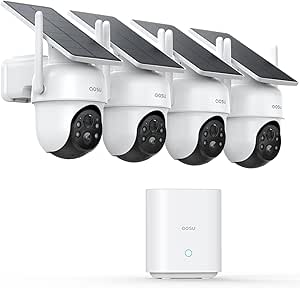
- Multi-camera kits solve a different problem than single cameras: the 2K four-pack, 4MP four-camera kit, and aosu D1 Classic focus on covering multiple points, not on simplifying one-camera installation.
- Resolution and system size are not interchangeable: the Tapo SolarCam C402 KIT offers 1080p, while several listed options specify 2K or higher; buyers should weigh detail against the area they need to monitor.
- Storage and connectivity vary enough to affect ownership: some models state SD or cloud storage, while the 4MP kit specifies 128GB local storage and dual-band Wi-Fi, so check those needs before choosing.


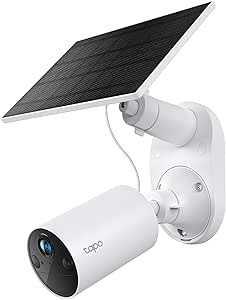


| solar powered outdoor security camera | Storage | Weather resistance | Power | Night vision |
|---|---|---|---|---|
| 2K Solar Wireless Security Cam | Optional microSD card, not included, or cloud storage | IP65 listed; description also states IP66 | Solar panel and built-in backup battery | Color with built-in spotlight |
| GNCC Solar-Powered Outdoor Sec | MicroSD up to 128GB, not included, or paid cloud storage | IP65 | — | — |
| 4MP Wireless Solar Security Ca | — | IP66 | — | Full color, up to 65 feet |
| GALAYOU R6 Solar-Powered Outdo | — | IP65 | Solar panel with Type-C backup charging | — |
| Solar-Powered 2K Outdoor Secur | MicroSD up to 256GB, not included, or seven-day rolling cloud storage | IP65 | Rechargeable battery with 2W solar panel | — |
| SEHMUA 2K Solar-Powered Outdoo | Memory card up to 128 GB (not included) or optional cloud storage | — | — | Color night vision with spotlight and infrared LEDs |
| Tapo C660 KIT 4K Outdoor Pan/T | — | — | — | — |
| eufy Security eufyCam C37 Sola | microSD up to 256 GB (sold separately) or compatible HomeBase | — | — | Color with built-in spotlight |
| eufy Security SoloCam S340 3K | 8 GB built-in | — | Solar-powered with removable solar panel | — |
| aosu D1 Classic 4-Camera Wirel | 32 GB local storage in aosuBase | IP65 | — | 2K color night vision |
| Tapo SolarCam C402 KIT 1080p S | microSD up to 512GB (sold separately) or Tapo Care cloud service | IP65 | Solar panel and built-in battery | Full-color, up to 30 ft |
| AlkiVision Solar-Powered Wirel | microSD up to 128GB (not included) or subscription-based cloud storage | IP67 | Solar panel and built-in battery | Color night vision with built-in spotlights |
| Oculview 2K Solar Wireless Out | Memory card up to 128GB (not included) or optional cloud storage | IP65 | Solar panel and rechargeable battery | — |
| Wyze Solar Cam Pan 2K Wireless | Local microSD up to 512GB (card sold separately); optional cloud recording | IP65 | Solar-powered, wire-free | Full-color |
More Details on Our Top Picks
2K Solar Wireless Security Camera System, 4-Pack
Four cameras and solar power make this a practical pick for buyers covering several outdoor areas without running power cables to each location. Its 2K video, spotlight-assisted color night vision, and app-controlled pan, tilt, and zoom give it more flexible viewing than the fixed-camera approach of the GALAYOU R6. AI human detection can help narrow alerts to people, while two-way audio supports remote conversation.
The tradeoff is that local storage is not ready out of the box: a microSD card is sold separately, or you can choose optional cloud storage. Dual-band Wi-Fi offers more network flexibility than the 2.4GHz-only GNCC camera, but solar charging still depends on each camera’s exposure to sunlight. I’d choose this system for broad property coverage, not for a buyer seeking included hub storage or a clearly subscription-free setup.
Pros:- Four cameras extend coverage across multiple entrances or yard areas.
- 2K video and a motion-activated spotlight support color night viewing.
- App-controlled pan, tilt, and zoom let users adjust the view remotely.
- Dual-band Wi-Fi, AI human detection, and two-way audio add flexibility.
Cons:- A microSD card is not included, and cloud storage is optional.
- Solar charging performance depends on available sunlight.
- The weather rating is inconsistent in the supplied details, which list both IP65 and IP66.
Best for: Homeowners who want to monitor several outdoor zones with one solar-powered, app-managed system.
Not ideal for: Buyers who want included local storage or dependable charging in shaded installation spots.
- Camera count:4
- Video resolution:2K
- Wi-Fi:Dual-band 2.4GHz and 5GHz
- Power:Solar panel and built-in backup battery
- Night vision:Color with built-in spotlight
- Detection:PIR and AI human detection
- Storage:Optional microSD card, not included, or cloud storage
- Weather resistance:IP65 listed; description also states IP66
Our verdict“Choose this four-camera kit if you need flexible solar coverage across several areas and can supply your own storage card.”
GNCC Solar-Powered Outdoor Security Camera with 360° View, Color Night Vision, and SD or Cloud Storage
The GNCC is a single-camera solar option for buyers who want broad directional coverage without stepping up to a multi-camera kit. Its 355° horizontal and 90° vertical rotation can sweep across a driveway or garden, while the 3W panel and 5200mAh battery support wire-free placement. Compared with the GALAYOU R6, it offers a wider horizontal rotation range, but its 1080p video gives less detail than that camera’s 2K image.
It records motion-triggered clips only, typically 8–16 seconds, so it is not suited to continuous surveillance or following a moving subject. The 2.4GHz-only Wi-Fi requirement may also rule it out for some network setups; the four-camera 2K system in this roundup supports 5GHz as well. MicroSD storage is available up to 128GB, but the card is not included, and AI recognition or cloud storage may require a paid plan.
Pros:- 355° horizontal rotation and 90° vertical rotation cover a broad area.
- 3W solar panel and 5200mAh battery support wireless installation.
- Color night vision, spotlight, siren, and two-way audio offer several monitoring tools.
- Supports microSD storage up to 128GB or optional cloud storage.
Cons:- 1080p resolution is lower than the 2K and 4MP options in this lineup.
- Records short motion-triggered clips rather than continuous video and does not track motion.
- Works only with 2.4GHz Wi-Fi; microSD card is not included.
Best for: Buyers who need one solar-powered camera to scan a broad outdoor area and are comfortable with event-based recording.
Not ideal for: Households requiring 5GHz Wi-Fi, continuous footage, motion tracking, or higher-resolution video.
- Resolution:1080p
- Rotation:355° horizontal and 90° vertical
- Solar panel:3W
- Battery:5200mAh rechargeable
- Night vision range:26 feet
- Connectivity:2.4GHz Wi-Fi and Bluetooth
- Recording:Motion-triggered event clips, 8–16 seconds
- Storage:MicroSD up to 128GB, not included, or paid cloud storage
- Weather resistance:IP65
Our verdict“Pick the GNCC if broad remote panning matters more than sharper detail, continuous recording, or dual-band Wi-Fi.”
4MP Wireless Solar Security Camera System with 4 Cameras, 128GB Local Storage, PTZ Tracking, Color Night Vision, and Dual-Band Wi-Fi
This four-camera kit has the strongest storage story in the group: a hub includes 128GB of encrypted local storage, so recording does not depend on a cloud plan. The cameras also pair 4MP video with 5W solar panels, 8000mAh batteries, color night vision, and motion tracking. Compared with the 2K four-camera system in this roundup, it offers higher stated resolution and included storage; the GNCC, by contrast, is a simpler single-camera choice with no hub.
That added capability comes with setup details buyers should check. Auto-tracking must be enabled in the app, and human-only recording is enabled by default, so other motion types may require settings changes. The supplied information also conflicts on whether the hub supports four or eight cameras, making expansion uncertain. I’d favor this kit for buyers who value local recording and multi-camera coverage over a simpler, more clearly specified setup.
Pros:- Included encrypted 128GB hub storage avoids a required cloud subscription.
- Four 4MP cameras provide detailed coverage across multiple outdoor areas.
- Solar panels and 8000mAh batteries support wire-free operation.
- Pan-and-tilt control, motion tracking, AI human detection, and two-way audio support active monitoring.
Cons:- Supplied details conflict on whether the hub supports four or eight cameras.
- Auto-tracking must be enabled manually in the app.
- Human-only recording is the default, so other motion types may require settings changes.
Best for: Households wanting four solar cameras with included local recording and no required subscription.
Not ideal for: Buyers who need confidently documented system expansion or want motion tracking active without app setup.
- Camera count:4
- Camera resolution:4MP
- Local storage:128GB encrypted hub storage
- Solar panel output:5W per camera
- Battery:8000mAh per camera
- Night vision:Full color, up to 65 feet
- Connectivity:2.4GHz and 5GHz Wi-Fi; hub also supports Ethernet
- Weather resistance:IP66
- Hub capacity:Conflicting supplied details: four-camera or eight-channel expandable hub
Our verdict“Choose this kit if included encrypted local storage and four higher-resolution solar cameras matter more than simple setup or certain expansion limits.”
GALAYOU R6 Solar-Powered Outdoor Security Camera, Wireless, 1-Pack
The GALAYOU R6 is a focused choice for buyers who need one adjustable solar camera rather than a complete multi-camera system. Its 2K video, 344° horizontal pan, 85° tilt, and motion tracking make it more active than the GNCC, which rotates farther horizontally but does not track motion. Human detection, color night vision, two-way audio, and a remote siren add useful ways to monitor and respond from the app.
The main compromise is recording access: the included history is limited to two days of 10-second event videos and five days of snapshots. A TF card can extend local storage, but it is not supplied, while cloud backup requires a paid subscription. Like the GNCC and the 2K 2-pack camera, it uses 2.4GHz Wi-Fi only. I’d pick it for a single monitored entry or yard zone, not as the best fit for buyers who want long event clips or included hub storage.
Pros:- 2K video combines with broad pan-and-tilt movement and motion tracking.
- Solar power with Type-C backup charging offers an alternative charging option.
- Human detection, color night vision, two-way audio, and a remote siren support active monitoring.
- Supports TF card storage up to 128GB.
Cons:- Included event-video access is limited to 10-second clips for two days.
- TF card is not included, and cloud backup requires a paid subscription.
- Requires 2.4GHz Wi-Fi.
Best for: Homeowners who want one solar-powered camera with motion tracking for a specific entry, driveway, or yard area.
Not ideal for: Buyers who need included long-term recording, 5GHz Wi-Fi, or a multi-camera system in one package.
- Quantity:1 camera
- Resolution:2K HD
- Pan and tilt:344° horizontal and 85° vertical
- Power:Solar panel with Type-C backup charging
- Connectivity:2.4GHz Wi-Fi
- Detection:PIR motion detection and human detection
- Local storage:TF card up to 128GB, not included
- Included recording history:Two-day access to 10-second event videos and five-day snapshot history
- Weather resistance:IP65
Our verdict“Choose the R6 for a single monitored zone where motion tracking matters more than generous included recording history.”
Solar-Powered 2K Outdoor Security Camera with Pan/Tilt, AI Motion Detection, Two-Way Audio, and SD/Cloud Storage
This camera’s 355° horizontal and 120° vertical rotation is its clearest advantage: the extra tilt range can help cover areas with both nearby ground activity and higher points of entry. It records 2K video and adds starlight color night vision, AI motion detection, two-way audio, a siren, and a flashing LED. Compared with the GALAYOU R6, it reaches farther vertically, while the R6 specifically lists motion tracking and Type-C backup charging.
A 2W solar panel and rechargeable battery support a wire-free mount, but the camera is limited to 2.4GHz Wi-Fi and records motion events rather than continuous footage. MicroSD storage supports cards up to 256GB, though the card is not included; cloud storage is described as seven-day rolling, with some AI and cloud features requiring a subscription. I’d choose it for a broad view from one mounting point, not for buyers who need 24/7 recording or confirmed tracking of moving subjects.
Pros:- 355° horizontal and 120° vertical rotation provide wide directional coverage.
- 2K video and starlight color night vision support clearer event viewing after dark.
- 2W solar panel and rechargeable battery allow wire-free installation.
- Two-way audio, siren, and flashing LED provide communication and deterrent options.
Cons:- Records motion events only, with no 24/7 continuous recording or motion tracking.
- Requires 2.4GHz Wi-Fi.
- MicroSD card is not included, and some AI or cloud features require a subscription.
Best for: Buyers who need one solar-powered camera to cover a tall, wide area with extensive pan-and-tilt movement.
Not ideal for: Households needing continuous recording, 5GHz Wi-Fi, or motion tracking rather than motion-event alerts.
- Resolution:2K, 2304 × 1296 pixels
- Pan and tilt:355° horizontal and 120° vertical
- Power:Rechargeable battery with 2W solar panel
- Night vision range:33 feet
- Connectivity:2.4GHz Wi-Fi
- Recording:Motion-event recording; no 24/7 continuous recording
- Storage:MicroSD up to 256GB, not included, or seven-day rolling cloud storage
- Weather resistance:IP65
- Dimensions and weight:6.7 × 4.85 × 5.9 inches; 0.88 kg
Our verdict“Pick this camera for unusually broad pan-and-tilt coverage, but skip it if you need continuous footage or active motion tracking.”
SEHMUA 2K Solar-Powered Outdoor Security Cameras, 2-Pack, 360° Pan/Tilt, Color Night Vision, PIR Motion Detection and Two-Way Audio
The SEHMUA’s appeal is straightforward: two solar-powered cameras can cover separate approaches to a home, while pan-and-tilt control lets each camera scan a wider area than a fixed model. Its 2K video, color night vision, PIR alerts, and two-way audio provide a useful mix for everyday outdoor monitoring. Compared with the four-camera aosu D1 Classic kit, this is a smaller system with fewer viewpoints, but it avoids making buyers start with four camera placements. The tradeoff is connectivity and storage flexibility: it works only on 2.4 GHz Wi-Fi, and local recording requires a memory card that is not included; cloud storage is optional. I’d choose it for two zones and skip it if your router or recording plan depends on 5 GHz or included storage.
Pros:- Two cameras let buyers monitor separate outdoor areas.
- Removable solar panels allow more flexible panel placement.
- Pan-and-tilt control provides broad coverage from each camera.
- 2K video, color night vision, PIR alerts, and two-way audio cover common security needs.
Cons:- Supports 2.4 GHz Wi-Fi only.
- Memory card is not included, and cloud storage is optional.
- A two-camera kit covers fewer locations than the four-camera aosu D1 Classic system.
Best for: Households wanting solar-powered coverage for two outdoor areas, such as a driveway and back door, with pan-and-tilt control.
Not ideal for: Buyers with a 5 GHz-only network or those who want a memory card or included cloud storage ready from the start.
- Camera count:2
- Video resolution:2K
- Coverage:360° pan; 355° viewing angle
- Night vision:Color night vision with spotlight and infrared LEDs
- Motion detection:PIR sensor
- Connectivity:2.4 GHz Wi-Fi; 5 GHz not supported
- Storage:Memory card up to 128 GB (not included) or optional cloud storage
Our verdict“Choose the SEHMUA if you need solar-powered pan-and-tilt coverage for two locations and can work with 2.4 GHz Wi-Fi and separate storage.”
Tapo C660 KIT 4K Outdoor Pan/Tilt Security Camera with Solar Panel
The Tapo C660 KIT is the resolution-focused pick here: 4K video and 8 MP stills can preserve more detail in a monitored view than the 2K SEHMUA or eufy C37. Its 10,000 mAh battery and included solar panel suit a wireless installation, while motion tracking and AI detection for people, vehicles, and pets help make a broad pan-and-tilt view more useful than simply having a camera that can move. It also accepts microSD cards up to 512 GB, so local recording does not require a cloud plan. The tradeoffs are a card sold separately and solar charging that depends on sunlight; charging is specified only from 32°F upward. Buyers seeking a multi-camera kit should look at the aosu D1 Classic instead, while this is better for one detailed, flexible viewpoint.
Pros:- 4K video and 8 MP still resolution provide more image detail than the 2K options here.
- Included solar panel and 10,000 mAh battery support a wireless outdoor setup.
- Motion tracking and AI detection cover people, vehicles, and pets.
- Supports local microSD recording up to 512 GB without requiring a subscription.
Cons:- MicroSD card is sold separately.
- Solar charging depends on sunlight, and its stated charging range starts at 32°F.
- A single-camera kit provides less multi-location coverage than the aosu D1 Classic four-camera system.
Best for: Homeowners who want one solar-powered camera with higher-resolution footage, tracking, and large-capacity local storage support.
Not ideal for: Buyers who need several cameras in one kit, live in a low-sun location, or expect solar charging in freezing temperatures.
- Video resolution:4K Ultra HD
- Effective still resolution:8 MP
- Pan and tilt:326° mechanical pan; 53° mechanical tilt
- Battery capacity:10,000 mAh
- Solar panel:Included; stated to need 45 minutes of sunlight per day
- Wi-Fi:2.4 GHz and 5 GHz
- Local storage:microSD up to 512 GB; card not included
- Operating temperature:-4°F to 113°F
Our verdict“Pick the Tapo C660 KIT for a single, detail-oriented solar camera with tracking and local-storage capacity, provided its charging limits fit your climate.”
eufy Security eufyCam C37 Solar Outdoor Camera with 2K Resolution
The eufyCam C37 makes solar placement a priority: its detachable 3W panel can be positioned separately from the camera, which helps when the best surveillance angle is shaded but a nearby spot gets more sun. The camera combines 2K color night vision, 360° pan-and-tilt, and AI tracking for people, vehicles, and pets. That gives it broader automated coverage than the fixed-view setup implied by the Tapo C660 KIT’s role as a resolution-first pick, though the Tapo records in 4K. The C37’s main limitation is its storage ecosystem: it supports a microSD card or compatible HomeBase, but not cloud storage. It is also limited to 2.4 GHz Wi-Fi and has compatibility exclusions, so I’d check existing eufy equipment before choosing it.
Pros:- Detachable 3W solar panel allows separate positioning for better sunlight.
- 360° pan-and-tilt and AI tracking cover moving activity.
- 2K color night vision includes a built-in spotlight.
- Offers local recording without requiring a cloud subscription.
Cons:- A microSD card or compatible HomeBase is required for recording and is not included.
- Cloud storage is not supported.
- Works only on 2.4 GHz Wi-Fi and excludes some eufy devices and platforms.
Best for: Homeowners who need to place the solar panel in a sunnier spot than the camera and prefer local recording through a card or compatible HomeBase.
Not ideal for: Buyers who rely on cloud recording, use a 5 GHz-only network, or need compatibility with HomeBase 2, NVR E50, or HomeKit.
- Video resolution:2K
- Pan and tilt:360°
- Detection:People, vehicles, and pets
- Night vision:Color with built-in spotlight
- Solar panel:Detachable, 3W
- Storage:microSD up to 256 GB (sold separately) or compatible HomeBase
- Cloud storage:Not supported
- Connectivity:2.4 GHz Wi-Fi
Our verdict“Choose the C37 if flexible panel placement and local recording matter more than cloud storage, 5 GHz Wi-Fi, or 4K footage.”
eufy Security SoloCam S340 3K Dual-Lens Solar Security Camera
The SoloCam S340 stands apart through its dual-lens 3K + 2K video and 8× zoom, a combination aimed at buyers who want to inspect a distant part of a yard or driveway without choosing a separate fixed camera for every view. Its 360° pan-and-tilt, AI detection and tracking, and removable solar panel add flexible coverage, while 8 GB of built-in storage means recording can begin without buying a memory card. Compared with the Tapo C660 KIT, the S340 offers built-in storage and stronger stated zoom, while the Tapo provides 4K resolution and support for a much larger microSD card. The S340’s listed night-vision range is 6 meters, and its screw-in wall mount limits installation choices. I’d favor it for a focused, zoom-capable view rather than broad multi-camera coverage.
Pros:- Dual-camera 3K + 2K video and 8× zoom help inspect distant areas.
- 360° pan-and-tilt coverage with AI detection and tracking.
- Removable solar panel supports flexible placement.
- Includes 8 GB of built-in storage with no monthly fee.
Cons:- Listed night-vision range is 6 meters.
- Installation is specified for screw-in wall mounting.
- Built-in storage is limited to 8 GB, unlike the Tapo C660 KIT’s support for microSD cards up to 512 GB.
Best for: Homeowners monitoring a driveway, gate, or large yard who want zoom, pan-and-tilt, and built-in local storage in one solar camera.
Not ideal for: Buyers needing a multi-camera bundle, longer stated night-vision reach, or a mount other than screw-in wall installation.
- Camera type:Dual-lens
- Video resolution:3K + 2K
- Zoom:8×
- Coverage:360° pan and tilt
- Power:Solar-powered with removable solar panel
- Storage:8 GB built-in
- Night-vision range:6 meters
- Mounting:Wall mount; screw-in installation
Our verdict“Pick the SoloCam S340 if zoom and included local storage matter more than longer stated night vision or expandable card capacity.”
aosu D1 Classic 4-Camera Wireless Outdoor Security Camera Kit with Solar Power
For buyers who need several outdoor viewpoints at once, the aosu D1 Classic has the clearest advantage: four solar-powered cameras come with a base offering 32 GB of encrypted local storage, so recording does not hinge on a cloud plan or a separately purchased memory card. Each camera provides 360° pan-and-tilt coverage and automatic motion tracking, while the system can show all four live streams at once. That makes it a more ready-made whole-property package than the two-camera SEHMUA, though the SEHMUA may suit buyers with only two areas to monitor. The tradeoff is installation effort: each camera requires drilling and screws, and wireless operation still depends on Wi-Fi for live streaming. I’d choose this for multiple entrances or sides of a home, not for a renter seeking an easy, drill-free setup.
Pros:- Four cameras support coverage across multiple sides of a property.
- Includes a 32 GB aosuBase for encrypted local storage without a subscription.
- 360° pan-and-tilt coverage and automatic motion tracking monitor activity across each camera’s area.
- Supports simultaneous viewing of up to four live streams and two-way audio.
Cons:- Installation requires drilling three holes and using screws.
- Live streaming and wireless connectivity depend on Wi-Fi.
- The four-camera system may be more setup and coverage than needed for buyers monitoring only one or two areas.
Best for: Homeowners who want four solar-powered camera positions, simultaneous live views, and included local storage without a subscription.
Not ideal for: Renters or buyers who cannot drill mounting holes, and households without reliable Wi-Fi for live streaming.
- Camera count:4
- Video resolution:2K / 3 MP
- Field of view:360°
- Storage:32 GB local storage in aosuBase
- Night vision:2K color night vision
- Motion tracking:Automatic
- Weather resistance:IP65
- Smart-home compatibility:Amazon Alexa, Google Assistant, SmartThings
Our verdict“Choose the aosu D1 Classic for multi-area coverage with included local storage, if you can install four cameras with drilled mounts and have reliable Wi-Fi.”
Tapo SolarCam C402 KIT 1080p Solar-Powered Wireless Outdoor Security Camera
The Tapo SolarCam C402 KIT is a practical pick when placement flexibility and storage choice matter more than maximum resolution. Its included 13-foot cable lets me position the panel in a sunnier spot than the camera, while the built-in battery keeps installation free of outlet wiring. Unlike the 2K AlkiVision and Wyze Solar Cam Pan, this model records at 1080p and does not pan, so it is better suited to watching a defined entrance than surveying a broad yard. Color night vision, two-way audio, activity zones, and support for a microSD card up to 512GB make it a capable everyday option without requiring cloud storage. The tradeoffs are that the card is separate, solar charging is limited to temperatures of 32°F and above, and RTSP/ONVIF support is absent.
Pros:- Included 13-foot cable allows the panel and camera to be mounted in different locations.
- Built-in battery and solar panel support wireless outdoor installation.
- Supports local microSD storage up to 512GB as well as cloud service.
- Color night vision, two-way audio, and customizable activity zones.
Cons:- 1080p resolution provides less detail than the 2K AlkiVision, Oculview, and Wyze models.
- Solar charging requires temperatures of at least 32°F.
- MicroSD card is sold separately, and RTSP/ONVIF are not supported.
Best for: Homeowners who want a fixed view of a doorway or driveway, flexible panel placement, and the option to store footage locally.
Not ideal for: Buyers who need 2K detail, automatic camera tracking, or solar charging during freezing weather.
- Video resolution:1080p
- Power:Solar panel and built-in battery
- Night vision:Full-color, up to 30 ft
- Weather resistance:IP65
- Operating temperature:-4°F to 113°F
- Solar charging temperature:32°F to 113°F
- Storage:microSD up to 512GB (sold separately) or Tapo Care cloud service
- Cable length:13 ft
- Detection and audio:Person and motion detection; two-way audio
Our verdict“Choose the Tapo C402 KIT for a fixed, wire-free view with flexible solar-panel placement and local storage, not for high-resolution or pan-and-track coverage.”
AlkiVision Solar-Powered Wireless Outdoor Security Camera with 2K Color Night Vision
The AlkiVision combines a 2K image with a 360° panoramic view, making it a more coverage-focused single-camera choice than the fixed-view Tapo SolarCam C402 KIT. Its AI detection can identify people, vehicles, pets, and packages, while a spotlight, siren, and two-way audio add ways to respond to activity rather than simply record it. The included solar panel charges a 5000mAh battery, and the IP67 water-resistance rating is stronger than the IP65 ratings listed for the Tapo and Wyze cameras. The main compromise is reliance on the Vicohome app and subscription requirements: AI recognition, package detection, custom alert areas, and cloud storage require a subscription. Local microSD storage is available up to 128GB, but the card is not included, and the camera requires 2.4GHz Wi-Fi.
Pros:- 2K video and 360° panoramic coverage can monitor a wider area than a fixed-view camera.
- AI detection covers people, vehicles, pets, and packages.
- IP67 water resistance is a stronger listed rating than the IP65 Tapo and Wyze models.
- Spotlight, siren, and two-way audio offer several ways to respond to activity.
Cons:- Several AI features, custom alert areas, and cloud storage require a subscription.
- microSD storage is limited to 128GB, and the card is not included.
- Connects only to 2.4GHz Wi-Fi.
Best for: Households wanting one solar camera with panoramic coverage, multiple AI detection categories, and built-in deterrence features.
Not ideal for: Buyers who want subscription-free access to all detection features, larger local storage, or a 5GHz-only Wi-Fi connection.
- Resolution:2K (2304 x 1296 pixels)
- Field of view:360° panoramic view
- Battery:5000mAh
- Power:Solar panel and built-in battery
- Connectivity:2.4GHz Wi-Fi
- Motion detection:AI detection for people, vehicles, pets, and packages
- Night vision:Color night vision with built-in spotlights
- Weather resistance:IP67
- Storage:microSD up to 128GB (not included) or subscription-based cloud storage
Our verdict“Pick the AlkiVision if panoramic coverage and broad AI detection matter more than subscription-free features or higher-capacity local storage.”
Oculview 2K Solar Wireless Outdoor Security Cameras, 2-Pack, 360° View
The Oculview set makes sense for buyers who need to cover two separate outdoor areas without buying cameras one at a time. Both cameras offer 2K video, solar power, color night vision, and 360° pan, giving this package broader property coverage than the single-camera AlkiVision. Its 4x digital zoom can help inspect a portion of the frame, but it is not a substitute for optical zoom or automatic motion tracking. PIR human detection, two-way audio, spotlights, and audio warnings provide useful monitoring and response functions, while IP65 protection suits outdoor installation. The compromises are a 2.4GHz-only Wi-Fi requirement and the need to supply memory cards; cloud storage is optional. Compared with the Wyze Solar Cam Pan, Oculview offers two cameras in the set, but Wyze specifies AI person tracking and a larger 512GB local-storage capacity.
Pros:- Two solar-powered cameras provide coverage for separate parts of a property.
- 2K video, 360° pan, and 4x digital zoom offer flexible framing.
- Color night vision, two-way audio, and audio and spotlight alarm options.
- IP65 weather resistance supports outdoor installation.
Cons:- Requires 2.4GHz Wi-Fi and cannot connect to a 5GHz-only network.
- Does not provide automatic motion tracking.
- Memory cards are not included, and cloud storage is optional.
Best for: Homeowners who want solar-powered coverage at two locations, such as a front entrance and a garage or side gate.
Not ideal for: Buyers with only 5GHz Wi-Fi, those who need automatic motion tracking, or anyone seeking included memory cards.
- Quantity:2 cameras
- Resolution:2K
- Pan:360°
- Digital zoom:4x
- Power:Solar panel and rechargeable battery
- Weather resistance:IP65
- Wi-Fi:2.4GHz only
- Detection:PIR human detection; no automatic motion tracking
- Storage:Memory card up to 128GB (not included) or optional cloud storage
Our verdict“Choose the Oculview two-pack when covering two outdoor zones matters more than automatic tracking or a simpler single-camera setup.”
Wyze Solar Cam Pan 2K Wireless Outdoor Security Camera
The Wyze Solar Cam Pan is the strongest fit here for buyers who want a camera to follow people across a wide scene, not just record a fixed view. Its 2K WDR video, 360° pan, 70° tilt, and AI person tracking provide more active coverage than the Oculview two-pack, which offers pan and zoom but no automatic tracking. A motion-activated spotlight, remotely activated 105 dB siren, and two-way audio add useful response options, while local microSD support up to 512GB gives it more capacity than the AlkiVision or Oculview. That feature set comes with caveats: the card is separate, cloud recording and some smart alerts require subscriptions, and Wi-Fi is limited to 2.4GHz. Solar performance also depends on available sunlight, so shaded mounting spots may not suit it.
Pros:- 360° pan, 70° tilt, and AI person tracking follow activity across a broad area.
- 2K WDR video and full-color night vision support day and nighttime monitoring.
- 105 dB siren, motion-activated spotlight, and two-way audio add deterrence and communication.
- Supports local microSD storage up to 512GB.
Cons:- Supports 2.4GHz Wi-Fi only, not 5GHz.
- microSD card is sold separately; cloud recording and some smart alerts require optional subscriptions.
- Solar charging depends on receiving sufficient sunlight.
Best for: Homeowners who want one solar camera to pan, tilt, and track people around a driveway, yard, or other broad outdoor area.
Not ideal for: Buyers with a 5GHz-only network, a consistently shaded mounting location, or a preference for included storage and subscription-free cloud features.
- Resolution:2K WDR
- Pan and tilt:360° pan, 70° tilt
- Power:Solar-powered, wire-free
- Solar panel maximum power:1.8 watts
- Motion tracking:AI person tracking
- Night vision:Full-color
- Storage:Local microSD up to 512GB (card sold separately); optional cloud recording
- Wi-Fi:Wi-Fi 6, 2.4GHz; 5GHz not supported
- Weather resistance:IP65
Our verdict“Choose the Wyze Solar Cam Pan if active person tracking and broad pan-and-tilt coverage are priorities and your mounting spot receives enough sun.”
How We Picked
I compared the 14 cameras by how well their stated features address the core needs of a solar-powered outdoor setup: useful coverage, clear footage, reliable power planning, manageable installation, and practical storage. I gave weight to distinctions a buyer can act on, such as single cameras versus multi-camera kits, fixed versus pan-and-tilt views, resolution, local or cloud storage options, and connectivity details. Solar charging is only helpful when the panel can receive suitable light, so I also considered how much flexibility a setup appears to offer for camera placement and upkeep.
The ranking favors products whose listed features make their intended use clear and offer a strong balance for that use, rather than treating a higher resolution as an automatic win. Models with specialized strengths—such as dual lenses, multi-camera coverage, or a straightforward 1080p kit—serve different buyers and are ranked for those roles. Product names and supplied specifications are the basis for this structure; where details such as battery capacity, subscription terms, or solar-panel output are not specified, I avoid assuming them and recommend checking before purchase.
| solar powered outdoor security camera | Weather resistance |
|---|---|
| 2K Solar Wireless Security Cam | IP65 listed; description also states IP66 |
| GNCC Solar-Powered Outdoor Sec | IP65 |
| 4MP Wireless Solar Security Ca | IP66 |
| GALAYOU R6 Solar-Powered Outdo | IP65 |
| Solar-Powered 2K Outdoor Secur | IP65 |
| SEHMUA 2K Solar-Powered Outdoo | — |
| Tapo C660 KIT 4K Outdoor Pan/T | — |
| eufy Security eufyCam C37 Sola | — |
| eufy Security SoloCam S340 3K | — |
| aosu D1 Classic 4-Camera Wirel | IP65 |
| Tapo SolarCam C402 KIT 1080p S | IP65 |
| AlkiVision Solar-Powered Wirel | IP67 |
| Oculview 2K Solar Wireless Out | IP65 |
| Wyze Solar Cam Pan 2K Wireless | IP65 |
Factors to Consider When Choosing Solar Powered Outdoor Security Cameras
Before choosing a camera, I’d plan the installation around the property rather than starting with resolution alone. Solar charging, wireless connectivity, storage, and camera movement all affect where a camera can work well and how much attention it may need after installation.
Match the Camera Count to the Property
Count the entrances, paths, and outbuildings you actually need to monitor, then decide whether one movable view or several separate viewpoints make more sense. A pan-and-tilt camera can redirect its view, but it cannot watch every direction at once. A multi-camera kit can cover several fixed zones, though it means more mounting points and more devices to manage. A common mistake is buying a kit for its camera count without checking whether each location has usable Wi-Fi and sunlight. For a small porch or side gate, one camera may be the cleaner setup; for a broad property, separate views can reduce blind spots. Prioritize coverage layout before choosing between 2K and 4K.
Plan for Sunlight Before You Mount
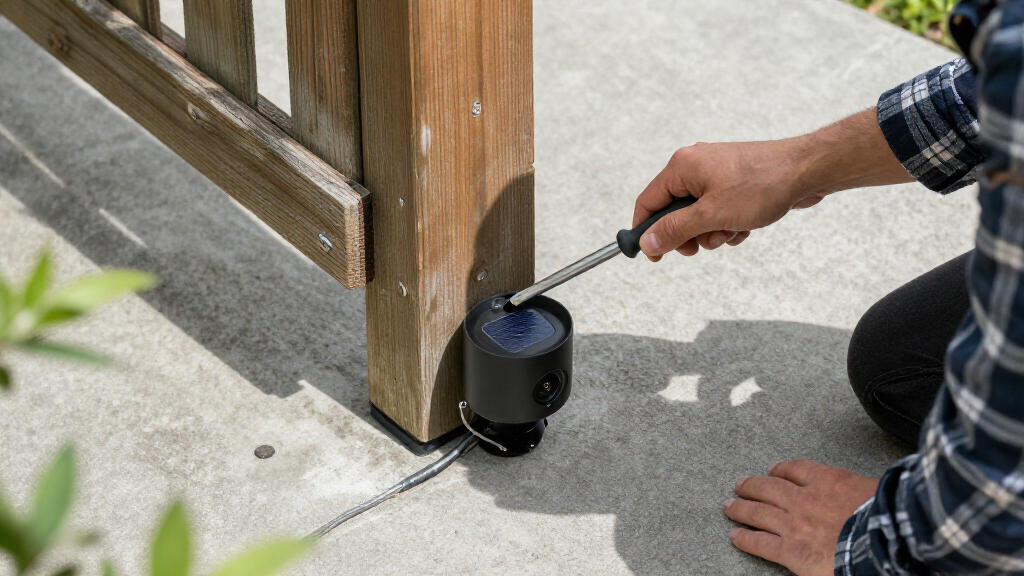
A solar camera still depends on the conditions at its installation site. Nearby trees, roof overhangs, winter daylight, and the panel’s orientation can affect how much charging it receives. Check whether the panel can be positioned separately from the camera; that flexibility can matter when the best camera angle is shaded. Avoid assuming that a sunny spot on one side of the house will also serve the entrance you need to monitor. Motion frequency and recording behavior can also affect battery demand, so a busy driveway may place different demands on a camera than a rarely used shed. Before buying, review the manufacturer’s guidance for panel placement and expected charging conditions.
Choose Resolution for the Viewing Distance
Higher resolution can retain more detail, but the benefit depends on how far away a person or object is and how you view the footage. A 4K camera may suit a wider scene where extra detail matters, while 1080p can be adequate for a close entrance or basic awareness. Pan-and-tilt movement and lens design affect what the camera can show, so resolution alone does not describe coverage. Buyers sometimes pay attention to pixel counts and overlook field of view, night performance, or the camera’s ability to track activity. Think about the scene you need to identify, not just the number printed on the box. If you expect to zoom into distant footage, check sample footage and stated viewing details before deciding.
Check Storage and Ongoing Access
Decide where recordings should live before installation: a local card, a hub or recorder, cloud storage, or a combination. Local storage can reduce dependence on a recurring service, but it may require card management and may be vulnerable if the camera is damaged or taken. Cloud storage can make remote access and off-site retention easier, though plan terms and costs vary by product. Product listings that mention SD or cloud storage do not necessarily provide the same features or access rules. Confirm whether event clips, continuous recording, playback, and sharing work the way you expect. I’d also check what remains available if the internet or a subscription is interrupted.
Treat Wi-Fi as Part of the Installation
A wireless camera still needs a usable network connection at its mounting location. Exterior walls, detached garages, and long distances from the router can weaken the signal, which may affect alerts and live viewing. Dual-band Wi-Fi, where specified, gives buyers a connectivity option, but it does not guarantee strong coverage through a difficult layout. Test the network where you plan to mount the camera before drilling or fixing a solar panel in place. If coverage is poor, a mesh node or access point may solve more problems than a camera upgrade. Also check whether the model supports your network setup and whether the app can manage all cameras in a multi-camera system.
Compare Maintenance, Privacy, and Placement
Solar power can reduce manual charging, but outdoor cameras still need occasional attention. Panels may collect dust, pollen, or snow, and motion zones may need adjustment as plants grow or seasonal activity changes. A camera aimed at a public walkway or a neighbor’s property can capture more than intended, so use privacy zones and careful positioning where available. Pan-and-tilt models offer flexible viewing, but movement should not leave a sensitive area uncovered at the wrong moment. Before paying more for extra features, ask whether they solve a recurring problem for your home. A simple fixed camera can be the better choice when one well-placed view is all you need.
Frequently Asked Questions
Can a solar camera keep working through cloudy weather or winter?
Solar charging depends on available daylight, so cloudy periods and shorter winter days can reduce the energy reaching the battery. Whether a camera keeps operating depends on its battery capacity, power use, and how often it records, details that vary by model. A shaded mount or a busy area may make the shortfall more noticeable. Check the manufacturer’s charging guidance and whether the battery can be charged separately if needed. If the camera protects an essential entry, plan for a backup charging method rather than assuming sunlight will always cover demand.
Should I choose a multi-camera kit or separate single cameras?
A kit can make sense when several locations need coverage and the cameras share a compatible app or recording system. Separate single cameras offer more freedom to choose different features for each spot, but managing them across apps or storage methods can be less convenient. A kit is not automatically simpler: each camera still needs a suitable mounting location, network signal, and sunlight for solar charging. Map your coverage points first and check whether the kit’s included cameras meet the needs of every location. If only one area needs monitoring, a single-camera setup avoids unused hardware.
Is local storage enough, or should I choose cloud storage?
Local storage may suit buyers who prefer recordings kept on a card or within their own system, but it can require manual management and may be lost if the device is damaged. Cloud storage can keep footage off-site and may make remote playback easier, though access rules and service fees depend on the product. Some cameras offer both, while others may have more limited choices. Check how long clips are retained, whether event history is accessible without a subscription, and what happens during an internet outage. Choose based on how important off-site backup and long-term playback are to you.
Will a pan-and-tilt camera cover more than one fixed camera?
A pan-and-tilt camera can move between directions and may track activity, which helps when one mounting point needs to monitor a broad area. It does not show every direction simultaneously, so an event outside its current view may be missed. Multiple fixed cameras provide simultaneous views but require more installation points and network coverage. For a gate and a separate back door, two fixed viewpoints may be more dependable than asking one camera to rotate between them. For a single open yard, a movable camera may offer useful flexibility.
What should I verify before choosing a solar camera with a subscription?
Check which features require payment, including cloud recording, longer clip history, person or vehicle alerts, and sharing. Confirm whether local recording still works if you do not subscribe or later cancel, and whether the camera loses any useful functions. Subscription terms can differ even when two products both advertise cloud storage. Review the retention period and the number of cameras supported by a plan, especially for a multi-camera kit. Comparing these details before installation helps avoid choosing a camera whose recording setup does not match your expectations.
Conclusion
For a balanced starting point, I’d choose the Tapo C660 KIT as the best overall pick among these listed options, especially when 4K detail and pan-and-tilt coverage matter. The best value direction is the Tapo SolarCam C402 KIT for buyers who can work with 1080p and want a straightforward solar-camera setup; compare its storage and connectivity needs before deciding. For a premium feature set, the eufy SoloCam S340 stands apart with its dual-lens design. Beginners who need one camera rather than a multi-device system can start by comparing the GALAYOU R6 and eufyCam C37, focusing on setup and storage details. If your priority is covering several locations, compare the 2K four-pack, 4MP four-camera kit, and aosu D1 Classic; if movable coverage is the main need, consider the pan-and-tilt models. In every case, confirm sunlight, Wi-Fi, and recording options at the planned mounting spot before committing.