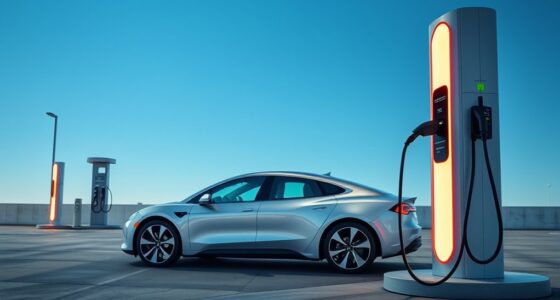
Electric cars have insane acceleration because they deliver instant torque, giving you rapid, smooth power right from the start. Unlike gas engines that need time to build momentum, EVs respond immediately to your throttle, thanks to advanced electric motors and high-energy batteries. Their seamless power makes merging or overtaking effortless. With ongoing battery improvements, EV performance keeps getting better, making them a thrilling choice for fast, efficient driving. Keep going to discover more about what makes them so impressive.
Listen free for 30 days with Audible
Thousands of audiobooks and originals — cancel anytime.
As an affiliate, we earn on qualifying purchases.
Key Takeaways
- Electric motors deliver instant torque, providing rapid acceleration from a standstill, unlike the delayed response of gas engines.
- High energy density lithium-ion batteries supply consistent power, enabling EVs to accelerate quickly and smoothly.
- EVs lack gear shifts, resulting in seamless power delivery and a more responsive driving experience.
- Continuous battery advancements are enhancing acceleration capabilities, often surpassing traditional gas-powered vehicles.
- Electric vehicles produce zero emissions, allowing for high-performance driving without environmental compromise.
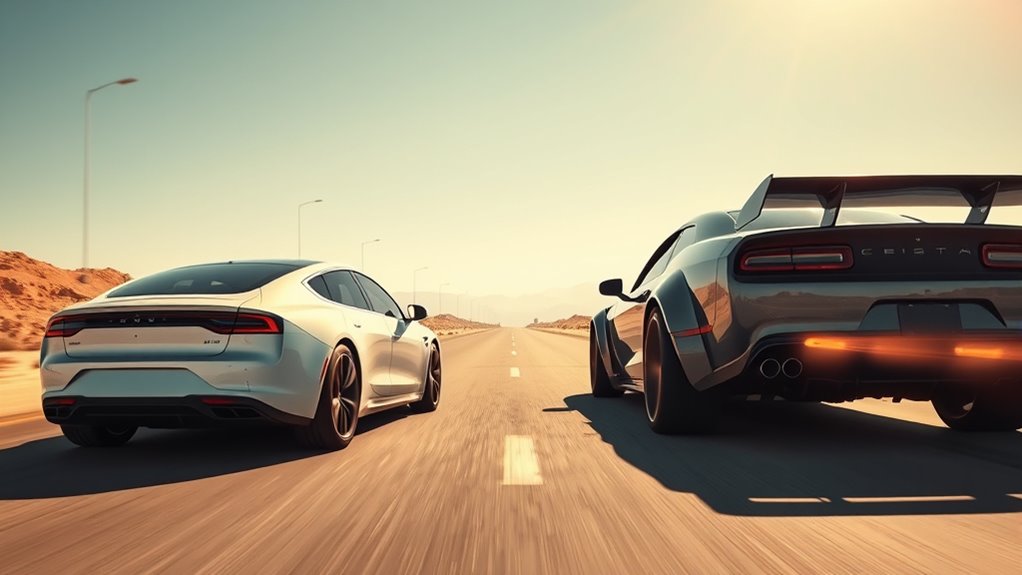
When comparing electric vehicles (EVs) and gas-powered cars, performance often becomes a key deciding factor. One of the most impressive aspects of EVs is their ability to deliver instant torque, resulting in rapid acceleration that often surpasses traditional gasoline engines. This power delivery is closely tied to advancements in battery technology, which have markedly improved the efficiency and capacity of EV batteries. Modern lithium-ion batteries provide high energy density, allowing electric cars to produce immediate torque from a standstill. Unlike gas engines that rely on engine revs to generate power, electric motors can respond instantly to throttle inputs, giving you a feeling of seamless, relentless acceleration whenever you need it. This characteristic is what makes EVs feel so exhilarating during a quick burst of speed, whether you’re merging onto a highway or overtaking on a twisty road.
Electric vehicles deliver instant torque and rapid acceleration thanks to advanced lithium-ion batteries and responsive electric motors.
Battery technology continues to evolve, pushing EV performance even further. Solid-state batteries, for instance, promise higher energy density, faster charging, and enhanced safety, which will translate to even more impressive acceleration and range in future models. As these innovations develop, you’ll notice that electric cars will keep closing the gap—if not surpassing—gas-powered vehicles in everyday performance metrics. Besides acceleration, EVs also excel in emission reduction, making them environmentally friendly options that don’t sacrifice power. With zero tailpipe emissions, EVs help cut down pollutants that contribute to smog and climate change, aligning performance with a greener philosophy.
When you step into an EV, the immediate torque output not only makes for thrilling acceleration but also provides smoother, more controlled driving experiences. This is especially noticeable during stop-and-go traffic, where electric motors can effortlessly handle low-speed maneuvers without the lag or noise typical of internal combustion engines. Plus, the absence of shifting gears in most EVs results in a quieter, more refined ride. As battery technology advances, you’ll see even more improvements in vehicle weight distribution and handling, further elevating their performance credentials.
In essence, EVs are redefining what performance means by combining cutting-edge battery technology with emission reduction goals. They deliver instant, powerful acceleration that’s not only fun but also cleaner and more efficient. As automakers continue to push the boundaries of battery innovation, electric cars will become even more capable, making them a compelling choice for drivers seeking thrill and responsibility in one package. So, when you consider overall performance, EVs are proving that electric power can match—and often beat—the traditional gas-powered performance benchmarks.
electric car acceleration boost kit
As an affiliate, we earn on qualifying purchases.
As an affiliate, we earn on qualifying purchases.
Frequently Asked Questions
How Do Electric Cars Maintain High Acceleration at Low Temperatures?
You can maintain high acceleration at low temperatures because electric cars use advanced thermal management systems that keep the battery warm, ensuring ideal performance. Additionally, modern battery chemistry is designed to operate efficiently in cold conditions, reducing performance loss. This combination allows you to enjoy quick acceleration even in chilly weather, as the system prevents battery cooling issues and preserves power delivery during cold starts.
What Are the Long-Term Reliability Differences Between EV Motors and Gas Engines?
You’ll find that EV motors generally require less maintenance and have longer battery longevity compared to gas engines. Electric motors have fewer moving parts, reducing breakages and repair costs over time. Meanwhile, gas engines need regular oil changes and more frequent part replacements, leading to higher maintenance costs. Over the long term, electric vehicles tend to be more reliable and cost-effective, especially as battery technology continues to improve.
How Does Battery Degradation Affect Performance Over Time?
You might worry that battery degradation will ruin your electric car’s performance over time, but most batteries retain about 70-80% of their capacity after 8-10 years. While battery lifespan affects performance decline, manufacturers design batteries to last longer, so your car stays quick and efficient longer. Regular charging habits and proper maintenance can further minimize performance loss, ensuring your EV remains fun and reliable for years to come.
Are There Specific EV Models That Outperform Gas Cars in All Conditions?
Yes, models like the Tesla Model S and Lucid Air outperform gas cars in all conditions. You’ll notice their instant torque and smooth acceleration no matter the weather or terrain. The Tesla Model S offers impressive range and reliability, while the Lucid Air delivers luxury and power. Both cars excel in acceleration, handling, and efficiency, making them superior choices for performance and versatility compared to traditional gas-powered vehicles.
How Does Weight Impact Acceleration Differences Between EVS and Gas Vehicles?
Imagine you’re pushing a swing. Heavier swings take more effort to start moving, just like heavier vehicles. Vehicle weight influences acceleration dynamics by adding inertia, making it harder for the car to speed up. Electric cars, often heavier due to batteries, can still accelerate quickly because of their instant torque. So, while weight impacts acceleration, EVs often compensate with powerful motors, maintaining impressive acceleration despite extra weight.
high-performance lithium-ion EV batteries
As an affiliate, we earn on qualifying purchases.
As an affiliate, we earn on qualifying purchases.
Conclusion
So, when it comes to acceleration, electric cars leave gas-powered vehicles in the dust—it’s like strapping a rocket to your daily commute. You’ll feel instant torque that makes your heart race and leaves you wondering if you’re driving a car or piloting a spaceship. As EV technology keeps evolving, there’s no doubt that electric cars are revolutionizing performance, making gas engines seem as outdated as rotary phones. Get ready for a thrilling, lightning-fast ride!
solid-state battery for electric vehicles
As an affiliate, we earn on qualifying purchases.
As an affiliate, we earn on qualifying purchases.
electric vehicle torque converter
As an affiliate, we earn on qualifying purchases.
As an affiliate, we earn on qualifying purchases.
NFL season / tailgating Picks
team gear
As an affiliate, we earn on qualifying purchases.