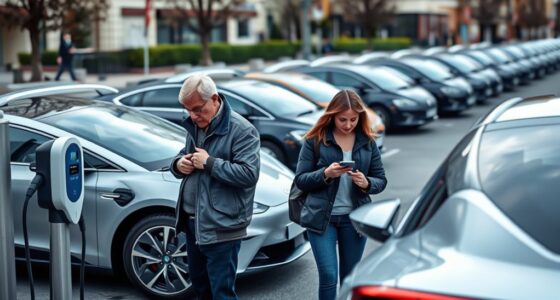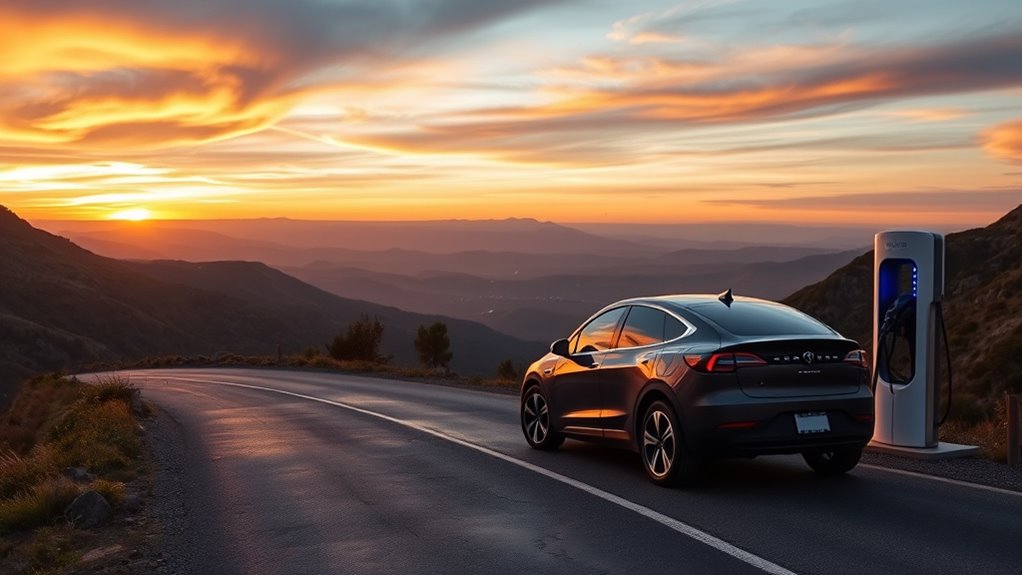

Range anxiety is the worry you feel about your EV running out of battery before reaching a destination or charging station. To overcome it, plan your routes carefully, locate charging stations in advance, and use navigation apps with real-time updates. Practice responsible driving and understand your vehicle’s range to boost confidence. With advancements in battery tech and widespread charging infrastructure, you can travel more comfortably—stay with us to learn more ways to manage this common concern.
Key Takeaways
- Range anxiety is the fear of running out of battery before reaching a destination or charging station.
- Proper route planning and familiarity with charging infrastructure help reduce worry about battery depletion.
- Understanding your EV’s capabilities and monitoring battery levels during trips increase confidence.
- Utilizing charging apps and knowing station locations ensure timely stops and prevent unexpected issues.
- Adopting eco-friendly driving habits and practicing responsible charging extend your EV’s effective range.
Understanding the Concept of Range Anxiety
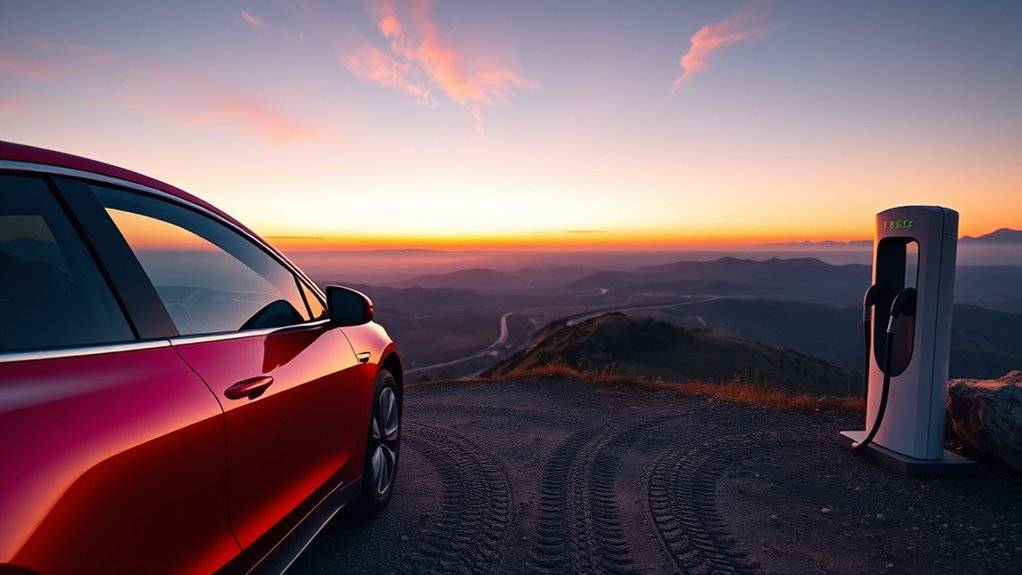
Range anxiety is the fear that your electric vehicle (EV) won’t have enough charge to reach your destination or a charging station. This concern often stems from worries about battery degradation, which can reduce your EV’s maximum range over time. You might hesitate to push your battery to its limits, fearing it will diminish faster with frequent deep discharges. Proper charging etiquette can help ease this anxiety by encouraging timely stops at charging stations and avoiding overuse of fast chargers that may accelerate battery wear. Understanding how your EV’s battery behaves and maintaining good charging habits can boost your confidence on the road. Remember, planning ahead and practicing responsible charging can considerably reduce the fear of running out of power unexpectedly.
Common Causes Behind Range Anxiety

Your range anxiety often stems from factors like limited battery capacity, which can restrict how far you can go. Temperature swings also affect your vehicle’s range, especially in extreme heat or cold. Additionally, your driving habits, such as speed and acceleration, can considerably impact how much distance your EV covers on a single charge. Implementing high-performance batteries can help mitigate some of these issues by providing more energy density and better thermal management. Moreover, understanding and optimizing thermal management systems can further enhance battery efficiency and extend driving range. Staying informed about battery technology advancements can also help owners make better choices for improving range. Paying attention to energy consumption habits allows drivers to maximize their vehicle’s efficiency and reduce range anxiety. Incorporating smart charging solutions can also help manage energy use more effectively and alleviate concerns about charging availability.
Battery Capacity Limitations
One of the primary reasons behind range anxiety is limited battery capacity, which directly affects how far you can travel on a single charge. Battery capacity limitations stem from the energy density of the cells, meaning how much energy they can store relative to their size. If the energy density is low, your EV’s range decreases. Several factors influence this:
- Battery size—smaller packs store less energy.
- Cell chemistry—affects energy density and capacity.
- Battery aging—reduces effective capacity over time.
- Design constraints—limits on pack size due to vehicle architecture.
- Vetted battery safety considerations—can also impact the size and design of the battery pack.
Understanding these limitations helps you manage expectations and optimize your driving habits to extend your EV’s range.
Temperature Effects on Range
Temperature fluctuations substantially impact an electric vehicle’s range, often causing it to decrease in cold or hot weather. Cold temperatures reduce battery efficiency, making proper battery maintenance essential to preserve range. When it’s chilly, your EV’s thermal management system works harder to keep the battery warm, which consumes extra energy. Conversely, in hot weather, the system cools the battery to prevent overheating, also draining power. These temperature-related effects mean your vehicle uses more energy for climate control and thermal regulation, decreasing overall range. To mitigate this, keep your battery well-maintained with regular checks and use pre-conditioning features when possible. Proper thermal management helps maintain ideal battery performance, minimizing range loss due to temperature extremes and easing range anxiety in challenging weather conditions. Additionally, understanding battery chemistry and how it reacts under different temperatures can help owners better prepare for seasonal changes. Recognizing the importance of thermal management systems can aid in optimizing your vehicle’s range and overall battery longevity. Maintaining optimal battery temperature is crucial for maximizing efficiency and extending battery life across varying climates, and advancements in European cloud solutions can support remote diagnostics and temperature monitoring to enhance battery care.
Driving Habits Impact
Driving habits considerably influence an electric vehicle’s range, often contributing to range anxiety if not managed carefully. How you drive impacts your battery life and efficiency. To maximize your range and practice eco-friendly driving, consider these habits:
- Avoid rapid acceleration and hard braking, which drain the battery faster.
- Maintain steady speeds, using cruise control when possible to reduce energy consumption.
- Minimize unnecessary idling and short trips that don’t allow the battery to reach ideal temperature.
- Plan routes carefully to avoid heavy traffic and steep inclines that increase energy use.
- Incorporate connected vehicle technology features that monitor and suggest optimal driving behaviors to extend your EV’s range.
- Be aware of Youngster Choice and other factors that can influence your vehicle’s performance and efficiency, ensuring you’re taking all aspects into account for optimal range. Additionally, understanding how driving style impacts battery consumption can help you make better decisions on the road.
- Staying informed about credit card insights and other financial factors can help you manage costs associated with EV ownership and charging.
- Regularly check your vehicle’s tire pressure, as under-inflated tires can increase rolling resistance and reduce range, making tire maintenance an important aspect of efficient EV use.
Adopting these eco-friendly driving habits can extend your EV’s range, reduce anxiety, and make your driving experience more sustainable. Small adjustments lead to significant savings in range and energy.
How Battery Technology Has Improved Over Time
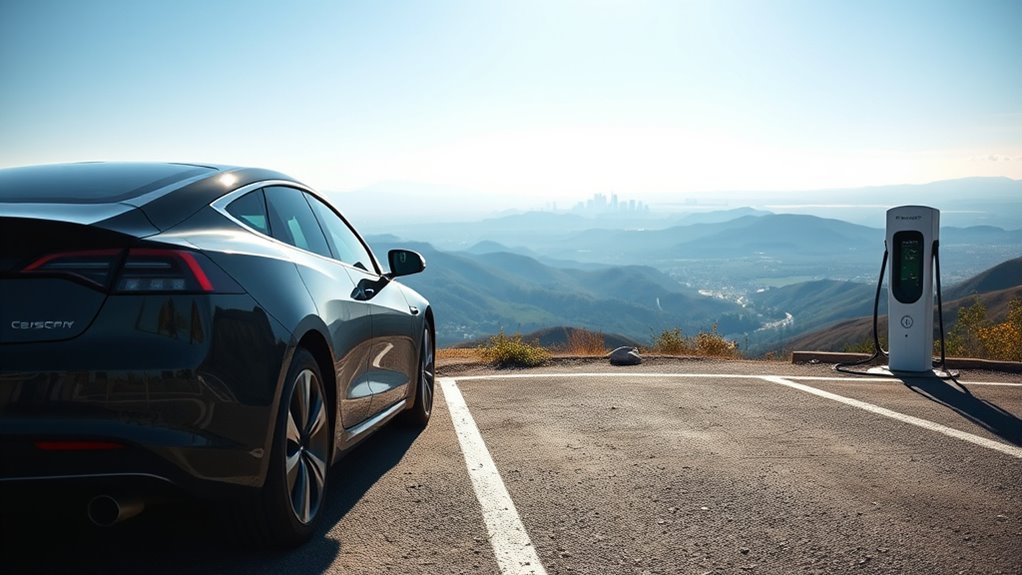
Battery technology has advanced considerably, allowing you to travel farther on a single charge. Modern batteries now store more energy, charge faster, and last longer over time. These improvements help reduce range anxiety and make electric vehicles more practical for everyday use. Additionally, ongoing innovations continue to enhance battery longevity, further easing concerns about battery life and replacement costs. The development of floating on water battery systems also presents promising opportunities for portable and renewable energy storage solutions.
Increased Energy Density
As battery technology has advanced, its energy density has substantially increased, allowing electric vehicles (EVs) to store more power in a smaller, lighter package. Improvements in battery chemistry have led to higher energy density, which directly boosts range and efficiency. These developments mean you can travel farther without adding weight or size to your vehicle. Key developments include:
- Enhanced materials that increase energy storage capacity.
- Solid-state batteries offering higher energy density and safety.
- Better electrode designs that maximize power retention.
- Optimized manufacturing processes that improve overall battery performance.
- Ongoing research into battery longevity aims to extend the lifespan and reliability of EV batteries over time. Additionally, innovations in thermal management are crucial for maintaining battery performance and safety during operation. Advances in battery chemistry continue to unlock new possibilities for higher energy storage, enabling EVs to meet the increasing demands for longer range and faster charging. As battery manufacturing processes become more efficient, the cost of high-capacity batteries is decreasing, making electric vehicles more accessible to consumers. Furthermore, advancements in manufacturing are making high-capacity batteries more affordable and accessible to consumers.
These innovations help reduce range anxiety by making EVs more capable and reliable, giving you greater confidence on longer trips.
Faster Charging Capabilities
Advancements in battery technology aren’t just making EVs last longer—they’re also allowing them to recharge faster than ever before. Modern batteries now resist battery degradation better, maintaining performance even after multiple charges. This improvement means you can quickly top up your vehicle without worrying about harming the battery. Additionally, the increasing charging station density makes fast charging more accessible, reducing wait times and range anxiety. Faster charging capabilities mean you spend less time plugged in and more time on the road. Innovations in battery chemistry and design enable rapid energy transfer, so you can get a significant charge in just minutes. These technological strides ensure that as an EV owner, you enjoy more convenience and confidence during longer trips or daily commutes.
Longer Battery Lifespan
Thanks to continuous improvements in battery technology, your EV’s battery now lasts many years—far longer than earlier models. Modern batteries experience less degradation over time, maintaining capacity longer and reducing concerns about replacement costs. Advances also mean faster charging speeds, so you spend less time at charging stations and more time on the road. To get the most out of your battery’s lifespan, keep these points in mind:
- Regular, moderate charging helps reduce battery degradation.
- Improved thermal management keeps batteries cool and extends longevity.
- Upgraded chemistry minimizes capacity loss over years.
- Faster charging doesn’t harm the battery if done correctly, thanks to smarter technology.
These innovations ensure your EV remains reliable, easing range anxiety and making electric driving more convenient.
Planning Your Routes for Maximum Confidence

Planning your routes carefully can considerably boost your confidence when driving an electric vehicle. By understanding your vehicle’s range and managing your battery effectively, you reduce the risk of unexpected stops. Proper route planning involves knowing where charging stations are located and considering terrain and traffic conditions. Driver education helps you optimize energy use, ensuring you conserve battery life for longer trips. Use the following table to identify key factors for confident planning:
| Factor | Tip |
|---|---|
| Battery management | Monitor your battery levels regularly during trips. |
| Route selection | Choose routes with accessible charging stations. |
| Terrain awareness | Avoid steep inclines that drain your battery quickly. |
Being proactive with route planning minimizes range anxiety and keeps you in control.
Utilizing Navigation and Charging Apps Effectively

Using navigation and charging apps can greatly improve your EV driving experience. They help you optimize route planning to save energy and identify nearby charging stations before you need them. Mastering these tools guarantees you’re always prepared and reduces range anxiety effectively.
Optimizing Route Planning
To maximize your EV’s range and avoid unexpected stops, leveraging navigation and charging apps effectively is essential. These tools help you plan routes that include charging opportunities, saving time and reducing range anxiety. When optimizing your trip, consider the following:
- Identify charging stations along your route to ensure you can recharge before battery depletion.
- Prioritize stations with fast chargers to minimize downtime and keep your trip efficient.
- Follow charging etiquette by being mindful of others waiting and not occupying chargers longer than necessary.
- Plan for battery recycling by properly disposing of or recycling your EV’s battery when it reaches the end of its lifecycle, supporting sustainability.
Effective route planning reduces stress, conserves battery life, and encourages responsible charging behaviors.
Identifying Charging Stations
Finding charging stations has become much easier thanks to advanced navigation and charging apps that provide real-time data. These navigation tools help you locate charging station locations quickly, reducing range anxiety. Simply input your destination, and the apps highlight nearby chargers, including their availability and types. You can plan your stops efficiently, ensuring you’re never far from a power source. To make it even clearer, here’s a quick overview:
| Navigation Tool | Key Features |
|---|---|
| PlugShare | User reviews, station status |
| ChargePoint | Wide network, real-time data |
| EVgo | Fast chargers, station info |
| Zap-Map | UK-based, route planning |
| Google Maps | Integrated charging stations |
Using these tools, you gain confidence and control over your EV journeys.
Strategies to Maximize Your EV’s Range

Maximizing your EV’s range requires mindful driving and smart habits. To do so, focus on effective battery management and practice good charging etiquette. First, drive smoothly by avoiding rapid acceleration and braking, which conserves battery power. Second, maintain steady speeds, especially on highways, to optimize energy use. Third, plan your routes to avoid hilly terrain and heavy traffic, reducing unnecessary energy drain. Fourth, prioritize charging during off-peak hours to extend your battery’s lifespan and ensure availability for future trips. By adopting these strategies, you’ll enhance your EV’s efficiency and reduce range anxiety. Remember, understanding your vehicle’s battery limits and respecting charging etiquette helps you get the most out of every charge, making your driving experience smoother and more reliable.
The Role of Charging Infrastructure and How to Find Stations

A well-developed charging infrastructure plays a crucial role in easing range anxiety by ensuring you can recharge your EV whenever needed. Reliable charging station availability means fewer worries about running out of power. As infrastructure development continues, more stations are popping up in urban and rural areas, making longer trips more feasible. To find stations quickly, use apps like PlugShare or ChargePoint, which map out nearby chargers and show real-time availability. Keep these factors in mind:
| Location | Charger Type | Availability Status |
|---|---|---|
| Highway Rest Stops | Fast Chargers | Often Available |
| Downtown Areas | Level 2 Chargers | Usually Open |
| Remote Areas | Fast Chargers | Limited Options |
This info helps you plan trips confidently, knowing charging options are accessible.
Tips for Long-Distance Travel in an EV
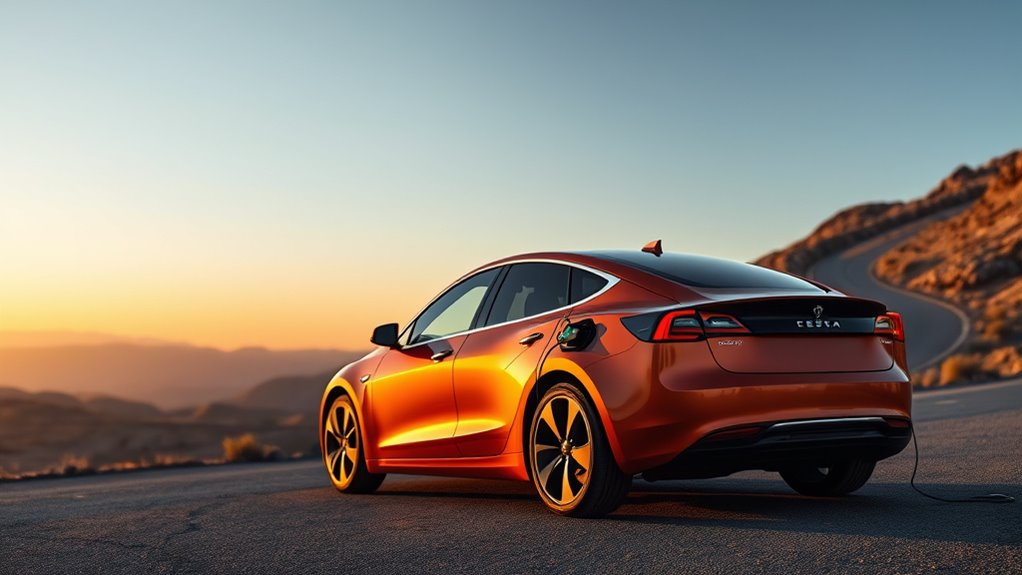
Planning your long-distance EV trips requires careful preparation to guarantee you reach your destination without stress. First, always check your battery’s health, as battery degradation can reduce range. Second, plan your route around charging station availability, ensuring you know where to recharge along the way. Third, keep an eye on your consumption; driving smoothly and at moderate speeds preserves battery life. Fourth, carry a portable charger if possible, providing extra peace of mind. By understanding your vehicle’s limits and potential battery performance, you can better manage range anxiety. Remember to schedule stops at reliable charging stations, and avoid pushing your battery to its extremes. Proper planning guarantees a smooth, enjoyable trip without unexpected setbacks.
Debunking Myths About Range Limitations

Many people believe that electric vehicles are severely limited by their range, but this isn’t the full story. Modern EVs often have impressive ranges, making daily commutes and most trips manageable. Range anxiety often stems from outdated perceptions, but technological advances are closing the gap. For example, improved battery recycling efforts help make batteries more sustainable and cost-effective, encouraging wider adoption. Additionally, government incentives support the development of faster charging stations and longer-range models, easing concerns about running out of power. The truth is, with proper planning and awareness of available infrastructure, most drivers won’t face range issues. Myths about limited range are just that—myths. As EV technology continues to evolve, these limitations will become even less significant.
Building Confidence as a New EV Owner

Gaining confidence as a new EV owner starts with understanding your vehicle’s capabilities and getting comfortable with its features. To build trust, practice charging etiquette by using designated stations efficiently and respectfully. Embrace eco-friendly driving habits like smooth acceleration and deceleration to maximize range and reduce emissions. Here are four steps to boost your confidence:
Gain confidence in your EV by understanding features, practicing etiquette, and adopting eco-friendly driving habits.
- Familiarize yourself with your EV’s range and charging options.
- Plan routes with charging stops to avoid surprises.
- Practice eco-friendly driving to extend battery life.
- Join local EV communities for tips and shared experiences.
Frequently Asked Questions
How Accurate Are EV Range Estimations in Real-World Driving?
You’ll find that EV range estimations are generally accurate, but they can vary depending on driving habits and conditions. To improve accuracy, verify your vehicle’s battery calibration is up-to-date, as it helps the system better estimate remaining range. Regular software updates also enhance estimation algorithms, accounting for real-world factors. Staying mindful of these updates and calibration checks helps you plan trips confidently without unexpected range surprises.
Can Weather Conditions Significantly Affect EV Battery Performance?
Weather conditions can considerably affect your EV’s battery performance, especially during extreme climates. Cold weather hampers battery efficiency, reducing range, while hot temperatures accelerate battery degradation over time. This climate impact means you might need to plan longer trips carefully or use pre-conditioning features. Staying aware of these effects helps you optimize your driving, ensuring your EV performs reliably regardless of weather, and prolongs your battery’s lifespan.
Do Different EV Models Have Varying Ranges Under Similar Conditions?
Yes, different EV models have varying ranges even under similar conditions. This mainly depends on battery capacity, which differs across models, affecting how far you can go on a single charge. Model differences also play a role, as design and aerodynamics impact efficiency. To maximize your range, choose a model with a higher battery capacity that suits your driving needs, and stay mindful of how weather and driving habits influence performance.
How Does Driving Style Influence the Actual Range of an EV?
Your driving habits considerably impact your EV’s range. Aggressive acceleration and high speeds drain the battery faster, while smooth driving conserves power. To preserve the battery and extend your range, avoid rapid braking and accelerate gently. Maintaining steady speeds and using regenerative braking help recharge the battery during deceleration. By adopting these habits, you can maximize your EV’s range and reduce range anxiety, making your driving experience more efficient and enjoyable.
Are There Ways to Improve EV Range Through Maintenance Practices?
Your EV’s range can skyrocket with simple maintenance tricks. Keep your battery calibrated by regularly fully charging and discharging it, ensuring accurate range readings. Additionally, check and maintain proper tire pressure—underinflated tires can drain energy faster, drastically reducing your range. These small steps prevent your EV’s efficiency from plummeting and make every charge last longer, so you can drive farther without worry.
Conclusion
Think of driving an EV like tending a garden; with the right planning and tools, your journey flourishes. As you learn to navigate your route and utilize charging stations, your confidence grows like a sturdy tree rooted in knowledge. Overcoming range anxiety is simply watering that confidence regularly. Soon, you’ll enjoy your drive like a well-tended garden—beautiful, worry-free, and full of promise for every adventure ahead.