Electric cars are generally greener than traditional vehicles, especially over their lifespan, because they produce no tailpipe emissions and use cleaner energy sources. However, their environmental impact depends on factors like battery production, recycling, and the regional electricity mix. If you want to understand how manufacturing, recycling, and energy sources influence EV sustainability—and how to maximize their benefits—you’ll find plenty of insights ahead.

Get backup power and energy gear delivered free — and shop member deals
- Fast, free delivery on millions of items
- Access to Prime Big Deal Days deals on October 6–7
- Prime Video, Amazon Music and more included
Key Takeaways
- EVs produce no tailpipe emissions, reducing local air pollution compared to gasoline vehicles.
- Manufacturing, especially battery production, has significant environmental impacts, including resource extraction and energy use.
- The overall greenness of EVs depends on the regional energy mix; renewable energy sources greatly enhance their environmental benefits.
- Recycling and responsible disposal of batteries are crucial to minimize soil and water contamination.
- Long-term benefits of EVs are maximized when supported by renewable energy infrastructure and effective policy measures.
electric vehicle battery recycling kit
As an affiliate, we earn on qualifying purchases.
As an affiliate, we earn on qualifying purchases.
The Manufacturing Footprint of Electric Vehicles
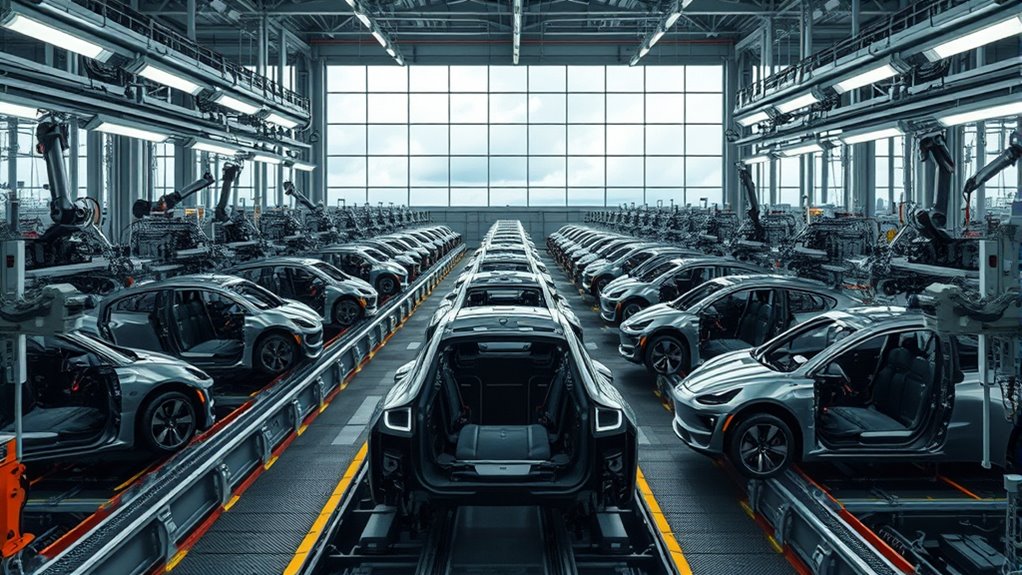
Have you ever wondered how electric vehicle manufacturing impacts the environment? When producing EVs, manufacturers aim to use eco friendly materials to reduce their overall footprint. These materials include recycled metals, sustainable plastics, and other environmentally conscious components. However, the manufacturing process still generates significant emissions, known as manufacturing emissions, which contribute to pollution and climate change. While EVs are often seen as greener alternatives, their production phase can be resource-intensive and energy-consuming. European cloud servers, with their focus on sustainable and energy-efficient infrastructure, exemplify innovative approaches to reducing overall environmental impacts. Additionally, adopting advanced manufacturing technologies can help streamline processes and cut emissions further. Improving supply chain sustainability and material sourcing practices are also critical steps toward making EV manufacturing more environmentally friendly. Efforts are underway to improve manufacturing practices, making them more sustainable by integrating sustainable supply chain management. By focusing on eco friendly materials and reducing manufacturing emissions, automakers can lessen the environmental impact of bringing electric vehicles to market, ensuring they’re truly a cleaner transportation option from start to finish. Furthermore, ongoing research into battery recycling methods promises to significantly decrease resource depletion and waste associated with EVs.
As an affiliate, we earn on qualifying purchases.
Battery Production and Its Environmental Cost

Although electric vehicle batteries enable cleaner transportation, their production carries significant environmental costs. Manufacturing batteries requires mining materials like lithium, cobalt, and nickel, which can harm ecosystems and deplete resources if sourcing ethics aren’t prioritized. The environmental impact is compounded by the energy-intensive processes involved, contributing to greenhouse gas emissions. Additionally, battery lifespan affects overall sustainability; shorter-lasting batteries lead to more frequent replacements and waste. Improving sourcing ethics guarantees responsible extraction, reducing ecological damage and human rights issues. Innovations in battery technology aim to extend lifespan and reduce dependence on contentious materials. While EV batteries are crucial for clean transportation, understanding and addressing their environmental costs during production is essential for truly sustainable mobility. Furthermore, sustainable manufacturing practices can significantly mitigate some of these environmental impacts, especially when combined with advances in battery recycling and second-life applications. Implementing ethical sourcing standards is vital to minimize ecological and social harm associated with raw material extraction. Moreover, adopting renewable energy in manufacturing processes can substantially lower the carbon footprint of battery production. Incorporating circular economy principles can further enhance the sustainability of EV batteries by promoting reuse and recycling efforts.
As an affiliate, we earn on qualifying purchases.
Energy Sources Powering Electric Cars

You should consider where the electricity powering electric cars comes from, as it varies by region. Some areas rely heavily on renewable sources like wind and solar, while others depend on non-renewable fuels like coal and natural gas. Understanding your regional energy mix helps you see how eco-friendly your electric vehicle truly is. Additionally, the energy sources used to generate electricity significantly influence the overall environmental impact of EVs. For instance, regions utilizing renewable energy tend to have more sustainable energy profiles, which can further reduce the carbon footprint of electric vehicles. Being aware of postpartum recovery and potential health considerations can also be important for new parents considering EVs for their transportation needs. Moreover, understanding the lifecycle and performance metrics of batteries can help you appreciate the environmental benefits of reconditioning and proper disposal practices.
Renewable vs. Non-renewable
Electric cars rely on electricity generated from various energy sources, and the type of power used considerably impacts their environmental benefits. If your electricity comes from renewable sources like solar power, your vehicle’s emissions are notably reduced, making your car much greener. Solar power produces clean energy without emitting greenhouse gases, directly lowering vehicle emissions. On the other hand, electricity from non-renewable sources such as coal or natural gas results in higher emissions, diminishing the eco-friendly advantage of EVs. The cleaner the energy mix, the more you help reduce air pollution and combat climate change. Additionally, the availability of renewable energy infrastructure plays a crucial role in maximizing the environmental benefits of electric vehicles. Investing in renewable energy technologies can further enhance the sustainability of EVs by ensuring a cleaner power supply. Moreover, adopting smart grid systems can optimize energy distribution and further decrease the carbon footprint of EV charging. Incorporating energy efficiency measures in the charging process can also significantly boost the overall environmental friendliness of electric vehicles. Choosing renewable energy options for charging your EV maximizes its environmental benefits and minimizes its carbon footprint, highlighting the importance of the energy sources powering your vehicle.
Regional Energy Mix
The regional energy mix determines how green your electric vehicle truly is, as the sources powering the grid vary across different areas. Your electricity’s environmental impact depends on regional energy policies and the grid infrastructure in place. Here’s what influences it:
- Energy sources: The proportion of renewables, coal, natural gas, or nuclear power affects emissions. A higher share of renewable energy can significantly reduce the carbon footprint of EVs.
- Regional policies: Initiatives promoting clean energy lead to greener grids.
- Grid infrastructure: Upgrades and modernizations improve efficiency and renewable integration.
- Electricity demand: High demand can strain the grid, impacting the energy mix’s sustainability.
- Energy storage: The development of energy storage systems helps balance supply and demand, further influencing the environmental benefits of EVs.
- Regional energy mix varies due to differing historical infrastructure investments and resource availability across regions, impacting the overall sustainability of electric vehicles.
Understanding these factors helps you grasp why EVs’ environmental benefits depend heavily on where you live and the regional energy policies shaping your power supply.
As an affiliate, we earn on qualifying purchases.
Emissions Reduction Compared to Conventional Vehicles

While electric cars produce no tailpipe emissions, their overall emissions are often lower than those of conventional vehicles, especially when considering the full lifecycle. Manufacturing EVs, particularly their batteries, involves emissions that can be offset over time with cleaner energy sources. As renewable infrastructure expands, the emissions associated with charging decrease further, making EVs even greener. Over the vehicle’s lifespan, electric cars tend to emit markedly fewer greenhouse gases compared to gasoline-powered cars. This reduction depends on factors like electricity sources and manufacturing processes, but overall, EVs offer a substantial advantage in lowering carbon footprints. If you keep your EV for a long vehicle lifespan, the cumulative emissions savings become even more pronounced, reinforcing electric cars’ role in reducing transportation-related environmental impacts.
The Recycling and Disposal of EV Batteries
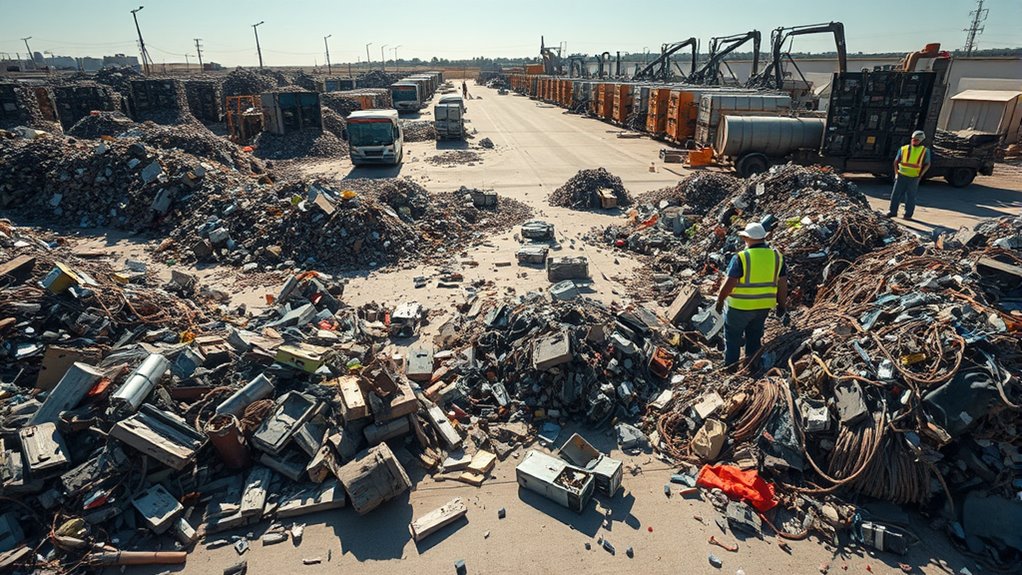
As you consider the future of electric vehicles, recycling technologies play a vital role in managing used batteries. You should also be aware of the environmental concerns linked to disposal methods that can release harmful substances. Addressing these issues is essential for making EVs truly sustainable.
Battery Recycling Technologies
Ever wondered what happens to electric vehicle batteries once they reach the end of their lifespan? Modern battery recycling technologies focus on extracting valuable materials and reducing waste. You can expect these processes:
- Breaking down batteries to recover toxic materials like cobalt and lithium.
- Separating components for reuse or repurposing, such as transforming old batteries into energy storage.
- Using hydrometallurgical methods to extract metals efficiently and safely.
- Promoting battery repurposing, extending battery life before recycling becomes necessary.
These innovations help minimize environmental impact by reducing toxic materials in landfills. They also support the circular economy, ensuring that valuable resources are reused instead of discarded. As technology advances, recycling methods become safer, more efficient, and environmentally friendly, helping make EVs truly greener.
Disposal Environmental Concerns
Disposal of EV batteries raises significant environmental concerns because improper handling can lead to soil and water contamination from toxic waste like cobalt, lithium, and other hazardous chemicals. If battery disposal isn’t managed properly, toxic waste can seep into ecosystems, harming wildlife and contaminating water supplies. Recycling programs aim to reduce these risks, but many batteries still end up in landfills where toxic substances can leak. As an EV owner or manufacturer, you should prioritize responsible battery disposal practices to prevent environmental damage. Proper handling minimizes the release of harmful chemicals and supports sustainable waste management. Addressing these disposal concerns is vital to ensuring electric vehicles truly benefit the environment and don’t create new pollution problems through improper battery disposal.
The Role of Renewable Energy in EV Sustainability
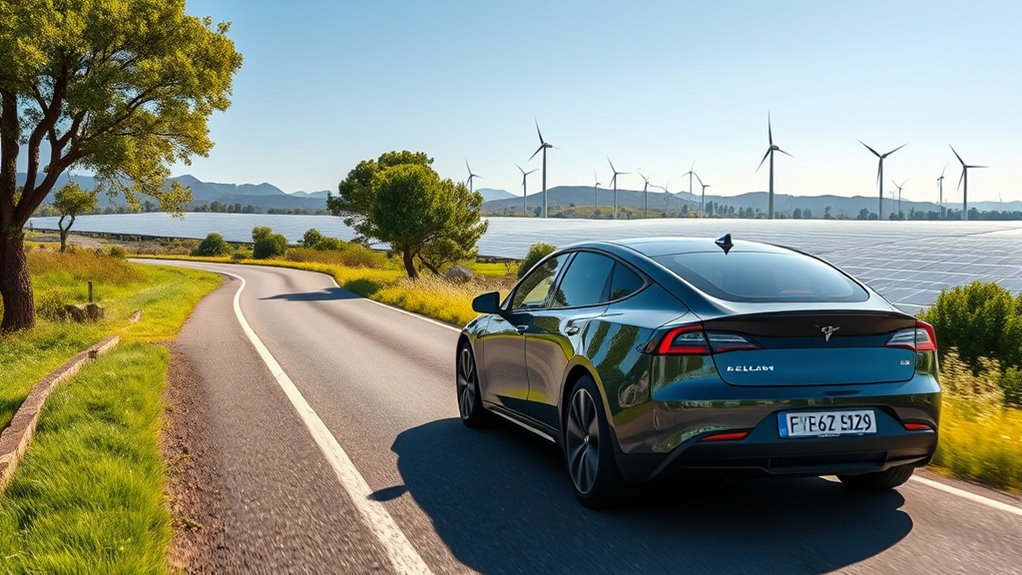
Have you ever considered how the source of electricity impacts the true environmental benefits of electric vehicles? If your grid relies on fossil fuels, the benefits diminish. To maximize EV sustainability, renewable energy plays a vital role. Key strategies include:
The environmental benefits of EVs depend on the cleanliness of your electricity source.
- Investing in solar integration to power charging stations with clean energy.
- Upgrading the grid through modernization efforts to handle increased renewable inputs.
- Promoting policies that encourage renewable energy adoption for electricity generation.
- Supporting community projects that expand access to renewable sources, reducing reliance on coal or natural gas.
Geographic Variations in EV Environmental Benefits

The environmental benefits of electric vehicles vary considerably depending on your geographic location. In areas with advanced urban infrastructure, EVs tend to have a larger positive impact because charging stations are widespread, making it easier to use clean energy. Conversely, in regions with poor infrastructure, you might rely on less renewable energy sources, reducing EVs’ environmental advantages. Policy incentives also play a vital role; some governments offer tax credits, rebates, or reduced registration fees that encourage EV adoption, amplifying their environmental benefits. In contrast, areas lacking such incentives may see slower adoption and less environmental gain. Understanding local policies and infrastructure helps you assess how much an EV can genuinely contribute to reducing your carbon footprint in your specific area.
Long-Term Environmental Benefits and Challenges
While electric vehicles offer significant long-term environmental benefits, challenges remain that could limit their overall impact. You’ll need to consider factors like urban infrastructure, which must adapt to support widespread EV use, including charging stations and grid capacity. Additionally, consumer adoption plays a critical role; without enough drivers switching to EVs, progress slows down. Here are key challenges:
Urban infrastructure upgrades and consumer adoption are vital for maximizing EVs’ environmental benefits.
- Upgrading urban infrastructure to accommodate increased charging needs
- Overcoming range anxiety and improving battery technology
- Ensuring the electricity grid is clean enough to maximize environmental benefits
- Promoting consistent consumer adoption through awareness and incentives
Addressing these challenges is essential for realizing EVs’ long-term environmental potential and making a meaningful difference.
Making Electric Vehicles Truly Greener
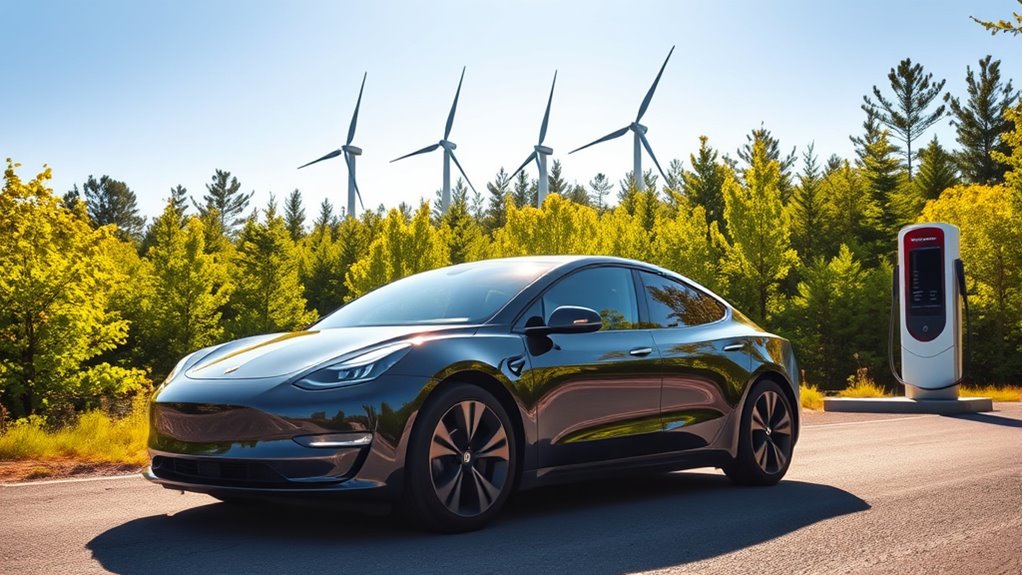
What steps can be taken to make electric vehicles genuinely greener? Improving urban infrastructure is essential. Expanding charging stations and integrating renewable energy sources into power grids reduces the environmental impact of EVs. Encouraging sustainable consumer behavior is equally important. You can choose electric cars with longer-lasting batteries and support policies promoting recycling and reuse of EV components. Educating yourself about the environmental footprint of manufacturing and disposal helps you make informed decisions. Additionally, advocating for smarter urban planning can ease traffic congestion and lower emissions, further boosting EVs’ greenness. By combining advancements in infrastructure with mindful consumer choices, you help make electric vehicles a more sustainable and truly greener transportation option.
Frequently Asked Questions
How Do EVS Impact Local Air Quality Beyond Greenhouse Gas Emissions?
Electric vehicles improve urban air quality by producing zero tailpipe emissions, reducing pollutants like nitrogen oxides and particulate matter that harm your lungs. They also help cut noise pollution since EVs operate more quietly than gas-powered cars. By choosing EVs, you’re actively contributing to cleaner, healthier city environments, making your daily commute less harmful for yourself and others, and promoting a quieter, more breathable urban space.
What Are the Ethical Concerns Related to Mining Materials for EV Batteries?
Imagine a delicate balance, where your choices ripple through the world like a heartbeat. You face ethical concerns about mining practices for EV batteries, risking harm to communities and ecosystems. Prioritizing ethical sourcing means demanding transparency and fair labor, ensuring that mining doesn’t come at the expense of vulnerable populations. By choosing responsibly sourced materials, you help break the cycle of exploitation, making your eco-friendly journey truly just and sustainable.
Can EVS Be Powered Entirely by Renewable Energy Everywhere?
You can’t power EVs entirely by renewable energy everywhere yet. While renewable energy scalability is improving, grid integration challenges remain, especially in regions with outdated infrastructure. You may find that in some areas, the grid can’t handle a high percentage of renewable sources, limiting how much clean energy can power your EV. To truly rely on renewables, you’d need better storage solutions and grid upgrades to support consistent, sustainable charging.
How Does EV Adoption Influence Global Resource Demand and Sustainability?
Adopting EVs can dramatically boost resource demand, possibly accelerating resource depletion at an alarming rate. Your shift to electric vehicles sparks a race for materials like lithium and cobalt, demanding relentless technological innovation to find sustainable solutions. While this growth pushes the limits of our planet’s resources, it also drives innovation that may eventually balance environmental impact and meet future sustainability goals. Your choices directly shape the future of global resource management.
What Are the Socioeconomic Impacts of Transitioning to Electric Vehicles?
You’ll notice that shifting to electric vehicles impacts socioeconomic factors by altering employment shifts and highlighting economic disparities. As traditional auto jobs decline, new opportunities in EV manufacturing and maintenance emerge, but not everyone benefits equally. This shift can widen economic disparities, especially in communities reliant on fossil fuel industries. Embracing EVs requires careful planning to guarantee fair job transitions and reduce inequality, fostering a more inclusive, sustainable future.
Conclusion
Ultimately, thinking of electric cars as a green oasis is tempting, but their true environmental impact is more like a delicate balancing act. You hold the power to drive positive change by supporting cleaner manufacturing, renewable energy, and better battery recycling. While EVs can be a beacon of hope, they’re also a reminder that true sustainability requires ongoing effort and awareness. Your choices are the seeds that can help transform this technological oasis into a lasting green forest.
Fall Picks
fall essentials
As an affiliate, we earn on qualifying purchases.