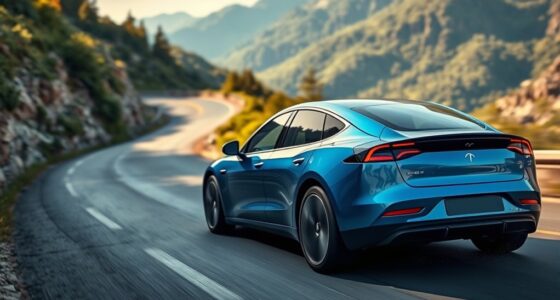

Electric cars work by using batteries to store electrical energy and powerful electric motors to turn that energy into motion. When you accelerate, the controller manages power flow from the battery to the motor, causing it to spin and drive the wheels. During braking, regenerative systems recover energy to recharge the battery. If you want to understand how all these parts work together seamlessly, there’s plenty more to discover about their operation and benefits.
Key Takeaways
- Electric cars use batteries to store chemical energy, which is converted into electrical energy to power the motor.
- The electric motor transforms electrical energy into mechanical motion through electromagnetic interactions.
- Power electronics regulate the flow of electricity between the battery and motor for smooth operation.
- Regenerative braking recovers kinetic energy during braking, converting it back into stored electrical energy.
- Advanced thermal management maintains optimal battery and motor temperatures, ensuring efficiency and longevity.
The Fundamental Components of Electric Vehicles
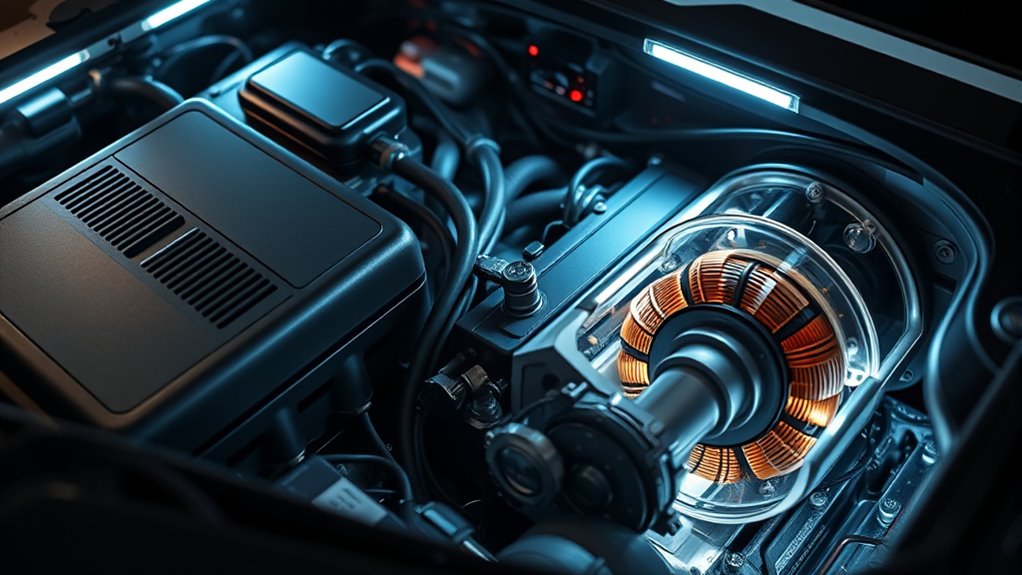
Electric vehicles rely on several key components that work together to deliver efficient and quiet transportation. One of the main aspects of electric vehicle design is optimizing vehicle aerodynamics, which reduces air resistance and improves overall efficiency. Sleek, smooth shapes help electric cars glide through the air with less effort, extending their range and reducing energy consumption. The core components include the electric motor, battery pack, and power electronics, but vehicle aerodynamics play a vital role in maximizing performance. By minimizing drag, the design allows the motor to operate more efficiently, translating to longer distances on a single charge. Aerodynamic design helps to further reduce energy consumption and enhance vehicle range. Understanding how these elements work in harmony gives you a clearer picture of how electric cars achieve their impressive efficiency and quiet operation. Additionally, battery technology continues to advance, further boosting range and charging speed for electric vehicles. Continuous improvements in energy management systems also optimize power usage, contributing to overall vehicle efficiency. Advances in thermal management help maintain optimal operating temperatures, which further improves battery lifespan and performance.
How Batteries Store and Supply Power
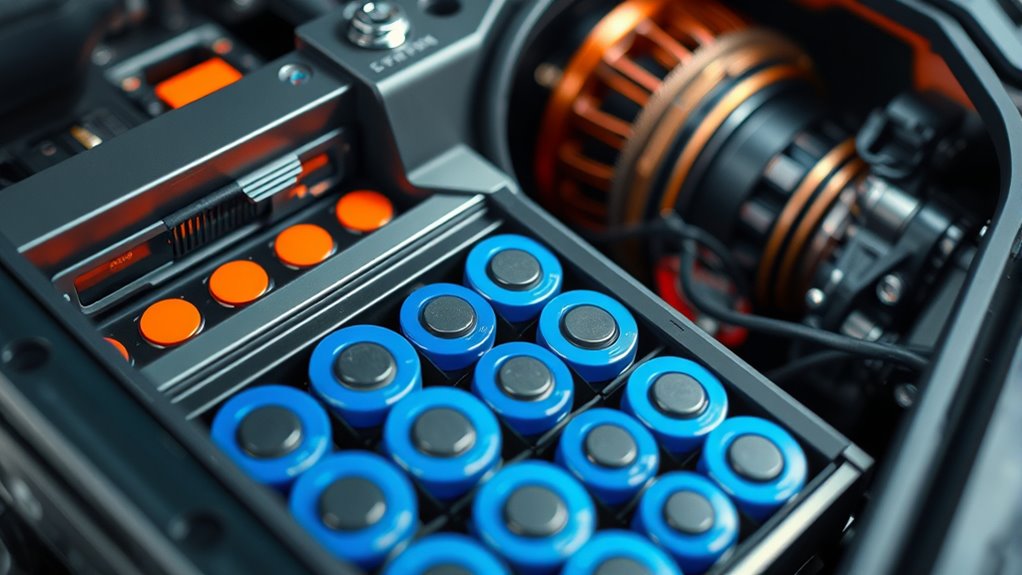
Your electric car’s battery uses specific chemistry and types to store energy efficiently. It relies on energy storage mechanisms that hold power until you need it, then releases it smoothly. Understanding how this power supply process works helps you see how your vehicle keeps you moving. The materials used in the battery, such as lithium or nickel, influence its capacity and longevity, making battery chemistry a crucial factor in performance. Additionally, advancements in solar system and energy insights contribute to improved energy efficiency and sustainability in electric vehicle technology. These innovations also drive the development of more sustainable energy storage solutions, which are vital for the future of clean transportation. Incorporating reliable solar panels and energy storage systems can further enhance the efficiency and environmental benefits of electric vehicles. Moreover, ongoing research into battery recycling aims to reduce environmental impact and promote resource conservation.
Battery Chemistry and Types
Batteries in electric cars store energy through chemical reactions that generate electrical current, making them essential for powering the vehicle. The most common type is lithium-ion, known for its high energy density and long lifespan. These batteries consist of multiple cells with electrolyte solutions that facilitate the flow of lithium ions between electrodes during charging and discharging. Recently, solid-state batteries are gaining attention as an advanced alternative; they replace liquid electrolytes with solid materials, offering improved safety, faster charging, and higher energy capacity. Understanding these chemistries helps you grasp how electric vehicles operate efficiently. Additionally, advancements in battery manufacturing processes are crucial for enhancing overall battery durability and reducing costs. Innovative battery technology continues to evolve, promising even more efficient and safer energy storage solutions for the future, especially as research focuses on solid-state battery development to overcome current limitations. Developing cost-effective manufacturing methods also plays a vital role in making electric vehicles more accessible to consumers. Furthermore, ongoing research aims to improve battery recycling techniques, which is essential for sustainable growth in electric vehicle adoption.
Energy Storage Mechanisms
Batteries store and supply power through electrochemical processes that convert stored chemical energy into electrical energy. When you draw power, chemical reactions release electrons, creating an electric current. To maintain ideal performance and safety, thermal management systems regulate battery temperature, preventing overheating or freezing. Proper thermal control enhances energy efficiency by reducing energy losses caused by temperature fluctuations. This thermal management system plays a crucial role in ensuring the longevity and safety of electric vehicle batteries. Efficient energy storage relies on the design of electrode materials and electrolyte composition, which influence how well the battery stores and releases energy. Additionally, advances in battery technology continue to improve energy density and lifespan, benefiting electric vehicle performance. Innovations in battery materials are paving the way for faster charging times and safer operation. Furthermore, ongoing research into thermal regulation techniques aims to further optimize battery performance under diverse operating conditions.
Power Supply Process
Have you ever wondered how energy is stored and released so efficiently in electric vehicle batteries? When you plug in your car for charging, electricity flows into the battery, where chemical reactions store the energy. This stored power is then released to power the motor when needed. Modern techniques like wireless charging allow you to top up your battery without plugging in, simplifying the process. Additionally, battery swapping stations offer a quick alternative by replacing your depleted battery with a fully charged one, reducing downtime. These methods enhance the power supply process, making electric cars more convenient and efficient. As technology advances, energy transfer efficiency continues to improve, leading to faster charging times and longer battery life. Whether through traditional charging, wireless methods, or swapping, the way batteries supply power is key to the vehicle’s performance and ease of use. Understanding the **power supply process** is essential for recognizing how electric vehicles optimize energy management and improve user experience.
Understanding Electric Motors and Their Function
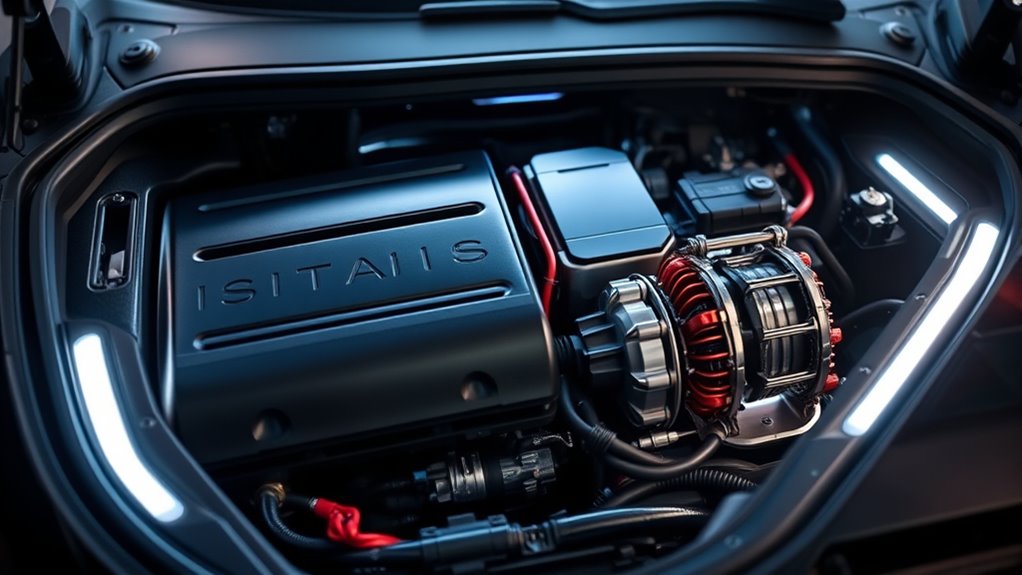
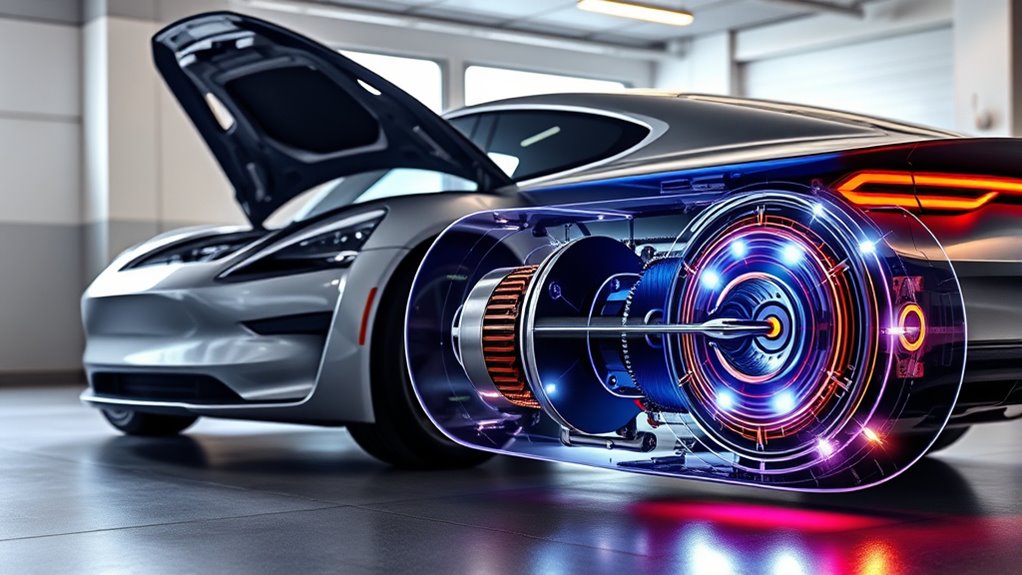
Ever wondered how electric motors convert electrical energy into motion? It all comes down to rotor dynamics and magnetic fields. When electrical current flows through the motor’s coils, it creates powerful magnetic fields. These fields interact with magnets inside the motor, generating forces that cause the rotor to spin. The rotor is the rotating part of the motor, designed to respond to these magnetic forces efficiently. As the magnetic fields continuously change, they produce torque that turns the rotor, translating electrical energy into mechanical motion. This process is smooth and precise, allowing electric cars to accelerate quickly and operate quietly. By controlling magnetic field interactions, the motor guarantees consistent, reliable power delivery, making electric vehicles efficient and responsive on the road. magnetic field interactions are carefully managed within the motor to optimize performance and efficiency.
The Process of Converting Stored Energy Into Motion
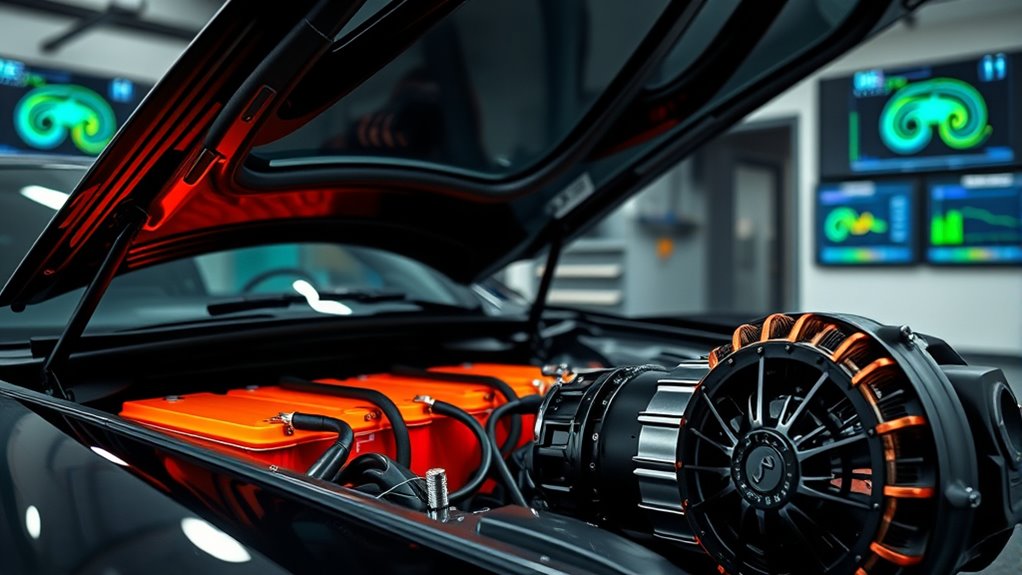
How does an electric car turn stored energy into motion? It begins with energy transfer from the battery to the motor. The motor then converts this electrical energy into mechanical energy, initiating motion. This process involves several key steps:
- When you press the accelerator, the controller sends power to the motor.
- The motor’s magnetic fields generate torque, starting rotation.
- The rotation is transferred through the drivetrain to the wheels.
- As a result, your car moves smoothly without combustion.
- Advanced energy management systems optimize this process for efficiency and performance.
This entire process is designed for efficient energy transfer, ensuring quick motion initiation while conserving energy. The seamless conversion from stored electrical energy to mechanical motion is what makes electric cars quiet, responsive, and eco-friendly.
Charging and Maintaining Electric Car Batteries
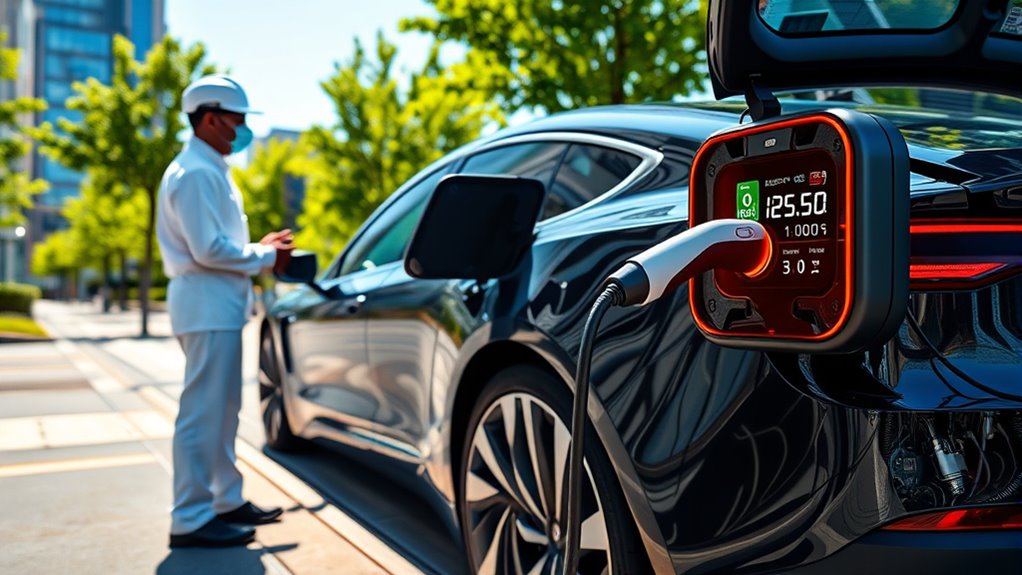
Charging and maintaining your electric car batteries is essential to guarantee ideal performance and longevity. Proper charging habits help preserve battery longevity, preventing issues like capacity loss over time. Use the right charger and follow manufacturer guidelines to avoid overcharging or deep discharges. As you rely on a growing charging infrastructure, plan your routes around accessible charging stations to ensure you’re never stranded. Regularly monitor your battery’s health through vehicle diagnostics or apps provided by manufacturers. Keep the battery cool and avoid exposing it to extreme temperatures, which can degrade its performance. Maintaining your electric car properly not only extends battery life but also ensures consistent, reliable driving. With the right care, your electric vehicle will serve you well for years to come.
The Role of Power Electronics in Electric Vehicles
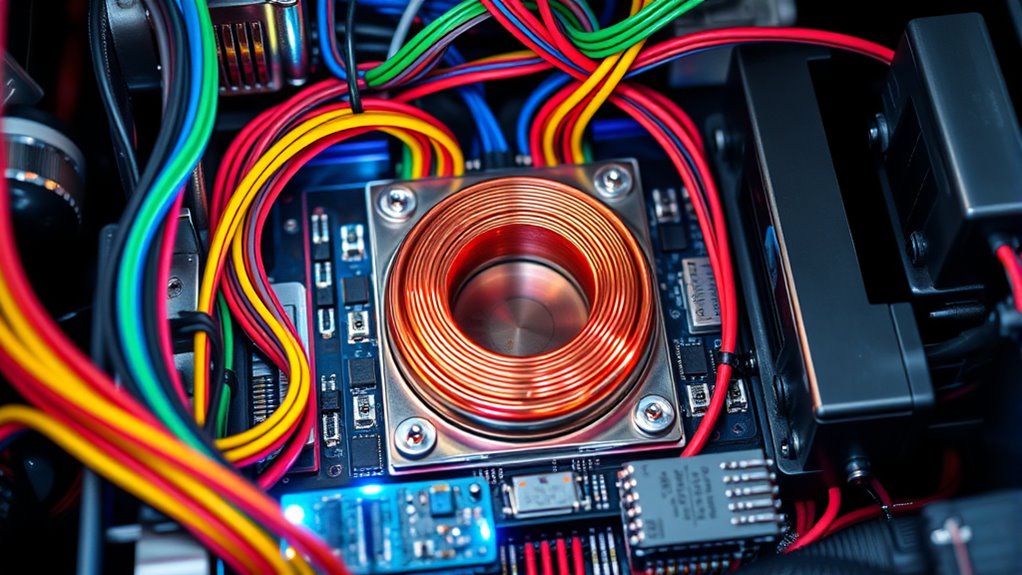
Power electronics are essential for controlling how power flows within your electric vehicle. They manage power conversion systems that turn battery energy into usable motor power, ensuring efficiency. Additionally, motor control strategies optimize performance, keeping your car running smoothly and responsively.
Power Conversion Systems
Power electronics are the critical components that enable electric vehicles to operate efficiently. They manage the flow of electricity between the battery, motor, and charging systems, ensuring smooth power conversion. Their role extends to battery management, where they monitor and regulate battery health and performance. When you accelerate or brake, power electronics adjust voltage and current to optimize efficiency and safety. Here’s how they work:
- Convert DC from the battery into AC for the motor
- Regulate voltage to match driving demands
- Control power flow during charging and discharging
- Protect the system through thermal and overcurrent safeguards
Motor Control Strategies
Motor control strategies are essential for managing how your electric vehicle’s motor responds to driving inputs and guarantees smooth operation. One key method is pulse width modulation (PWM), which adjusts the power delivered to the motor by rapidly switching the voltage on and off. This technique helps control motor speed and torque efficiently. Another advanced strategy is field oriented control (FOC), which aligns the magnetic fields within the motor for precise torque and speed regulation. FOC enables smoother acceleration, better efficiency, and improved responsiveness, especially at lower speeds. Together, PWM and FOC optimize motor performance, reduce energy consumption, and enhance the driving experience. Power electronics use these strategies to seamlessly manage motor functions, ensuring your electric vehicle runs smoothly and efficiently under various driving conditions.
Regenerative Braking and Energy Recovery
When you brake in an electric car, the vehicle doesn’t just stop; it actively recovers energy through regenerative braking. This process captures braking energy and converts it into electrical energy, which is stored in the battery for later use. Here’s how it works:
- The electric motor switches to generator mode during braking.
- The motor slows the wheels down, converting kinetic energy into electrical energy.
- This electrical energy is directed back into the battery for energy recovery.
- As a result, your car gains efficiency by reusing braking energy instead of wasting it as heat.
This system reduces energy loss, extends driving range, and improves overall efficiency. Regenerative braking is a key innovation that helps electric cars make the most of every bit of braking energy.
Advantages of Electric Drive Systems

The energy recovery from regenerative braking highlights one of the key benefits of electric drive systems: their efficiency. These systems are simpler, with fewer moving parts than traditional engines, which means less maintenance and lower costs over time. You’ll notice significant cost savings on fuel, since electric motors are cheaper to operate and require less upkeep. Plus, electric drive systems produce zero tailpipe emissions, offering clear environmental benefits by reducing pollution and your carbon footprint. They also deliver instant torque, providing a smooth and responsive driving experience. Overall, these advantages make electric drive systems not just more economical, but also more environmentally friendly, aligning with both your savings goals and your commitment to sustainability.
Frequently Asked Questions
How Long Do Electric Car Batteries Typically Last Before Needing Replacement?
Your electric car’s battery typically lasts between 8 to 15 years, depending on usage and maintenance. Battery longevity is improving with advances in technology, often providing around 100,000 to 200,000 miles of driving. When it’s time for replacement, costs can range from $5,000 to $15,000, though warranties often cover many years. Proper care and charging habits can extend your battery’s lifespan, saving you money in the long run.
What Safety Features Protect Batteries From Overheating or Damage?
You’re protected by advanced safety features like battery insulation and thermal management systems. Battery insulation prevents heat transfer that could cause overheating, while thermal management actively controls the battery’s temperature, preventing damage and fires. These systems work together to guarantee your electric car’s battery stays within safe temperature ranges, reducing risks of overheating or damage. As a result, your vehicle remains safe, reliable, and efficient during daily use.
How Do Temperature Changes Affect Electric Vehicle Performance?
When temperatures change, your electric vehicle’s performance can take a hit; it’s a double-edged sword. Extreme heat or cold affects battery efficiency and can reduce range. Thanks to thermal management systems, your EV adapts to climate variations, maintaining ideal performance. To keep your car running smoothly, climate adaptation is key. Proper thermal regulation ensures you get the best out of your EV, no matter the weather outside.
Are There Different Types of Electric Motors Used in EVS?
Yes, there are different types of motors used in EVs, such as induction, permanent magnet, and brushed DC motors. Each type offers unique advantages for motor efficiency, power, and cost. For example, permanent magnet motors are highly efficient and compact, making them popular in many electric cars. Understanding the different types of motors helps you appreciate how they optimize performance and energy use in electric vehicles.
What Are the Environmental Impacts of Manufacturing and Disposing of EV Batteries?
You should know that manufacturing and disposing of EV batteries impact the environment. Mining for materials like lithium and cobalt can harm ecosystems and deplete resources. When batteries are discarded, toxic chemicals can leak, polluting soil and water. However, you can help by supporting battery recycling initiatives, which reduce mining demand and minimize environmental harm. Proper disposal and recycling are essential for making EVs more sustainable and eco-friendly.
Conclusion
Now that you understand how electric cars breathe life into movement, you’re like a conductor guiding a symphony of batteries and motors. Their dance transforms stored energy into a powerful melody of motion, with each component playing its part. As you step into this world, you hold the key to a cleaner, greener future—driving not just a car, but a revolution on wheels. Embrace the charge, and let innovation steer your journey forward.