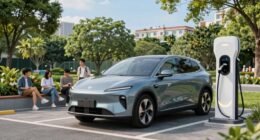
Electric cars have a fascinating history that dates back to the early 1900s, when inventors created quiet, clean alternatives to gas-powered vehicles. Their popularity grew briefly before gas engines took over due to longer ranges and infrastructure. The electric revival started in the 1960s and 70s, gaining momentum with battery tech and sustainability concerns. Today, Tesla and other innovators are transforming electric cars into powerful, stylish options—if you continue exploring, you’ll see how far they’ve come.
Key Takeaways
- Electric cars originated in the early 19th century and were among the first motor vehicles available to consumers.
- Their popularity declined mid-20th century due to gasoline engines’ longer range and widespread infrastructure.
- Interest revived in the 1960s-70s amid pollution concerns, leading to renewed development and government incentives.
- Advances in battery technology, especially lithium-ion, have significantly improved electric vehicle performance and range.
- Tesla revolutionized the industry with long-range, high-performance electric cars, establishing a new standard for modern EVs.

ChargePoint HomeFlex Level 2 EV Charger J1772 – Fast Smart Battery Power Charging at Home for Electric Automobile Vehicles- Hardwired for Electric Car
Charge With Confidence: ChargePoint builds reliable, flexible EV charging stations for home, business, and fleets. Get 24/7 support…
As an affiliate, we earn on qualifying purchases.
As an affiliate, we earn on qualifying purchases.
Early Beginnings and the First Electric Car Models

Electric cars date back to the early 19th century when inventors began experimenting with electric propulsion. During this period, automotive design focused on simple, lightweight structures to maximize battery efficiency. The earliest models, like Thomas Parker’s 1884 electric carriage, showcased compact designs suited for city use. Charging infrastructure was virtually nonexistent, which limited their practicality. Instead, inventors relied on basic charging methods, often manually connecting batteries to power sources. These early models demonstrated the potential of electric propulsion but faced challenges in range and speed. Despite these limitations, they sparked interest in electric mobility. The focus was on creating functional, efficient vehicles, setting the foundation for future innovations in automotive design and charging solutions that would eventually shape the industry.

Behaviour of Lithium-Ion Batteries in Electric Vehicles: Battery Health, Performance, Safety, and Cost (Green Energy and Technology)
As an affiliate, we earn on qualifying purchases.
As an affiliate, we earn on qualifying purchases.
Electric Vehicles’ Popularity in the Early 20th Century

As the 20th century unfolded, interest in electric vehicles surged, driven by advancements in battery technology and growing concerns over air pollution. During this period, electric cars gained popularity in various electric vehicle markets, especially in cities where their quiet operation and ease of use appealed to urban drivers. Manufacturers experimented with innovations like wireless charging, making recharging more convenient and boosting adoption. Sales peaked around 1910, and electric vehicles were considered practical alternatives to gasoline cars, especially for short trips. Their clean, quiet operation made them attractive, although limited range and high costs kept them from dominating the market. Still, the early 20th century marked a pivotal time when electric cars captured significant attention and investment before their decline.
![Wigoo Tesla Model S Sunshade Roof [Never Sag, Nano Ice-Crystal Coatings] 3-Gen Heat Insulation Glass Roof Sun Shade, Accessories for Tesla Model S 2020~2026, Tesla Interior Black](https://m.media-amazon.com/images/I/414namrJLmL._SL500_.jpg)
Wigoo Tesla Model S Sunshade Roof [Never Sag, Nano Ice-Crystal Coatings] 3-Gen Heat Insulation Glass Roof Sun Shade, Accessories for Tesla Model S 2020~2026, Tesla Interior Black
[Seamless Integration, Like a Glove] Wigoo Tesla Model S Glass Roof Sunshade is precisely tailored for vehicles from…
As an affiliate, we earn on qualifying purchases.
As an affiliate, we earn on qualifying purchases.
The Decline of Electric Cars and the Rise of Gasoline Power

When gasoline-powered cars gained popularity, electric vehicles faced significant challenges such as limited range and high costs. Gasoline’s convenience and expanding infrastructure helped it dominate the market. Recently, advancements have sparked a resurgence in electric cars, changing the landscape once again. Additionally, the development of energy-efficient cloud servers demonstrates a broader commitment to sustainable innovation across various industries.
Early Electric Car Challenges
Despite their early promise, electric cars faced significant hurdles that ultimately slowed their progress. One major challenge was the limited charging infrastructure, making long trips difficult and inconvenient. Without widespread charging stations, consumers hesitated to buy electric cars, fearing they wouldn’t be practical. Additionally, consumer perceptions played a vital role; many believed electric vehicles lacked power, range, and reliability compared to gasoline cars. This skepticism was fueled by the perception that electric cars were outdated or too expensive. As gasoline-powered cars became more affordable and their refueling networks expanded, public interest shifted. These obstacles created a cycle that kept electric cars on the sidelines, hindering their growth until technological advances and shifting attitudes gradually reopened the path for electric vehicle innovation. Moreover, the contrast ratio in early electric vehicle displays and instruments was often poor, which contributed to the perception of outdated technology.
Gasoline’s Market Dominance
The rise of gasoline-powered cars transformed the automotive industry, gradually overshadowing electric vehicles and establishing dominance in the market. You soon found that the gasoline market offered advantages like longer range, faster refueling, and cheaper production, making fossil fuel-powered cars more practical for everyday use. Automakers invested heavily in gasoline technology, and oil companies promoted gasoline as the fuel of choice. This shift led to a decline in electric car development, as the industry favored the convenience and power of gasoline engines. By the mid-20th century, electric cars became a niche, largely forgotten. Gasoline’s dominance reshaped transportation, cementing fossil fuel as the primary energy source for decades. This monopolization slowed electric innovation, delaying its comeback until much later.
Resurgence of Electric Vehicles
Have electric vehicles truly disappeared from the roads? Not quite. Their decline in the mid-20th century was driven by cheap gasoline and limited charging infrastructure. Today, electric cars are making a strong comeback thanks to several key factors:
- Expansion of charging infrastructure makes EVs more practical for daily use.
- Government incentives reduce upfront costs, encouraging adoption.
- Advances in battery technology increase driving range.
- Growing environmental awareness prompts consumers to choose cleaner options.
- The availability of solar-powered solutions for charging stations further supports sustainable transportation.
This resurgence is reshaping the automotive landscape. With more charging stations and supportive policies, electric vehicles are once again becoming a viable, even preferred, choice for drivers seeking sustainability and innovation.

Nexoroot EV Charger Holder Wall Mount | Heavy-Duty J-Hook for Cable Retractor, Durable Steel Hook for Indoor/Outdoor Use, Electric Vehicle Cord Organizer Accessory
Non-Slip Rubber Coating:The EV charging cable holder keeps your cable secure, protects it from damage, and helps prevent…
As an affiliate, we earn on qualifying purchases.
As an affiliate, we earn on qualifying purchases.
The Revival of Electric Vehicles in the 1960s and 1970s

During the 1960s and 1970s, interest in electric vehicles surged as concerns about pollution and fuel shortages grew. This period marked a vintage innovation phase, where automakers and inventors revisited early electric car concepts to address new challenges. You’d see a market resurgence as governments and environmental groups pushed for cleaner transportation options. Automakers experimented with small electric cars, often using existing battery technology, hoping to appeal to urban commuters and eco-conscious consumers. Although these vehicles still faced limitations like limited range and high costs, they reignited public curiosity. Their revival wasn’t just about nostalgia; it was a practical response to growing environmental awareness. This era laid the groundwork for future advancements, showing that electric cars could be a viable alternative once again. Additionally, the concept of Free Floating vehicles began to influence the development of modern electric mobility solutions. The development of battery technology during this time also contributed significantly to the potential of electric cars to become more practical and affordable, making them increasingly commercially viable. Researchers also explored renewable energy sources, aiming to power electric vehicles with cleaner energy to further reduce environmental impact.
Technological Advancements and the Modern Resurgence

Advancements in battery technology have made electric cars more efficient and reliable than ever before. Improved autonomy and connectivity features now allow you to travel farther and stay connected on the road. These innovations are driving the modern resurgence of electric vehicles and transforming how we think about transportation. Modern kitchen technology continues to evolve with smarter systems that optimize energy use and enhance user experience. Additionally, urban innovation plays a role in integrating electric vehicles into city life through improved charging infrastructure and sustainable planning.
Battery Innovation and Efficiency
Recent breakthroughs in battery technology have sparked a modern resurgence in electric vehicle (EV) adoption, making them more practical and appealing than ever before. Advances in battery chemistry have led to safer, longer-lasting cells, while increasing energy density means your EV can travel farther on a single charge. Here are four key developments:
- Use of lithium-ion batteries with improved chemistries boosts performance.
- Solid-state batteries promise higher energy density and safety.
- Fast-charging technologies reduce downtime substantially.
- Recycling innovations extend battery life and reduce environmental impact. Industry trends in battery sustainability are increasingly driving innovation and adoption. These efforts are supported by sustainable manufacturing practices, which focus on reducing environmental footprints throughout the production process.
Additionally, the integration of gears and mechanical elements inspired by steampunk design principles is starting to influence modern battery manufacturing aesthetics, blending Victorian-inspired artistry with cutting-edge technology. These innovations mean you benefit from longer ranges, quicker charges, and more reliable batteries—improving overall efficiency—bringing electric cars closer to mainstream acceptance and transforming how you think about sustainable transportation.
Autonomy and Connectivity
As battery technology improves, electric vehicles are becoming smarter and more connected, transforming the driving experience. You can now enjoy features like wireless charging, which allows you to power your car without plugging in, making charging more convenient. Autonomous driving capabilities are advancing rapidly, offering enhanced safety and reduced driver fatigue. Connectivity also means your vehicle can communicate with infrastructure, enabling vehicle-to-grid technology that allows your car to supply energy back to the power grid during peak demand. This integration not only optimizes energy use but also supports sustainable energy management. Additionally, smart grid integration enables EVs to play a vital role in balancing energy supply and demand, further increasing their environmental benefits. These technological advancements create a seamless driving environment, where your EV adapts to your needs, stays connected, and helps shape a smarter, more efficient transportation future. Moreover, vehicle-to-everything communication is paving the way for improved traffic management and reduced congestion, making driving safer and more efficient for everyone. As the adoption of electric vehicles continues to grow, the development of standardized communication protocols ensures seamless interoperability between different brands and systems, enhancing user experience and infrastructure compatibility. Furthermore, AI-powered vehicle systems are beginning to anticipate driver preferences and adjust settings proactively, elevating comfort and convenience on the road. The ongoing innovations are also influenced by the evolution of battery recycling and sustainability efforts, which aim to reduce environmental impact and promote a circular economy for EV components.
The Role of Tesla and the Reinvention of Electric Cars

Tesla has revolutionized the electric vehicle industry by proving that electric cars can be powerful, desirable, and commercially successful. This Tesla innovation has led to significant market disruption, changing perceptions and expectations worldwide. You should know that Tesla’s breakthrough ideas, like long-range batteries and advanced autopilot, set new standards. Additionally, Tesla’s emphasis on sticking wall decor and innovative design has contributed to their widespread appeal. Their approach to integrating outdoor tech features into vehicle design has further elevated their status in the industry. Moreover, Tesla’s focus on battery technology has been fundamental in pushing electric cars toward mainstream adoption. Recognizing the importance of vetted information in this rapidly evolving field, Tesla continues to lead with research and development efforts.
Challenges and Breakthroughs in Battery Technology

Advances in battery technology are central to overcoming the limitations of electric vehicles, but developing high-capacity, durable, and fast-charging batteries remains a significant challenge. Improving battery chemistry is key to enhancing energy density, allowing batteries to store more power in less space. Researchers focus on new materials, such as solid electrolytes and lithium-ion innovations, to boost performance and safety. Higher energy density means longer driving ranges and shorter charging times, essential for widespread adoption. However, balancing energy density with longevity and safety continues to be complex. Breakthroughs like solid-state batteries and advanced cathode materials show promise, but scaling these innovations for mass production takes time. Overcoming these challenges is fundamental to making electric cars more practical, reliable, and appealing to consumers.
Electric Cars and the Push for Sustainable Transportation

Electric cars have become a cornerstone of the global effort to create sustainable transportation systems. They help reduce emissions and dependence on fossil fuels. To support this shift, you should consider:
- Integrating renewable energy sources like solar and wind into charging infrastructure.
- Promoting urban planning that prioritizes EV-friendly roads and accessible charging stations.
- Encouraging policies that incentivize the adoption of electric vehicles.
- Designing cities that reduce traffic congestion and support efficient EV use.
The Future of Electric Vehicles and Emerging Trends

Advancements in battery technology are making electric vehicles more efficient and affordable than ever before. At the same time, autonomous vehicle integration promises to transform how you drive and think about transportation. Together, these trends signal a future where electric cars become smarter, safer, and more accessible for everyone.
Battery Technology Advancements
As researchers continue to push the boundaries of battery technology, the future of electric vehicles looks increasingly promising. Breakthroughs in battery chemistry, such as solid-state batteries, promise higher energy density and faster charging times. These innovations will reduce range anxiety and make EVs more practical for daily use. Improved charging infrastructure, including ultra-fast chargers, will further decrease charging times and enhance convenience. To stay ahead, focus on:
- Developing safer, more efficient battery chemistries
- Expanding charging infrastructure nationwide
- Increasing battery lifespan and recyclability
- Integrating smart charging systems for grid stability
These advancements will transform the EV landscape, making electric cars more accessible, reliable, and sustainable for everyone.
Autonomous Vehicle Integration
Autonomous vehicle integration is rapidly transforming the future of transportation by combining self-driving technology with electric powertrains. You’ll see driverless technology become more prevalent as automakers develop smarter, safer, and more efficient vehicles. This integration allows electric cars to operate autonomously, reducing human error and enhancing safety. As you travel, autonomous vehicle integration means fewer traffic accidents, less congestion, and improved mobility for everyone, especially those unable to drive. Companies are investing heavily in driverless technology, pushing towards fully autonomous systems that can navigate complex environments. With this trend, electric vehicles won’t just be clean and quiet; they’ll also be intelligent, capable of making real-time decisions to optimize routes and energy use. The future of electric cars is undeniably linked to autonomous vehicle integration, shaping a smarter, safer transportation landscape.
Electric Cars in the Context of Global Environmental Goals

Electric cars play a crucial role in achieving global environmental goals by reducing greenhouse gas emissions and decreasing reliance on fossil fuels. You can accelerate this progress by focusing on key factors:
- Adopting renewable energy sources to power electric vehicles, guaranteeing they run cleaner and greener.
- Implementing policy incentives like tax credits and rebates to encourage EV adoption.
- Supporting infrastructure development, such as widespread charging stations, to make EV ownership more practical.
- Setting emission reduction targets that align with international climate agreements to ensure collective progress. By prioritizing renewable energy and policy incentives, you help drive the shift toward sustainable transportation, reducing pollution and combating climate change. Your choices can make a significant impact on achieving these global environmental goals.
Frequently Asked Questions
How Did Early Electric Cars Influence Modern Automotive Design?
Early electric cars influenced modern automotive design by pioneering advancements in battery technology, which improved efficiency and range. They also emphasized aerodynamic design to reduce drag and boost performance. You can see these influences today in electric vehicles with sleek shapes and powerful, long-lasting batteries. These innovations laid the foundation for sustainable, high-performance cars, making electric mobility more practical and appealing for consumers now and in the future.
What Were the Main Technological Barriers to Electric Car Adoption in the 20TH Century?
You faced significant barriers like battery limitations, which meant limited range and long charging times, making electric cars less practical. Additionally, the lack of charging infrastructure discouraged adoption, as you couldn’t easily recharge vehicles away from home. These technological hurdles kept electric cars from gaining widespread popularity in the 20th century, despite their early promise. It wasn’t until advancements in battery tech and infrastructure that electric vehicles started to make a comeback.
How Did Government Policies Impact the Rise and Fall of Electric Vehicles Historically?
You’ll find that government policies substantially shaped electric vehicle history, with incentives boosting early adoption, like California’s 1990s zero-emission mandates. In 2009, federal tax credits encouraged buyers, but regulatory standards and fluctuating support caused ebbs and flows in EV popularity. When policies favor electric cars, sales soar; when they weaken, interest declines. Overall, government actions directly influenced the rise, fall, and resurgence of electric vehicles over the decades.
What Role Did Oil Prices Play in the Popularity of Electric Versus Gasoline Cars?
Oil prices directly influence your car choices by highlighting oil dependence and fuel economy. When oil prices spike, electric vehicles become more attractive because they offer better fuel economy and reduce reliance on volatile oil markets. Conversely, low oil prices make gasoline cars cheaper to operate, decreasing the appeal of electric cars. Your decision often hinges on how oil prices fluctuate, affecting the overall popularity of electric versus gasoline vehicles.
How Has Consumer Perception of Electric Cars Evolved Over the Decades?
You’ve probably noticed how perceptions of electric cars have shifted from skepticism to enthusiasm. Decades ago, many saw them as impractical relics, but now environmental awareness drives demand. For example, the rise of Tesla transformed electric cars into symbols of innovation. Today, people increasingly see EVs as essential for a sustainable future, overcoming past doubts and embracing cleaner, smarter transportation options.
Conclusion
Imagine you’re holding a tiny spark that could ignite a revolution—just like the early inventors did over a century ago. Electric cars have come a long way from fragile, early models to Tesla’s sleek, powerful vehicles. As you embrace this shift, remember it’s not just about technology, but about fueling a sustainable future. Your choice to drive electric today is like planting a seed that can grow into a cleaner, greener world tomorrow.