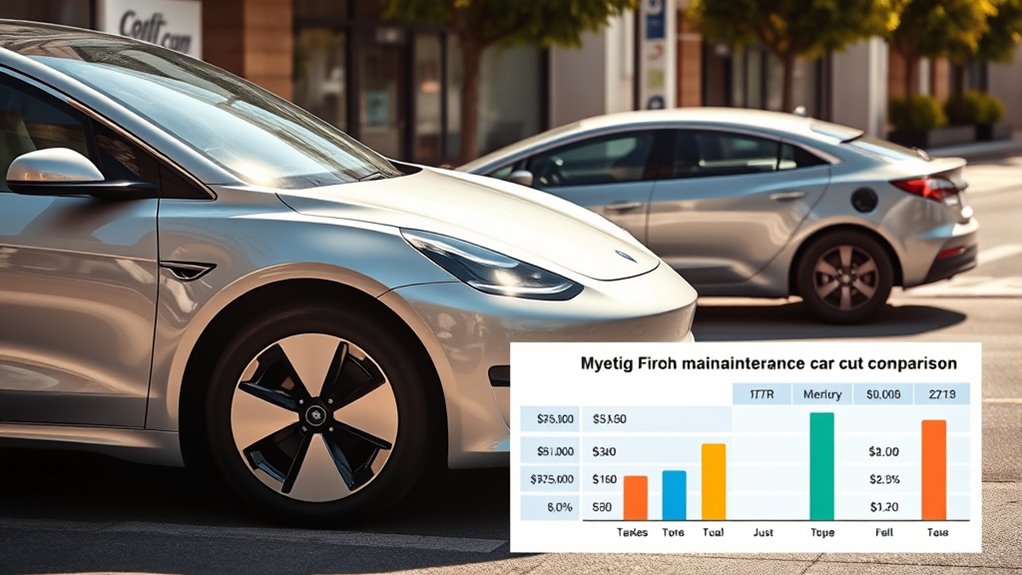

Over five years, you’ll find that electric cars cost less to maintain than gas-powered ones because they have fewer moving parts and require less routine service. EVs don’t need oil changes, spark plugs, or exhaust repairs, and regenerative braking reduces brake wear. Although battery replacement can be pricey, costs are dropping as technology improves. Overall, EVs offer more savings and less hassle, and exploring further reveals how these benefits continue to grow.
Key Takeaways
- EVs require less routine maintenance, eliminating oil changes, spark plugs, and exhaust system repairs.
- Battery lifespan typically ranges from 8 to 15 years, with decreasing replacement costs and warranties covering up to 8 years.
- Gas cars incur higher maintenance costs due to regular oil changes, tune-ups, and fluid replacements.
- EVs benefit from regenerative braking, reducing brake wear and associated maintenance expenses.
- Overall, EV maintenance costs over 5 years are lower, mainly due to fewer scheduled services and lower parts replacement needs.
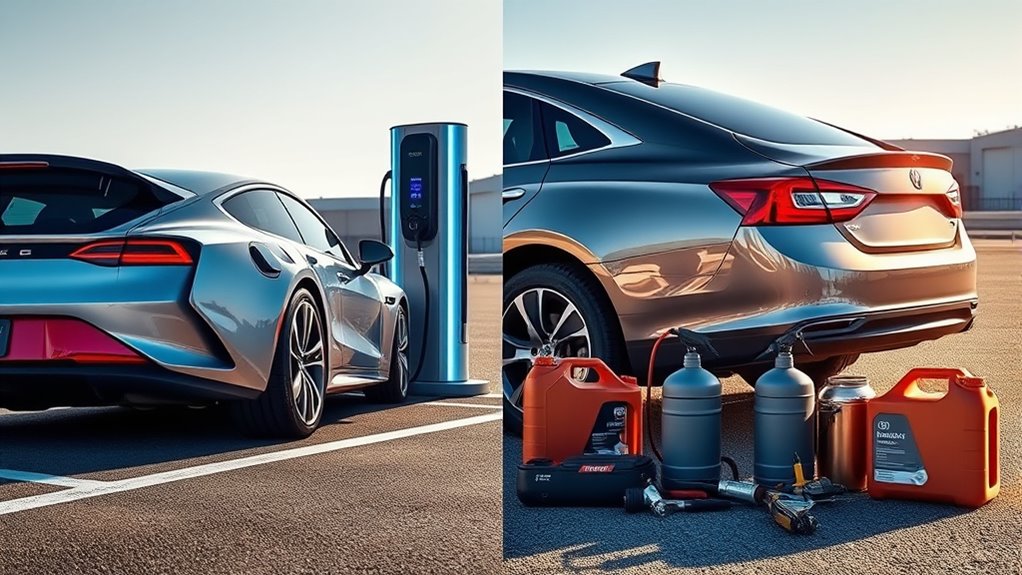
Have you ever wondered how electric cars compare to traditional gas-powered vehicles? When it comes to maintenance costs over five years, there are several factors to think about, and the battery lifespan plays a significant role. Electric vehicles (EVs) generally require less routine maintenance since they lack many parts that wear out in gas cars, like oil filters, spark plugs, and exhaust systems. However, the battery’s longevity is essential because it’s one of the most expensive components to replace if it fails prematurely. Most modern EV batteries are designed to last between 8 to 15 years, and warranties often cover around 8 years or 100,000 miles, giving you some peace of mind regarding long-term costs. Still, replacing a battery can be costly, though prices are gradually decreasing as technology advances. Additionally, the cost of replacing the battery is expected to decline further as manufacturing processes improve and economies of scale are achieved.
Electric vehicle batteries typically last 8 to 15 years, with warranties covering around 8 years or 100,000 miles.
Another key aspect influencing maintenance costs is fueling infrastructure. Electric cars benefit from a growing network of charging stations, making it easier and more convenient to keep your vehicle powered without frequent visits to a gas station. Home charging options also add convenience, allowing you to plug in overnight and start each day with a full battery. In contrast, gas cars rely on a widespread fueling infrastructure that’s been established for over a century. This means you can find a gas station nearly anywhere, but fuel prices fluctuate and can add up over time. While charging an EV at home can be cheaper than filling up a gas tank, the initial investment in a home charger might be a consideration.
Over five years, the maintenance costs for EVs tend to be lower overall. You won’t need oil changes or tune-ups as often, and brake wear is reduced thanks to regenerative braking systems. In comparison, gas vehicles require regular oil changes, fluid replacements, and more frequent brake servicing, which can add up. The cost difference is further influenced by the availability and accessibility of fueling infrastructure. If you’re in an area with an expanding network of charging stations, the convenience and lower maintenance needs of an EV can translate into significant savings. Conversely, if charging options are limited, you might face higher costs or inconvenience, which could impact your decision. As the electric vehicle market grows, the availability of charging stations continues to improve, making EV ownership even more practical.
Ultimately, while the battery lifespan and fueling infrastructure are critical factors in evaluating maintenance expenses, EVs generally offer lower costs over five years. The initial investment might be higher, but the reduced need for repairs and fuel savings often make electric cars more economical in the long run. As technology continues to improve and charging infrastructure expands, these advantages are likely to grow, making EVs an increasingly attractive option for budget-conscious drivers.
Frequently Asked Questions
How Do Battery Replacements Impact Long-Term Electric Car Costs?
Battery replacements can substantially impact your long-term electric car costs. As battery degradation occurs over time, you might need to replace the battery, which can be costly. The replacement frequency depends on usage and climate, but newer batteries last longer. While this adds to expenses, the overall savings on fuel and maintenance often balance the costs. Planning for potential battery replacements helps you better manage your long-term electric vehicle budget.
Are There Significant Insurance Differences Between Electric and Gas Vehicles?
You’ll find insurance premiums for electric cars often start higher because insurers view them as higher risk due to factors like battery costs and repair complexity. However, risk assessment can vary based on your driving habits and location. Over time, some insurers may offer discounts for electric vehicles, so it’s worth shopping around. Overall, the insurance differences aren’t huge but do depend on individual circumstances and the insurer’s risk assessment.
What Are the Environmental Costs of Manufacturing Electric Versus Gas Cars?
Manufacturing electric cars is like planting a tree—initially intense but beneficial long-term. You’ll find that their emission lifecycle starts higher due to battery production, especially with mining and assembly. However, battery recycling reduces environmental impact over time. Gas cars, while less resource-intensive to produce, emit more pollutants throughout their lifecycle. Ultimately, electric vehicles tend to be greener, with manufacturing impacts offset by cleaner operation and recycling efforts.
How Do Charging Infrastructure Costs Influence Overall Electric Car Expenses?
Charging station costs and infrastructure expansion substantially impact your overall electric car expenses. When you factor in installing home chargers or relying on public charging networks, these costs add up. As infrastructure expands, charging becomes more accessible and affordable, reducing your long-term expenses. However, initial investments in charging stations can be high, so consider how these costs influence your total ownership costs over time.
Do Government Incentives Significantly Affect the Total Ownership Cost?
Government incentives and tax credits can substantially lower your total ownership costs. When you take advantage of these programs, you reduce the upfront price of your electric vehicle, making it more affordable. This means you’ll spend less over time on purchase costs and may benefit from additional savings through rebates or reduced taxes. Overall, these incentives can make electric cars a more economical choice compared to gas-powered vehicles.
Conclusion
Over five years, electric cars can save you around $4,000 on maintenance costs compared to gas cars. Did you know that electric vehicles have 60% fewer moving parts? That means fewer repairs and less hassle for you. If you’re looking to cut expenses and enjoy a smoother ride, switching to an electric car might be your best move. With significant savings and fewer visits to the mechanic, you’ll appreciate the difference every mile.