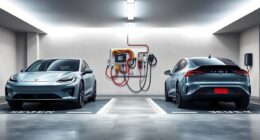
With an EV, your daily routine involves planning charging stops, often at home or public stations, especially for longer trips, since you can’t refuel quickly like a gas car. You’ll notice a quieter, smoother drive and need to balance charging around errands and commutes. In contrast, a gas car lets you refuel in minutes, offering more flexibility but less eco-friendly. Curious about how these routines impact your day? Keep exploring to find out more.
Key Takeaways
- EV owners plan charging stops around home, work, or public stations, while gas car users refuel quickly at any gas station.
- Daily charging routines for EVs can add time and require route planning, unlike the immediate refueling of gas vehicles.
- EV driving provides a quiet, smooth experience suited for city commuting, whereas gas cars depend on fuel efficiency and engine noise.
- Charging station availability influences trip planning and daily errands for EV users, while gas stations offer widespread, quick refueling options.
- Urban driving benefits EV regenerative braking efficiency, while highway travel favors gas cars’ typically better fuel economy.

Spending a day with an electric vehicle (EV) versus a gas car reveals immediate differences in daily routines and driving experiences. When you start your morning, you might notice that charging your EV is a key part of your day, especially if you don’t have a dedicated charger at home. Unlike refueling a gas car, which takes only a few minutes at a gas station, plugging in your EV involves connecting to a charging station—either at home or nearby. If you rely on public charging stations, you’ll find that they vary in speed; some provide rapid charging, allowing you to top off your battery quickly, while others take longer. Planning your trips around charging station locations becomes part of your routine, especially for longer drives. On the other hand, your gas car’s fuel efficiency plays a significant role in your daily planning. With a gas vehicle, you might simply fill up before a long trip or when the tank runs low, confident that a quick stop at the pump will keep you going for hundreds of miles.
Throughout the day, you’ll experience the differences in driving comfort and efficiency. EVs are known for their smooth, quiet operation, so your commute feels almost silent, and you might notice that regenerative braking helps extend your range. Since charging stations are often strategically placed in urban areas, shopping centers, and along highways, you may find it easier to recharge during errands or breaks, making your day more flexible. Fuel efficiency in gas cars, however, depends heavily on your driving habits—city driving consumes more fuel, while highway cruising tends to be more economical. This means your routine can vary depending on how much stop-and-go traffic you face versus long stretches of open road.
Frequently Asked Questions
How Do EV Charging Times Vary by Climate?
You’ll notice charging speed variations based on climate impact; colder weather can slow down your EV’s charging process because batteries struggle in low temperatures. Conversely, warmer climates usually allow faster charging, as batteries operate more efficiently. In extreme cold, you might need extra time to fully charge, so plan accordingly. Overall, climate impacts charging times, so understanding these variations helps you better manage your daily routine.
What’s the Cost Difference in Maintenance Over a Year?
You’ll likely spend less on maintenance costs with an EV than a gas car, mainly because EVs have fewer moving parts and no oil changes. Over a year, your main expenses might include tire rotations and brake checks, but battery replacement costs are rare and usually occur after many years. This means your overall maintenance costs stay lower, saving you money in the long run.
Are EVS Suitable for Long Road Trips?
Yes, EVs are suitable for long road trips, especially considering that over 80% of charging occurs at home. Many models now offer battery ranges exceeding 300 miles, making travel convenient. Plus, the growing network of charging stations along highways means you can easily find quick stops to recharge. With proper planning, you’ll enjoy a smooth, eco-friendly journey without the worry of running out of power.
How Does Traffic Congestion Affect EV Battery Life?
Traffic congestion can negatively impact your EV battery life because idling and stop-and-go driving increase battery degradation over time. When you’re stuck in traffic, your battery works harder, which accelerates wear. Frequent exposure to these traffic patterns reduces overall range and lifespan. To protect your battery, try to avoid heavy traffic when possible, and maintain steady driving habits to minimize unnecessary strain on your EV.
What Are the Insurance Implications for EV Owners?
You’ll likely see insurance premiums for your EV differ from traditional cars, often due to higher repair costs and specialized parts. Coverage considerations include ensuring your policy covers EV-specific components like batteries and charging equipment. It’s smart to compare providers, as some offer discounts for safety features or home charging setups. Staying informed helps you balance affordability with complete coverage, giving you peace of mind on the road.
Conclusion
Imagine waking up in a world where your EV charges itself with a whisper, while your gas car guzzles gallons like a thirsty beast. Your daily routine transforms from a frantic pit stop to a seamless glide, leaving pollution and stress in the dust. Switch to an EV, and you’ll feel like you’re driving into the future—faster, cleaner, and freer—leaving behind the chaos of gas-powered chaos forever. The choice is crystal clear: embrace the revolution today!