
When comparing the longevity of EV batteries and gas engines, EV batteries typically last between 8 and 15 years, gradually degrading over time. Gas engines can often run for over 200,000 miles, sometimes lasting longer in years. While batteries may eventually need costly replacements, ongoing advances in technology and recycling help extend their life and reduce environmental impacts. To learn more about how these components truly compare, keep exploring further.

Get backup power and energy gear delivered free — and shop member deals
- Fast, free delivery on millions of items
- Access to Prime Big Deal Days deals on October 6–7
- Prime Video, Amazon Music and more included
Key Takeaways
- EV batteries typically last 8 to 15 years, with gradual degradation, whereas gas engines can often operate for 200,000 miles or more.
- Technological advancements are improving EV battery durability, aiming to match or surpass the longevity of traditional gas engines.
- Proper maintenance and care can extend EV battery life, similar to how routine maintenance prolongs engine lifespan.
- Recycling innovations help maximize battery lifespan and sustainability, potentially increasing effective longevity beyond initial use.
- Gas engines generally have a proven longer lifespan in terms of years and miles, but EV batteries are rapidly closing the gap with ongoing improvements.
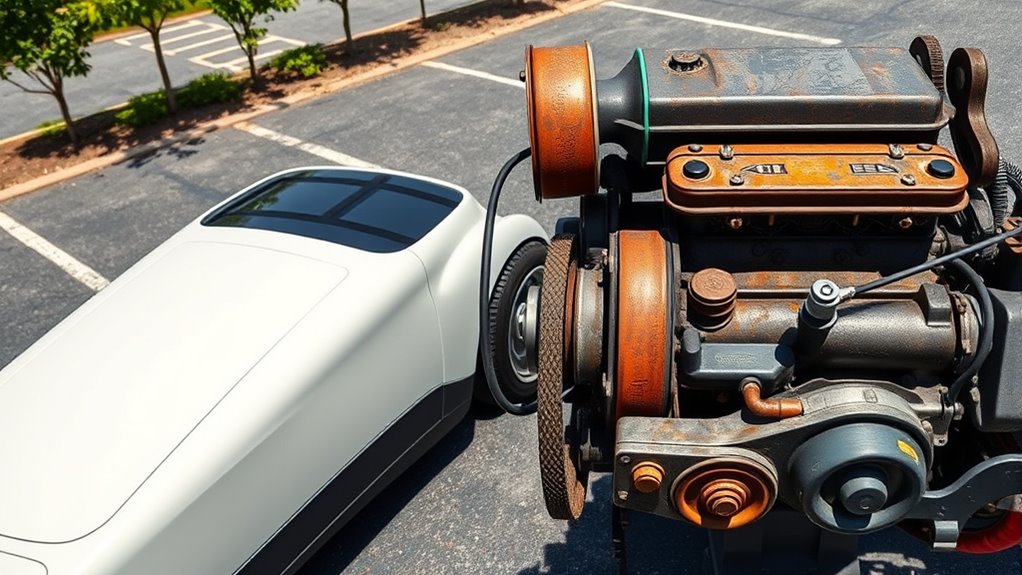
When it comes to longevity, many wonder whether electric vehicle (EV) batteries or traditional gas engines stand the test of time. If you’re considering an EV, understanding how long its battery lasts—and what happens afterward—is essential. EV batteries typically have a lifespan of around 8 to 15 years, depending on usage, climate, and maintenance habits. While this may seem shorter than the lifespan of a gas engine, which can often run for 200,000 miles or more, EV batteries are designed to gradually degrade over time, rather than suddenly failing. When a battery’s performance diminishes considerably, many manufacturers offer warranties that cover at least 8 years, giving you some reassurance about long-term reliability.
EV batteries last 8–15 years, gradually degrading, with warranties providing long-term reassurance.
One key aspect that influences the overall longevity of EV batteries is the process of battery recycling. As batteries reach the end of their life cycle, recycling becomes indispensable for minimizing environmental impact and reclaiming valuable materials like lithium, cobalt, and nickel. Innovations in battery recycling technology are making it more efficient and sustainable, which not only reduces waste but also helps lower the costs associated with manufacturing new batteries. As a result, the industry is moving toward a circular economy that extends the usefulness of battery components and reduces the need for frequent replacements.
Maintenance costs also play a critical role in determining how long an EV battery remains functional. Compared to gas engines, EVs generally have lower maintenance costs because they have fewer moving parts and don’t require oil changes, spark plugs, or complex transmission repairs. Proper care—such as avoiding extreme temperatures, not overcharging, and following manufacturer recommendations—can help extend the life of your EV battery. Regular check-ups and software updates can also optimize performance and detect potential issues early, saving you money in the long run.
While gas engines tend to be more straightforward to repair and often have a longer proven lifespan, they also come with higher ongoing maintenance costs, including oil changes, filter replacements, and more frequent repairs due to moving parts wearing out. EV batteries, on the other hand, offer less maintenance but may eventually need replacement or refurbishment, which can be costly. However, ongoing advancements in battery technology and recycling processes are expected to improve durability and reduce costs, making EV batteries increasingly competitive with traditional engines over the long haul. Additionally, the development of natural floating pools and other eco-friendly backyard features reflect the industry’s move toward sustainable practices that can also be integrated into EV ownership, emphasizing long-term environmental benefits.
Ultimately, whether EV batteries or gas engines last longer depends on factors like usage patterns, maintenance, and technological developments. As the industry evolves, EV batteries are becoming more durable and sustainable, promising a longer and more environmentally friendly lifespan.
Frequently Asked Questions
How Do Climate Conditions Affect EV Battery Lifespan?
Climate conditions markedly affect your EV battery lifespan. Extreme temperature effects, like very hot or cold weather, can accelerate battery degradation, reducing overall longevity. Humidity impact also plays a role; high humidity can cause corrosion and damage internal components. To protect your battery, avoid exposing your EV to extreme temperatures and high humidity conditions whenever possible, and consider parking in shaded or sheltered areas to prolong battery health.
Can EV Batteries Be Recycled Effectively After Their Lifespan?
Think of EV batteries as treasure chests that can be refilled rather than discarded. You can recycle EV batteries effectively, turning them into new batteries through advanced battery recycling processes. This reduces environmental impact by preventing toxic waste and conserving resources. Proper battery recycling keeps valuable materials in circulation, ensuring you’re helping protect the planet while maximizing the lifespan of these powerful energy sources.
What Maintenance Is Required to Extend EV Battery Life?
To extend your EV battery life, focus on proper maintenance. Keep an eye on battery cooling systems to prevent overheating, which can degrade the battery. Adopt good charging habits by avoiding frequent fast charging and keeping the battery charge between 20% and 80%. Regularly check for software updates and make sure your vehicle’s cooling system functions properly. These steps help maximize your battery’s longevity and overall performance.
How Does Driving Style Impact Battery Longevity?
Like a careful gardener tending delicate blooms, your driving habits directly influence your battery’s lifespan. Smooth acceleration and gentle braking reduce strain, conserving battery life—think of it as a steady hand preserving fragile petals. Aggressive driving, on the other hand, accelerates wear. To maximize battery longevity, adopt driving habits that prioritize battery conservation, avoiding rapid acceleration and hard braking, and you’ll keep your EV running efficiently longer, much like nurturing a resilient, thriving garden.
Are There Warranty Differences Between EV Batteries and Gas Engines?
You’ll find that warranty coverage for EV batteries typically lasts longer than that for gas engines, often around 8 years or 100,000 miles, depending on the manufacturer policies. Manufacturers usually offer specific warranty coverage to protect against battery deterioration, while gas engines have different warranty terms. It’s important to review each vehicle’s warranty details to understand what’s covered, but overall, EV warranties tend to be more all-encompassing for battery longevity.
Conclusion
In the race between EV batteries and gas engines, batteries are like a resilient marathon runner, slowly but steadily pushing forward with proper care. While gas engines may have a shorter lifespan, EV batteries are improving and can last many years with proper maintenance. So, if you’re looking for a reliable partner on your journey, trust that today’s EV batteries are becoming the steady, enduring engine that keeps you moving forward, mile after mile.
Fall Picks
fall essentials
As an affiliate, we earn on qualifying purchases.