
In 2026, expect major upgrades in EV batteries, with solid-state tech boosting energy density and safety, while charging infrastructure expands considerably for faster, more reliable services. Smart, renewable-powered chargers and vehicle-to-grid systems make recharging easier and more sustainable. Longer ranges and quick-charging options will make EV ownership more practical and affordable. If you want to see how these innovations will shape your electric driving experience, stay tuned for further insights.
Open a free Amazon Business account
Business pricing, bulk buying and tax-exempt orders.
As an affiliate, we earn on qualifying purchases.
Key Takeaways
- Breakthroughs in solid-state batteries boost EV range, safety, and lifespan.
- Expansion of ultra-fast charging networks reduces recharge times to under 15 minutes.
- Integration of renewable energy and vehicle-to-grid tech enhances sustainability and grid stability.
- Enhanced charging infrastructure makes EVs more convenient for long trips and daily use.
- Industry advancements foster more affordable, reliable, and eco-friendly electric mobility in 2026.
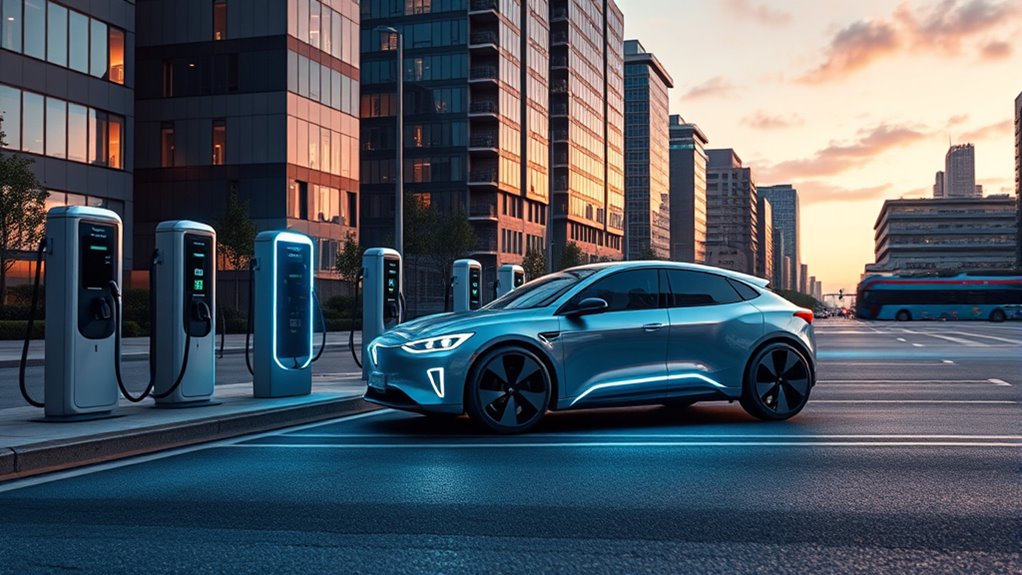
As electric vehicles (EVs) continue to evolve rapidly, 2026 is shaping up to be a pivotal year for the industry. You’ll notice significant advances in battery innovations, which are driving better performance, longer ranges, and faster charging times. Manufacturers are pushing the limits of solid-state batteries, promising higher energy density and improved safety. These new battery chemistries reduce charging times dramatically, so you won’t have to wait hours at charging stations anymore. Instead, you’ll see EVs capable of reaching 80% charge in under 15 minutes, making long trips and daily commutes more convenient. This leap in battery technology isn’t just about speed; it’s also about durability. Expect batteries that last longer and withstand more charge cycles, which means fewer replacements and lower total ownership costs for you.
Battery tech in 2026 enables faster charging, longer lasting, and more durable EVs with higher safety standards.
Alongside battery innovations, the charging infrastructure landscape is transforming to support this new era of EVs. More charging stations are popping up in cities, highways, and even rural areas, making charging more accessible than ever before. Fast-charging networks are expanding rapidly, with some stations offering ultra-fast chargers that can deliver hundreds of miles of range in just a few minutes. You’ll find that charging at home becomes even more seamless with the advent of smart chargers that optimize energy use and integrate with your home’s energy system. Public chargers are becoming more reliable and user-friendly, reducing wait times and simplifying payment processes. This improved infrastructure means you’ll spend less time planning your routes around charging stations and more time enjoying your drive.
Moreover, the integration of renewable energy sources into charging stations is gaining momentum. Solar-powered chargers and energy storage systems are making charging more sustainable and environmentally friendly. As a result, your EV’s environmental impact diminishes further, aligning with broader efforts to combat climate change. These advancements in charging infrastructure also support vehicle-to-grid technology, allowing your EV to feed excess energy back into the grid during peak demand times. This not only helps stabilize the power grid but can also provide you with additional financial benefits.
In addition, innovative European cloud servers are increasingly supporting the infrastructure needed for smart grid management and data integration, enhancing the efficiency and security of EV charging networks. In essence, 2026 will see a convergence of breakthroughs in both battery tech and charging infrastructure. You’ll experience vehicles that go farther on a single charge, charge faster, and are easier to recharge than ever before. These innovations will make EV ownership more practical, affordable, and appealing, encouraging more people like you to switch to electric. With these cutting-edge developments, your future drives will be cleaner, more efficient, and more connected than anything you’ve known so far.
Frequently Asked Questions
How Will EV Affordability Change by 2026?
By 2026, you’ll likely see EVs become more affordable as battery costs continue to drop, making these vehicles cheaper to produce. Price parity with traditional cars will become common, so you might not even notice the difference in price. As technology advances and economies of scale kick in, more people will find EVs accessible, saving you money on fuel and maintenance in the long run.
What New EV Models Are Expected to Launch?
You’ll see sleek, stylish new EVs hitting the streets, driven by bold battery innovations and stunning design developments. Expect models from major automakers like Tesla, Ford, and Volkswagen to launch with improved ranges, faster charging, and futuristic features. These upcoming vehicles will blend cutting-edge technology with clever craftsmanship, making electric driving more desirable and accessible. Get ready to embrace a new era of electric excitement, where innovation ignites every journey.
Will Mainstream Automakers Adopt Solid-State Batteries?
Yes, mainstream automakers are expected to adopt solid-state battery technology soon. You’ll see them integrate these advanced batteries because they offer higher energy density, faster charging, and improved safety. Automakers are investing heavily in solid-state research, aiming to make EVs more practical and appealing. As this battery technology matures, it will substantially enhance your driving experience, making electric vehicles more reliable, efficient, and ready for mass-market adoption by 2026.
How Will Charging Infrastructure Evolve in Rural Areas?
In rural areas, charging stations will become more widespread, supported by upgrades to the rural grid to handle increased demand. You’ll find more fast-charging options that reduce wait times, making EV travel more practical. Utilities and governments will invest in expanding infrastructure, ensuring that even remote locations have reliable access. This evolution will make your EV journeys smoother, giving you confidence to explore beyond urban centers without worrying about charging availability.
What Government Policies Will Impact EV Adoption in 2026?
In 2026, government incentives and stricter emission regulations will markedly impact your EV adoption. Expect more attractive subsidies and tax credits, making EVs more affordable. Additionally, tighter emission standards will push automakers to produce cleaner vehicles, encouraging you to switch. These policies aim to reduce carbon footprints, making EVs a practical and eco-friendly choice for your transportation needs, ultimately accelerating your shift to electric mobility.

DARAN Portable Power Station 89.6Wh LiFePO4 Battery 100W(200W Peak) Solar Power Bank, Portable Charger Small Generator with AC Outlets & PD Fast Charging for Home/Laptop/Camping(Solar Panel Optional)
- Compact and Lightweight: Size of a smartphone, weighs 2.54 lbs
- Portable Design: Ergonomic soft handle for easy carrying
- Multiple Output Ports: 7 ports including AC, USB-C, USB-A, DC
As an affiliate, we earn on qualifying purchases.
Conclusion
So, as you gear up for 2026, it’s almost amusing how faster-charging batteries and smarter charging stations will make your EV life smoother—yet, somehow, we’re still waiting for that perfect, effortless charging experience to truly arrive. It’s funny how every upgrade promises a leap forward, but the goal of truly hassle-free EV ownership still seems just out of reach. Guess we’ll keep dreaming, while the tech keeps catching up—at least, for now.

Portable Power Station with 40W Solar Panel, 100W Solar Powered Generator
- Solar Power Bank Kit: Includes 100W battery and 40W solar panel
- Multiple Charging Outputs: AC, USB, QC, and USB-C ports
- Powerful Emergency Tool: Flashlight with SOS mode included
As an affiliate, we earn on qualifying purchases.

SinKeu 24000mAh Portable Power Bank with AC Outlet, 88.8Wh Portable Laptop Charger, Portable Power Station Outdoor Generators Portable for Home Backup Outdoor Emergency
- Capacity: 24000mAh 88.8Wh portable power bank
- AC Outlet: 110V/65W AC outlet for devices
- Fast Recharging: Recharges in 4 hours with high-speed input
As an affiliate, we earn on qualifying purchases.
Fall Picks
fall essentials
As an affiliate, we earn on qualifying purchases.