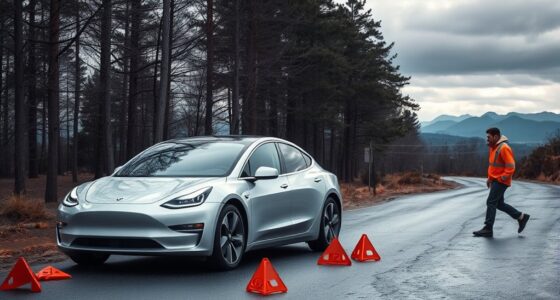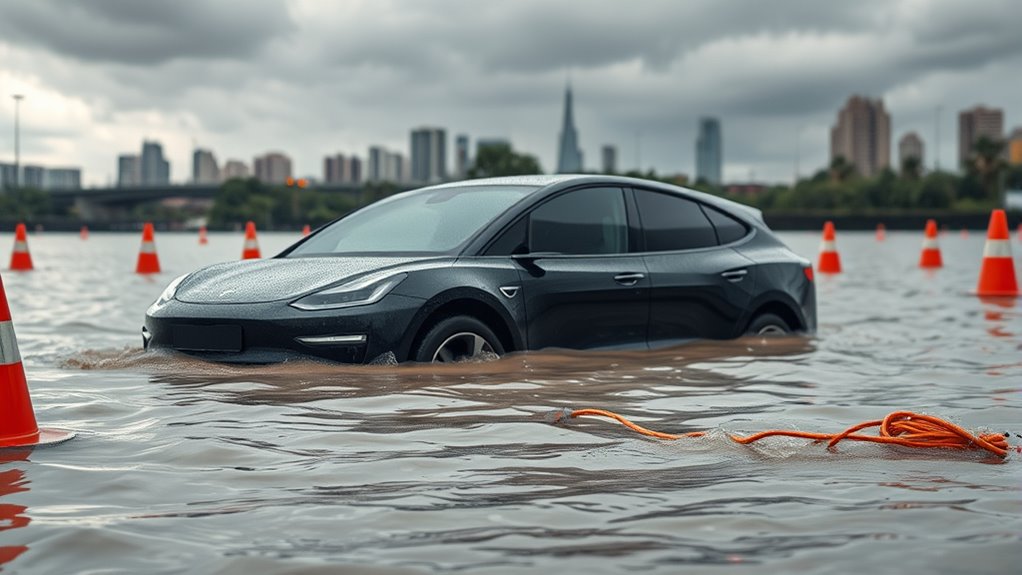

If your EV gets caught in a flood, first move to higher ground and keep others away from the vehicle. Do not attempt to start, charge, or open any compartments yourself. Instead, contact emergency services or roadside assistance immediately and wait for professionals to assess the damage. Floodwaters can damage high-voltage systems and pose serious risks, so it’s best to let experts handle the situation. Continue to see what steps you should take once help arrives.
Key Takeaways
- Immediately move the vehicle to higher ground and keep others away from floodwater.
- Do not attempt to start, charge, or open the vehicle’s electrical compartments.
- Contact emergency services or roadside assistance for professional flood damage assessment.
- Avoid handling or inspecting the vehicle yourself; wait for qualified technicians to evaluate water intrusion.
- Do not use or operate the EV until professionals confirm it is safe after thorough inspection.
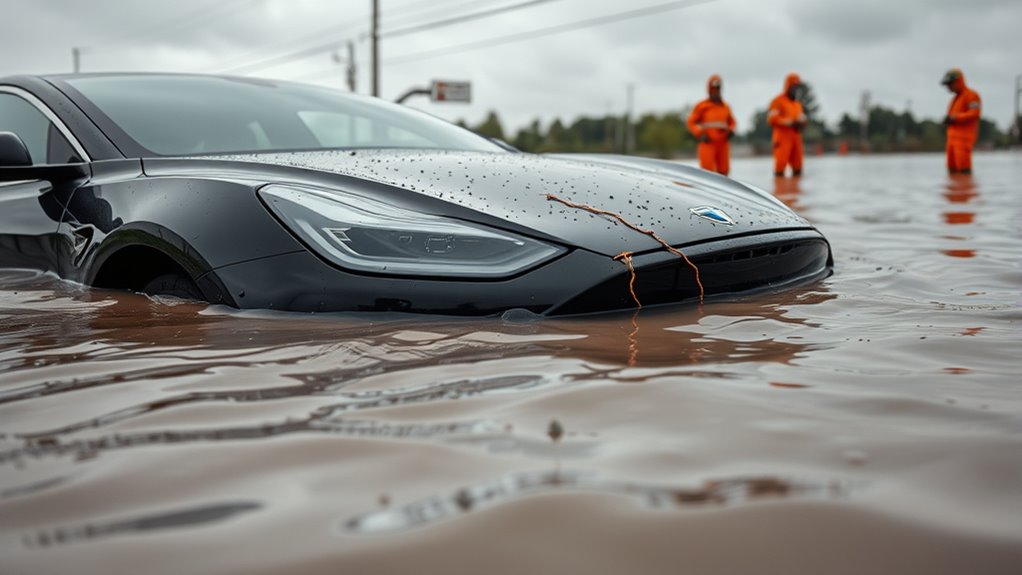
If your electric vehicle (EV) becomes trapped in a flood, acting quickly and safely is essential. Floodwaters can pose serious risks, and understanding how to respond can help protect you and your vehicle. The first priority is to avoid any attempts to restart or operate the EV until it has been properly evaluated by professionals. Because EV batteries are high-voltage components, battery safety is a primary concern. Water intrusion can compromise the battery’s integrity, increasing the risk of electrical hazards or fire. Do not try to open the battery compartment or disconnect any parts yourself. Instead, focus on safeguarding yourself by moving to higher ground and keeping others away from the vehicle. Once you’re in a safe location, contact emergency services or your roadside assistance provider to report the situation.
The next step involves a thorough flood damage assessment. Do not assume your EV is safe just because it was temporarily submerged. Floodwaters can damage internal electrical systems, batteries, and other critical components, even if the vehicle appears to be functioning afterward. When professionals arrive, they will evaluate the extent of the flood damage carefully. They will examine the battery and electrical systems to determine if water has infiltrated them, which could compromise safety or future performance. During the assessment, technicians might perform diagnostic scans and tests to check for residual moisture or corrosion. They’ll also look for signs of corrosion, unusual odors, or visible water inside the vehicle. If flood damage is confirmed, your EV may need extensive repairs or, in some cases, replacement. This process ensures your vehicle is safe to operate again and prevents hidden issues from causing problems later. Additionally, understanding the impact of contrast ratio and color accuracy in the vehicle’s electronic displays can help assess if the infotainment systems have been compromised.
While waiting for professional help, avoid trying to start or charge your EV. Doing so could lead to electrical shorts, fires, or other dangerous situations. Remember that even if your EV seems dry on the outside, water could have penetrated into critical parts, especially around the battery and electrical wiring. It’s important to trust the expertise of qualified technicians to perform a thorough flood damage evaluation before attempting to use your vehicle again. Protecting your safety and the longevity of your EV depends on a cautious, informed response. Once the professionals confirm that everything is dry, undamaged, and safe, they can guide you through the proper steps to restore your vehicle’s functionality. Until then, prioritize your safety and let the experts handle the assessment and repairs.
Frequently Asked Questions
Can Floodwaters Damage the Electric Motor Permanently?
Floodwaters can cause permanent electric motor damage if water intrusion reaches critical components. When water gets inside the motor or electrical systems, it can lead to corrosion and short circuits, impairing performance. You should avoid driving through flooded areas, and if your EV gets submerged, have it inspected by professionals promptly. Proper maintenance and quick action can help prevent long-term electric motor damage from floodwaters.
How Long Should I Wait Before Attempting to Restart My EV?
You should wait at least 24 hours before attempting to restart your EV after water exposure, ensuring the battery safety is prioritized. Water can damage electrical components, so give it ample time to dry out completely. Avoid rushing the process, as restarting prematurely could cause further damage. Check for any signs of water intrusion or corrosion, and if uncertain, have a professional inspect your vehicle before powering it back on.
Are EV Batteries Waterproof or Just Water-Resistant?
Your EV batteries are designed with water resistance, not waterproofing. They have water resistance ratings that prevent water from damaging internal components during normal exposure, like rain or splashes. However, deep flooding can still pose risks, so it’s best to avoid exposing your EV to floodwaters. Manufacturers build these batteries to withstand certain water levels, but no battery is truly waterproof, so caution is always advised.
What Are Signs of Electrical System Failure After Flooding?
If your EV’s electrical system fails after flooding, you’ll notice dramatic signs like electrical insulation breakdown and circuit corrosion. Your dashboard might light up like a Christmas tree, with warning lights flashing wildly. You could experience sudden power loss, strange noises, or the vehicle refusing to start. These symptoms indicate severe damage to the electrical insulation and corrosion of circuits, signaling urgent professional inspection before further damage occurs.
Should I Call Roadside Assistance or a Specialized EV Technician?
You should call a specialized EV technician rather than roadside assistance. They’re trained to handle electric vehicle issues, especially after flooding. Contact your insurance company to start a claim and arrange for a vehicle inspection. A professional EV technician can properly evaluate your vehicle’s electrical system, diagnose damage, and guarantee safety. Don’t attempt repairs yourself; professional help is essential to avoid further damage or hazards.
Conclusion
Remember, your EV is like a delicate seed in a raging storm. Stay calm and act swiftly—avoid water, disconnect the battery if possible, and seek professional help. Floodwaters can be relentless, but your quick, cautious response can be the anchor that keeps your vehicle—and yourself—afloat. Think of it as steering through turbulent seas; patience and prudence will guide you safely back to calmer waters, where the road ahead is clear and dry.