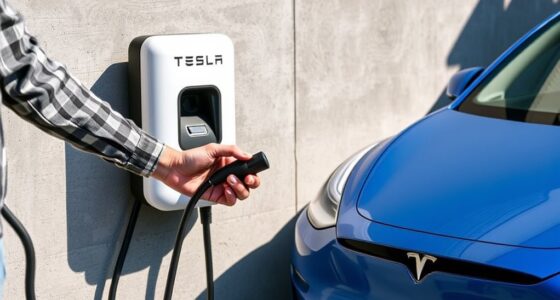
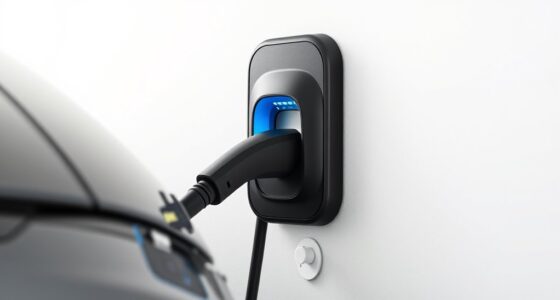
If your home charging feels slower than it used to or no longer keeps up with your daily driving needs, it’s time to think about upgrading your EV charger. Signs include longer charging times, increased battery size, or your current setup no longer supporting faster charging. Electrical limitations or frequent malfunctions also signal an upgrade might be necessary. Keep an eye on these indicators—understanding them can help you decide when more power is the right move.

Get backup power and energy gear delivered free with Prime
- Fast, free delivery on millions of items
- Prime Video, Amazon Music and more included
- Member-only deals all year
Key Takeaways
- Charging takes longer than expected, indicating the need for a faster, more powerful charger.
- Your current setup cannot support higher charging speeds or increased battery sizes.
- Frequent charging delays disrupt daily routines or cause inconvenience.
- Electrical capacity issues or outdated panels prevent upgrading to a higher-power charger.
- Changing driving habits or vehicle requirements demand more charging power and faster recharge times.

As more electric vehicles become part of your daily routine, it’s important to recognize when your home EV charger no longer meets your needs. You might notice that charging takes longer than it used to or that your current setup simply can’t handle your growing demand for faster charging. Understanding when to upgrade involves evaluating both the cost comparison and the installation process, so you can make informed decisions without surprises.
Initially, many homeowners start with a basic Level 1 charger, which uses a standard household outlet. It’s affordable and easy to install, but it can be painfully slow, especially if you drive frequently or have multiple EVs. As your vehicle’s battery size increases or your driving habits change, you’ll find yourself waiting longer for your car to charge, which can disrupt your daily schedule. At this point, it’s worth considering a Level 2 charger, which offers faster charging times. While the cost comparison initially shows a higher upfront expense, the time saved and convenience gained often outweigh the initial investment.
Starting with a basic Level 1 charger is affordable but slow; upgrading to Level 2 saves time and boosts convenience.
The installation process for an upgraded charger plays a big role in deciding when to make the switch. Upgrading from a Level 1 to a Level 2 charger typically involves installing a dedicated 240-volt outlet and possibly upgrading your electrical panel. This process can seem intimidating, but many homeowners find it manageable when working with professional electricians. It’s important to assess your current electrical system; if your panel is outdated or lacks capacity, additional upgrades might be necessary, which can add to the overall cost and installation time. Keep in mind that some newer homes already have the infrastructure in place for Level 2 chargers, making the upgrade smoother and more cost-effective. Additionally, electrical system capacity is a crucial factor to ensure your home can support the increased power needs of the new charger.
Monitoring your charging habits helps you determine if an upgrade is overdue. If you’re consistently charging overnight and still waking up to a nearly empty battery, or if your EV’s range no longer meets your daily needs, it’s a clear sign you need more power. Also, if your current charger is frequently malfunctioning or unable to handle your vehicle’s charging requirements, it’s time to look into an upgrade. While the initial investment might seem high, the long-term benefits of faster, more reliable charging can greatly improve your driving experience.
Products Worth Considering

DEWALT 20V MAX Drill and Impact Driver Combo Kit (DCK240C2)

Vantrue S1 Pro DMS 2.7K Dash Cam with Front and Interior Recording

Milwaukee M18 FUEL 18V Lithium-Ion Brushless Cordless 1 in. Impact Wrench Extended Reach D-Handle Kit with Two 12.0 Ah Batteries
As an affiliate, we earn on qualifying purchases.
Frequently Asked Questions
Can Existing Chargers Be Upgraded or Do I Need a New Unit?
You can often upgrade your existing charger if it’s compatible with newer models, but you’ll need to check charger compatibility first. Upgrading might involve some costs, including new hardware or installation fees, which can vary. If your current charger isn’t compatible or the upgrade costs are high, it’s better to think about purchasing a new unit that meets your current and future EV charging needs.
How Long Does It Typically Take to Upgrade an EV Charger?
Upgrading your charging station typically takes a few hours to a full day, depending on your home’s electrical setup and the new power capacity you need. The process involves evaluating your current system, installing a new circuit, and guaranteeing proper connections. You should plan for some electrical work and possibly a permit. Overall, it’s a manageable upgrade that ensures your charging station meets your vehicle’s power needs efficiently.
Is Upgrading My Charger Covered by Warranty or Insurance?
Imagine your home EV charger shining brightly, ready for reliable use. Typically, warranty coverage may include repairs or replacements if your charger malfunctions due to manufacturing defects. However, insurance claims usually don’t cover upgrades unless damage resulted from an incident. Check your warranty details and insurance policy carefully; some providers may cover certain repairs or upgrades, giving you peace of mind for your EV charging needs.
What Are the Safety Considerations When Upgrading a Home EV Charger?
When upgrading your home EV charger, focus on circuit breaker safety and wiring compatibility. Make certain the new charger’s amperage matches your existing circuit breaker to prevent overloads. Check that wiring is rated for the new charger’s power demands, avoiding potential fire hazards. It’s best to have a qualified electrician handle the upgrade, as they can verify all safety standards are met, keeping your home and family safe during and after the installation.
Can I Upgrade My Charger Myself or Should I Hire a Professional?
Upgrading your home EV charger is like tinkering with a delicate puzzle—you might think you can do it yourself, but safety is key. For DIY safety, make sure you understand electrical codes and have the right tools, but professional installation is highly recommended. A licensed electrician guarantees your charger’s safety and compliance, preventing future issues. Trust a pro to handle the upgrade, so you can charge with peace of mind.
Conclusion
Knowing when to upgrade your home EV charger is like catching a wave—you don’t want to miss it or wipe out. If you notice slower charging, frequent trips to the outlet, or adding more electric vehicles to your home, it’s time for an upgrade. Acting early guarantees your charging stays smooth and reliable, just like a well-oiled machine. Keep an eye on your power needs so you can ride the current of convenience without hitting any bumps.