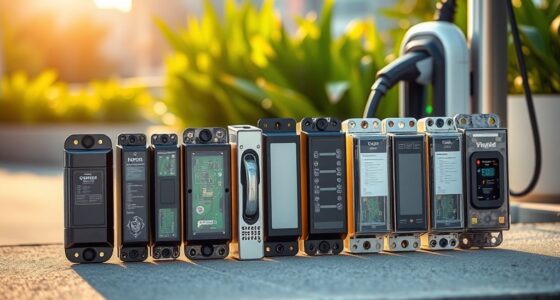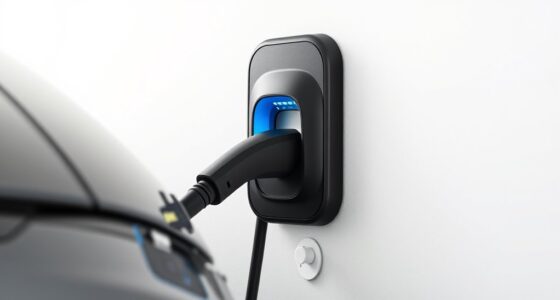
Community charging allows neighbors and apartment residents to share EV chargers, making electric vehicle ownership more affordable and convenient. By pooling resources, you can reduce installation costs and avoid cluttered parking spaces. Community initiatives often involve local governments and neighborhood groups working together to create designated charging spots. This not only fosters stronger connections but also promotes sustainability and equitable access. If you want to discover how these shared solutions can benefit you, keep exploring the options available.

Get backup power and energy gear delivered free with Prime
- Fast, free delivery on millions of items
- Prime Video, Amazon Music and more included
- Member-only deals all year
Key Takeaways
- Neighborhoods organize shared EV charging stations through community initiatives and collaboration with local authorities to reduce costs and improve accessibility.
- Shared infrastructure allows multiple residents to charge EVs at designated spots, promoting equitable access in apartment complexes.
- Community pools funds and resources to install and maintain charging stations, fostering collective responsibility and engagement.
- Shared charging solutions help address disparities by making EV adoption more affordable and convenient for all residents.
- These initiatives strengthen neighborhood bonds, promote sustainability, and support the development of extensive, accessible charging networks.
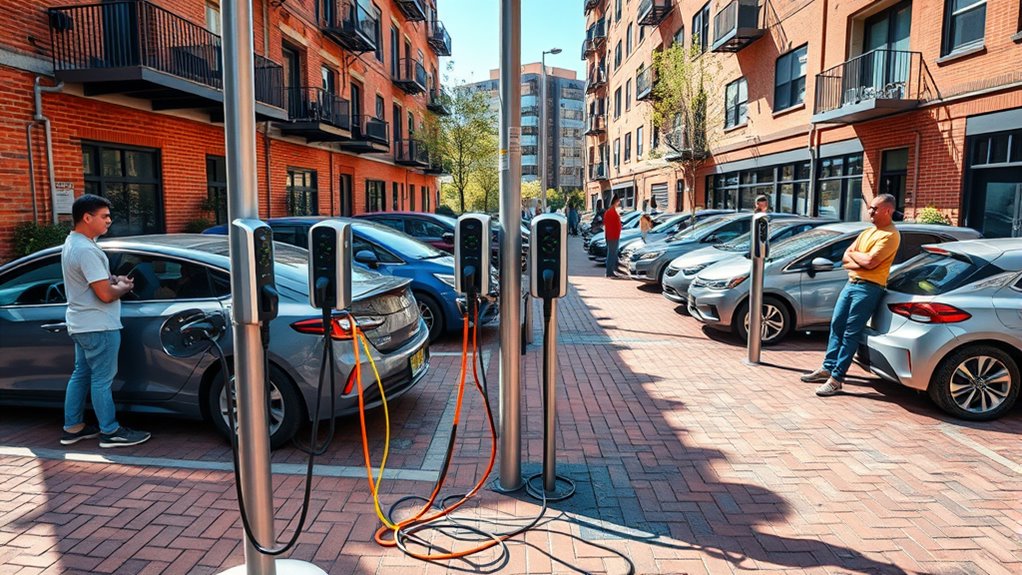
Have you ever wondered how communities are making electric vehicle charging more accessible and affordable? The answer lies in innovative approaches like shared infrastructure and neighborhood initiatives that bring neighbors together to solve common challenges. Instead of everyone installing their own charger, communities are pooling resources to create shared infrastructure that benefits everyone. This approach not only cuts costs but also reduces the need for multiple chargers cluttering up parking spaces. When neighbors collaborate on installing a few well-placed chargers, it becomes easier for everyone to access reliable, fast charging without breaking the bank. These shared chargers often serve multiple residents, making it a smart and sustainable solution, especially in apartment complexes or multi-unit neighborhoods where individual installations may be impractical or prohibited. Additionally, embracing European cloud solutions can enhance the management and security of shared charging networks, ensuring data privacy and system resilience. Neighborhood initiatives play a vital role in expanding access to EV charging. Communities are organizing to advocate for public and shared charging stations, often working with local governments or utility providers to secure funding and streamline installation. These initiatives foster a sense of collective responsibility and encourage residents to participate actively. By organizing neighborhood meetings and pooling funds, residents can negotiate better deals for installing chargers or even advocate for city-sponsored programs. Many neighborhoods are also establishing designated parking spots equipped with chargers, turning idle spaces into efficient charging hubs. This not only promotes eco-friendly transportation but also boosts property values and community appeal. Shared infrastructure and neighborhood initiatives also help address disparities in EV adoption. In areas where installing individual chargers might be too costly or complicated, shared solutions provide an equitable way for more residents to participate in the EV movement. For apartment dwellers, community charging stations eliminate the need for complex wiring or permission from landlords. Instead, residents can rely on accessible, communal chargers that are conveniently located nearby. This democratizes access to EV technology, encouraging more people to switch to cleaner transportation options without financial or logistical hurdles. Furthermore, these community-driven efforts foster a sense of connection and shared purpose. When neighbors work together to install and maintain chargers, it cultivates a community spirit centered around sustainability. It also sparks conversations about energy conservation and environmental responsibility, inspiring others to get involved. Over time, these initiatives can evolve into exhaustive networks that support larger-scale charging needs, making electric vehicles a practical choice for more people. Ultimately, by embracing shared infrastructure and neighborhood initiatives, communities are creating more inclusive, affordable, and sustainable ways to charge electric vehicles, helping to accelerate the shift toward greener transportation for everyone.
As an affiliate, we earn on qualifying purchases.
Frequently Asked Questions
How Are Costs Typically Divided Among Residents?
You typically share costs through various cost sharing models outlined in resident agreements. These agreements specify how expenses like installation, maintenance, and electricity are divided, often based on usage or a flat fee. Some communities split costs evenly, while others charge residents proportionally. Clear resident agreements help everyone understand their financial responsibilities, ensuring fair participation and avoiding disputes over shared EV charger expenses.
What Safety Measures Are Required for Shared Chargers?
You need to guarantee proper safety measures are in place for shared chargers. Install safety signage to warn users about potential hazards, and consider measures to prevent charger vandalism, such as secure enclosures or surveillance. Regular inspections help identify issues early, and clear instructions can reduce misuse. These steps protect everyone and keep the charging process safe, reliable, and vandalism-resistant, fostering trust among neighbors sharing the chargers.
How Is Access to Chargers Scheduled or Managed?
You should follow clear access protocols and use a charger scheduling system to manage shared EV chargers. These protocols often involve sign-ups, time slots, or apps that coordinate who can use the charger and when. This way, everyone gets fair access, and conflicts are minimized. Implementing a straightforward scheduling method guarantees smooth operation, prevents disputes, and makes charging convenient for all neighbors or residents sharing the facility.
Are There Legal or Liability Concerns With Community Charging?
You should be aware of liability concerns and legal regulations when sharing EV chargers in a community. Liability concerns can arise if accidents or damages occur during charging, so it’s wise to have clear agreements. Legal regulations vary by location, often requiring proper signage, insurance, and adherence to safety standards. Staying informed and setting up written policies helps protect everyone involved and guarantees smooth, compliant community charging experiences.
What Incentives or Subsidies Are Available for Shared EV Charging?
Think of government rebates and utility incentives as your keys to opening savings on shared EV chargers. You can often receive rebates that cover part of the installation costs and enjoy utility incentives for using cleaner energy. These financial boosts make sharing chargers more affordable and appealing, turning a neighborhood project into a win-win. Carefully research your area’s programs to maximize your benefits and make EV charging more accessible.
As an affiliate, we earn on qualifying purchases.
Conclusion
By embracing community charging, you’re opening the door to a more harmonious and convenient future. Sharing EV chargers gently weaves a sense of togetherness into daily routines, making sustainable living feel less like a challenge and more like a shared journey. As neighbors and apartment dwellers come together, the road ahead becomes smoother, brighter, and full of promise. After all, when we charge as one, we’re fueling a brighter tomorrow for everyone involved.
apartment complex EV charging station
As an affiliate, we earn on qualifying purchases.
As an affiliate, we earn on qualifying purchases.
fast charging station for electric vehicles
As an affiliate, we earn on qualifying purchases.
As an affiliate, we earn on qualifying purchases.
Halloween Picks
halloween
As an affiliate, we earn on qualifying purchases.