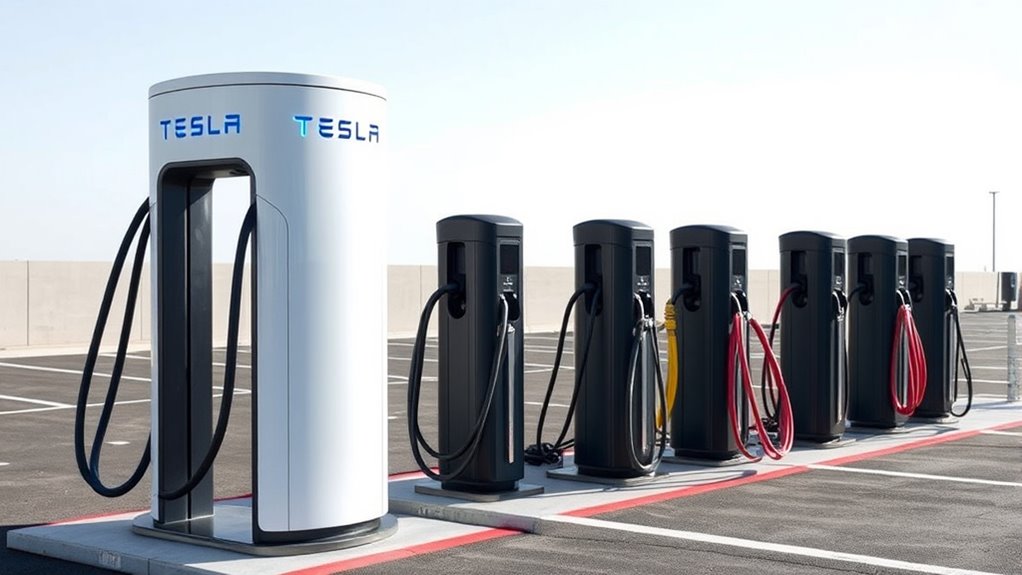
Tesla Superchargers provide rapid charging tailored mainly for Tesla vehicles, with extensive coverage on key travel routes. Other fast chargers like Electrify America and ChargePoint support multiple brands, offer similar high speeds, and are expanding quickly into urban areas. While Tesla chargers are more vehicle-specific, third-party networks give you broader compatibility and more options. To understand which fits your driving habits best and how each network compares, keep exploring the details.
Key Takeaways
- Tesla Superchargers offer ultra-fast charging up to 200 miles in 15 minutes, while third-party chargers range from 150-350 kW.
- Tesla’s network is extensive in North America and Europe, primarily for Tesla vehicles, with some recent openness to other EVs.
- Third-party networks support multiple vehicle brands with standards like CCS and CHAdeMO, providing broader compatibility.
- Tesla chargers are mainly located along major travel routes, whereas third-party stations fill urban and regional coverage gaps.
- Choice depends on vehicle compatibility, travel needs, and regional charging infrastructure availability.
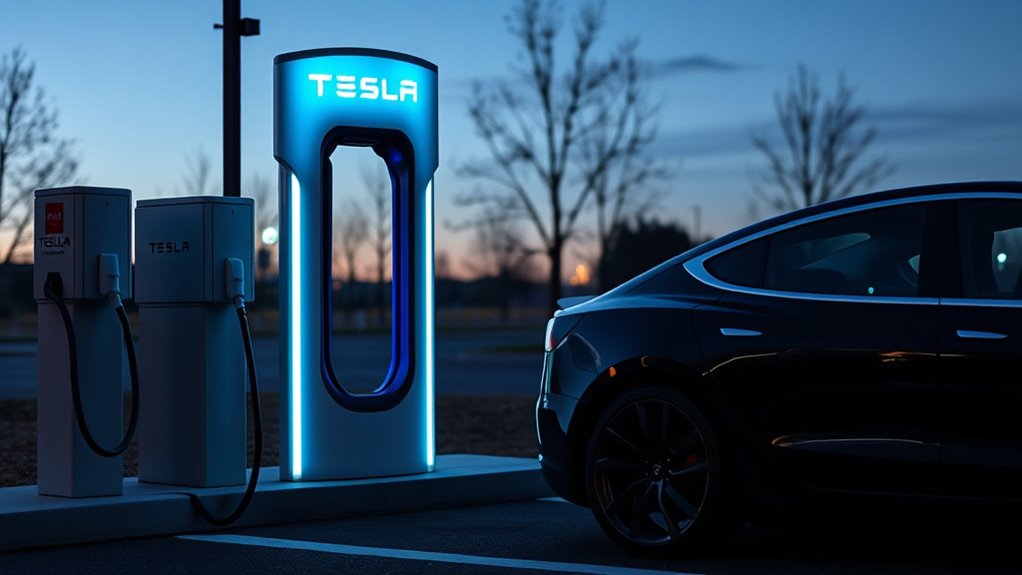
When it comes to charging your electric vehicle quickly and efficiently, Tesla Superchargers often stand out, but they’re just one option among many fast-charging networks. The key factors you should contemplate are charging speed and network coverage, as these directly impact your driving experience and convenience. Tesla Superchargers are known for their impressive charging speeds, often delivering up to 200 miles of range in just 15 minutes, which is perfect when you need a quick top-up during long trips. Their high charging rate minimizes downtime, allowing you to get back on the road faster. However, charging speed isn’t the only consideration. Network coverage plays an essential role, especially if you don’t own a Tesla. While Tesla’s network is extensive in North America and parts of Europe, providing hundreds of stations along major highways, it still doesn’t match the widespread presence of third-party networks like Electrify America, ChargePoint, or Ionity. These networks have rapidly expanded their coverage, especially in urban areas and regions where Tesla’s stations are less prevalent. If you frequently travel outside Tesla’s supercharger zones, relying solely on Tesla’s network could limit your options and cause inconvenience.
Another aspect to consider is compatibility. Tesla Superchargers are designed specifically for Tesla vehicles, and while recent updates have begun to open some Supercharger stations to non-Tesla EVs in select regions, compatibility remains a concern. Third-party fast chargers, on the other hand, often support multiple brands and charging standards such as CCS and CHAdeMO, offering more flexibility if you own a non-Tesla EV. This broad compatibility enhances network coverage for diverse vehicle types, making it easier to find a charger when needed.
Additionally, the availability of chargers can vary depending on where you are. Tesla’s network tends to be concentrated along popular travel corridors, ensuring you have access when you’re on a road trip. Conversely, third-party networks are increasingly filling in the gaps in urban and suburban areas, providing more options for daily charging. The speed of charging stations from other providers is comparable to Tesla’s, with many offering fast chargers capable of delivering 150-350 kW, which can replenish your battery just as quickly.
Frequently Asked Questions
Are Tesla Superchargers Compatible With Non-Tesla Electric Vehicles?
Tesla Superchargers aren’t compatible with most non-Tesla electric vehicles due to unique charging connector compatibility. However, some newer Superchargers now include adapters or support CCS connectors, increasing accessibility for non-Tesla EVs. Still, charging station accessibility remains limited outside Tesla’s network, so you might need to find compatible stations or carry adapters. Always verify the charging connector compatibility before heading out to ensure smooth, efficient charging for your vehicle.
How Does Charging Speed Compare Between Tesla Superchargers and Other Fast Chargers?
Imagine a race between charging giants—Tesla Superchargers and other fast chargers. Tesla’s charging technology boasts higher power output, letting you juice up faster, sometimes in just 20-30 minutes. Other fast chargers, while decent, often lag behind in speed and consistency. So, if you’re in a hurry, Tesla’s got a slight edge, making your EV charging experience quicker and more efficient—no magic, just powerful technology.
What Are the Costs Associated With Using Tesla Superchargers Versus Other Chargers?
You’ll find that Tesla Superchargers generally cost around $0.28 to $0.32 per kWh, but prices vary based on energy pricing models and location. Other fast chargers may have different pricing structures, often charging by the minute or session. Costs also factor in charging station maintenance and energy rates, which can fluctuate. Always check the station’s pricing info beforehand to avoid surprises and compare costs effectively.
Do Tesla Superchargers Require Membership or Subscription Plans?
You don’t need a membership to use Tesla Superchargers, making them more accessible for casual drivers. However, if you do opt for a membership, you’ll enjoy reduced charging costs and added convenience. Subscription costs vary, but they often lower the overall expense compared to pay-per-use. Unlike other chargers, Tesla offers this flexibility, so whether you prefer paying per charge or subscribing, you can choose what fits your driving habits best.
Are Tesla Superchargers Available Internationally or Only in Specific Regions?
You’ll find Tesla Superchargers available in many regions worldwide, making it easier to travel internationally with your electric vehicle. Tesla’s expanding international networks guarantee you can access fast charging stations across North America, Europe, and parts of Asia. Regional availability varies, but Tesla is actively growing its global infrastructure. So, whether you’re on a local trip or crossing borders, you’ll likely find a Supercharger nearby to keep your Tesla charged and ready.
Conclusion
Think of Tesla Superchargers like a well-oiled race car, zooming ahead with speed and reliability. While other fast chargers can be like sturdy bicycles—dependable but not as swift—you’ll find Tesla’s network is designed for quick, convenient charging. Whether you’re a Tesla owner or exploring your options, understanding these differences helps you choose the right speedster for your journey. After all, in the race of electric driving, knowing your chargers keeps you cruising smoothly.