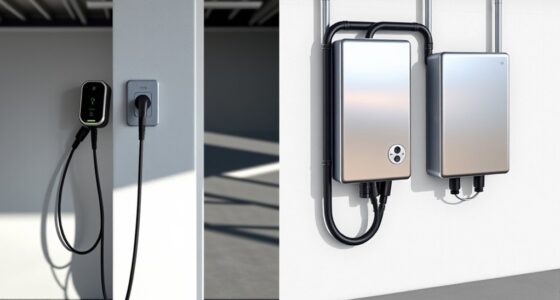
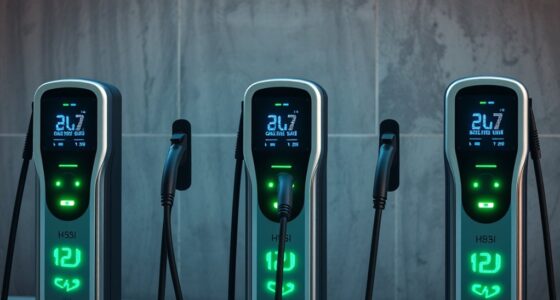
Dynamic load balancing helps you safely charge two EVs on one circuit by constantly adjusting the power flow based on real-time energy use, solar output, and system limits. It monitors your energy demand and solar generation, reducing charging rates when needed to prevent overloads. Smart meters and adaptive systems work together to keep everything balanced, ensuring safety while maximizing renewable energy. Keep exploring to learn how this technology makes your EV charging smarter and more efficient.

Get backup power and energy gear delivered free with Prime
- Fast, free delivery on millions of items
- Prime Video, Amazon Music and more included
- Member-only deals all year
Key Takeaways
- Implement real-time monitoring with smart meters to prevent circuit overload during simultaneous EV charging.
- Utilize dynamic load balancing to adjust charging rates based on solar energy output and household demand.
- Integrate energy management systems to prioritize solar power use and avoid exceeding circuit capacity.
- Design circuits with appropriate capacity and safety features to support multiple EV chargers simultaneously.
- Continuously adapt charging based on real-time data to ensure safe, efficient, and sustainable two EV charging on one circuit.
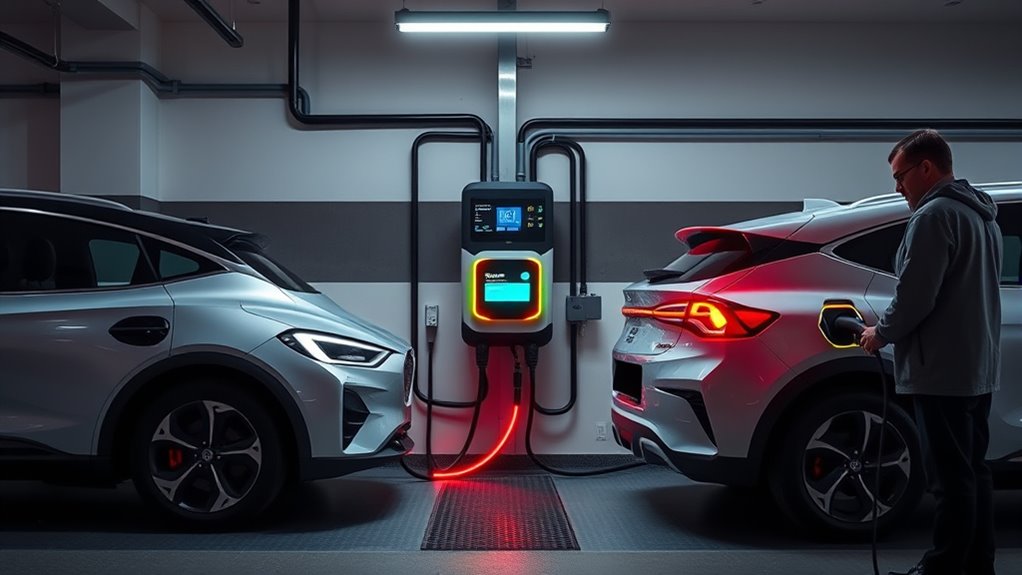
Dynamic load balancing is a crucial technique that helps distribute workloads across servers or resources efficiently, especially in environments with unpredictable or fluctuating demands. When it comes to managing electrical loads, particularly with electric vehicles (EVs), this concept becomes essential for safety and efficiency. If you’re charging two EVs on a single circuit, you need a system that can adapt to changing energy needs without risking overloads or damage. This is where dynamic load balancing shines. By continuously monitoring the power requirements, it ensures that each vehicle gets the charge it needs without exceeding the circuit’s capacity.
Dynamic load balancing ensures safe, efficient EV charging by continuously monitoring and adapting to power needs on a single circuit.
In modern setups, solar integration plays a significant role. If you have solar panels feeding your home or facility, your energy supply can vary based on sunlight. During peak sunlight hours, your system might generate more power than you consume, making it advantageous to charge your EVs during these times. Dynamic load balancing can coordinate with your solar system by adjusting charging rates accordingly, preventing overloads and maximizing the use of renewable energy. This integration not only enhances efficiency but also reduces reliance on the grid, saving you money and lowering your carbon footprint.
Smart metering is another critical component in managing multiple EVs safely on one circuit. With smart meters, you gain real-time data on energy consumption and generation, allowing precise control over your electrical load. When you connect two EVs, the smart meter communicates with your load balancing system, providing instant feedback on current draw. If one EV starts charging and the total load approaches the circuit’s limit, the system can automatically reduce the charging rate of one or both vehicles. This ensures safety, prevents tripping breakers, and prolongs the lifespan of your electrical infrastructure.
Implementing dynamic load balancing with smart metering and solar integration means you’re actively managing your energy resources rather than passively risking overloads. It enables you to prioritize charging during times of excess solar production or when grid demand is low. The system can also respond to unexpected changes, like a sudden increase in household energy use, by adjusting EV charging accordingly. This seamless coordination not only keeps your charging process safe but also optimizes energy consumption, making your EV charging smarter and more sustainable.
Additionally, understanding the importance of proper circuit design helps ensure your setup remains safe and efficient when supporting multiple EV chargers. In essence, by leveraging dynamic load balancing, smart metering, and solar integration, you can confidently charge two EVs on one circuit without fear of overloads or inefficiencies. It transforms your energy management into a proactive, intelligent system that adapts to your needs in real-time, ensuring safety, cost savings, and a greener future.
Products Worth Considering

Autel Home EV Charger up to 50A J1772 Hardwired Level 2 Charger with 25 ft Cable

Nextbase iQ 4K Smart HD Dash Cam Pro with 64GB microSD Card – Front and Rear View, 1440p, Smart Sense Parking, Emergency SOS, Roadwatch AI

Autel 40A Level 2 EV Charger, 240V NEMA 14-50 J1772, WiFi, 25ft Cable
As an affiliate, we earn on qualifying purchases.
Frequently Asked Questions
Can Load Balancing Be Automated for Real-Time Adjustments?
Yes, load balancing can be automated for real-time adjustments. With automation integration, your system constantly monitors the electrical load using real-time monitoring tools. When demand changes, the system dynamically adjusts power distribution between the two EVs, ensuring safety and efficiency without manual intervention. This seamless automation helps prevent overloads and optimizes charging times, giving you peace of mind while charging multiple EVs on a single circuit.
What Safety Standards Govern Dual EV Charging on One Circuit?
You need to follow electrical safety standards that govern dual EV charging on one circuit. These include adhering to wiring standards like the National Electrical Code (NEC), which specifies proper circuit wiring, breaker ratings, and grounding. Ensuring circuit safety involves installing dedicated circuits with appropriate overcurrent protection, using properly rated wiring, and employing safety devices like residual current devices (RCDs). These measures help prevent overloads, shorts, and electrical hazards during simultaneous EV charging.
How Does Load Balancing Impact Overall Electricity Costs?
Load balancing improves energy efficiency by distributing electrical demand evenly, which helps prevent circuit overloads. As a result, you can experience cost savings by avoiding higher energy rates during peak times and reducing the need for costly upgrades. By optimizing power use between your EV chargers, you guarantee efficient operation and lower your overall electricity costs, making your charging setup more economical and sustainable in the long run.
Are There Specific Circuit Breaker Requirements for Dual EVS?
Think of the circuit breaker specifications as your EV charging guardian—yes, they need to satisfy safety compliance standards. For dual EV setups, you typically require a double-pole breaker rated for the total load, often 40-50 amps. This ensures safe, reliable charging without tripping. Always consult local electrical codes and an electrician to confirm your breaker meets all safety standards, keeping your home and EVs protected.
What Maintenance Is Needed for Dynamic Load-Balanced Circuits?
You need to regularly inspect your circuit capacity to guarantee it handles the load efficiently. Check breaker specifications to confirm they match the requirements for dual EV charging, and look for signs of wear or overheating. Keep connections tight and clean to prevent faults. Schedule routine testing and maintenance of the breakers and wiring to maintain safety and peak performance, especially as usage patterns and load demands evolve.
Conclusion
By implementing dynamic load balancing, you can safely charge two EVs on a single circuit without risking overloads. It’s a smart way to optimize your existing electrical system and avoid costly upgrades. Did you know that properly balanced loads can increase circuit efficiency by up to 30%? This means you not only stay safe but also get faster, more reliable charging. Embrace dynamic load balancing today and power up your EVs confidently and efficiently.