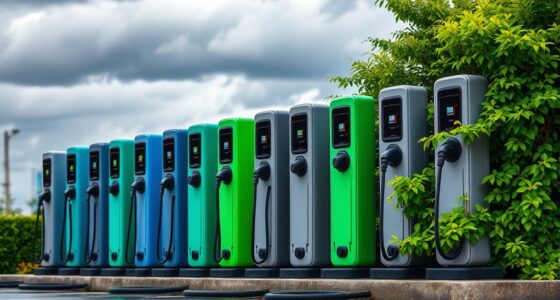
Yes, you can plug your EV into a regular household outlet for Level 1 charging, which uses a standard 120-volt socket. This setup is simple and safe if your outlet is properly grounded and in good condition. However, charging is slow, taking around 8-12 hours to fully recharge, making it ideal for overnight use. If you want to discover more about safe installation tips and options, keep exploring the details.

Get backup power and energy gear delivered free with Prime
- Fast, free delivery on millions of items
- Prime Video, Amazon Music and more included
- Member-only deals all year
Key Takeaways
- Yes, most EVs can be plugged into a standard 120-volt household outlet for Level 1 charging.
- Use a compatible charging cord designed for your EV and ensure the outlet is properly grounded.
- Charging from a regular outlet provides slow charging, typically adding 4-5 miles of range per hour.
- Confirm the outlet’s capacity (15A or 20A) and avoid using extension cords not rated for the load.
- Regular inspection and proper grounding are essential for safety and to prevent electrical hazards.
Products Worth Considering

Autel Home EV Charger up to 50A J1772 Hardwired Level 2 Charger with 25 ft Cable

Autel MaxiCharger Level 2 EV Charger, 40A, 240V, Indoor/Outdoor, 25‑Foot Flexible Cable, NEMA 14‑50 Plug (White)

Autel 40A Level 2 EV Charger, 240V NEMA 14-50 J1772, WiFi, 25ft Cable
As an affiliate, we earn on qualifying purchases.
Understanding Level 1 Charging Basics

Have you ever wondered how plugging your electric vehicle into a standard household outlet works? It’s a simple process that taps into your vehicle’s battery capacity, allowing slow but steady charging. This type of setup is often called Level 1 charging, and it typically uses a standard 120-volt outlet. Unlike dedicated charging stations, a regular outlet provides a limited power supply, so charging takes longer—often several hours or overnight. Your vehicle’s onboard charger manages this process, converting household current into usable energy for the battery. While it’s convenient and accessible, it’s best suited for those with short daily drives or as a backup option. Understanding this basic setup helps you make informed decisions about charging your EV safely and efficiently, especially considering power supply limitations that can affect charging times during high-demand periods. Additionally, being aware of electric load management can help prevent overloads in your home electrical system. Recognizing the importance of proper electrical wiring can also ensure safe and reliable charging without risking damage to your home or vehicle. Being aware of other home electrical considerations can further optimize your EV charging experience and safety.
What Type of Outlet Is Suitable for Level 1 Charging

To guarantee safe and effective Level 1 charging, you need to use a standard household outlet that supplies 120 volts. This outlet is typically a regular 15-amp or 20-amp receptacle found in most homes. Verify the outlet is in good condition and properly grounded to meet the power requirements for your charging station. Avoid using extension cords or adapters that aren’t rated for the load, as they can pose safety risks. The charging station’s plug should match the outlet type, providing a secure connection. Most Level 1 chargers are designed for standard outlets, making them convenient for home use. Confirm the outlet’s capacity and compatibility with your EV’s charging station to affirm safe, reliable charging. Additionally, consulting a reliable power guide can help ensure your setup meets safety standards and provides continuous power. Ensuring your outlet has the correct electric circuit capacity can prevent overloads and potential electrical hazards. Proper outlet grounding is essential to avoid electrical shocks and protect your equipment. Checking the grounding system of your home’s electrical setup can help prevent dangerous faults and ensure safe operation. Regularly inspecting your electrical system and grounding connections can further enhance safety during charging.
How to Set Up Your Home for Level 1 Charging

To set up your home for Level 1 charging, start by checking if your power outlet is compatible and can manage the charging needs. Next, install a proper charging cord designed for your EV and outlet type. Additionally, consider safety precautions to prevent hazards and ensure reliable charging. Incorporating smart home integration can also help monitor and optimize your charging process for safety and efficiency. Recognizing the importance of a digital-friendly environment at home can further enhance your overall charging experience and safety. Understanding your power supply capabilities is essential to prevent overloads and ensure consistent charging performance. Moreover, understanding large-scale event logistics can provide insights into managing your home electrical setup effectively during peak charging times.
Assess Power Outlet Compatibility
Before plugging in your EV for Level 1 charging, it’s essential to verify that your home’s outlets are compatible with the charger’s requirements. Different power outlet types, such as standard 120-volt outlets, are common in homes, but not all outlets support the electrical safety standards needed for EV charging. Check that the outlet is grounded properly and free of damage. Look for signs of wear or corrosion, which could pose risks. Ensure the outlet matches the plug on your charging cord, typically a standard household socket. Confirming compatibility helps prevent electrical hazards and ensures safe, reliable charging. Additionally, understanding vacuum features to consider can help you choose the right equipment for your specific needs, and consulting an electrician can provide peace of mind and proper assessment of your home’s electrical safety. Proper grounding and regular inspection are key aspects of electrical safety when setting up your home for EV charging.
Install Proper Charging Cord
Setting up your home for Level 1 charging begins with installing the proper charging cord that matches your outlet and vehicle requirements. Make certain your charging cord is compatible with your EV and outlet type to avoid issues. Regular charging cord maintenance is essential; check for frayed wires, cracks, or damage before each use, and clean connectors to ensure a secure connection. Proper cord storage tips help prolong its lifespan—coil the cord neatly and avoid tight bends or knots that can cause wear. Store the cord in a dry, cool place away from direct sunlight and extreme temperatures. Taking these steps guarantees safe, efficient charging and helps prevent damage, ensuring your EV is always ready when you need it. Ensuring compatibility with trusted brands can also provide added peace of mind during your charging routine. Additionally, understanding charging safety best practices can further enhance your overall experience and security. Regularly inspecting your charging equipment is also vital to maintain optimal performance and safety.
Ensure Electrical Safety Measures
Ensuring electrical safety is essential when setting up your home for Level 1 charging. First, verify that your outlet is properly grounded to prevent electrical shocks or damage. Proper electrical grounding directs excess current safely into the ground, protecting you and your EV. Next, check that your circuit breaker meets the necessary requirements for your charging setup. It should be rated to handle the amperage of your charging cord and outlet, preventing overloads or short circuits. Avoid using extension cords or adapters that aren’t rated for your load. Regularly inspect your outlet and wiring for signs of wear or damage. Additionally, consider the Top Dog Beds for Golden Retrievers to ensure a comfortable environment if your pet is nearby during charging. Proper electrical installation practices are crucial to maintaining safety and preventing potential hazards. By adhering to these safety measures, you guarantee a secure, reliable charging environment that minimizes risks and keeps your home and EV protected. **Always follow manufacturer guidelines and consult a licensed electrician for professional installation to ensure electrical safety and compliance with local codes.**
Charging Time Expectations With a Regular Outlet
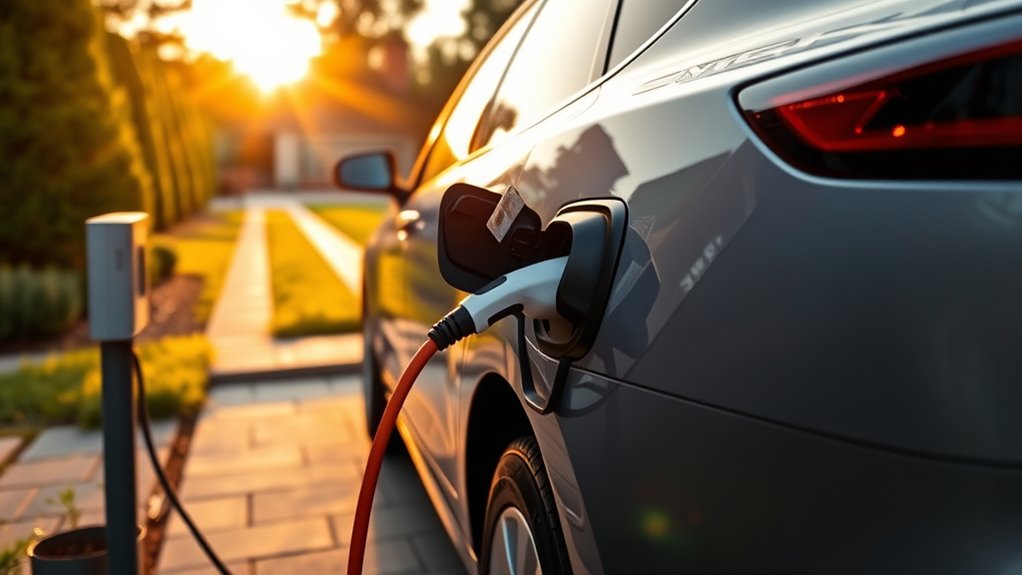
Charging an electric vehicle (EV) using a regular household outlet typically takes much longer than using specialized chargers. Expect to add only about 4 to 5 miles of range per hour of charging. This slow pace means you’ll need patience, especially if you’re planning regular trips. To keep your battery healthy, avoid frequent deep discharges and monitor charging times. The location of your charging station plays a role—you’ll want it conveniently placed near your home for easy access. Imagine this scenario:
| Charging Time | Range Gained | Ideal Use Case |
|---|---|---|
| 8-12 hours | 40-60 miles | Overnight, minimal travel |
| 24 hours | 80-120 miles | Long stays at home |
| 48 hours | 160+ miles | Extended periods, battery maintenance |
This setup helps you plan your charging schedule effectively. Additionally, understanding Level 1 charging can help you optimize your charging routine for everyday needs.
Limitations and Safety Considerations

While plugging your EV into a regular outlet is convenient, it comes with important limitations and safety considerations you need to keep in mind. Electrical safety is paramount; using the wrong outlet or overloading circuits can cause overheating or fires. Ensure your outlet is compatible with your EV charger’s plug and rated for the required amperage—using incompatible outlets increases the risk of damage or electrical hazards. Avoid extension cords, which are not designed for high current loads, and always inspect the outlet for damage before plugging in. Proper grounding is essential for safety, so check that your outlet is properly grounded to prevent electrical shocks. If you’re unsure about outlet compatibility or safety, consult a licensed electrician to avoid potential hazards.
Comparing Level 1 Charging to Other Options
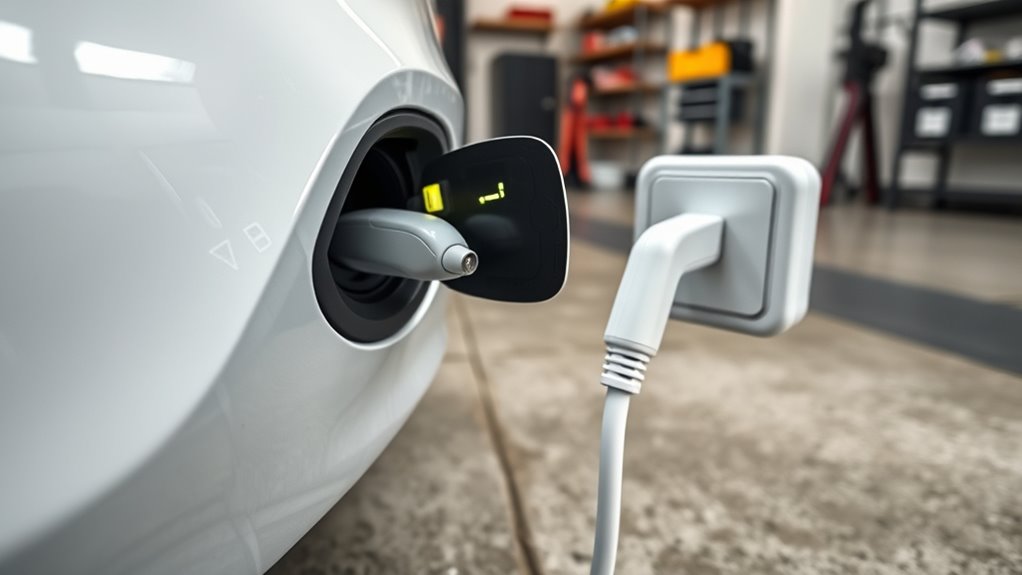
Compared to using a regular household outlet for your EV, Level 1 charging offers a slower but straightforward option that many drivers find convenient for overnight or low-mileage needs. It relies on standard electrical wiring and a basic charging cord, making it accessible but limited in speed. Other options include dedicated charging stations, such as Level 2 chargers, which use higher electrical current for faster charging, or DC fast chargers that markedly reduce charging time. Consider the table below to compare these options:
| Charging Method | Power Level | Charging Speed | Installation Complexity |
|---|---|---|---|
| Regular Outlet | 120V, Level 1 | Slow | Minimal |
| Charging Station | 240V, Level 2 | Faster | Moderate |
| DC Fast Charger | High Voltage, Level 3 | Very Fast | Complex |
| Electrical Wiring | Standard or Upgraded | Varies | Varies |
| Convenience | Very High | Low | Low |
Practical Tips for Daily EV Charging at Home
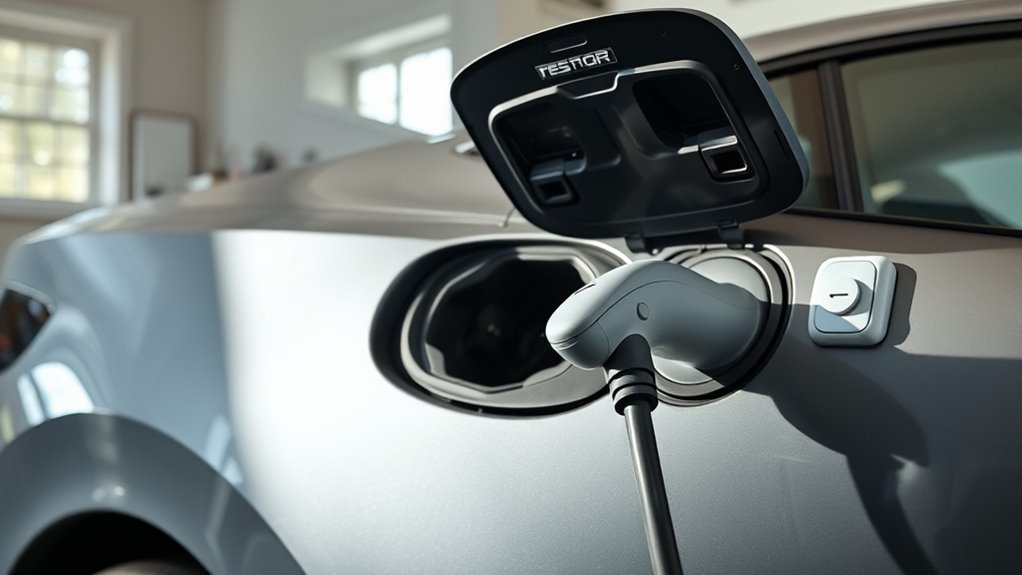
To guarantee your EV is ready each morning, establishing a simple daily charging routine can make a big difference. First, focus on proper battery maintenance by avoiding frequent deep discharges and keeping your battery charged within recommended levels. Second, optimize charging station placement by choosing a convenient, accessible spot near your driveway or garage, reducing hassle and wear on cords. Third, develop a consistent schedule—plug in your vehicle at the same time each day to ensure a full charge without overloading your outlet. This routine helps preserve battery health, minimizes plug-in stress, and keeps your EV ready to go. Making small adjustments in these areas ensures reliable daily charging, prolongs battery life, and simplifies your EV ownership experience.
When to Upgrade to Faster Charging Solutions

If your charging speed feels too slow or your driving habits change, it might be time to contemplate faster charging options. You’ll need to check if your vehicle supports higher-power chargers and evaluate the costs and infrastructure requirements. Upgrading makes sense when it saves you time and fits your budget, but it’s important to weigh all these factors first.
Charging Speed Limitations
Charging speed limitations often become apparent when you find that plugging into a regular outlet no longer meets your needs, especially during busy days or long trips. If your charging station relies on the power grid’s capacity, you might notice slow recharge times or extended downtime. Consider upgrading to a faster charging solution if:
- You frequently need quick top-ups between trips.
- Your current outlet can’t supply enough power for your vehicle’s needs.
- Your charging station’s output is limited, causing longer charging durations.
These issues mean your current setup isn’t optimized for your driving habits. Upgrading to a dedicated, higher-capacity charging station can considerably reduce charging times, ensuring you’re always ready to go without long waits.
Vehicle Compatibility Factors
Your vehicle’s specifications play a crucial role in determining whether upgrading to a faster charging solution makes sense. If your EV has a high battery capacity, it can benefit from a more powerful charging station to reduce charging times. Compatibility depends on your vehicle’s onboard charger and its ability to handle higher power levels.
Consider the following table:
| Battery Capacity | Compatible Charging Station | Charging Time Reduction |
|---|---|---|
| 40 kWh | Level 1, Level 2 | Minimal |
| 60-75 kWh | Level 2, DC Fast Charger | Significant |
| 100+ kWh | DC Fast Charger | Rapid |
If your EV’s specs align with higher-capacity chargers, upgrading makes sense. Otherwise, sticking with Level 1 or 2 may be enough.
Cost and Infrastructure
Upgrading to faster charging solutions depends heavily on your budget, driving habits, and available infrastructure. First, consider the cost comparison between Level 1 chargers and more advanced options like Level 2 or DC fast chargers. These upgrades can range from a few hundred to several thousand dollars. Next, evaluate the infrastructure requirements: installing a dedicated circuit or upgrading your home’s electrical system might be necessary for faster chargers. Finally, think about your driving frequency and daily mileage; if you frequently travel long distances, investing in a faster charging setup makes sense. If your current setup meets your needs and your budget is tight, sticking with Level 1 charging might be best. Upgrading only makes sense when the benefits outweigh the costs and infrastructure demands.
Frequently Asked Questions
Can I Use a Regular Outlet for Long Trips?
Using a regular outlet for long trips isn’t ideal. While it’s safe for short charges, extended use may impact EV charging safety and outlet compatibility. Regular outlets aren’t designed for continuous high-power use, risking overheating or damage. For long trips, consider a dedicated Level 2 charger or charging station, which provides faster, safer charging. Always consult your EV’s manual and follow manufacturer recommendations for safe, reliable charging during extended travel.
Will Charging a Tesla With a Standard Outlet Damage the Car?
Charging your Tesla with a standard outlet won’t damage the car if you follow proper safety measures. Battery safety is maintained because the car’s charging system regulates power, preventing overloads. However, the power capacity of a regular outlet is limited, so charging will be slow. Make sure to use a compatible outlet and avoid overloading circuits to keep your battery secure and ensure efficient charging.
Are There Any Hidden Costs When Charging at Home?
Yes, there can be hidden costs when charging your EV at home. You might face installation fees if you need to upgrade your electrical system or install a dedicated outlet. Additionally, consider increased electricity bills from frequent charging. These costs can add up over time, so it’s wise to budget for potential installation expenses and monitor your energy usage to avoid surprises on your bills.
How Does Temperature Affect Level 1 Charging Performance?
Temperature critically impacts your EV’s level 1 charging performance because ambient temperature influences battery efficiency. In cold weather, your battery’s efficiency drops, causing slower charging and reduced range. Conversely, hot temperatures can accelerate battery degradation, affecting overall performance. To optimize charging, keep your vehicle in moderate ambient temperatures when possible, and consider parking in shaded or sheltered areas during extreme weather to maintain better battery efficiency and guarantee smoother level 1 charging.
Is a Special Permit Needed to Install a Home Outlet for EV Charging?
Think of your home’s electrical system as a carefully choreographed dance. You usually need a special permit to install a dedicated EV charging outlet, ensuring it follows electrical codes and keeps everything in harmony. Skipping this step risks dissonance—possible fines or safety hazards. Check with local authorities or a licensed electrician to get the proper permit requirements, so your EV charging setup moves smoothly and safely, just as it should.
Conclusion
Now that you know you can plug your EV into a regular outlet, you’re empowered to start charging effortlessly, simply, safely. You can save time, save money, and enjoy the convenience of daily charging. You can stay connected to your car, stay in control of your schedule, and stay confident in your choices. Embrace the simplicity, embrace the freedom, and embrace the future of driving—one charge at a time.