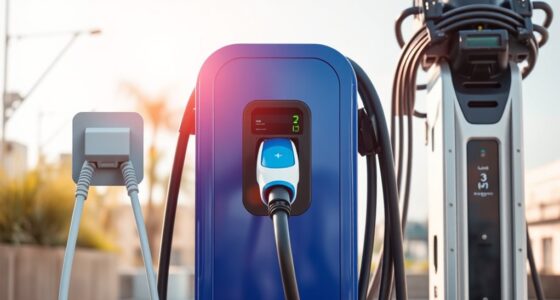
Choosing between a wall outlet, Level 2 charger, and fast charger depends on your driving habits and budget. A wall outlet is simple and suitable for infrequent use, providing 3-5 miles of range per hour. A Level 2 charger offers quicker top-ups at home, adding 20-60 miles per hour. Fast chargers are best for rapid charging on the go. Keep in mind, each option fits different needs—continue exploring to find the best setup for you.
Key Takeaways
- Wall outlets are simple, cost-effective, and suitable for occasional or short-distance charging without extra installation.
- Level 2 chargers require professional installation but offer faster charging speeds for daily use.
- Fast chargers provide rapid charging at public stations, ideal for quick top-ups during travel.
- Charging speed varies from 3-5 miles/hour with wall outlets to 80% charge in 30 minutes with fast chargers.
- Integrating solar panels with any home charger promotes eco-friendly energy use and reduces electricity costs.

Charging your electric vehicle at home is one of the most convenient ways to keep your car ready for daily use. Whether you’re starting your day or winding down at night, having reliable home charging options makes life simpler. When considering your options, you’ll notice three main choices: using a standard wall outlet, installing a Level 2 charger, or opting for a fast charger. Each has its own benefits, and your choice depends on your driving habits, budget, and available space.
Home charging options include standard outlets, Level 2 chargers, and fast chargers—choose based on your driving needs and budget.
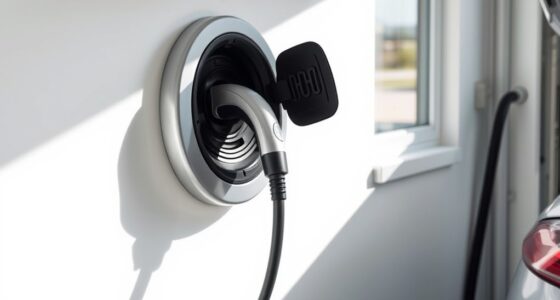
A wall outlet, often called Level 1 charging, is the simplest way to charge your EV. It uses the standard 120-volt socket found in most homes. This method is straightforward because you don’t need extra equipment or electrical work. However, it’s also the slowest option, providing about 3 to 5 miles of range per hour of charging. If you drive infrequently or have a short daily commute, this might be enough. Plus, if you’re interested in solar integration, you can set up a solar panel system to generate your own clean energy. This can offset some of the electricity used for charging, making your eco-friendly ambitions more cost-effective and sustainable. Still, with a wall outlet, you’ll need patience, especially if you have a long commute or need quick turnaround times for your vehicle.
Installing a Level 2 charging station offers a significant upgrade. It operates on a 240-volt circuit, similar to what appliances like a dryer use. This setup allows you to charge your EV much faster—typically adding about 20 to 60 miles of range per hour. Installing a charging station involves some initial work, including choosing a suitable location and possibly upgrading your home’s electrical system. It’s worth consulting a professional for charging station installation to ensure safety and compliance. Once installed, a Level 2 charger makes daily charging quick and convenient, especially if you want to top up overnight or during short breaks. Plus, integrating this system with solar panels can further enhance your energy sustainability, allowing you to charge using renewable energy during sunny days.
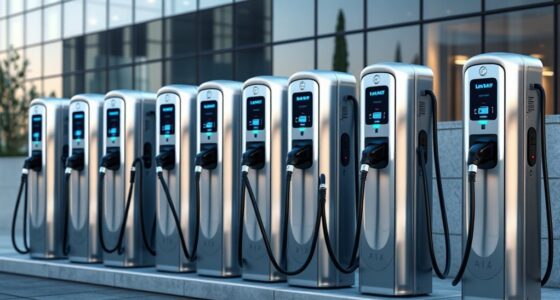
Fast chargers are usually found at public stations, but some advanced homes might opt for high-capacity systems. These can charge your vehicle to 80% in about 30 minutes, making them ideal for quick top-ups if you’re on a tight schedule. However, fast chargers are expensive and require significant electrical infrastructure, which might not be practical for most residential settings. They’re best suited for those who need rapid charging on the go rather than daily home use.
Frequently Asked Questions
What Is the Typical Cost Difference Between the Three Charging Options?
You’ll find that wall outlets are the most affordable, often just costing the price of a regular outlet, with minimal installation costs and low maintenance. Level 2 chargers are pricier initially, with installation expenses ranging from a few hundred to over a thousand dollars, but they offer faster charging. Fast chargers, typically commercial, have high installation and maintenance expenses, making them the most costly option overall.
How Long Does Each Charging Method Take to Fully Charge an EV?
With each charging method, your EV’s charging speed and power requirements vary. Using a standard wall outlet, it takes about 8-12 hours to fully charge your vehicle, making it ideal for overnight charging. A Level 2 charger considerably speeds this up, typically taking 4-6 hours. Fast chargers can top off your EV in approximately 30 minutes to an hour, providing quick power boosts for longer trips.
Are There Any Safety Concerns Associated With Fast Chargers at Home?
Fast chargers at home are generally safe if installed properly, but electrical safety is vital. About 10% of home electrical fires involve improper wiring or outdated systems, raising fire hazard concerns. To avoid risks, make sure your electrical system meets all safety standards and have a licensed electrician install your fast charger. Regular inspections help prevent fire hazards and ensure safe, efficient charging without compromising your home’s safety.
Can I Install a Level 2 Charger Myself or Need Professional Help?
You can attempt a DIY installation of a Level 2 charger if you’re comfortable with electrical work, but it’s highly recommended to obtain professional help. Many jurisdictions require electrical permits for safety and code compliance. Hiring a licensed electrician ensures proper wiring, adherence to local codes, and reduces risks. If you’re unsure about your skills or permits, it’s best to consult a professional to avoid potential hazards or legal issues.
How Does Climate Affect Charging Speed and Efficiency?
Climate impact can substantially affect your EV’s charging speed and efficiency. In extreme cold, battery chemistry slows down, reducing efficiency and charging speed. Hot temperatures can also cause thermal management systems to work harder, potentially lowering overall performance. To maximize temperature efficiency, charge your vehicle in moderate conditions when possible, and consider using climate control features to maintain ideal battery temperature, ensuring faster and more reliable charging.
Conclusion
When choosing your home charging setup, consider your daily driving needs and budget. Did you know that installing a Level 2 charger can cut your charging time by up to 50% compared to a standard wall outlet? Whether you stick with a basic outlet or upgrade to faster charging, the key is finding what works best for your lifestyle. Making the right choice guarantees you stay powered up without hassle or added expense.