
Vehicle-to-grid (V2G) technology allows your EVs to send stored energy back to the grid during times of high demand, helping stabilize power supply and integrate renewable energy sources. As EV batteries act as mobile storage units, they can reduce reliance on fossil fuels and lower energy costs. Utilities might even pay you for participating in these programs. To discover how this innovative system benefits everyone, keep exploring what the future of V2G holds.

Get backup power and energy gear delivered free with Prime
- Fast, free delivery on millions of items
- Prime Video, Amazon Music and more included
- Member-only deals all year
Key Takeaways
- EVs enable bidirectional energy flow, providing stored power to stabilize the grid during peak demand.
- V2G technology allows EV batteries to store excess renewable energy and feed it back into the grid when needed.
- EVs act as decentralized energy resources, reducing reliance on fossil fuel power plants and supporting renewable integration.
- Utility incentives motivate EV owners to participate, enhancing grid stability and reducing energy costs.
- As part of a smart energy ecosystem, EVs contribute to a resilient, sustainable, and cleaner power system of the future.

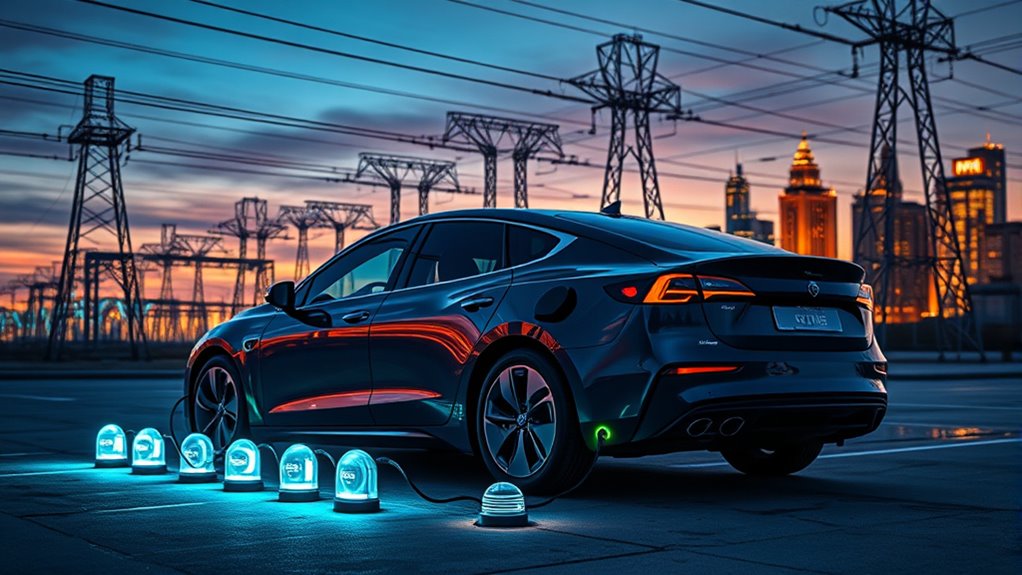
As electric vehicles (EVs) become more popular, their impact on the power grid is increasingly essential to understand. One of the most promising ways EVs can benefit the grid is through vehicle-to-grid (V2G) programs, which enable your car’s battery to act as a mobile energy resource. When you plug in your EV, it doesn’t just charge; it can also discharge electricity back into the grid during peak demand periods. This bidirectional flow of energy transforms your vehicle into a form of battery storage, helping balance supply and demand more efficiently. By leveraging EV batteries in this way, utilities can reduce reliance on fossil fuels and better integrate renewable energy sources like wind and solar, which are inherently variable. This process supports renewable integration by smoothing out fluctuations and making renewable energy more reliable.
Your EV can serve as a decentralized energy storage unit that responds dynamically to grid needs. During times of excess renewable generation, such as midday when solar output is high, your vehicle can store surplus energy. When demand spikes later in the day, that stored energy can be fed back into the grid, reducing the need for traditional power plants to ramp up. This not only helps stabilize the grid but also maximizes the use of renewable sources, making clean energy more accessible and cost-effective. With V2G technology, your EV becomes part of a broader energy ecosystem, contributing to a more resilient and sustainable power system.
Implementing vehicle-to-grid programs also offers potential financial benefits for you. Utilities may compensate you for providing grid services, turning your EV into a source of income when it helps prevent blackouts or reduces energy costs during high-demand periods. This incentivizes more people to participate, expanding the benefits across communities. As the grid becomes smarter with advanced communication and control systems, your EV can automatically respond to signals from utility operators, optimizing its charging and discharging cycles without inconvenient disruptions to your daily routine.
Ultimately, your EV’s role in the future of energy isn’t limited to transportation. It’s a key component in a more flexible, sustainable, and resilient grid. As renewable energy continues to grow, your vehicle’s ability to store and supply power will be vital in balancing the grid, reducing emissions, and ensuring a reliable energy supply. Embracing V2G technology puts you at the forefront of a cleaner, smarter energy future—where your car’s battery helps power the world as much as it powers your daily commute.
Products Worth Considering

Autel Home EV Charger up to 50A J1772 Hardwired Level 2 Charger with 25 ft Cable

Nextbase iQ 4K Smart HD Dash Cam Pro with 64GB microSD Card – Front and Rear View, 1440p, Smart Sense Parking, Emergency SOS, Roadwatch AI

Autel MaxiCOM MK808S Bidirectional Automotive Diagnostic Scanner
As an affiliate, we earn on qualifying purchases.
Frequently Asked Questions
How Secure Are Vehicle-To-Grid Communication Systems Against Cyber Threats?
Vehicle-to-grid communication systems are generally secure, thanks to robust cybersecurity protocols and data encryption. These measures protect against cyber threats by ensuring only authorized access and safeguarding your data. However, no system is completely invulnerable, so ongoing updates and vigilance are essential. By following best practices, you can trust that your EV’s connection to the grid remains protected, helping to prevent potential cyberattacks and ensure reliable energy management.
What Are the Costs Involved for Consumers to Participate in V2G Programs?
Imagine your EV as a savings account, working for you. Participating in V2G programs involves costs like potential battery wear and higher energy rates, but a thorough cost analysis shows user incentives often offset these expenses. You might receive payments or discounts, making it worthwhile. While some upfront investments exist, the benefits of helping the grid and earning incentives can make V2G participation a smart, mutually rewarding choice.
How Do V2G Systems Impact the Longevity of EV Batteries?
V2G systems can slightly impact your EV battery’s longevity by increasing battery degradation due to more charging cycles. Every time you connect your vehicle for V2G, you add to the overall charging cycles, which may accelerate wear over time. However, with advanced battery management and controlled V2G operations, you can minimize this impact. Proper usage helps extend your battery’s lifespan while supporting the grid.
Can V2G Technology Be Integrated With Renewable Energy Sources Effectively?
Yes, V2G technology can be effectively integrated with renewable energy sources. You can use EVs as flexible energy storage units, helping with renewable integration by balancing supply and demand. This allows for smoother energy flow, reduces reliance on fossil fuels, and maximizes renewable potential. By actively managing EV batteries, you support grid stability and promote cleaner energy, making V2G a essential part of sustainable energy systems.
What Regulatory Changes Are Needed to Support Widespread V2G Adoption?
To support widespread V2G adoption, you need a proactive policy framework that promotes seamless grid integration. Regulators should revise rules to recognize EVs as energy assets, incentivize participation, and streamline standards. By creating clear, consistent policies, you enable efficient energy exchange, empowering EV owners and utilities alike. Strengthening regulations fosters flexibility, facilitates future growth, and fuels the progression toward a resilient, renewable-powered grid.
Conclusion
Think of EVs as tiny power plants quietly parked in your driveway, ready to lend a hand when the grid needs it most. Just like a team of firefighters, they can step in during peak times to prevent blackouts, balancing supply and demand. With over 10 million EVs on the road worldwide, their collective power could light up entire neighborhoods. Embracing vehicle-to-grid tech means you’re not just driving; you’re actively shaping a more resilient, sustainable future.