If you linger at a charger after your vehicle is fully charged, you could face idle fees—extra charges meant to encourage you to unplug promptly and free the station for others. These fees act as a reminder to be considerate and avoid blocking access for fellow EV drivers. By following proper charging etiquette, you help keep the network efficient. To learn more about how these fees work and how to avoid them, keep going.

Get backup power and energy gear delivered free with Prime
- Fast, free delivery on millions of items
- Prime Video, Amazon Music and more included
- Member-only deals all year
Key Takeaways
- Idle fees are extra charges for leaving your vehicle plugged in after charging is complete.
- They encourage drivers to unplug promptly, ensuring fair access for all users.
- Lingering at chargers can block other EVs and reduce overall charging station efficiency.
- Following proper etiquette helps prevent unnecessary fees and maintains a smooth charging experience.
- Being mindful of time and moving your vehicle once charged supports a fair, accessible charging network.
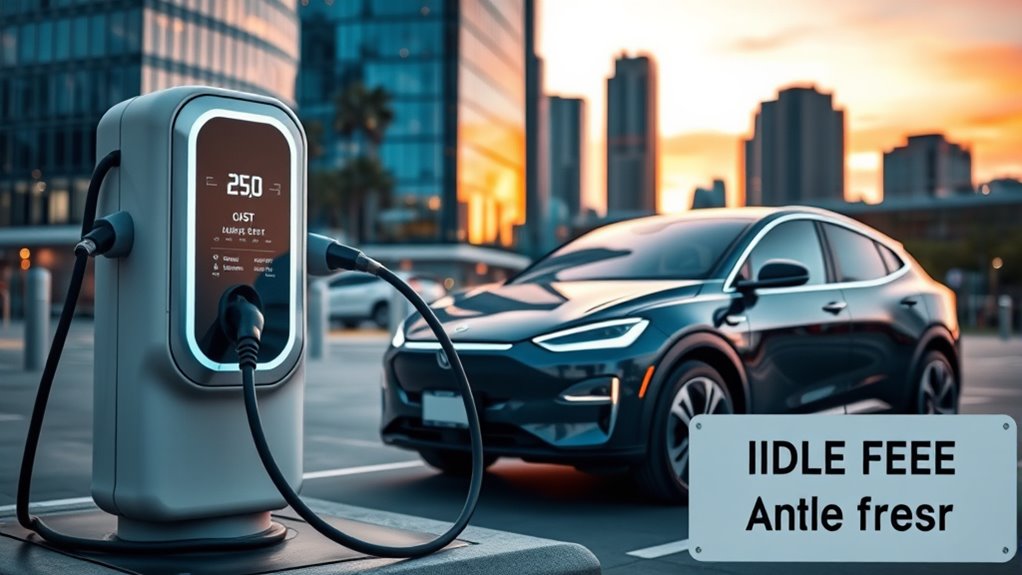
Have you ever wondered what idle fees are and why they might be charged? If you frequently use electric vehicle charging stations, understanding this concept is vital. Idle fees are additional charges imposed when a car remains plugged into a charger after it’s fully charged or after the owner has finished charging. These fees are designed to encourage responsible charging station etiquette, ensuring that chargers are available for others who need them. Essentially, they act as a deterrent against lingering, which can block access and create frustration for fellow EV drivers. Properly managing charging time is also part of charging station etiquette, which helps keep the network accessible for everyone. Charging station etiquette plays a significant role in how these fees are enforced. When you arrive at a station, it’s important to be mindful of the time you spend plugged in. Once your vehicle reaches full charge, you should promptly move it to a parking spot or turn off the charger. Failure to do so can lead to idle fees, as station operators want to prevent drivers from occupying chargers unnecessarily. This is especially relevant in busy areas where charging infrastructure is limited. By following proper etiquette—such as unplugging promptly and respecting other drivers—you help keep the charging network efficient and accessible for everyone.
Products Worth Considering

Autel 40A Level 2 EV Charger, 240V NEMA 14-50 J1772, WiFi, 25ft Cable

Autel MaxiCharger Level 2 EV Charger, 40A, 240V, Indoor/Outdoor, 25‑Foot Flexible Cable, NEMA 14‑50 Plug (White)

DEWALT 20V MAX 1/4-Inch Impact Driver Kit with Battery and Charger (DCF787D1)
As an affiliate, we earn on qualifying purchases.
Frequently Asked Questions
Are Idle Fees Standard Across All Charging Networks?
Not all charging networks have idle fees, but many emphasize fee transparency to promote good charging etiquette. You should always check the specific network’s policies beforehand, as some do charge for lingering after your vehicle is charged. Being aware of these fees helps you avoid unexpected costs and encourages responsible charging behavior, ensuring a fair experience for everyone. Always read the terms to stay informed and respectful.
How Do Charging Stations Detect When a Vehicle Is Finished Charging?
Think of charging stations as vigilant gatekeepers, waiting to signal when your vehicle’s fully charged. They use detection technology, like sensors and communication protocols, to monitor your car’s status. When your vehicle reaches full charge, these systems alert the station, prompting a prompt payment timing. This guarantees you’re billed accurately and prevents lingering, so you can get on your way without unnecessary delays or fees.
Can I Dispute an Idle Fee if I Wasn’T Aware of It?
You can dispute an idle fee if you weren’t aware of it by following the dispute process outlined by the charging station. First, check the station’s notification policies—some providers alert you when charges apply. Then, contact customer support, explain your situation, and provide any proof that you weren’t informed. Be clear and polite; many companies review disputes case-by-case, especially if their policies weren’t properly communicated.
What Are the Best Practices to Avoid Idle Fees?
Imagine the charging station as a busy café—your charging etiquette matters. To avoid idle fees, stay mindful of your charging time and move promptly once your vehicle is full. Check for fee transparency upfront, so you’re aware of costs. Keep an eye on your device, and don’t linger longer than needed. Respect others’ time and energy, ensuring a smooth experience for everyone.
Do Idle Fees Apply to All Types of Electric Vehicles?
Idle fees generally don’t apply to all EVs, but many charging stations implement them to promote proper charging etiquette and prevent hogging chargers. You should always check for fee transparency before charging, as some stations clearly state idle fees in their policies. To avoid extra charges, move your vehicle promptly once charging is complete, respecting others and maintaining good charging etiquette. This keeps the process fair for everyone.
Conclusion
Remember, lingering at a charger isn’t just a minor delay—it’s like holding a seat after the show’s over. Idle fees are the theater’s final curtain call for your car’s charging session, reminding you that everyone’s time and resources matter. So next time you see that charging station, be quick or risk paying the price. After all, in the world of EV charging, time isn’t just money—it’s the ticket that keeps everyone moving.