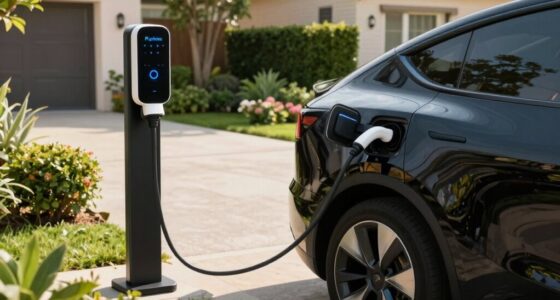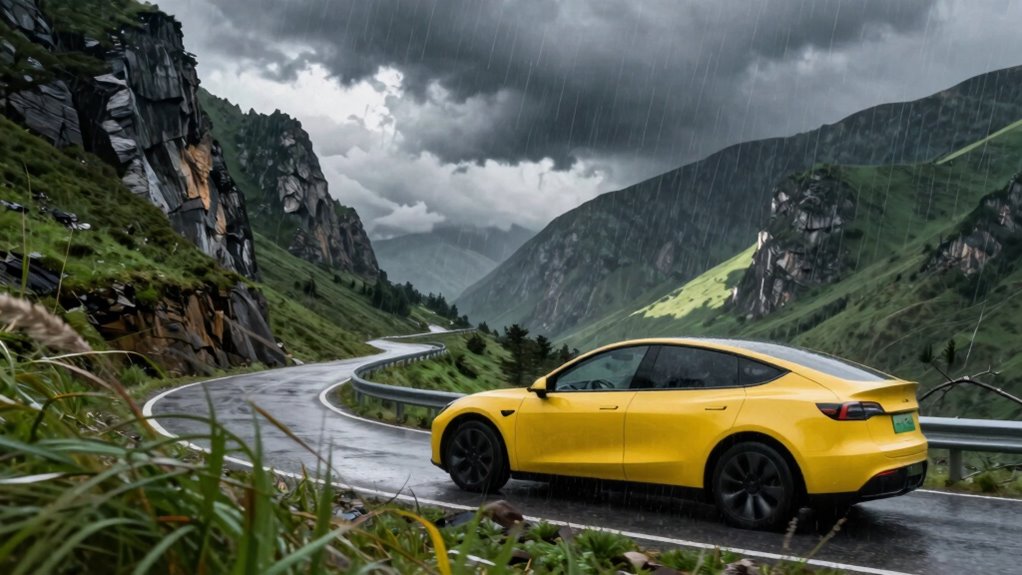

Wind, rain, and elevation all affect your EV’s range by making it work harder. Headwinds and gusts increase airflow resistance, using more battery power, while wet roads reduce traction, raising energy use for acceleration. Uphill climbs demand extra power, draining your battery faster, and descents can help save energy with regenerative braking. Taking these factors into account and adjusting your driving can help maximize your range—more tips even closer just ahead.

Get backup power and energy gear delivered free — and shop member deals
- Fast, free delivery on millions of items
- Access to Prime Big Deal Days deals on October 6–7
- Prime Video, Amazon Music and more included
Key Takeaways
- Strong headwinds increase aerodynamic resistance, causing higher energy consumption and reducing EV range.
- Rain and wet conditions raise rolling resistance and decrease traction, leading to greater battery drain.
- Uphill elevation demands more power, depleting the battery faster, while downhill can enable regenerative braking.
- Open terrain and mountain passes intensify wind and elevation effects, further lowering driving range.
- Adjusting speed, route, and maintaining proper tire pressure can help mitigate external factors’ impact on range.
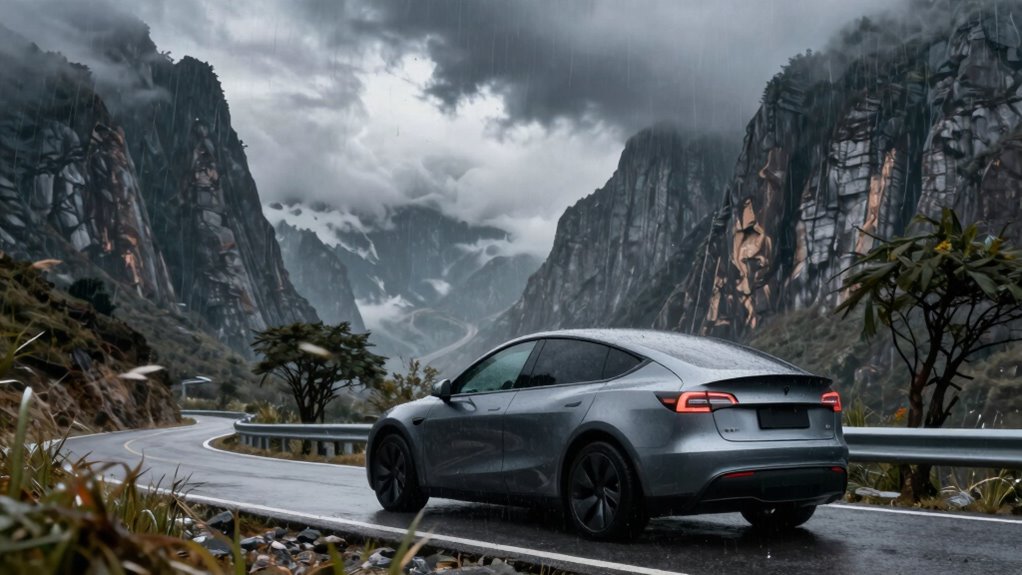
Driving an electric vehicle (EV) isn’t just about the battery and motor; external conditions like wind, rain, and elevation can significantly influence your driving range. When you face strong headwinds or cross gusty areas, your battery efficiency takes a hit because your motor has to work harder to maintain speed. Wind resistance directly affects how much energy your EV consumes, which means you might notice a quicker drain on your battery than expected. If you’re planning a long trip, it’s worth considering weather forecasts and route adjustments to minimize exposure to heavy winds, especially when heading into open plains or mountain passes. Proper solar system design can also help in managing energy use more efficiently during trips. Rain also plays a substantial role in reducing your EV’s range. Wet conditions tend to lower tire traction, which means your vehicle needs more energy to accelerate and maintain stability. When tires lose grip due to slick surfaces, your EV’s systems might engage more frequently to prevent slipping, again increasing energy consumption. Additionally, heavy rain can cause increased rolling resistance, further taxing the battery. Good tire maintenance becomes essential here; well-inflated tires with proper tread help maintain ideal traction and minimize energy loss. Using eco-driving modes or gentle acceleration can help counteract the additional energy drain caused by wet roads, ensuring you get the most out of your battery. External factors such as aerodynamic drag also play a critical role in energy consumption and should be considered when planning longer trips. Incorporating real-time weather data into your route planning can provide valuable insights to optimize your journey. Elevation changes are another factor that impacts your EV’s range. Climbing uphill demands more power from your motor, which quickly depletes your battery. Conversely, descending can save energy if you utilize regenerative braking, but only if your vehicle’s system is functioning properly. If you’re driving through hilly terrain, keep in mind that the increased effort required for ascents reduces overall battery efficiency. Planning routes with less elevation gain or allowing extra charging stops can help you manage your range effectively. Also, consider how the terrain affects tire traction; on steep or uneven surfaces, tires can lose grip, leading to higher energy consumption and potential safety hazards. Being aware of terrain types and their effects can help you adjust your driving to conserve energy and maintain safety. In all these scenarios, understanding how external conditions affect your EV’s battery efficiency and tire traction allows you to adjust your driving habits accordingly. Slowing down in strong winds, maintaining proper tire pressure, and choosing routes wisely can make a noticeable difference in your actual driving range. Being proactive about these factors helps you maximize your EV’s performance and avoid surprises on the road, ensuring your journey remains smooth and efficient regardless of the weather or terrain.
As an affiliate, we earn on qualifying purchases.
Frequently Asked Questions
How Does Temperature Affect EV Range During Different Weather Conditions?
Temperature markedly impacts your EV range. When it’s cold, your battery cooling system works harder to keep the battery warm, consuming more energy and reducing range. Conversely, warm weather helps the battery operate efficiently. Temperature sensors monitor these conditions, allowing the vehicle to adjust performance accordingly. In extreme cold or heat, expect decreased range because the battery’s performance drops and energy is diverted to maintain ideal temperature.
Can Tire Pressure Adjustments Improve EV Range in Adverse Weather?
Tire pressure adjustments can considerably improve your EV range in adverse weather by enhancing grip, reducing rolling resistance, and optimizing weather adaptation. When you keep your tires properly inflated, you maintain better contact with the road, which conserves energy and extends your range. Inflate your tires to recommended levels before facing challenging conditions, and you’ll navigate rain, wind, or elevation changes more efficiently, ensuring your EV performs at its best regardless of weather.
How Do Different Elevation Gains Impact Battery Performance?
Higher elevation gains decrease your EV’s battery performance due to altitude effects and lower air density. As you climb, the thinner air offers less cooling and resistance, causing the battery to work harder and drain faster. You might notice reduced range during steep ascents. To optimize, plan your trips with elevation changes in mind, and consider preconditioning your battery for better efficiency at higher elevations.
What Role Do Driving Habits Play in Weather-Related Range Changes?
Your driving habits greatly influence weather-related range changes. By adopting smooth driving techniques—such as gentle acceleration and braking—you conserve energy and minimize strain on the battery during adverse weather. Avoiding rapid acceleration, maintaining steady speeds, and using regenerative braking help optimize your EV’s efficiency. These energy conservation strategies ensure you get the most out of your battery, even in challenging conditions like rain, wind, or elevation changes.
Are There Specific EV Models Better Suited for Challenging Weather?
Some specific EV models stand out for challenging weather, thanks to sturdy battery durability and superior charging infrastructure. You’ll find that vehicles with robust battery degradation resistance maintain range better in cold or rainy conditions. Models offering fast charging and extensive charging networks help you stay powered up in tough weather. Look for features like thermal management systems that optimize performance, making certain EVs better suited for weather challenges and ensuring reliable range even in harsh conditions.
As an affiliate, we earn on qualifying purchases.
Conclusion
Just as Icarus learned when flying too close to the sun, you’ll find that wind, rain, and elevation can unexpectedly drain your EV’s range. By understanding these natural forces, you can navigate more wisely, conserving energy and avoiding surprises. Remember, every journey is a dance with the elements—your awareness keeps you soaring smoothly, much like Daedalus’s careful flight. Stay mindful of the environment, and your EV will serve you better, mile after mile.
As an affiliate, we earn on qualifying purchases.
As an affiliate, we earn on qualifying purchases.
Fall Picks
fall essentials
As an affiliate, we earn on qualifying purchases.