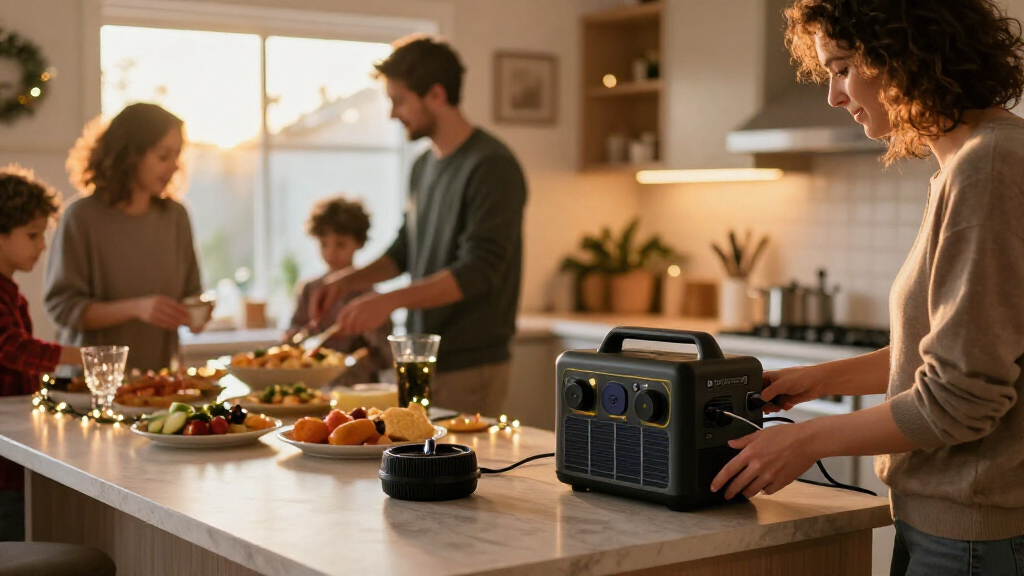

For backup power for holiday hosting, I’d choose the Jackery HomePower 3600 Plus as my best overall pick: its 3,584Wh capacity and 3,600W output give it more room for several household essentials than the smaller stations. The Anker SOLIX C1000 Gen 2 is a more manageable choice for lights, networking, and selected appliances, while the CyberPower CP1500PFCLCD suits sensitive electronics that need an immediate battery-backed handoff. The central tradeoff is between a compact unit that can cover a few essentials and a larger, heavier station that can run more equipment for longer. Traditional UPS models protect electronics but have far less energy for extended outages, so they are not substitutes for high-capacity power stations. Read on for the full breakdown by hosting need, capacity, and ease of use.

Get backup power and energy gear delivered free with Prime
- Fast, free delivery on millions of items
- Prime Video, Amazon Music and more included
- Member-only deals all year
Complete the kit


Key Takeaways
- The Jackery HomePower 3600 Plus leads for multi-device hosting backup among these picks, pairing 3,584Wh of capacity with 3,600W output; its size and weight make it a poor fit for buyers who need a grab-and-go unit.
- The Anker SOLIX C1000 Gen 2 is the most balanced mid-size option for essential lights, routers, and selected appliances, but its 1,024Wh capacity cannot match the longer reserve of the 2,000Wh-class stations.
- Capacity and output solve different problems. A large battery can run gear longer, while wattage determines whether it can start or operate power-hungry appliances; check both before planning a holiday load.
- UPS models and portable power stations fill different roles. The CyberPower CP1500PFCLCD and APC Back-UPS models are suited to electronics and brief interruptions, while the larger stations are better candidates for hours of backup.
- The lineup spans a wide range of hosting needs: compact 288–292Wh units suit small electronics, 1,024Wh models cover a modest essentials plan, and 3,014–5,040Wh options prioritize longer runtime at the cost of portability.
| Anker SOLIX S2000 Portable Power Station, 2,010Wh, 1,500W |  | Best Balanced Backup for a Full Holiday Table | Battery capacity: 2,010Wh | Battery type: LiFePO4 (LFP) | Continuous output: 1,500W | VIEW LATEST PRICE | See Our Full Breakdown |
| BLUETTI Elite 300 Portable Power Station, 3014Wh |  | Best for High-Draw Appliances and Longer Outages | Battery capacity: 3,014Wh | Battery chemistry: LiFePO4 | Battery cycle life: 6000+ cycles | VIEW LATEST PRICE | See Our Full Breakdown |
| APC Back-UPS BE600M1 600VA/330W Battery Backup and Surge Protector |  | Best for Routers and Small Electronics | Capacity: 600VA/330W | Battery-backed outlets: 5 | Surge-only outlets: 2 | VIEW LATEST PRICE | See Our Full Breakdown |
| Jackery Explorer 1000 v2 Portable Power Station, 1024Wh LiFePO4 Battery |  | Best Portable Middle Ground | Battery capacity: 1,024Wh | Battery type: LFP (LiFePO4) | AC output: 1,500W | VIEW LATEST PRICE | See Our Full Breakdown |
| Jackery Explorer 300 Portable Power Station, 292Wh |  | Best Compact Backup for Personal Devices | Battery capacity: 292Wh | Battery chemistry: LiFePO4 | Peak surge output: 600W | VIEW LATEST PRICE | See Our Full Breakdown |
| Jackery Explorer 5000 Plus Portable Power Station, 5040Wh |  | Best for Whole-Home Holiday Backup | Battery capacity: 5,040Wh | Surge output: 14,400W | Output voltage: 120V / 240V | VIEW LATEST PRICE | See Our Full Breakdown |
| Jackery HomePower 2000 Plus v2 Portable Power Station, 2048Wh, 2400W |  | Best for Expandable Mid-Size Backup | Battery capacity: 2,048Wh | AC output: 2,400W | Expandable capacity: Up to 12kWh | VIEW LATEST PRICE | See Our Full Breakdown |
| Anker SOLIX C1000 Gen 2 Portable Power Station, 1,024Wh LiFePO4 Battery |  | Best for Fast Turnaround Between Outages | Battery capacity: 1,024Wh | Output power: 2,000W | Peak output: 3,000W | VIEW LATEST PRICE | See Our Full Breakdown |
| EcoFlow DELTA 3 Portable Power Station, 1024Wh, 1800W |  | Best for Multiple Small Hosting Devices | Capacity: 1,024Wh | AC output: 1,800W | Surge output: 3,600W | VIEW LATEST PRICE | See Our Full Breakdown |
| APC Back-UPS Pro BX1500M 1500VA/900W Battery Backup and Surge Protector |  | Best for Protecting Hosting Electronics | Capacity: 1,500VA / 900W | Outlets: 10 NEMA 5-15R: 5 battery backup and surge protection, 5 surge protection only | Runtime: Up to 68 minutes at a 100W load | VIEW LATEST PRICE | See Our Full Breakdown |
| Anker SOLIX C300 Portable Power Station, 288Wh |  | Best for Quiet Device Charging | Capacity: 288Wh | Running output: 300W | Surge output: 600W | VIEW LATEST PRICE | See Our Full Breakdown |
| Jackery HomePower 3600 Plus Portable Power Station, 3584Wh, 3600W |  | Best for Expandable Whole-Home Backup | Battery capacity: 3,584Wh | Output: 3,600W | Parallel output: Up to 7,200W | VIEW LATEST PRICE | See Our Full Breakdown |
| CyberPower CP1500PFCLCD PFC Sine Wave UPS Battery Backup and Surge Protector |  | Best for Protecting Hosting Tech | Capacity: 1500VA / 1000W | Topology: Line-interactive | Output waveform: Sine wave | VIEW LATEST PRICE | See Our Full Breakdown |
| EF ECOFLOW DELTA Pro Portable Power Station, 3600Wh, 3600W AC Output | 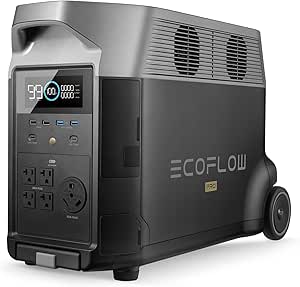 | Best Premium Power Station | Battery capacity: 3,600Wh | Battery type: LFP | AC output: 3,600W | VIEW LATEST PRICE | See Our Full Breakdown |
| Jackery Explorer 2000 v2 Portable Power Station, 2042Wh, 2200W AC Output |  | Best Mid-Size Backup for Small Appliances | Battery capacity: 2,042Wh | Battery chemistry: LiFePO4 | AC output: 2,200W | VIEW LATEST PRICE | See Our Full Breakdown |
| backup power for holiday hosting | Weight | Battery capacity |
|---|---|---|
| Anker SOLIX S2000 Portable Pow | 35.7 lbs | 2,010Wh |
| BLUETTI Elite 300 Portable Pow | 58 lbs | 3,014Wh |
| APC Back-UPS BE600M1 600VA/330 | 7.5 lbs | — |
| Jackery Explorer 1000 v2 Porta | 23.4 lbs | 1,024Wh |
| Jackery Explorer 300 Portable | 7.5 lbs | 292Wh |
| Jackery Explorer 5000 Plus Por | 134.5 pounds | 5,040Wh |
| Jackery HomePower 2000 Plus v2 | 40.6 pounds | 2,048Wh |
| Anker SOLIX C1000 Gen 2 Portab | 11.3kg | 1,024Wh |
| EcoFlow DELTA 3 Portable Power | 12.5kg | — |
| APC Back-UPS Pro BX1500M 1500V | — | — |
| Anker SOLIX C300 Portable Powe | 4.13 kg | — |
| Jackery HomePower 3600 Plus Po | 77.2 pounds | 3,584Wh |
| CyberPower CP1500PFCLCD PFC Si | 24.9 pounds | — |
| EF ECOFLOW DELTA Pro Portable | 99 pounds | 3,600Wh |
| Jackery Explorer 2000 v2 Porta | 39.5 pounds | 2,042Wh |
More Details on Our Top Picks
Anker SOLIX S2000 Portable Power Station, 2,010Wh, 1,500W
I’d put the Anker SOLIX S2000 near the top for hosts who want one portable unit to keep several essentials running through an outage. Its 2,010Wh LiFePO4 battery and eight outlets give it more capacity and connection options than the Jackery Explorer 1000 v2, making it a better fit for a refrigerator plus smaller devices. The stated fridge runtime is up to 35 hours, but actual results depend on the appliance and conditions, so I wouldn’t treat that as a guaranteed schedule.
The under-10ms UPS switchover can help protect connected electronics, while six recharge methods and up to 400W solar input add flexibility. The tradeoff is its 1,500W continuous output, which limits how many high-draw kitchen appliances can run together. It also lacks a 12V DC port, unlike the BLUETTI Elite 300.
Pros:- 2,010Wh LiFePO4 battery offers substantial stored energy for outage essentials.
- Eight outlets make it easier to connect several household devices at once.
- Up to 400W solar input and six recharge methods provide flexible replenishment options.
- Under-10ms UPS switchover can help keep connected electronics powered during a brief interruption.
Cons:- 1,500W continuous output can limit simultaneous use of high-draw appliances.
- No 12V DC port for compatible devices.
- Real-world appliance runtime varies with load and conditions.
Best for: Hosts who want to back up a refrigerator and several smaller devices, with enough outlets to avoid juggling connections.
Not ideal for: Hosts planning to run multiple high-wattage kitchen appliances at once, or anyone who needs a 12V DC port.
- Battery capacity:2,010Wh
- Battery type:LiFePO4 (LFP)
- Continuous output:1,500W
- Peak output:3,000W
- Solar input:Up to 400W
- Total outlets:8
- UPS switchover:Under 10ms
- Weight:35.7 lbs
Our verdict“Choose the S2000 for broad household backup and multiple connections, but look to the BLUETTI Elite 300 for higher output and a 12V/30A port.”
BLUETTI Elite 300 Portable Power Station, 3014Wh
For holiday hosts prioritizing capacity and output over easy carrying, I’d choose the BLUETTI Elite 300. Its 3,014Wh battery and 2,400W output exceed the Anker SOLIX S2000’s capacity and continuous output, giving it more headroom for demanding loads and a longer stretch of essential backup. The 4,800W surge rating also suits devices with a higher startup draw, though it doesn’t mean every appliance can run together within the continuous limit.
The TT-30 RV outlet and 12V/30A output make it more versatile for RV owners than the Jackery Explorer 1000 v2. AC charging can reach 80% in as little as 78 minutes, and the unit supports solar, car, lead-acid, and generator charging. The main costs in convenience are its 58-pound weight and just two power outlets; hosts with many small devices may need a power strip, within output limits.
Pros:- 3,014Wh capacity and 2,400W output provide more headroom than the Anker SOLIX S2000.
- 4,800W surge capacity can accommodate brief startup demands from compatible equipment.
- TT-30 RV outlet and 12V/30A DC output add useful connection options.
- AC charging can reach 80% in as little as 78 minutes.
Cons:- At 58 lbs, it is difficult to move casually between rooms.
- Only two power outlets may require careful connection planning.
- The stated 78-minute charge time is for reaching 80%, not a full recharge.
Best for: Hosts with high-draw essentials or RV users who want substantial stored energy, a TT-30 connection, and high-current DC output.
Not ideal for: Anyone who needs a light, frequently moved power station or many built-in outlets for separate devices.
- Battery capacity:3,014Wh
- Battery chemistry:LiFePO4
- Battery cycle life:6000+ cycles
- Output wattage:2,400W
- Surge power:4,800W
- RV output:TT-30 outlet
- AC charging:0–80% in as little as 78 minutes
- Weight:58 lbs
Our verdict“Pick the Elite 300 when capacity, output, and RV-style connections matter more than portability or a large number of outlets.”
APC Back-UPS BE600M1 600VA/330W Battery Backup and Surge Protector
I’d reserve the APC Back-UPS BE600M1 for the quiet, low-power side of holiday hosting: keeping a router, computer, or other small electronics on through a short interruption. Unlike the portable power stations here, it is a plug-in UPS with five battery-backed outlets, two surge-only outlets, and a replaceable battery. That makes it a practical desk or media-center backup, not a source of power for a refrigerator or cooking equipment.
Its listed runtime is 23 minutes at a 100W load, so it offers a short window to maintain connectivity or shut equipment down safely rather than hours of household backup. The Jackery Explorer 300 has much greater flexibility for portable charging, while the APC is better suited to staying connected to fixed electronics. The tradeoffs are its 330W capacity, 10-hour battery charge time, and separately sold replacement battery.
Pros:- Five battery-backed outlets combine backup power and surge protection.
- Two additional surge-only outlets provide connections for equipment that does not need battery backup.
- User-replaceable battery can extend the unit’s service life.
- Compact design can sit on the floor or mount on a wall.
Cons:- 330W capacity and short runtime are not suited to major household appliances.
- Replacement battery is sold separately.
- A full battery charge takes 10 hours.
Best for: Hosts who want a stationary backup for a router, computer, or media electronics during brief power interruptions.
Not ideal for: Anyone expecting to run a refrigerator, lights across multiple rooms, or kitchen appliances through an extended outage.
- Capacity:600VA/330W
- Battery-backed outlets:5
- Surge-only outlets:2
- USB port:1.5A USB Type-A
- Runtime:23 minutes at 100W load
- Battery charge time:10 hours
- Weight:7.5 lbs
- Mounting:Floor- or wall-mountable
Our verdict“Choose the BE600M1 to keep a router or computer alive through brief outages, not to power the holiday meal or refrigerator.”
Jackery Explorer 1000 v2 Portable Power Station, 1024Wh LiFePO4 Battery
The Jackery Explorer 1000 v2 suits hosts who want meaningful backup capacity without carrying a 35-pound-plus station. At 23.4 pounds with a foldable handle, it is easier to move around the home than the Anker SOLIX S2000 or BLUETTI Elite 300. Its 1,500W AC output matches the Anker’s continuous rating, but its 1,024Wh battery stores about half as much energy as the S2000, so I’d prioritize selected essentials rather than expect long refrigerator coverage.
Two AC outlets, USB-C PD charging, a car port, and 10ms UPS switchover cover a useful mix of devices. App-controlled modes include a 50-minute emergency charge, but that setting must be enabled before each charge. Solar panels are not included, and solar charging is limited to Jackery panels. Compared with the lighter Explorer 300, this model offers far more capacity and AC output, at the cost of extra weight.
Pros:- 1,500W AC output supports a wider range of devices than the Jackery Explorer 300.
- Foldable handle and 23.4-pound weight make it easier to relocate than the larger Anker and BLUETTI stations.
- 10ms UPS switchover can help keep connected electronics powered through brief interruptions.
- App modes include quiet overnight operation and an optional emergency charging mode.
Cons:- 1,024Wh capacity is substantially below the Anker SOLIX S2000 and BLUETTI Elite 300.
- Only two AC outlets are built in.
- Solar panels are not included, and solar charging is limited to Jackery panels.
Best for: Hosts who need a movable station for selected household essentials and want more AC power than a compact 300W unit can provide.
Not ideal for: Buyers seeking long-duration refrigerator backup, many AC outlets, or solar-panel flexibility across brands.
- Battery capacity:1,024Wh
- Battery type:LFP (LiFePO4)
- AC output:1,500W
- Surge peak:3,000W
- UPS switchover:10ms
- Ports:2 USB-C, 1 USB-A, 1 DC car port, 2 AC ports
- Weight:23.4 lbs
- Solar compatibility:Jackery solar panels only; panels not included
Our verdict“Choose the Explorer 1000 v2 for a portable balance of useful AC output and moderate capacity, but select a larger station for longer appliance backup.”
Jackery Explorer 300 Portable Power Station, 292Wh
For a host who mainly wants phones, a laptop, or a small compatible device topped up, the Jackery Explorer 300 is the easiest unit here to carry and place out of the way. At 7.5 pounds, it is much more portable than the Explorer 1000 v2, but its 292Wh capacity and 300W rated output put it in a different class: it is not a substitute for the Anker SOLIX S2000 or a practical choice for running a refrigerator through a long outage.
Its six ports include a 100W USB-C PD port, two AC outlets, USB-A ports, and a car port, which suits a small cluster of personal electronics. The LiFePO4 battery is rated for over 4,000 cycles before reaching 70% capacity. Solar charging works with compatible Jackery panels, which are not included. I’d choose it for portability and modest loads, not for whole-room or kitchen backup.
Pros:- At 7.5 lbs, it is far easier to carry than the larger stations in this roundup.
- Six ports include a 100W USB-C PD port and two AC outlets.
- LiFePO4 battery is rated for over 4,000 cycles before reaching 70% capacity.
- Compatible with Jackery solar panels for off-grid recharging.
Cons:- 292Wh capacity provides limited runtime for household backup.
- 300W rated output rules out many high-draw appliances.
- Solar panel is not included, and solar charging is limited to compatible Jackery panels.
Best for: Hosts who want a light, portable source for phones, laptops, and other low-power personal devices during a short interruption.
Not ideal for: Anyone planning to power a refrigerator, high-draw kitchen appliance, or several substantial loads for an extended outage.
- Battery capacity:292Wh
- Battery chemistry:LiFePO4
- Peak surge output:600W
- Weight:7.5 lbs
- Ports:2 AC, 1 USB-C, 2 USB-A, 1 car port
- USB-C output:100W
- Solar charging:About 80% in 2.8 hours with a 100W panel; panel not included
Our verdict“Pick the Explorer 300 for portable backup of personal electronics, but choose the Explorer 1000 v2 or a larger station for household appliances.”
Jackery Explorer 5000 Plus Portable Power Station, 5040Wh
For hosts who want one unit to cover more than phones and lighting, the Jackery Explorer 5000 Plus offers the greatest stated capacity and output in this group: 5,040Wh and 7,200W, with 120V and 240V support. That makes it a better fit than the Jackery HomePower 2000 Plus v2 for heavier household loads or longer outages, while its expansion option can grow to 60kWh. The 4,000W solar input is useful for replenishing a large reserve, but the roughly two-hour recharge claim depends on suitable solar input; panels are optional. Its main hosting drawback is practical: at 134.5 pounds, this is not a station I’d want to move between rooms or load into a car casually. Choose it for substantial backup, not portability.
Pros:- 5,040Wh capacity and 7,200W rated output can support more demanding hosting loads than the smaller Jackery HomePower 2000 Plus v2.
- 120V and 240V support broadens the range of compatible household appliances.
- Expandable capacity up to 60kWh supports longer backup plans.
- Up to 4,000W solar input and LiFePO₄ battery chemistry support replenishment and long-term use.
Cons:- At 134.5 pounds, it is difficult to reposition without planning.
- Solar panels are optional, adding a separate requirement for the stated solar recharge approach.
- Its size and capacity may be excessive for hosts who only need brief backup for small electronics and lights.
Best for: Hosts seeking substantial backup for multiple household circuits and willing to plan a mostly stationary setup.
Not ideal for: Apartment hosts or anyone who needs a lightweight unit they can move easily; its 134.5-pound weight and optional solar panels make it less convenient for casual, portable use.
- Battery capacity:5,040Wh
- Surge output:14,400W
- Output voltage:120V / 240V
- Expandable capacity:Up to 60kWh
- Maximum solar input:4,000W
- Battery type:LiFePO₄
- Weight:134.5 pounds
- Outlets:9
Our verdict“Choose the Explorer 5000 Plus when broad, expandable household backup matters more than easy portability.”
Jackery HomePower 2000 Plus v2 Portable Power Station, 2048Wh, 2400W
The Jackery HomePower 2000 Plus v2 sits between compact stations and the much larger Explorer 5000 Plus: its 2,048Wh capacity and 2,400W AC output give holiday hosts a meaningful reserve without committing to a 134.5-pound system. Its strongest distinction is expandability up to 12kWh, which lets buyers start with a more manageable unit and add capacity for longer outages. Priority routing for essential circuits can help keep selected needs ahead of less important loads, while the 6,000-plus-cycle LFP battery suits repeat use. At 40.6 pounds, it is still a substantial lift, and the 120V AC specification is less flexible than the Explorer 5000 Plus’s 120V/240V support. Solar is optional, so it is not a complete solar-ready package on its own.
Pros:- 2,048Wh capacity and 2,400W output offer more reserve than the Anker SOLIX C1000 Gen 2.
- Expandable capacity up to 12kWh supports a larger backup setup over time.
- Priority routing helps direct power to essential circuits.
- LFP battery is rated for more than 6,000 cycles, and the 140W USB-C port can serve compatible devices.
Cons:- At 40.6 pounds, it is less convenient to move than the smaller Anker SOLIX C1000 Gen 2.
- Its listed 120V AC output does not match the Explorer 5000 Plus’s 120V/240V flexibility.
- Solar panels are optional.
Best for: Homeowners who want a mid-size starting point for essential backup, with the option to expand for longer outages.
Not ideal for: Hosts needing 240V appliance support or a light station for frequent carrying; this model is 120V AC and weighs 40.6 pounds.
- Battery capacity:2,048Wh
- AC output:2,400W
- Expandable capacity:Up to 12kWh
- Battery type:LFP
- Battery cycle life:More than 6,000 cycles
- USB-C output:140W, AVS protocol support
- Voltage:120V AC
- Weight:40.6 pounds
Our verdict“Pick the HomePower 2000 Plus v2 if you want expandable essential-load backup without stepping up to the Explorer 5000 Plus’s size and weight.”
Anker SOLIX C1000 Gen 2 Portable Power Station, 1,024Wh LiFePO4 Battery
When an outage interrupts dinner plans but the backup window may be short, the Anker SOLIX C1000 Gen 2 offers a useful mix of 1,024Wh capacity, 2,000W output, and quick recharge options. Its stated 49-minute AC recharge can help restore a reserve between disruptions, and solar input adds another route when conditions allow. A sub-10ms UPS switchover and app-based management also suit hosts who want to monitor connected essentials. Compared with the EcoFlow DELTA 3, the Anker lists higher output and faster AC recharge, while both have 1,024Wh batteries and 4,000-cycle claims. The tradeoff is that Anker’s solar input tops out at 600W, and the supplied data conflicts on whether there are nine or ten power outlets. At 11.3kg, it is portable, but not featherweight.
Pros:- 2,000W output and 3,000W peak provide more output headroom than the EcoFlow DELTA 3’s 1,800W AC rating.
- Stated 49-minute AC recharge can shorten downtime between outages.
- Under-10ms UPS switchover and app-based power management suit connected essentials.
- LiFePO₄ battery is rated to retain at least 80% capacity after 4,000 cycles.
Cons:- The 1,024Wh capacity is modest for keeping several household appliances running through a long outage.
- Solar input is limited to 600W, below the EcoFlow DELTA 3’s stated 500W only slightly, but not enough for rapid large-scale replenishment.
- Product data conflicts on the number of power outlets, listing 10 ports in one place and 9 total power outlets in another.
Best for: Hosts who want a portable 1kWh-class station that can recharge quickly between short outages and keep essential electronics connected.
Not ideal for: Buyers planning extended backup for several large appliances or relying heavily on solar replenishment; capacity is limited to 1,024Wh and solar input to 600W.
- Battery capacity:1,024Wh
- Output power:2,000W
- Peak output:3,000W
- AC recharge time:49 minutes at 1,600W
- Solar input:Up to 600W, 60V maximum
- UPS switchover:Under 10ms
- Battery chemistry:LiFePO₄
- Weight:11.3kg
Our verdict“Choose the C1000 Gen 2 for quick-recharging backup for essential hosting electronics, rather than long-duration household power.”
EcoFlow DELTA 3 Portable Power Station, 1024Wh, 1800W
The EcoFlow DELTA 3 is a practical match for hosts who need to keep a spread of smaller devices powered: it lists 13 power outlets, a 100W USB-C output, and 1,024Wh of capacity. That outlet count gives it an advantage for connecting several lights, chargers, and networking devices at once, although the 1,800W AC rating is lower than the Anker SOLIX C1000 Gen 2’s 2,000W. Its recharge claim needs context: 56 minutes to full charge uses combined AC and solar input, rather than AC alone. Expansion to 5kWh is available with compatible EcoFlow batteries, but those packs are separate. The IP65-rated battery pack and 4,000-cycle rating add useful durability details; neither changes the fact that 1,024Wh is a limited reserve for long outages.
Pros:- Thirteen listed power outlets make it easier to connect multiple hosting devices than with a unit offering fewer outlets.
- Expandable to 5kWh with compatible EcoFlow battery packs.
- 100W USB-C output can power compatible higher-demand devices.
- LiFePO₄ battery is rated for 4,000 cycles to 80% capacity, and the battery pack has IP65 protection.
Cons:- Its 1,800W AC output is lower than the Anker SOLIX C1000 Gen 2’s 2,000W rating.
- The 56-minute full recharge claim requires combined AC and solar input.
- Expansion depends on separately acquired compatible EcoFlow batteries.
Best for: Hosts who need to connect several low- to moderate-draw devices and may want to expand capacity with compatible EcoFlow batteries.
Not ideal for: People seeking the highest output in a 1kWh-class station or expecting the 56-minute full recharge from AC power alone.
- Capacity:1,024Wh
- AC output:1,800W
- Surge output:3,600W
- X-Boost output:2,200W
- Solar input:500W
- Recharge time:56 minutes to full charge with combined AC and solar input
- Expandable capacity:Up to 5kWh with compatible EcoFlow batteries
- Power outlets:13
- Weight:12.5kg
Our verdict“Choose the DELTA 3 when outlet count and expandable capacity matter more than the highest output or a simple AC-only fast recharge.”
APC Back-UPS Pro BX1500M 1500VA/900W Battery Backup and Surge Protector
The APC Back-UPS Pro BX1500M serves a different purpose from the portable power stations here: it is designed to bridge short interruptions for electronics, not run kitchen appliances or sustain a household during a long outage. For holiday hosting, that makes it a sensible backup for a router, computer, or other compatible equipment that needs to stay on while power returns. Automatic voltage regulation can correct voltage fluctuations without drawing on the battery, and the LCD shows estimated runtime and connected load. Compared with the Anker SOLIX C1000 Gen 2, the APC is much narrower in scope but has a replaceable battery and dedicated surge-only outlets for peripherals. Its 900W ceiling, stepped-approximation sine wave, and load-dependent runtime rule it out for high-demand appliances.
Pros:- Ten outlets separate five battery-backup outlets from five surge-protection-only outlets.
- Automatic voltage regulation stabilizes 120V input without using battery power.
- LCD reports estimated runtime, battery charge, connected load, and input voltage.
- Replaceable battery allows battery renewal without replacing the entire UPS.
Cons:- 900W capacity and load-dependent runtime make it unsuitable for high-demand appliances or extended household backup.
- Only five of the ten outlets provide battery backup.
- Replacement battery is sold separately, and the output waveform is a stepped approximation to a sine wave.
Best for: Hosts who want short-duration backup and surge protection for a router, computer, or home-office electronics during gatherings.
Not ideal for: Anyone expecting to power a refrigerator, cooking appliance, or multiple household loads through a lengthy outage; this UPS is rated at 900W and runtime depends on load.
- Capacity:1,500VA / 900W
- Outlets:10 NEMA 5-15R: 5 battery backup and surge protection, 5 surge protection only
- Runtime:Up to 68 minutes at a 100W load
- Voltage regulation:Automatic Voltage Regulation at 120V
- Data-line protection:Coaxial and Ethernet
- Display:LCD
- Replacement battery:APC APCRBC124, sold separately
- Output waveform:Stepped approximation to a sine wave
Our verdict“Choose the BX1500M to keep compatible hosting electronics online briefly, not to power the kitchen or replace a portable power station.”
Anker SOLIX C300 Portable Power Station, 288Wh
For holiday hosts who mainly want to keep phones, laptops, and cameras charged during an outage, the Anker SOLIX C300 is the most compact, low-noise pick here. Its eight ports let several guests charge at once, while its stated 25 dB operating noise is less intrusive in a living area than a large backup unit. Compared with the Jackery Explorer 2000 v2, the C300 is far easier to carry and suits small electronics rather than kitchen appliances or extended household backup. The tradeoff is its 288Wh capacity and 300W output: it cannot cover the same range of hosting needs as the larger stations. Wall, car, solar, and USB-C charging add flexibility, but the strap and solar panel are not included.
Pros:- Eight charging ports accommodate several guests’ small devices.
- Compact 4.13 kg design and stated 25 dB operating noise suit indoor use.
- Can recharge from a wall outlet, solar panel, car, or USB-C.
- LiFePO4 battery is rated for 3,000 cycles.
Cons:- 288Wh capacity is better suited to electronics than appliances or prolonged backup.
- Shoulder strap and solar panel are not included.
- Not compatible with Anker SOLIX PS30, PS200, or PS400 panels.
Best for: Hosts who want a lightweight backup for guest phones, laptops, cameras, and other small electronics.
Not ideal for: Anyone hoping to run a refrigerator, cooking appliance, or several household devices through a long outage; its capacity and 300W output are limited.
- Capacity:288Wh
- Running output:300W
- Surge output:600W
- Charging ports:8 total: 3 AC outlets, 1 car socket, 3 USB-C, 1 USB-A
- Battery:LiFePO4; rated for 3,000 cycles
- Wall recharge:80% in 50 minutes
- Weight:4.13 kg
- Noise level:25 dB at 3.3 ft
Our verdict“Choose the C300 for quiet, portable charging of guests’ small devices, not for powering holiday appliances.”
Jackery HomePower 3600 Plus Portable Power Station, 3584Wh, 3600W
If holiday hosting means keeping more of the home running through an extended outage, the Jackery HomePower 3600 Plus offers a substantial step up from mid-capacity options. Its 3,584Wh battery and 3,600W output can serve a broader mix of household loads than the Jackery Explorer 2000 v2, and parallel operation supports 240V and up to 7,200W output. Capacity can also expand, making it a stronger fit for a host planning backup beyond a single evening. Multiple charging routes—including hybrid AC+DC, solar, and a gas generator—help adapt to different outage conditions. The cost of that coverage is size and weight: at 77.2 pounds, it rolls on wheels but is still awkward to lift. Its two outlets also offer fewer plug-in positions than the DELTA Pro’s five AC outlets.
Pros:- 3,584Wh capacity and 3,600W output cover more demanding backup needs than mid-size stations.
- Expandable capacity and parallel operation support larger power requirements.
- AC, solar, gas-generator, and hybrid AC+DC charging offer multiple recharge routes.
- Wheels and a telescopic handle help with rolling the 77.2-pound unit.
Cons:- At 77.2 pounds, it remains difficult to lift despite its wheels.
- Only two outlets are listed, limiting direct connections for multiple appliances.
- Solar panel is optional and not included.
Best for: Hosts seeking high-capacity outage backup who have space to store a wheeled unit and may want to expand their setup.
Not ideal for: People who need a light, easy-to-lift station or many AC plug-in points without adding a power strip.
- Battery capacity:3,584Wh
- Output:3,600W
- Parallel output:Up to 7,200W
- Voltage:120V; 240V in parallel
- Battery:LFP; rated for 6,000 cycles
- Charging options:Hybrid AC+DC, AC, solar, gas generator
- Weight:77.2 pounds
- Outlets:2
Our verdict“Pick the HomePower 3600 Plus if expandable, high-output backup matters more than easy lifting or abundant outlets.”
CyberPower CP1500PFCLCD PFC Sine Wave UPS Battery Backup and Surge Protector
For a host whose priority is keeping the router, computer, or other sensitive electronics online through brief interruptions, the CyberPower CP1500PFCLCD is a focused alternative to the portable stations in this roundup. Its sine wave output supports active PFC power supplies, and automatic voltage regulation handles minor fluctuations without switching to battery power. The tilting LCD makes power status easier to check, while 12 outlets provide a mix of battery backup and surge protection. Unlike the Jackery HomePower 3600 Plus, this is not designed to run substantial household loads or provide long-duration power; only six outlets receive battery backup. That limitation is also part of its role: it is a desktop-style UPS for essential electronics, not a general-purpose station. It also requires two 12V batteries.
Pros:- Sine wave output supports devices with active PFC power supplies.
- Automatic voltage regulation corrects minor power fluctuations without using battery power.
- Twelve outlets combine battery-backed and surge-protected connections.
- Tilting color LCD and USB-A and USB-C charging ports add useful access.
Cons:- Only six outlets provide battery backup.
- Its UPS design is intended for electronics, not broad household or appliance backup.
- Requires two 12V batteries.
Best for: Hosts who need short-term backup and surge protection for a modem, router, computer, or other sensitive electronics.
Not ideal for: Anyone seeking long-duration outage power for kitchen appliances, lighting throughout the home, or several high-wattage loads.
- Capacity:1500VA / 1000W
- Topology:Line-interactive
- Output waveform:Sine wave
- Outlets:12 total: 6 battery backup and surge protected, 6 surge protected
- USB charging:1 Type-A and 1 Type-C
- Voltage regulation:Automatic Voltage Regulation (AVR)
- Dimensions:14 x 3.9 x 11 inches
- Weight:24.9 pounds
Our verdict“Choose this UPS to keep hosting-related networking and computer equipment protected, not to power the kitchen during an outage.”
EF ECOFLOW DELTA Pro Portable Power Station, 3600Wh, 3600W AC Output
The EcoFlow DELTA Pro is the premium pick for hosts who want substantial backup capacity, a wide range of connections, and room to scale. Its 3,600Wh LFP battery and 3,600W AC output put it in the same broad-capacity class as the Jackery HomePower 3600 Plus, but the DELTA Pro lists five AC outlets and 15 output methods, giving a host more ways to connect party and household gear directly. It can recharge from a wall outlet, solar, an EV station, a smart generator, or a car outlet; app control adds remote monitoring and setting changes. Expansion up to 25kWh supports longer backup plans. The tradeoff is real: 99 pounds makes moving it a two-person-style task for many households, and fast solar recharging depends on four 400W panels.
Pros:- 3,600Wh LFP battery and 3,600W output support substantial backup loads.
- Five AC outlets and multiple USB and DC connections simplify powering varied devices.
- Capacity can expand up to 25kWh with compatible equipment.
- Wall, solar, EV station, smart generator, and car charging options plus app control.
Cons:- At 99 pounds, the unit is difficult to move without help.
- Fast solar recharge depends on using four 400W panels.
- Compatible extra batteries or smart generators are needed for expansion.
Best for: Hosts who need high output, numerous connection options, app monitoring, and a path to expand backup capacity.
Not ideal for: Buyers who need a compact station they can move alone or want solar charging without investing in multiple panels.
- Battery capacity:3,600Wh
- Battery type:LFP
- AC output:3,600W
- Maximum output:4,500W with X-Boost
- Expansion capacity:Up to 25kWh
- AC outlets:5
- Charging methods:EV station, solar, wall outlet, smart generator, car outlet
- Weight:99 pounds
Our verdict“Choose the DELTA Pro for feature-rich, expandable household backup if its weight and accessory needs fit your setup.”
Jackery Explorer 2000 v2 Portable Power Station, 2042Wh, 2200W AC Output
The Jackery Explorer 2000 v2 is a practical middle ground for holiday hosts who need more than phone charging but do not want a 77-pound or 99-pound station. Its 2,042Wh capacity and 2,200W AC output can support a wider range of outage needs than the Anker SOLIX C300, while its 39.5-pound body is more manageable than the larger Jackery HomePower 3600 Plus. Three AC ports give guests or essential devices direct connections, and a 100W USB-C PD port handles compatible electronics. The 20ms UPS switching is useful for equipment that needs continuous power during a brief interruption. The compromise is less capacity and output than the DELTA Pro or HomePower 3600 Plus, and solar panels are not stated to be included.
Pros:- 2,042Wh capacity and 2,200W output offer a useful step up from compact device chargers.
- Three AC ports and a 100W USB-C PD port support a mix of household and personal electronics.
- 20ms UPS switching can keep connected equipment powered through brief interruptions.
- Quiet charging mode is stated below 30 dB.
Cons:- At 39.5 pounds, it may be cumbersome to carry or reposition.
- Its capacity and output fall short of the Jackery HomePower 3600 Plus and EcoFlow DELTA Pro.
- Solar panels are optional and are not stated to be included.
Best for: Hosts who want a carryable station for several electronics and selected small appliances, without stepping up to a 3,600Wh unit.
Not ideal for: Buyers planning to power multiple high-draw appliances or sustain a broad household load through a prolonged outage.
- Battery capacity:2,042Wh
- Battery chemistry:LiFePO4
- AC output:2,200W
- AC ports:3
- USB-C PD output:100W
- AC recharge:0–80% in 66 minutes
- UPS switching time:20 ms
- Weight:39.5 pounds
Our verdict“Pick the Explorer 2000 v2 for a balance of meaningful backup capacity and more manageable size, rather than maximum whole-home coverage.”
How We Picked
I ranked these options by how well they address the real demands of holiday hosting: keeping essential devices available, supporting the intended electrical load, and providing enough stored energy to make a useful difference during an outage. I weighed capacity and AC output separately, since watt-hours affect runtime while watts limit what can run at once. I also considered portability, usability, and whether the product is a traditional UPS or a portable power station, since those categories serve different outage scenarios.
The order favors products that offer a practical balance of usable capacity, output, and hosting flexibility. Larger stations rank well for households that need to keep more equipment running, but their bulk and higher power commitment keep them from being universal picks. Smaller stations and UPS models earn narrower roles when they suit a specific task particularly well; they rank lower for whole-room or extended hosting backup because their stored energy is more limited.
Factors to Consider When Choosing Backup Power For Holiday Hosting
Before choosing a unit, I’d map out what needs to stay powered and for how long. Holiday loads often include a mix of low-draw essentials and appliances with demanding startup or heating cycles, so one headline capacity number cannot answer every question. These factors help turn a broad backup plan into a realistic one.
List the Loads You Actually Need
Separate must-have equipment from conveniences before comparing stations. A router, a few LED lights, and phone charging call for a different backup plan than a refrigerator, coffee maker, and several kitchen appliances. Check each device’s label or manual for its running wattage, and look for startup demands on motors such as refrigerators. Avoid adding every appliance you might use at once; that can push the required output far beyond the station’s limit. A short priority list helps you choose a unit for the outage you want to manage, rather than paying for capacity aimed at an unlikely all-at-once load. Keep a wired or battery-powered light option available so the station’s outlets remain for higher-priority devices.
Read Watt-Hours and Watts as Separate Limits
Watt-hours estimate how much energy a battery stores, while watts describe how much power it can deliver at one time. A station with generous capacity can still be unsuitable for a device whose draw exceeds its output rating. Runtime estimates also shrink when several devices run together, and actual results depend on conversion losses and how the equipment cycles. For a holiday plan, first check that the station can handle the largest load you intend to run, then estimate how long the combined essentials need to stay on. Don’t treat a claimed capacity as a promise of a matching number of hours at any load. If you are uncertain, plan for a shorter runtime and choose backup priorities you can change during an outage.
Choose a UPS or a Portable Power Station for the Right Job
A UPS is designed to keep connected electronics powered through brief interruptions and, in many setups, to provide a quick handoff when utility power drops. It is a natural fit for a router, desktop computer, or home office equipment that should not reboot unexpectedly. A portable power station generally stores much more energy and can serve a broader set of devices, but its transfer behavior and outlets may not match a dedicated UPS. Neither category should be assumed to cover every appliance or whole-house circuit without checking its specifications and connection method. A common mistake is buying a small UPS expecting it to power a kitchen for hours, or expecting a power station to protect a computer exactly like a dedicated UPS. Match the device to the interruption and load you need to manage.
Balance Runtime Against Storage and Portability
More capacity can mean a longer reserve, but larger stations take up more space and are harder to move or store. Think about where the unit will sit during an outage, whether it must travel between rooms, and whether one person can position it safely. A compact model can be easier to keep accessible for lights and phones, while a large unit makes more sense when its extra energy serves a planned set of essential loads. Check the product’s dimensions and weight, not just its battery rating. Also plan where it can be used with adequate ventilation and easy access to the connected equipment. If the station will be stored away from the hosting area, the effort of bringing it out can matter as much as its capacity.
Check Recharging Plans Before an Outage
Stored energy only helps if the station is charged and ready when the power fails. Review the manufacturer’s charging options and charging times, then decide how you would replenish the battery if an outage lasts longer than its initial reserve. Solar compatibility can offer another charging route, but usable results depend on panel support, weather, placement, and available daylight. Do not assume that a compatible panel will recharge a large station quickly enough to keep up with continuous household use. A practical plan may be to conserve power overnight, recharge when conditions allow, and reserve energy for the next period of greatest need. Follow the maker’s storage and maintenance guidance so the unit is ready between holiday gatherings.
Treat Kitchen Appliances as a Separate Planning Challenge
Kitchen equipment can draw much more power than lights, phones, or networking gear, and heating appliances may use substantial power for as long as they operate. Decide whether you need to preserve food, prepare one meal, or keep a full cooking routine running; each goal calls for a different level of backup. Check both the appliance’s running demand and any startup surge, and avoid running several high-draw devices together unless the station supports that combined load. Many buyers overestimate how long a battery will run an oven, kettle, or other heating appliance because they focus on stored capacity alone. A better approach is to reserve battery power for essential refrigeration and low-draw items, then use a separate cooking plan if needed. Never connect a station to household wiring through an improvised setup; use only approved connection methods and qualified installation where required.
Frequently Asked Questions
Can a portable power station run a refrigerator during a holiday outage?
It may, but the answer depends on the refrigerator’s running draw, startup demand, and how long you need it to operate. Check the appliance label or manual and compare its demands with both the station’s continuous output and surge capability. Battery capacity then determines how much energy is available across the outage, with real runtime affected by cycling and conversion losses. Avoid assuming a station’s watt-hour figure translates directly to hours of refrigerator use. If keeping food cold is the priority, plan around that load first and limit other devices connected at the same time.
Should I buy a UPS or a power station for holiday hosting?
Choose a UPS when a brief interruption could reboot or disrupt sensitive electronics such as a router or desktop computer. Choose a power station when you need more stored energy for lights, charging, or selected appliances over a longer outage. The CyberPower and APC models in this roundup are UPS options, while the Jackery, Anker, BLUETTI, and EcoFlow models are portable power stations. Their purposes overlap only partly, so one is not automatically a replacement for the other. Some households may want a small UPS for electronics and a separate power station for broader backup.
How much battery capacity do I need to host through an outage?
There is no single capacity that fits every gathering, because the answer depends on which devices must stay on and how long the outage lasts. Write down your essential loads, estimate their combined use over the expected period, and allow for battery conversion losses and changes in appliance demand. A compact unit may suit phones, a router, and a few lights, while refrigeration or multiple appliances call for more stored energy. Output limits matter too: adequate capacity does not help if the station cannot run the device you need. Build the plan around a short essentials list rather than trying to power every normal household activity.
Can I run a coffee maker, kettle, or other heating appliance from these stations?
Only if the appliance’s power demand falls within the station’s output rating, and using a heating appliance can consume stored energy quickly. Check its wattage and compare that figure with the station’s continuous output, not just its peak or surge figure. Running a kettle or coffee maker alongside a refrigerator and other equipment can exceed the available output even when each device seems manageable alone. For longer outages, it may be wiser to use the station for refrigeration, communications, and lighting rather than routine high-draw cooking. Do not connect appliances through an improvised household wiring setup.
Is the largest station in this roundup the right choice for every home?
No. A high-capacity station such as the Jackery Explorer 5000 Plus can support a larger backup plan, but it also takes more storage space and is less convenient to move than a compact model. If you only need to keep a router, lights, and phones going, a smaller station or UPS may be easier to store and use. Larger capacity makes sense when you have specific loads and longer runtime needs that justify the added size. Check the intended appliances, the unit’s output, and where you can place it before choosing by battery capacity alone. Buyers with modest needs may get a more useful setup from a smaller station paired with sensible load priorities.
Conclusion
For most households planning a flexible outage reserve, I’d start with the Jackery HomePower 3600 Plus as the best overall pick: its 3,584Wh capacity and 3,600W output put it ahead of mid-size models when several essentials need backup, though its size is a real tradeoff. For best value in a compact essentials setup, the Jackery Explorer 1000 v2 offers a more manageable 1,024Wh option; the Anker SOLIX C1000 Gen 2 is another strong mid-size choice if you prefer its feature set. Beginners who want a simple, smaller unit for lights, phones, and networking should look at the Jackery Explorer 300 or Anker SOLIX C300, while accepting their limited runtime. For a premium, longer-reserve setup, the Jackery Explorer 5000 Plus provides the greatest listed capacity, but only makes sense when its scale matches your planned loads. If your specific need is short-interruption protection for electronics, choose the CyberPower CP1500PFCLCD or an APC UPS instead of treating a UPS as a household power station. Match the pick to the equipment you need to keep running, not just the largest battery number.