TL;DR

Get backup power and energy gear delivered free with Prime
- Fast, free delivery on millions of items
- Prime Video, Amazon Music and more included
- Member-only deals all year
A Lithuanian industrial site’s battery produced an average of about €1,960 per installed MWh of capacity per month from April to July 2026 by shifting electricity use around day-ahead prices and solar output. The figure represents modeled savings on the site’s electricity bill, not net profit or earnings from balancing markets, which the batteries had not joined.
Four months of battery data from Lithuania show that a roughly 1 MWh industrial battery created an average of about €1,960 per installed MWh of capacity per month from April to July 2026, according to a report by Inion Software CTO Robertas Janickas. The amount is an estimate of electricity-bill savings from day-ahead price optimization, not net profit or measured revenue from wholesale trading or balancing services.
The example site has a solar installation and a battery rated at approximately 1 MWh of capacity and 0.5 MW of power, a configuration commonly described as a two-hour system. The site bought electricity at Lithuania’s Nord Pool day-ahead price, plus a supplier margin and network charge. It received no payment for electricity exported to the grid during the period covered by the report.
From April through July 2026, the control software charged the battery when electricity was cheaper or surplus solar power was available, then discharged it when the site would otherwise have bought more expensive electricity. Monthly value ranged from €1,640 to €2,230 per installed MWh. About 43% of charging energy came from the site’s solar generation and 57% from the grid; the battery averaged approximately 0.8 equivalent full cycles a day.
In July, the average electricity price during charging was €0.070 per kWh, compared with €0.145 per kWh during discharge, a difference of about €75 per MWh. The report says energy losses were included: discharged energy amounted to between 93% and 97% of charged energy across the batteries measured.
Why Site Conditions Change Battery Value
The figures show why a battery’s rated capacity alone cannot predict what its owner will earn or save. The outcome depends on the site’s consumption and solar output, its electricity contract, network charges, permission to export power and the control strategy. In the reported example, value came from buying or storing electricity at lower effective prices and avoiding purchases at higher ones—not from selling power into a balancing market.
A second site in the report illustrates how operating conditions can change the result. A similarly sized battery, used mainly to increase onsite solar consumption under a grid export constraint, created about €460 per installed MWh in July, around one-quarter of the first site’s monthly value. The comparison is not a controlled test of battery hardware: the sites had different operating conditions and strategies.
Owners should not treat the reported bill value as take-home profit. The calculation excludes battery degradation, financing costs, fixed network charges and possible trading or aggregation fees. It also excludes revenue from intraday trading and balancing services. These omissions matter when comparing battery projects or estimating payback.
Products Worth Considering
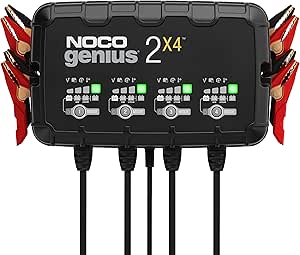
NOCO GENIUS2X4 6V/12V Four-Bank Battery Charger and Maintainer

Nextbase Piqo 1K Smart Dash Cam, 1080p

DEWALT DCF913B 20V MAX 3/8-Inch Cordless Impact Wrench with Hog Ring Anvil
As an affiliate, we earn on qualifying purchases.
What the Four-Month Sample Covers
Janickas’s report is based on operating data from batteries managed by Inion Software in Lithuania. It focuses on the value of optimizing a battery against day-ahead electricity prices at a site with solar generation. The measured period is spring and summer, from April to July 2026; it does not include a full year of seasonal conditions.
The report multiplies the four-month average by 12 to give an indicative figure of about €23,500 per installed MWh per year. That is a simple extrapolation, not an observed annual result. The report also says the batteries in this dataset had not participated in frequency containment reserve (FCR), automatic frequency restoration reserve (aFRR) or manual frequency restoration reserve (mFRR) markets, so it cannot provide measured earnings from those services.
Participation can require assets to be combined. The report says Lithuania’s balancing offers start at 1 MW and use 1 MW increments, while commercial and industrial batteries commonly have ratings of 0.1 to 0.5 MW. Many individual systems would therefore need to join a larger portfolio to offer balancing services.
“Our experience in Lithuania shows why there is no one-size-fits-all solution.”
— Robertas Janickas, CTO at Inion Software, in the report
What the Savings Figure Leaves Out
The report does not provide a measured annual result or a net-profit calculation. Its annual figure is an extrapolation from four months, and seasonal performance beyond April to July remains unknown. The source also does not give a full breakdown of the electricity bill savings by month beyond the stated range and July price comparison.
No measured income from intraday trading or balancing services is included, because the batteries in the dataset had not yet participated in those markets. The report says its platform can exchange data for FCR, aFRR and mFRR offers, but that capability is not evidence of market participation or earnings. It also does not quantify the excluded costs, so readers cannot calculate net returns from the published figures alone.
Operational response is another open factor. Inion reports that controllers usually confirm commands within 0.5 to two seconds, while median power response is 39 seconds and the slowest 10% of observed responses take up to 11 minutes. The report says delays vary by battery manufacturer and requested state change; the additional source note records a worst idle-command response of up to 15 minutes. Those observations describe the systems measured, not every battery model.
Measure Before Adding Market Revenue
The report identifies accurate metering, a tested control connection and a suitable electricity contract as practical starting points for owners. It says schedule execution and reliable data matter: a lost connection, outdated schedule or failure to follow commands can reduce value and, in market participation, create imbalance costs. Inion also reports encountering metering errors that changed calculated battery value from negative to significantly positive after correction.
Before committing a battery to fast-response services, the report recommends measuring response time for the specific battery model and requested transition. The next meaningful evidence would be longer operating records across seasons, documented net costs and measured results from batteries actually participating in trading or balancing markets. The supplied report does not give a timetable for those results or confirm when the batteries will enter those markets.
Key Questions
How much value did the Lithuanian battery create?
The industrial-site battery created an average of about €1,960 per installed MWh of capacity per month from April to July 2026. Monthly results ranged from €1,640 to €2,230 per installed MWh.
Is that amount net profit or market revenue?
No. The report describes it as savings on the site’s electricity bill from day-ahead price optimization. It excludes several costs and does not include measured revenue from wholesale trading or balancing services.
Was the annual figure measured over 12 months?
No. The report’s figure of approximately €23,500 per installed MWh per year is a simple multiplication of the four-month average by 12. It is an indicative extrapolation, not an observed annual result.
Why did a second site report a lower result?
The second site’s battery was used mainly to increase onsite solar consumption and faced a grid export constraint. It created about €460 per installed MWh in July; the report says site conditions and operating strategy can change value substantially.
Did the batteries earn money from balancing services?
The batteries in this dataset had not participated in FCR, aFRR or mFRR markets, according to the report. It gives no measured balancing-service revenue.
Source: rss