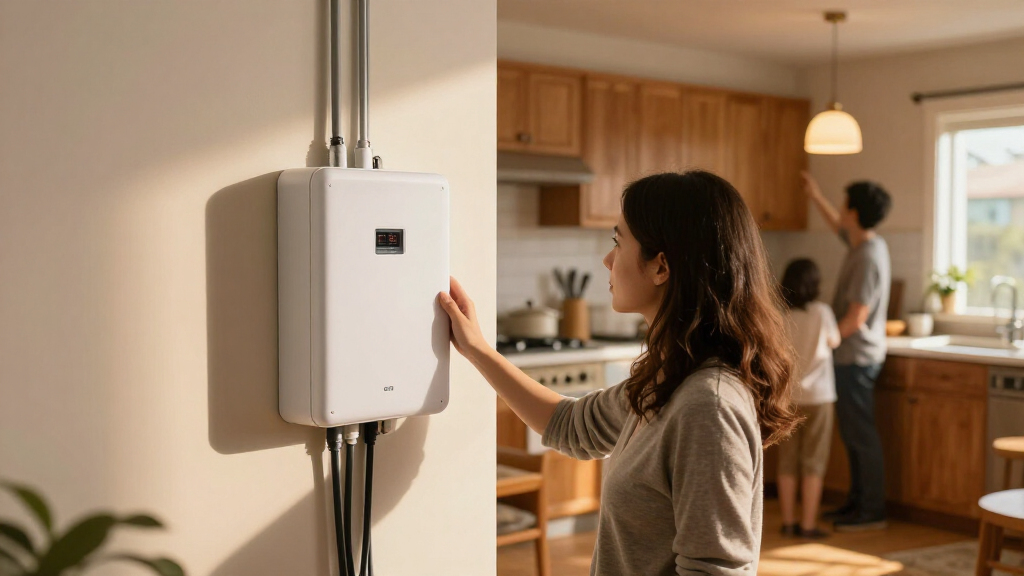
Whole-home battery backup systems fall into two camps: portable power stations that plug into your existing wiring, and permanently installed hybrid systems with an inverter and rack-mounted batteries. My top overall pick is the EcoFlow DELTA Pro Ultra X with Smart Home Panel 3, because it pairs 12,288Wh of storage with automatic whole-home transfer, so essentials keep running without you touching a switch. If budget is the priority, the ECO-WORTHY 48V system with 10kW inverter and two 10.24kWh batteries delivers true whole-home coverage for far less than brand-name alternatives. For homeowners who want maximum storage, the ECO-WORTHY 30,720Wh system is the largest pre-configured kit in this lineup. The main tradeoff you’ll face is convenience versus cost: plug-and-play units install in minutes but cost more per kilowatt-hour, while component-based systems scale cheaper but demand more setup. Keep reading for the full breakdown.

Get backup power and energy gear delivered free — and shop member deals
- Fast, free delivery on millions of items
- Access to Prime Big Deal Days deals on October 6–7
- Prime Video, Amazon Music and more included
Key Takeaways
- The EcoFlow DELTA Pro Ultra X and standard Ultra share the same battery platform, but only the X-badged unit with the Smart Home Panel 3 offers automatic whole-home transfer — the bare power station version requires manual plugging, which is a meaningful difference during an outage at 2 a.m.
- ECO-WORTHY dominates the value end of this lineup, but its systems split into two distinct buyer paths: complete kits with inverter and batteries included, and bare Powermega battery packs that only make sense if you already own or plan to buy a compatible hybrid inverter.
- Capacity per dollar separates the field more than peak wattage does — the 3,600W-class portables (ABOK Ark3600, Jackery HomePower 3600 Plus) can run a fridge and some circuits, but they cannot carry a whole house with HVAC, well pump, and electric water heater simultaneously.
- UL certification is not uniform across the lineup. The Powermega 16.07kWh single battery and the 2-pack with Liber 10KP inverter carry UL 1973 listing, which matters for permitting, insurance, and interconnection approval — several competing kits here do not.
- Expandability is where the EcoFlow platform pulls ahead long-term: starting at 6kWh with the DELTA Pro Ultra and stacking toward 90kWh is easier than the fixed configurations in most ECO-WORTHY kits, though each expansion battery carries a premium.
| EcoFlow DELTA Pro Ultra X Power Station, 12,288 Wh, with AC Cable |  | Best Overall | Capacity: 12,288 Wh (expandable to 180 kWh) | Output: 12 kW (expandable to 36 kW) | Battery Chemistry: LiFePO4 | VIEW LATEST PRICE | See Our Full Breakdown |
| ECO-WORTHY 48V Home Backup Power System with 10kW Inverter and Two 10.24kWh Batteries |  | Best Value for a Wired Whole-Home Setup | Total Capacity: 10,240 Wh (expandable to 163.84 kWh) | Peak Output: 20,000 W | Output: Pure sine wave, 120V single-phase or 120V/240V split-phase | VIEW LATEST PRICE | See Our Full Breakdown |
| ABOK Ark3600 Portable Power Station 3600W, 3840Wh LiFePO4 Battery |  | Best for Essentials-Only Backup on a Budget | Capacity: 3840 Wh (expandable to 11,520 Wh) | Ports: 15 total, including 30A and 20A AC, USB-C PD 100W, XT60 | Recharge Time: 1.29 hours (AC + solar), 3 hours (AC only) | VIEW LATEST PRICE | See Our Full Breakdown |
| Anker SOLIX E10 Power Dock 6kWh 7.6kW Output 9kW Solar |  | Best Modular Starter System | Battery Capacity: 6 kWh (expandable to 90 kWh) | Continuous Output: 7.6 kW (up to 22.8 kW with three units) | Solar Input: 9 kW per unit | VIEW LATEST PRICE | See Our Full Breakdown |
| Jackery HomePower 3600 Plus Power Station, 3584Wh, 3600W AC Output |  | Best Portable-to-Whole-Home Hybrid | Capacity: 3584 Wh (expandable to 21 kWh per unit, 43 kWh multi-unit) | AC Output: 3600 W (7200 W in parallel) | Voltage: 120V, or 240V with parallel units | VIEW LATEST PRICE | See Our Full Breakdown |
| ECO-WORTHY Powermega 48V 314Ah LiFePO4 Battery, 2-Pack |  | Best for Off-Grid Builders | Chemistry: LiFePO4 | Nominal Voltage: 51.2V | Capacity: 314Ah (16.07kWh per battery) | VIEW LATEST PRICE | See Our Full Breakdown |
| EF ECOFLOW DELTA Pro Ultra 12kWh Power Station with Extra Battery |  | Best for Whole-Home Appliance Backup | Capacity: 12,288Wh (scalable to 90kWh) | Output Power: 7200W (up to 21.6kW with triple inverters) | Voltage: 120V & 240V | VIEW LATEST PRICE | See Our Full Breakdown |
| ECO-WORTHY 48V Home Backup Power System with 10kW Inverter and 30,720Wh Battery |  | Best Complete Kit Value | Battery Configuration: Six 51.2V 100Ah LiFePO4 batteries | Total Capacity: 30,720Wh | Inverter Output: 10,000W (20,000W peak) | VIEW LATEST PRICE | See Our Full Breakdown |
| EF EcoFlow DELTA Pro Ultra X with Smart Home Panel 3 – 12288Wh Whole-Home Power Station |  | Best Premium Smart-Home Integration | Capacity: 12,288Wh (expandable 12–180kWh) | Output: 12–36 kW | Voltage: 240V | VIEW LATEST PRICE | See Our Full Breakdown |
| EF ECOFLOW DELTA Pro Ultra 6144Wh Power Station, 120/240V 7200W AC Output |  | Best Entry Point to a Scalable Platform | Battery Capacity: 6144Wh (expandable to 90kWh) | AC Output: 7200W (up to 21.6kW with multiple inverters) | Voltage: 120/240V | VIEW LATEST PRICE | See Our Full Breakdown |
| ECO-WORTHY Powermega 48V 314Ah LiFePO4 Battery, 16.07kWh, UL 1973 Certified |  | Best Scalable Storage Foundation | Chemistry: LiFePO4 | Voltage / Capacity: 48V / 314Ah (16.07kWh) | Certification: UL 1973 | VIEW LATEST PRICE | See Our Full Breakdown |
| ECO-WORTHY Powermega 48V 314Ah (2 Pack) UL1973 LiFePO4 Battery with Liber 10KP 10kW Hybrid Inverter |  | Best Complete Whole-Home Kit | System Capacity: 30kWh+ usable energy | Battery Configuration: 2 × 48V 314Ah LiFePO4 | Inverter: Liber 10KP 10kW hybrid, 99.9% MPPT | VIEW LATEST PRICE | See Our Full Breakdown |
| whole-home battery backup system | Capacity |
|---|---|
| EcoFlow DELTA Pro Ultra X Powe | 12,288 Wh (expandable to 180 kWh) |
| ECO-WORTHY 48V Home Backup Pow | — |
| ABOK Ark3600 Portable Power St | 3840 Wh (expandable to 11,520 Wh) |
| Anker SOLIX E10 Power Dock 6kW | — |
| Jackery HomePower 3600 Plus Po | 3584 Wh (expandable to 21 kWh per unit, 43 kWh multi-unit) |
| ECO-WORTHY Powermega 48V 314Ah | 314Ah (16.07kWh per battery) |
| EF ECOFLOW DELTA Pro Ultra 12k | 12,288Wh (scalable to 90kWh) |
| ECO-WORTHY 48V Home Backup Pow | — |
| EF EcoFlow DELTA Pro Ultra X w | 12,288Wh (expandable 12–180kWh) |
| EF ECOFLOW DELTA Pro Ultra 614 | — |
| ECO-WORTHY Powermega 48V 314Ah | — |
| ECO-WORTHY Powermega 48V 314Ah | — |
More Details on Our Top Picks
EcoFlow DELTA Pro Ultra X Power Station, 12,288 Wh, with AC Cable
Whole-home backup is the whole point here, and the DELTA Pro Ultra X delivers it with 12 kW of output and a 12,288 Wh base capacity that can scale to a staggering 180 kWh. The sub-20-millisecond switchover means computers, medical equipment, and smart home gear stay live through an outage rather than rebooting. Where the Anker SOLIX E10 starts at 6 kWh and asks you to build up, this option arrives with genuine whole-home capacity on day one. Its automatic blending of solar, battery, and grid power also makes it useful every day for bill savings, not just blackouts.
The tradeoff is logistics: at 350 lbs, this is a two-person (or dolly-assisted) install, and the inverter and extra battery arrive in separate shipments, so plan your delivery day carefully. Compared with the ECO-WORTHY kit, it’s simpler to set up but less flexible for split-phase wiring customizations.
Pros:- Massive expandable capacity from 12 kWh up to 180 kWh
- 12 kW output with scaling to 36 kW for even large households
- Under 20 ms backup response keeps sensitive electronics running
- LiFePO4 cells with layered safety systems and temperature management
Cons:- 350 lb weight makes placement and installation a real project
- Inverter and extra battery ship separately, complicating delivery
Best for: Homeowners who want true whole-home coverage out of the box, with room to expand later for multi-day outages
Not ideal for: Renters or apartment dwellers — the weight, 350-lb footprint, and whole-home wiring assumptions make it impractical to relocate or install without ownership
- Capacity:12,288 Wh (expandable to 180 kWh)
- Output:12 kW (expandable to 36 kW)
- Battery Chemistry:LiFePO4
- Backup Response:Under 20 ms
- Power Source:Solar / battery / grid with automatic switching
- Weight:350 lbs
Our verdict“If you own a home and want one system that covers everything today and scales for tomorrow, this is the one to beat.”
ECO-WORTHY 48V Home Backup Power System with 10kW Inverter and Two 10.24kWh Batteries
This kit takes a different philosophy than the EcoFlow DELTA Pro Ultra X: instead of an all-in-one power station, you get a 10 kW split-phase inverter plus two rack-style LiFePO4 batteries, and you wire it into your panel like a permanent energy system. For hands-on buyers, that approach means more capacity per dollar and far more customization — you can grow to 163.84 kWh of storage and 60 kW of output, dwarfing what portable units offer. The dual MPPT controllers also let you attach serious solar arrays without extra charge controllers.
The catch is that this is not plug-and-play. Compared with the Anker SOLIX E10’s stack-and-power design, this demands real electrical work, and parallel expansion locks you into compatible batteries and careful configuration. UL1973 and UL1741 testing is reassuring, but budget for an electrician.
Pros:- Includes a 10 kW inverter and two batteries for a complete core system
- Expands to 163.84 kWh storage and 60 kW output for large or off-grid homes
- 120V/240V split-phase output runs well pumps, HVAC, and other 240V loads
- App-based monitoring plus CAN/RS485 communication with compatible inverters
Cons:- Components ship separately and require assembly and wiring
- Parallel expansion demands matching compatible batteries and careful setup
Best for: DIY-inclined homeowners and off-grid builders who want maximum capacity per dollar and don’t mind wiring and configuration work
Not ideal for: Anyone wanting an afternoon setup — this requires panel wiring, battery communication setup, and likely a licensed electrician
- Total Capacity:10,240 Wh (expandable to 163.84 kWh)
- Peak Output:20,000 W
- Output:Pure sine wave, 120V single-phase or 120V/240V split-phase
- Battery Chemistry:LiFePO4
- MPPT Controllers:Two independent controllers, 200A max charging
- Safety Certification:UL1973 and UL1741 tested
Our verdict“The strongest pick for value-minded builders willing to trade plug-and-play convenience for capacity and configurability.”
ABOK Ark3600 Portable Power Station 3600W, 3840Wh LiFePO4 Battery
Not every household needs to run the entire house — and the Ark3600 is honest about that. With 3840 Wh and 15 ports, it keeps refrigerators, lights, CPAP machines, and Wi-Fi running through a typical outage, then rolls into a closet on its wheels until next time. Its standout trick is recharging in as little as 1.29 hours with combined AC and solar input, which matters when you’re cycling it during a multi-day event. Compared with the Jackery HomePower 3600 Plus, it offers comparable capacity with more port variety, though it caps expansion at 11.5 kWh versus Jackery’s 43 kWh.
The 92-lb weight is manageable thanks to the telescoping handle, but this is a big-box portable, not a luggable one. And single-room backup is the realistic ceiling: it will not run central air or a whole house.
Pros:- 3840 Wh of EV-grade LiFePO4 capacity, expandable to 11,520 Wh
- 15 output ports covering nearly all household devices
- Very fast 1.29-hour recharge with combined AC and solar
- Wheels, telescoping handle, and Bluetooth app monitoring
Cons:- 92 lb weight limits true portability despite the handle
- Expansion ceiling of 11.5 kWh is low for whole-home ambitions
Best for: Households that mainly need refrigeration, medical devices, and communications kept alive during outages, with portability for camping or RV use between emergencies
Not ideal for: Homes with 240V appliances like well pumps or central HVAC — the capacity and output fall well short of whole-home coverage
- Capacity:3840 Wh (expandable to 11,520 Wh)
- Ports:15 total, including 30A and 20A AC, USB-C PD 100W, XT60
- Recharge Time:1.29 hours (AC + solar), 3 hours (AC only)
- Battery Lifespan:4000+ cycles, up to 10 years
- Weight:92 lbs
Our verdict“A smart buy if ‘backup’ means essentials, not everything — and if you want one unit that doubles for RV trips.”
Anker SOLIX E10 Power Dock 6kWh 7.6kW Output 9kW Solar
The SOLIX E10’s pitch is start small, scale without regret. The base 6 kWh capacity is modest next to the EcoFlow DELTA Pro Ultra X’s 12.3 kWh, but the stackable design grows to 90 kWh, and the 200A Power Dock covers your entire electrical panel, not just selected circuits. The ≤20 ms switchover and weatherproof outdoor-rated enclosure put it in genuine whole-home territory, and 9 kW of solar input per unit means it can function as a daily solar storage hub rather than a garage ornament.
The ‘stack, plug, power up’ framing is friendlier than the ECO-WORTHY kit’s component-based approach, but don’t mistake it for toolless — panel-level integration realistically needs a professional. And at 6 kWh out of the box, a single unit covers a few hours of household load, so the true cost of whole-home runtime means buying expansion batteries from the start.
Pros:- 200A whole-panel coverage rather than partial circuit backup
- Expands from 6 kWh to 90 kWh, or 22.8 kW output with three units
- Weatherproof enclosure allows outdoor wall or floor installation
- 9 kW solar input per unit works with existing solar systems
Cons:- 6 kWh base capacity alone is thin for true whole-home runtime
- Whole-home electrical integration requires professional installation
Best for: Homeowners who want a professionally installed, weatherproof system they can expand gradually as budget allows
Not ideal for: Quick, cheap emergency backup — the base capacity is small and the full setup calls for professional installation and additional battery modules
- Battery Capacity:6 kWh (expandable to 90 kWh)
- Continuous Output:7.6 kW (up to 22.8 kW with three units)
- Solar Input:9 kW per unit
- Switchover Time:≤20 ms
- Electrical Coverage:200A Power Dock, whole-panel
- Warranty:5 years (E10), 10 years (Dock)
Our verdict“The best choice for buyers who see backup as a long-term, expandable investment rather than a one-time purchase.”
Jackery HomePower 3600 Plus Power Station, 3584Wh, 3600W AC Output
The HomePower 3600 Plus occupies a clever middle ground: it rolls around on wheels like the ABOK Ark3600, but it can scale to 43 kWh across multiple units, which puts genuine multi-day whole-home backup within reach. Its battery durability is the standout — 6,000 cycles with ceramic-membrane LFP cells, which outlasts the Ark3600’s 4,000-cycle rating and should carry the system past a decade of daily cycling. A 2-hour hybrid recharge keeps downtime short during extended outages.
The frustration is the 240V requirement: to run a well pump, dryer, or central AC, you need a second unit in parallel. That means the 240V-capable whole-home configuration is really a two-unit purchase, and the costs compound accordingly. Solo, it’s an excellent essentials-plus system; paired, it’s a legitimate whole-home contender.
Pros:- Expands from 3584 Wh up to 43 kWh with multiple units
- 6,000-cycle LFP cells rated for 10-year lifespan
- 2-hour full recharge via hybrid AC+DC charging
- Luggage-style wheels and telescopic handle for easy repositioning
Cons:- 240V output only available with a second unit in parallel
- Building a full whole-home configuration requires a substantial multi-unit investment
Best for: Buyers who want portable flexibility now and a path to 240V-capable whole-home backup by adding a second unit later
Not ideal for: Households that need 240V appliance backup immediately — a single unit can’t deliver it, and the second unit roughly doubles the investment
- Capacity:3584 Wh (expandable to 21 kWh per unit, 43 kWh multi-unit)
- AC Output:3600 W (7200 W in parallel)
- Voltage:120V, or 240V with parallel units
- Battery Lifespan:6,000 cycles / 10 years (ceramic membrane LFP)
- Recharge Time:2 hours hybrid AC+DC; 2.5 hours AC
- Charging Options:Hybrid AC+DC, AC, solar, gas generator
Our verdict“The best fit for buyers who want to start portable and grow into whole-home power — as long as they accept 240V means buying two.”
ECO-WORTHY Powermega 48V 314Ah LiFePO4 Battery, 2-Pack
Unlike the all-in-one power stations elsewhere in this roundup, this two-pack is a raw DIY energy storage foundation — 32.14kWh of UL 1973-certified LiFePO4 capacity with no inverter or display hub included. That’s the point: compared with the ECO-WORTHY 10kW system below, this option trades plug-and-play convenience for serious per-battery density (16.07kWh each) and expansion headroom up to 15 parallel units. The aerosol fire suppression and 200A BMS with active balancing are genuine differentiators at this capacity class, and the 10-year warranty beats most consumer power station coverage. The tradeoff is weight and logistics — these arrive palletized by freight truck, and you’ll need to source your own inverter, which adds cost and complexity the EcoFlow units bundle in.
Pros:- Massive 32.14kWh total capacity across two UL 1973-certified batteries
- Aerosol fire suppression and 200A BMS with active cell balancing
- Expands up to 15 parallel units for over 200kWh of storage
- 10-year warranty and 7-inch touchscreen with Wi-Fi/Bluetooth monitoring
Cons:- Requires a separate inverter and installation knowledge — not a turnkey system
- Extremely heavy and ships palletized via freight truck, limiting delivery options
Best for: Off-grid homeowners and DIY solar installers who already have or plan to buy a compatible 48V inverter and want massive expandable storage
Not ideal for: Buyers wanting a complete, ready-to-run backup solution — this is batteries only, with no inverter or transfer switch included
- Chemistry:LiFePO4
- Nominal Voltage:51.2V
- Capacity:314Ah (16.07kWh per battery)
- Configuration:2-pack, expandable to 15 units
- BMS:200A smart BMS with active balancing
- Certification:UL 1973
- Monitoring:7-inch touchscreen, Wi-Fi, Bluetooth
- Warranty:10 years
Our verdict“This is the pick for experienced off-grid builders who want maximum certified capacity per dollar of battery and don’t need an integrated inverter.”
EF ECOFLOW DELTA Pro Ultra 12kWh Power Station with Extra Battery
This configuration stands out for one reason above all: 7200W of continuous 240V output — enough to start and run a 3-ton central air conditioner, which is the appliance that breaks most smaller systems like the Anker SOLIX E10 or Jackery HomePower 3600 Plus. With the extra battery included here, you get 12,288Wh out of the box, and the 0-ms online UPS transfer means computers and medical equipment never blink during an outage. Compared with the single-battery DELTA Pro Ultra (Product 10), the bundled second battery doubles runtime immediately without a second purchase cycle. The tradeoffs are real: the inverter and battery ship separately, and chasing the full 90kWh ceiling means stacking purchases that add up fast.
Pros:- 7200W output handles a 3-ton central AC and other heavy 240V appliances
- 12,288Wh of included capacity with expansion up to 90kWh
- 0-ms online UPS transfer protects sensitive electronics seamlessly
- Recharges a full 6144Wh battery in about 2 hours via EV charger or solar
Cons:- Inverter and battery arrive in separate packages that may not show up together
- Reaching maximum capacity and output requires additional battery and inverter purchases
Best for: Homeowners in hot climates who need to run central air conditioning and heavy 240V appliances through multi-day outages
Not ideal for: Apartment dwellers or renters — the dual-unit footprint and 240V wiring expectations make it overkill for partial-home backup
- Capacity:12,288Wh (scalable to 90kWh)
- Output Power:7200W (up to 21.6kW with triple inverters)
- Voltage:120V & 240V
- UPS Transfer Time:0 ms
- Recharge Time:~2 hours per 6144Wh battery
- Charging Methods:EV piles, solar, wall outlet, generator
- Control:EcoFlow app with circuit prioritization
Our verdict“If keeping the whole house — air conditioning included — running through an extended outage is the goal, this dual-battery setup is the most direct path.”
ECO-WORTHY 48V Home Backup Power System with 10kW Inverter and 30,720Wh Battery
This is the most complete package in the lineup: six LiFePO4 batteries, a 10,000W inverter, and a server rack, all in one purchase. Compared with the Powermega 2-pack, which leaves you to source an inverter separately, this kit hands you 30.7kWh of storage plus a 10kW pure sine wave inverter with dual MPPT controllers — ready to pair with solar and go off-grid. Compared with the EcoFlow DELTA Pro Ultra, you get roughly 2.5x the base capacity for a system-level build, though you give up the polished app experience and near-instant transfer switching. The main frustration: split-phase 120/240V output requires buying a second inverter and running them in parallel, so homes needing 240V for well pumps or dryers should budget for that. Items also ship separately, so expect staggered delivery.
Pros:- Everything included: six batteries, 10kW pure sine wave inverter, and server rack
- 30,720Wh capacity with expansion up to 32 batteries and 6 inverters
- Dual independent MPPT controllers support substantial solar arrays
- UL 1973 and UL 1741 tested, with Bluetooth/WiFi app monitoring
Cons:- 120V/240V split-phase output only available with multiple parallel inverters
- Multiple components ship separately and require rack assembly and wiring
Best for: Budget-conscious buyers who want a large-capacity, all-included system for off-grid living or whole-home backup without piecing together components
Not ideal for: Homes that need 240V split-phase power from day one — that requires a second inverter in parallel, adding cost and setup complexity
- Battery Configuration:Six 51.2V 100Ah LiFePO4 batteries
- Total Capacity:30,720Wh
- Inverter Output:10,000W (20,000W peak)
- Voltage:120V single-phase; 120/240V split-phase with parallel inverters
- MPPT Controllers:Two independent
- Max Charging Current:200A
- Certifications:UL 1973, UL 1741, UL 9540A listed
Our verdict“For buyers who want maximum stored energy and a complete component set in one order, this kit offers more raw capacity per purchase than anything else here.”
EF EcoFlow DELTA Pro Ultra X with Smart Home Panel 3 – 12288Wh Whole-Home Power Station
This option makes the most sense for buyers who want backup power to be invisible in daily life. The Smart Home Panel 3 doesn’t just switch to battery during outages in under 20 milliseconds — it actively manages circuit-level energy routing between solar, battery, and off-peak grid power to cut electricity bills every day, not just during storms. That’s a fundamentally different value proposition from the standard DELTA Pro Ultra (Product 10), which is primarily an outage tool, and from the ECO-WORTHY kit, which has no automatic transfer or smart panel at all. The Ultra X also scales harder: 12–36kW output and up to 180kWh capacity, dwarfing the 90kWh ceiling of the standard Ultra. Tradeoffs: it ships as three separate packages, the warranty terms aren’t clearly published, and the total investment for a fully scaled system is substantial.
Pros:- Smart Home Panel 3 provides automatic sub-20ms switchover and circuit-level control
- Automatic solar/battery/off-peak grid routing lowers everyday electric bills
- Scales from 12kW to 36kW output and 12 to 180kWh capacity
- No hardwiring required — portable, with plug-and-play battery expansion and DIY solar support
Cons:- Ships in multiple separate packages (inverter, battery, and panel)
- Detailed warranty terms are not clearly listed
- A fully scaled system demands significant space and financial investment
Best for: Tech-forward homeowners who want daily energy-cost optimization and seamless automatic backup managed at the circuit level, not just emergency power
Not ideal for: Buyers seeking simple occasional-outage backup — the smart panel integration and premium cost are wasted if the system sits idle most of the year
- Capacity:12,288Wh (expandable 12–180kWh)
- Output:12–36 kW
- Voltage:240V
- Switchover Time:<20 milliseconds
- Battery Chemistry:LiFePO4
- Installation:No hardwiring; portable with plug-and-play expansion
- Energy Management:Smart Home Panel 3 circuit-level control
Our verdict“This is the choice for homeowners who see backup power as one feature of a smarter, solar-driven home energy strategy rather than an emergency-only purchase.”
EF ECOFLOW DELTA Pro Ultra 6144Wh Power Station, 120/240V 7200W AC Output
Think of this as the on-ramp to EcoFlow’s largest ecosystem. You get the same 7200W, 120/240V output as the 12kWh version (Product 7) at a lower starting capacity of 6144Wh — and because batteries are plug-and-play expandable to 90kWh, you can grow into whole-home coverage over time rather than paying for it upfront. Compared with the ECO-WORTHY 10kW kit, you give up raw capacity per dollar but gain the 2-hour recharge, UL1973/UL9540 certifications, and an app that prioritizes circuits during outages. The 20ms UPS transfer is fast enough for most household electronics, though the 0-ms online transfer on the 12kWh bundle is the safer choice for truly sensitive gear. Note that it’s oversized for camping or occasional portable use — the ABOK Ark3600 is a better fit there.
Pros:- 7200W of 120/240V output supports heavy household appliances
- Expandable from 6144Wh up to 90kWh without replacing the base unit
- Fast recharging from EV charger, solar, wall outlet, or generator
- UL1973 and UL9540 certified with UPS protection and app-based circuit management
Cons:- Inverter and battery arrive in separate packages
- Maximum capacity requires purchasing additional battery modules
- 20ms UPS transfer is slower than the 0-ms online transfer on higher bundles
Best for: Homeowners who want to start with essential-circuit backup now and expand capacity gradually as budget allows
Not ideal for: Users who only need portable power for camping or tools — this is a heavy home-focused unit that costs more than portable-station alternatives
- Battery Capacity:6144Wh (expandable to 90kWh)
- AC Output:7200W (up to 21.6kW with multiple inverters)
- Voltage:120/240V
- Recharge Time:~2 hours per 6144Wh battery
- UPS Transfer Time:20 ms
- Charging Options:EV charger, solar, wall outlet, generator
- Certifications:UL1973, UL9540
Our verdict“Buy this if you want whole-home capability eventually but prefer to spread the cost across battery additions over time.”
ECO-WORTHY Powermega 48V 314Ah LiFePO4 Battery, 16.07kWh, UL 1973 Certified
Buyers comparing whole-home systems often face a choice between all-in-one power stations like the EcoFlow DELTA Pro Ultra X and component-based setups. This single 16.07kWh battery makes the strongest case for the component route, because up to 15 units can run in parallel for 241kWh — a ceiling no plug-and-play station in this roundup can touch. The 200A BMS with active cell balancing keeps the cells healthy over a decade of daily cycling, and UL 1973 certification plus internal fire-suppression modules mean it clears hurdles that insurers and inspectors care about. The built-in 7-inch touchscreen is a genuinely useful touch compared to app-only monitoring on rivals. The tradeoff is real, though: this is a battery only. There’s no inverter in the box, freight delivery is required, and it makes no sense for anyone wanting portable power — the Jackery HomePower 3600 Plus wins that contest by default.
Pros:- UL 1973 certified with a 10-year manufacturer warranty for long-term peace of mind
- Parallel expansion up to 15 units and 241kWh outgrows nearly any household’s needs
- 200A smart BMS with active balancing and aerosol fire-suppression modules for layered safety
- On-unit 7-inch touchscreen plus WiFi, Bluetooth, RS485, and CAN monitoring options
Cons:- Battery-only purchase — you must source and configure a compatible inverter yourself
- Very large and heavy; arrives via pallet freight and needs a truck-accessible address
Best for: Homeowners building a permanent, expandable 48V battery bank who already own or plan to buy a hybrid inverter separately
Not ideal for: Anyone wanting an out-of-the-box backup solution — this ships without an inverter and demands freight delivery plus professional integration
- Chemistry:LiFePO4
- Voltage / Capacity:48V / 314Ah (16.07kWh)
- Certification:UL 1973
- BMS:200A smart BMS with active balancing
- Expansion:Up to 15 units (241kWh)
- Monitoring:7-inch touchscreen, WiFi, Bluetooth, RS485, CAN
- Warranty:10-year manufacturer warranty
Our verdict“This is the pick for buyers who want a certified, future-proof storage backbone they can grow over years rather than a one-shot portable power station.”
ECO-WORTHY Powermega 48V 314Ah (2 Pack) UL1973 LiFePO4 Battery with Liber 10KP 10kW Hybrid Inverter
This bundle solves the biggest frustration with the solo ECO-WORTHY Powermega battery: it ships the 10kW hybrid inverter alongside two 314Ah batteries, giving you a matched 30kWh+ system without hunting for compatible components. Compared with the EcoFlow DELTA Pro Ultra with Extra Battery at roughly 12kWh, this kit more than doubles the runtime while adding split-phase 240V output — enough to run well pumps, HVAC, and kitchen circuits together, not just the essentials. The 9000+ cycle rating at 80% depth of discharge means the cells should outlast most mortgages of daily cycling, and the 99.9% MPPT tracking extracts more from a solar array than many competing inverters. Caveats worth weighing: freight delivery in multiple packages, and ECO-WORTHY ships two inverter versions randomly, so the unit you receive may not match listing photos. Against the Anker SOLIX E10 Power Dock, this kit trades sleek packaging for raw, expandable capacity.
Pros:- 30kWh+ usable capacity with a 10kW hybrid inverter covers genuine whole-home loads
- 9000+ cycle LiFePO4 batteries rated for decades of daily use
- Split-phase 240V and single-phase 120V output handles heavy appliances like well pumps and HVAC
- Bluetooth and WiFi app monitoring with RS485/CAN/RS232 for system integration
Cons:- Random inverter version shipping means the unit you receive may look different from the listing
- Extremely heavy multi-pallet freight delivery with packages that can arrive on different days
- Installation complexity realistically requires an electrician
Best for: Off-grid households and whole-home backup buyers who want batteries and a 10kW inverter engineered to work together from day one
Not ideal for: Renters, apartment dwellers, or anyone needing portable power — this is a permanently installed, freight-delivered system with no mobility
- System Capacity:30kWh+ usable energy
- Battery Configuration:2 × 48V 314Ah LiFePO4
- Inverter:Liber 10KP 10kW hybrid, 99.9% MPPT
- Output:Split-phase 240V / single-phase 120V
- Cycle Life:9000+ cycles at 80% DoD
- Certification:UL1973
- Communication:RS485 / CAN / RS232, Bluetooth, WiFi
Our verdict“If you want a true whole-home backup system in one purchase rather than assembling pieces, this matched battery-plus-inverter kit is the most complete package here.”

How We Picked
I judged these twelve systems against what actually determines whether a battery backup works during a real outage. Usable capacity came first — a system needs enough kilowatt-hours to carry essential loads overnight, not just a headline wattage number. Inverter or AC output rating came second, because a battery that can’t start a well pump or air conditioner at the same moment as a refrigerator is only partial backup. Third, I weighed installation path: plug-and-play power stations, transfer-panel-integrated systems, and component-based inverter-plus-battery kits serve very different comfort levels and budgets.
From there, I factored solar charging capacity (critical for multi-day outages), expandability, chemistry and cycle life — every pick here uses LiFePO4, but warranty and certification details vary — and cost per kilowatt-hour of storage. Systems that could genuinely run a house ranked above large portables, which ranked above bare battery modules intended for custom builds. That lens is why a 30kWh kit outranks a flashier 3.6kWh power station even though the smaller unit is more convenient.
Factors to Consider When Choosing Whole-home Battery Backup Systems
Before you commit to any system in this roundup, step back and size the problem correctly. Most buyers either drastically overspend on capacity they’ll never cycle, or underspend on a system that dies halfway through the first night without grid power. These are the factors I’d work through first.Calculate Your Real Load Before You Calculate Capacity
The single most common mistake in this category is buying on total kilowatt-hours without knowing your household load profile. Start by listing what must actually run during an outage — refrigerator, freezer, some lighting, internet, and either a furnace fan or a window AC unit. That essential list typically lands between 2kWh and 5kWh per day for most homes; adding a well pump, electric water heater, or central air can triple it. A 3.6kWh portable covers the essential list for roughly a day, while a 20kWh-plus system with a 10kW inverter can run nearly everything. Measure with a plug-in power meter for a week before buying, because manufacturer marketing assumes light loads. Also check surge ratings: motors in pumps and compressors can draw two to three times their running wattage at startup, and an undersized inverter will simply trip offline.
Plug-and-Play Versus Hardwired: The Convenience Gap
Portable power stations like the ABOK Ark3600 or Jackery HomePower 3600 Plus can be running in ten minutes — you just run extension cords or use a transfer switch. The tradeoff is that manual switchover means you’re awake at 2 a.m. re-routing cords while the food warms. Hardwired systems with a smart panel, like the EcoFlow Smart Home Panel 3 pairing, detect outages and transfer automatically in milliseconds. Component kits from ECO-WORTHY sit in between: they’re permanent installations, but you (or your electrician) handle the transfer logic through the hybrid inverter. My advice: if anyone in the house has medical equipment or you travel frequently, automatic transfer isn’t a luxury, it’s the whole point of buying a system. If outages in your area are short and predictable, the manual approach saves real money.
Solar Input Determines Whether You Survive Multi-Day Outages
Battery capacity alone only gets you through a fixed number of hours. What separates a真 survival setup from an expensive flashlight is recharging while the grid is down. Systems like the Anker SOLIX E10 accept up to 9kW of solar, which can fully recharge a 6kWh battery in a single sunny afternoon — effectively making the system indefinite. Smaller portables often cap solar input at 400–1,000W, which means multi-day recharges and rationing. When comparing systems, look at the solar input ceiling alongside capacity, and check whether the charge controller supports the panel voltage you plan to use. Also verify what happens in winter: solar yield can drop by half in December in northern states, so a system sized for summer autonomy may still fail in a January ice storm. Budget for panels as a separate line item — most of these kits ship battery-only.
Certification, Permitting, and the Paperwork You Didn’t Expect
If you’re hardwiring a system into your home — anything involving an inverter and your electrical panel — your local authority having jurisdiction may require listed equipment. This is where UL 1973 certification on the ECO-WORTHY Powermega batteries earns its keep: listed equipment smooths permitting, satisfies insurers, and is often mandatory for utility interconnection or rebate programs. Uncertified kits can be cheaper upfront but may leave you unpermitted, which creates problems at resale or after a fire-related claim. The same applies to UL 1741 on inverters if you plan to back-feed or grid-tie. Portable power stations dodge most of this paperwork because they sit outside the permanent electrical system, which is part of why they cost more per kWh. Before buying any kit, call your building department and ask what listings they require — it’s a ten-minute call that can save a four-figure mistake.
Voltage and Architecture Lock You Into an Ecosystem
The 48V battery packs in the ECO-WORTHY systems and the EcoFlow expansion batteries are not interchangeable, and this decision shapes every future purchase. Once you build around a 48V rack system with a 10kW hybrid inverter, adding capacity means buying matching batteries — often at better per-kWh pricing than the EcoFlow path, but with less flexibility. The EcoFlow platform starts expensive but lets you stack from 6kWh toward 90kWh using the same batteries across product generations. Cheaper generic batteries exist, but mixing brands on a shared bus risks charging mismatches that shorten battery life across the whole bank. Decide your five-year capacity target now: if you know you’ll eventually want 30kWh, buy a platform that gets there economically rather than one you’ll outgrow and replace entirely.
The Hidden Costs Beyond the Sticker
Comparing headline prices across this category misleads buyers constantly. A bare battery 2-pack like the Powermega 314Ah modules looks like a bargain until you add the hybrid inverter, racking, cabling, breakers, and — for most homeowners — an electrician, which can add thousands. Plug-and-play systems include everything but often cost 50–100% more per stored kilowatt-hour. Hardwired kits need a transfer switch or smart panel, and solar panels plus mounting can equal the cost of the battery itself. Don’t forget operating costs: LiFePO4 chemistry across this lineup is rated for thousands of cycles, but depth-of-discharge habits and heat exposure affect real lifespan. Finally, check warranty terms carefully — some manufacturers warranty based on years OR cycle count, whichever comes first, which can cut coverage short for daily-cycling off-grid users.
Frequently Asked Questions
Can a portable power station really back up my whole house?
For most homes, no — at least not the 3.6kWh class like the ABOK Ark3600 or Jackery HomePower 3600 Plus. Those units comfortably run a refrigerator, lights, internet, and device charging for a day, and can handle one higher-draw appliance like a microwave or a small window AC in short bursts. Whole-house backup usually means running a central HVAC system, electric water heater, or well pump simultaneously, which demands 6–10kW of continuous output and 15kWh or more of storage. The EcoFlow DELTA Pro Ultra X with the Smart Home Panel 3 or the ECO-WORTHY 10kW inverter systems are built for that job. A realistic approach for smaller units is to treat them as essential-circuits backup rather than whole-home coverage.
Is the EcoFlow DELTA Pro Ultra X worth it over the standard DELTA Pro Ultra?
The two share the same 12kWh-class battery platform, so the difference comes down to output, solar ceiling, and how they connect to your home. The Ultra X delivers higher continuous AC output and faster charging, which matters if you’re running heavy loads like an electric dryer or a large well pump. The real decision point, though, is the Smart Home Panel 3: paired with it, either unit provides automatic whole-home transfer, but without it you’re limited to manual plugging. If you already know you want a hardwired installation, buying the Ultra X bundled with the panel (pick #9) makes more sense than buying the bare station (pick #1) and adding hardware later. If you want a cheaper entry point with room to expand, the 6,144Wh Ultra (pick #10) accepts the same expansion batteries.
Why are ECO-WORTHY’s battery-only options so much cheaper — what am I giving up?
Battery-only listings like the Powermega 314Ah 2-pack (pick #6) exclude the inverter, charge controller, wiring, and enclosure that complete kits include, so the per-kWh price looks dramatically better. That’s a genuine bargain if you already own a compatible 48V hybrid inverter or plan to buy one — the Liber 10KP bundle (pick #12) packages exactly that combination, which is why it exists. What you give up is turnkey convenience: you’ll need to size the inverter yourself, handle bus-bar wiring and breakers correctly, and likely pull a permit. You also lose the polished app ecosystems and automatic transfer logic that EcoFlow and Anker provide. For a DIY-minded owner or an installer-assisted project, the savings can be substantial; for a first-time buyer, the complete kits or portables are far safer choices.
How much battery capacity do I actually need for overnight backup?
Work backward from your overnight loads rather than your total daily usage. Through a typical night — refrigerator cycling, furnace fan or a couple of window units, security system, internet, and standby electronics — most homes draw between 1.5kWh and 4kWh. A 6kWh system like the Anker SOLIX E10 or the base EcoFlow Ultra covers that with margin; a 3.6kWh portable covers a lean night but leaves little buffer for a second day. The bigger risk is daytime loads: laundry, cooking, and air conditioning can consume 10–20kWh on their own. If your goal is riding out a 24-hour outage comfortably, target 10kWh minimum; for multi-day independence without solar recharge, you’re realistically looking at 20–30kWh systems like the larger ECO-WORTHY kits.
Do I need an electrician, or can I install one of these systems myself?
Portable power stations require no installation at all — you can run one out of the box with extension cords, and even a manual transfer switch is a modest electrician job measured in hours. Hardwired systems are a different matter: anything connecting to your main panel, like the EcoFlow Smart Home Panel 3 or an ECO-WORTHY 10kW hybrid inverter, involves working inside energized service equipment and almost always requires a permit and inspection. Most jurisdictions allow a homeowner to do their own electrical work, but a 48V, 10kW system with battery storage presents real arc-flash and fire risk if wired incorrectly, and mistakes can void warranties and insurance claims. My suggestion is a hybrid approach: install the batteries, racking, and low-voltage wiring yourself if you’re comfortable, and hire a licensed electrician for the panel connection and interconnection paperwork. That typically keeps labor costs to a few hundred dollars instead of thousands.
Conclusion
The right choice here depends less on which system is objectively best and more on how you plan to live with it. For best overall, the EcoFlow DELTA Pro Ultra X with Smart Home Panel 3 combines whole-home automatic transfer, 12kWh of storage, and a long expansion path — it’s the system I’d point most homeowners toward if the budget allows. The best premium pick is the same platform scaled deliberately: the bare DELTA Pro Ultra X or the expandable 6,144Wh Ultra for buyers who want to build toward 30kWh-plus over time rather than pay for it all at once.
For best value, the ECO-WORTHY 48V system with the 10kW inverter and twin 10.24kWh batteries delivers more than 20kWh of storage and true whole-home output at a per-kWh cost the portable brands can’t touch — provided you’re comfortable with a component-style installation or hiring an electrician. The ECO-WORTHY 30,720Wh kit is the pick for a specific need: extended off-grid living or multi-day outage independence where solar recharge is part of the plan.
For beginners, skip the racks and inverters entirely. The Anker SOLIX E10 offers the gentlest entry into home-scale backup with clean design and 9kW solar input, while the ABOK Ark3600 and Jackery HomePower 3600 Plus are the simplest possible starting point — essential-circuit coverage you can set up in an afternoon with zero wiring. And if you already own a compatible inverter, the UL-listed Powermega 16.07kWh battery or the Liber 10KP bundle lets you add serious capacity at the lowest cost per kilowatt-hour in this entire lineup. Whatever you choose, size it to your measured loads, not the marketing numbers, and buy the platform you can grow into rather than the one you’ll outgrow.
Fall Picks
fall essentials
As an affiliate, we earn on qualifying purchases.