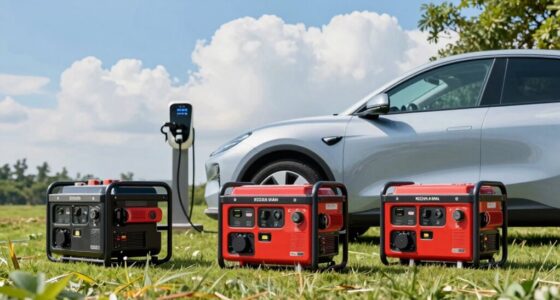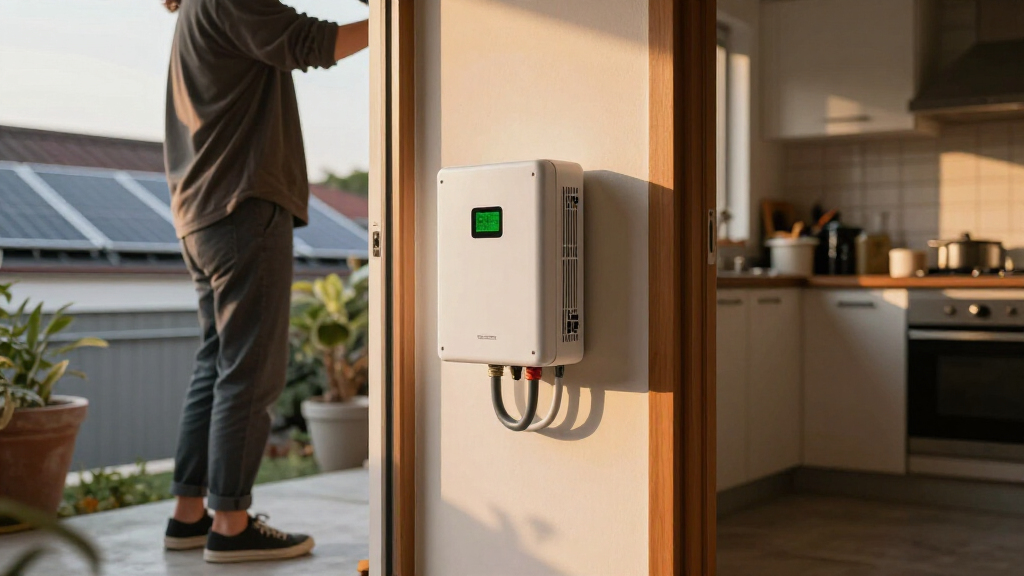
Choosing among home battery backup systems comes down to one core question: do you want a permanent, whole-house setup or a flexible power station you can move and expand? For whole-home coverage, the ECO-WORTHY 32 kWh Solar Panel and LiFePO4 Home Backup System stands out as the most complete package, pairing massive storage with panels in one kit. If you want scalability without an installer, the EF ECOFLOW DELTA Pro Ultra with Extra Battery offers the best expandability, while the Jackery HomePower 3600 Plus balances capacity, portability, and ease of use better than almost anything else in this lineup. The main tradeoff in this category is between rack-mounted systems that deliver more kilowatt-hours per dollar and portable stations that trade capacity for convenience and faster setup. Read on for the full breakdown of all ten systems.

Get backup power and energy gear delivered free — and shop member deals
- Fast, free delivery on millions of items
- Access to Prime Big Deal Days deals on October 6–7
- Prime Video, Amazon Music and more included
Key Takeaways
- Rack-mounted LiFePO4 systems like the ECO-WORTHY Cubix100 and Powermega deliver the lowest cost per kilowatt-hour, but they require more setup knowledge than any portable power station in this roundup.
- Two products in the lineup are near-duplicates apart from bundled solar — the Jackery HomePower 3600 Plus and its two-panel version — so buying decision comes down to whether you already own panels.
- The EcoFlow and Jackery 5000-class stations justify their premium through expandability and whole-home transfer switch compatibility, while the smaller Delta 3 Classic models are backup for essentials, not whole houses.
- Solar bundling varies widely in value: the Growatt HELIOS 3600 includes 400W of panels, which partially offsets its mid-tier battery capacity for off-grid buyers.
- The biggest capacity gap in the roundup spans 1 kWh to 32 kWh, meaning the real decision is sizing your backup to critical loads versus buying capacity you may never use.
| ECO-WORTHY Cubix100 51.2V 600Ah LiFePO4 Server Rack Battery System |  | Best for Large Expandable Storage | Chemistry: LiFePO4 | System voltage: 51.2V (48V nominal) | System capacity: 600Ah | VIEW LATEST PRICE | See Our Full Breakdown |
| Jackery HomePower 3600 Plus Portable Power Station, 3584Wh, 3600W |  | Best Portable Backup | Capacity: 3,584 Wh | AC output: 3,600 W | Parallel output: 7,200 W | VIEW LATEST PRICE | See Our Full Breakdown |
| EF ECOFLOW DELTA Pro Ultra Power Station with Extra Battery |  | Best Premium Whole-Home Flexibility | Output: 7,200 W | Voltage: 120 V and 240 V | Battery capacity: 6,144 Wh | VIEW LATEST PRICE | See Our Full Breakdown |
| ECO-WORTHY Powermega 48V 314Ah LiFePO4 Battery (16.1kWh) |  | Best Safety-Focused Single Battery | Model: L13L314AH-1 | Chemistry: LiFePO4 | Voltage: 51.2 V (48 V nominal) | VIEW LATEST PRICE | See Our Full Breakdown |
| Jackery HomePower 3600 Plus Portable Power Station with Two 200W Solar Panels |  | Best Portable Solar Bundle | Capacity: 3,584 Wh | AC output: 3,600 W | Parallel output: 7,200 W | VIEW LATEST PRICE | See Our Full Breakdown |
| ECO-WORTHY 32 kWh Solar Panel and LiFePO4 Home Backup System |  | Best for Whole-Home and Off-Grid Capacity | Usable energy: 30 kWh+ | Battery bank: 2 × 48 V, 314 Ah LiFePO4 batteries | Inverter: 10 kW hybrid | VIEW LATEST PRICE | See Our Full Breakdown |
| Growatt HELIOS 3600 Portable Power Station with 400W Solar Panels |  | Best Expandable Portable System | Battery capacity: 3600 Wh | Continuous output: 3600 W | Included solar panels: 2 × 200 W | VIEW LATEST PRICE | See Our Full Breakdown |
| Jackery Solar Generator 5000 Plus Portable Power Station |  | Best Premium Portable Backup | Battery capacity: 5,040 Wh | Battery chemistry: LiFePO4 | Surge output: 14,400 W | VIEW LATEST PRICE | See Our Full Breakdown |
| EcoFlow Portable Power Station Delta 3 Classic, 1024Wh 1800W AC |  | Best Compact UPS Backup | Battery capacity: 1,024 Wh | Continuous output: 1800 W | Surge output: 3600 W | VIEW LATEST PRICE | See Our Full Breakdown |
| EF ECOFLOW DELTA 3 Classic Solar Generator with 220W Solar Panel, 1024Wh |  | Best Compact Solar Starter | Battery capacity: 1,024 Wh | Output: 1800 W | Surge output: 3600 W | VIEW LATEST PRICE | See Our Full Breakdown |
| home battery backup system | Voltage | Battery capacity |
|---|---|---|
| ECO-WORTHY Cubix100 51.2V 600A | — | — |
| Jackery HomePower 3600 Plus Po | 120 V; 240 V in parallel | — |
| EF ECOFLOW DELTA Pro Ultra Pow | 120 V and 240 V | 6,144 Wh |
| ECO-WORTHY Powermega 48V 314Ah | 51.2 V (48 V nominal) | — |
| Jackery HomePower 3600 Plus Po | 120 V; 240 V in parallel | — |
| ECO-WORTHY 32 kWh Solar Panel | — | — |
| Growatt HELIOS 3600 Portable P | — | 3600 Wh |
| Jackery Solar Generator 5000 P | — | 5,040 Wh |
| EcoFlow Portable Power Station | 120 V | 1,024 Wh |
| EF ECOFLOW DELTA 3 Classic Sol | — | 1,024 Wh |
More Details on Our Top Picks
ECO-WORTHY Cubix100 51.2V 600Ah LiFePO4 Server Rack Battery System
The Cubix100’s 30.72 kWh across six batteries gives it a different role from portable stations: it is built for a fixed home backup or off-grid setup with substantial storage needs. Compared with the ECO-WORTHY Powermega 48V 314Ah, this system starts with more stored energy and can grow to a larger stated maximum, making it a stronger fit for longer outages or future expansion. CAN and RS485 support inverter communication, while Bluetooth and Wi-Fi add monitoring options. The tradeoff is the rack installation: it needs dedicated space and is less suited to a buyer seeking a ready-to-move backup unit like the Jackery HomePower 3600 Plus. Six batteries may also arrive in separate shipments, so delivery and installation can take coordination.
Pros:- 30.72 kWh of initial storage across six batteries
- Expandable to as many as 32 units
- CAN, RS485, Bluetooth, and Wi-Fi communication
- Includes installation accessories and a 10-year limited warranty
Cons:- Requires dedicated space and rack installation
- The six batteries may arrive in separate packages at different times
Best for: Homeowners or off-grid users planning a fixed rack installation with high storage needs and room to expand
Not ideal for: Renters or buyers who need a portable, ready-to-use backup unit without rack space or installation planning
- Chemistry:LiFePO4
- System voltage:51.2V (48V nominal)
- System capacity:600Ah
- Energy capacity:30.72 kWh
- Battery count:6
- Communication:CAN, RS485, Bluetooth, Wi-Fi
- Maximum expansion:32 units; up to 163.8 kWh
- Certifications:UL9540, UL1973, CEC listed
- Warranty:10 years
Our verdict“Choose the Cubix100 for a fixed home or off-grid system where substantial storage and future expansion matter more than portability.”
Jackery HomePower 3600 Plus Portable Power Station, 3584Wh, 3600W
The HomePower 3600 Plus pairs 3,584 Wh with 3,600 W of AC output, giving portable backup buyers the ability to run substantial household loads without committing to a fixed rack system. Its wheels and telescopic handle make repositioning easier than with the ECO-WORTHY Cubix100 or Powermega, both designed around stationary battery storage. Charging flexibility also helps when grid power is unavailable: it accepts AC, solar, a gas generator, or hybrid AC and DC charging. The main limit is scale: its starting capacity is well below the larger fixed systems, and 240 V output requires parallel operation. The listed recharge times vary by power source, so a buyer should plan around available charging input rather than treat the fastest time as universal.
Pros:- 3,600 W AC output for substantial appliance loads
- Wheels and telescopic handle simplify movement
- AC, solar, generator, and hybrid charging options
- Expandable capacity and parallel operation
Cons:- 3,584 Wh is less initial storage than the fixed ECO-WORTHY battery systems
- 240 V output requires parallel operation
- Recharge time depends on the charging source and setup
Best for: Households seeking a movable backup unit for essential appliances, with charging options for outages and travel between locations
Not ideal for: Buyers who need large built-in storage or 240 V output from a single unit
- Capacity:3,584 Wh
- AC output:3,600 W
- Parallel output:7,200 W
- Voltage:120 V; 240 V in parallel
- Expandable capacity:Up to 21 kWh per unit or 43 kWh with multiple units
- Charging options:Hybrid AC+DC, AC, solar, gas generator
- Battery cycle life:6,000 cycles
- Design:Wheels and telescopic handle
Our verdict“Pick the HomePower 3600 Plus if you want a wheeled, flexible backup station and can work within its single-unit capacity and voltage limits.”
EF ECOFLOW DELTA Pro Ultra Power Station with Extra Battery
The DELTA Pro Ultra combines a 7,200 W inverter with a 6,144 Wh battery, so it offers more output from its initial setup than the Jackery HomePower 3600 Plus while keeping a modular path to much greater storage. Its stated expansion ceiling of 90 kWh makes it a better match for buyers planning extended backup than a standalone portable station. Support for both 120 V and 240 V, several charging sources, and a 0 ms UPS transfer time add useful flexibility for home circuits and sensitive devices. It is still a system to plan around: the inverter and battery ship separately, and reaching the full capacity requires adding batteries. Compared with the fixed ECO-WORTHY Cubix100, this pick combines inverter output and storage in one product family, but its initial battery capacity is lower.
Pros:- 7,200 W output at 120 V or 240 V
- Expandable battery capacity up to 90 kWh
- 0 ms UPS transfer time for supported backup use
- Can recharge from EV charging stations, solar, wall outlets, and outdoor generators
Cons:- The inverter and battery arrive in separate packages
- The initial 6,144 Wh capacity is below the Cubix100 system’s 30.72 kWh
- Reaching the stated maximum capacity requires adding batteries
Best for: Homeowners who want high-output backup with 120 V and 240 V support and a modular path to extended runtime
Not ideal for: Buyers who want a single compact unit with all components delivered together or need high storage without future expansion
- Output:7,200 W
- Voltage:120 V and 240 V
- Battery capacity:6,144 Wh
- Expandable capacity:Up to 90 kWh with 15 batteries
- UPS transfer time:0 ms
- Charging methods:EV charging stations, solar, wall outlets, outdoor generators
- Recharge time:2 hours for one 6,144 Wh battery
- Package note:Inverter and battery arrive separately
Our verdict“Choose the DELTA Pro Ultra for high-output home backup that can grow over time, provided you are prepared to plan around separate components and expansion.”
ECO-WORTHY Powermega 48V 314Ah LiFePO4 Battery (16.1kWh)
The Powermega stores 16.07 kWh in one LiFePO4 battery, offering a substantial fixed-storage starting point without the Cubix100’s six-battery rack arrangement. Its 200 A smart BMS, active cell balancing, external circuit breaker, and aerosol fire-suppression modules make safety and battery management central to its appeal. The 7-inch touchscreen, Wi-Fi, Bluetooth, RS485, and CAN also give buyers several ways to check system status. Compared with the Cubix100, the Powermega starts with less capacity and has a lower stated expansion ceiling, but its single-battery format may suit a simpler storage layout. This is still a large pallet-delivered unit, not a portable station like the Jackery HomePower 3600 Plus; delivery access, weight, and installation need to fit the home.
Pros:- 16.07 kWh of LiFePO4 storage in one battery
- 200 A smart BMS with active cell balancing
- Aerosol fire suppression and external circuit breaker
- Touchscreen plus Wi-Fi, Bluetooth, RS485, and CAN monitoring
Cons:- Large and heavy, with pallet delivery by truck
- Expansion is limited to 15 parallel units, below the Cubix100’s stated unit count
- The provided product data lists UL 1973 certification but no UL 9540 certification
Best for: Homeowners building fixed residential storage who prioritize integrated battery protection, monitoring, and a substantial single-unit capacity
Not ideal for: Renters, buyers needing portable outage power, or households without a suitable delivery and installation plan
- Model:L13L314AH-1
- Chemistry:LiFePO4
- Voltage:51.2 V (48 V nominal)
- Capacity:314 Ah
- Energy:16.07 kWh
- BMS:200 A smart BMS with active cell balancing
- Parallel expansion:Up to 15 units; up to 241 kWh
- Connectivity and display:Wi-Fi, Bluetooth, RS485, CAN; 7-inch HD touchscreen
- Warranty:10 years
Our verdict“The Powermega suits fixed home storage buyers who value built-in protection and monitoring and can accommodate a heavy pallet-delivered battery.”
Jackery HomePower 3600 Plus Portable Power Station with Two 200W Solar Panels
This HomePower bundle has the same 3,584 Wh capacity and 3,600 W output as the standalone Jackery HomePower 3600 Plus, but adds two 200 W solar panels for buyers who want generation hardware included. That makes it a more self-contained starting point for recharging during an outage than the standalone model, while remaining far easier to move than the ECO-WORTHY Powermega fixed battery. It supports AC, solar, gas generator, and hybrid charging, and its wheels and handle help when the station needs to move between storage and use. The panels do not change its battery capacity or output, however, and actual solar recharge depends on conditions. Parallel operation is still required for 240 V, and the station and panels may arrive in separate packages.
Pros:- Includes two 200 W solar panels
- 3,584 Wh capacity and 3,600 W AC output
- AC, solar, generator, and hybrid charging options
- Wheels and telescopic handle aid movement
Cons:- Solar panels do not increase stored battery capacity
- 240 V output requires parallel operation
- The station and panels may arrive in separate packages
Best for: Portable-backup buyers who want a power station and two solar panels in one purchase for recharging away from the grid
Not ideal for: Households seeking large fixed storage or 240 V output from one unit, or buyers who already have suitable panels
- Capacity:3,584 Wh
- AC output:3,600 W
- Parallel output:7,200 W
- Voltage:120 V; 240 V in parallel
- Included solar panels:Two 200 W panels
- Expandable capacity:Up to 21 kWh per unit or 43 kWh with multiple units
- Battery cycle life:6,000 cycles
- Charging options:Hybrid AC+DC, AC, solar, gas generator
- Design:Wheels and telescopic handle
Our verdict“Choose this bundle if you want Jackery’s portable backup format with panels included and accept that it remains a 3,584 Wh single-unit system.”
ECO-WORTHY 32 kWh Solar Panel and LiFePO4 Home Backup System
The ECO-WORTHY system is the capacity pick in this group: its 30 kWh+ of usable energy and 10 kW hybrid inverter are aimed at backing up multiple household loads or supporting an off-grid setup. Its 120 V and 240 V output gives it broader home-system reach than portable stations such as the Jackery Solar Generator 5000 Plus, while the included six panels make it a more complete solar package. Battery monitoring, multiple communication protocols, and layered safety features add useful control for a permanently installed system. That scale comes with real logistical demands: the pallet shipment needs truck access, and installation is a larger project than connecting a portable unit. I would choose it for substantial fixed backup needs, not for buyers who want easy relocation or a simple plug-in setup.
Pros:- More than 30 kWh of usable energy for extended backup needs
- 10 kW inverter provides 120 V and 240 V output
- Includes six 590 W solar panels
- Battery monitoring and multiple built-in protection features
Cons:- Large pallet shipment requires suitable delivery access
- Fixed-system scale is less convenient to install or relocate than portable stations
- Inverter exterior version is selected randomly
Best for: Households planning substantial fixed backup or off-grid use that can accommodate pallet delivery and system installation
Not ideal for: Renters or buyers seeking a portable, quick-to-set-up backup unit
- Usable energy:30 kWh+
- Battery bank:2 × 48 V, 314 Ah LiFePO4 batteries
- Inverter:10 kW hybrid
- Output voltage:120 V and 240 V
- Solar panels:6 × 590 W N-type monocrystalline
- Battery cycle life:9000+ cycles at 80% DoD
- Monitoring:Bluetooth, Wi-Fi, and LCD screen
- Battery communication:RS485, CAN, and RS232
Our verdict“Choose this system if you need high-capacity fixed backup with solar included and have space for a substantial installation.”
Growatt HELIOS 3600 Portable Power Station with 400W Solar Panels
The HELIOS 3600 suits buyers who want a portable starting point that can grow into a larger backup setup. It supplies 3600 W of continuous output and includes two 200 W panels, while its stated expansion ceiling of 36 kWh gives it a path beyond the base unit’s 3.6 kWh. That modular approach separates it from the fixed, high-capacity ECO-WORTHY system: Growatt is easier to begin with, but reaching larger backup capacity means adding equipment. Two units can also provide 240 V output, which makes it more adaptable for home loads than the 120 V EcoFlow DELTA 3 Classic. The tradeoff is that whole-house expansion requires a second unit, and the power station plus panels can be cumbersome to move and arrange. I’d pick it for staged growth, not immediate high-capacity coverage.
Pros:- Includes two 200 W solar panels
- Expandable capacity stated up to 36 kWh
- Two-unit parallel setup supports 240 V output
- 15 ms EPS switching supports backup for essential devices
Cons:- Base capacity is 3600 Wh, so extended backup requires expansion
- 240 V operation requires a second unit
- The station and included panels can be awkward to transport or set up
Best for: Homeowners or RV users who want a portable system now and a stated path to expand capacity and 240 V output later
Not ideal for: Buyers who need high-capacity, 240 V backup from a single ready-to-use unit
- Battery capacity:3600 Wh
- Continuous output:3600 W
- Included solar panels:2 × 200 W
- Maximum solar input:2000 W
- Expandable capacity:Up to 36 kWh
- Parallel output:Up to 7200 W and 240 V with two units
- EPS switching time:15 ms
- Battery type and life:LFP; retains 80% capacity after 4000 cycles
Our verdict“Choose the HELIOS 3600 if you want a portable system that can be expanded over time and can accept the cost and space of added units.”
Jackery Solar Generator 5000 Plus Portable Power Station
The Jackery Solar Generator 5000 Plus targets buyers who want substantial output in a portable format and room to build a larger system. Its 7200 W rated output, 120 V and 240 V support, and 5,040 Wh battery give it more immediate appliance coverage than the 3,600 Wh Growatt HELIOS 3600. Expansion to 60 kWh and up to 4,000 W of solar input make it a stronger fit for extended backup planning than the compact EcoFlow DELTA 3 Classic. Those capabilities depend on adding compatible equipment, though: the solar panel is optional, and powering home circuits requires Jackery’s 60A Smart Transfer Switch. The included unit is still a 5 kWh-class battery, so its impressive output does not by itself provide long runtimes for heavy loads. I’d shortlist it for flexible, expandable backup when its system accessories fit the plan.
Pros:- 7200 W rated output with 120 V and 240 V support
- Expandable capacity stated up to 60 kWh
- Accepts up to 4,000 W of solar input
- LiFePO4 battery chemistry
Cons:- Solar panel is optional
- Powering home circuits requires a compatible 60A Smart Transfer Switch
- Base battery capacity is 5,040 Wh, so extended heavy-load backup may require expansion
Best for: Homeowners who need 120 V and 240 V output, strong appliance support, and the option to expand capacity with compatible equipment
Not ideal for: Buyers seeking a complete solar setup or direct home-circuit backup without separate equipment
- Battery capacity:5,040 Wh
- Battery chemistry:LiFePO4
- Surge output:14,400 W
- Output voltage:120 V and 240 V
- Maximum expandable capacity:60 kWh
- Maximum solar input:4,000 W
- Home-circuit accessory:Compatible with Jackery 60A Smart Transfer Switch
Our verdict“Choose the Jackery if you want high-output portable backup with a large expansion path and are prepared to add solar and home-circuit equipment.”
EcoFlow Portable Power Station Delta 3 Classic, 1024Wh 1800W AC
The DELTA 3 Classic is the compact choice here for keeping essential devices running through an outage. Its under-10 ms UPS switching can help protect sensitive electronics when household power drops, while 1,800 W continuous output covers many smaller appliances. At 26.7 pounds, it is easier to reposition than the Jackery Solar Generator 5000 Plus, though the Jackery has more than five times the battery capacity and adds 240 V output. The EcoFlow’s fast AC charging—up to 80% in 45 minutes—helps shorten the wait between uses, but its 1,024 Wh battery limits how long it can sustain substantial loads. It also cannot expand with Delta 2 or other Delta 3 series extra batteries. I’d choose this version for a compact backup and UPS role, rather than as a route to whole-home coverage.
Pros:- Under-10 ms UPS switching for sensitive electronics
- 1800 W continuous output and 3600 W surge capacity
- AC charging reaches 80% in 45 minutes
- Six outlets in a 26.7-pound unit
Cons:- 1,024 Wh capacity limits runtime for larger household loads
- No compatibility with Delta 2 or other Delta 3 series extra batteries
- 120 V output does not support 240 V home loads
Best for: People in apartments or smaller homes who need portable UPS backup for electronics and a few essential devices
Not ideal for: Households seeking long runtimes, 240 V support, or a compatible extra-battery expansion path
- Battery capacity:1,024 Wh
- Continuous output:1800 W
- Surge output:3600 W
- Voltage:120 V
- Outlets:6
- UPS switching:Under 10 ms
- AC charging:0–80% in 45 minutes
- Weight:26.7 pounds
Our verdict“Choose the DELTA 3 Classic for quick-charging, portable backup for electronics and essential devices rather than long-duration home coverage.”
EF ECOFLOW DELTA 3 Classic Solar Generator with 220W Solar Panel, 1024Wh
This DELTA 3 Classic package makes more sense than the station-only version for buyers who want a ready-made small solar backup kit. It includes a 220 W bifacial panel and retains the same 1,024 Wh capacity, 1,800 W output, and under-10 ms UPS switching as the EcoFlow DELTA 3 Classic. The panel gives it a way to recharge without a separate solar purchase, though the stated 5.8-hour recharge depends on conditions and the included panel’s modest input. Compared with the much larger Jackery Solar Generator 5000 Plus, this bundle is easier to fit into a compact backup plan but cannot match its 240 V output or expansion ceiling. The station and panel may arrive separately, and this remains a short-runtime system for demanding loads. I’d select it for modest needs and practical solar recharging.
Pros:- Includes a 220 W bifacial solar panel
- 1800 W output with 3600 W surge capacity
- Under-10 ms UPS switching
- AC charging reaches 80% in 45 minutes
Cons:- 1,024 Wh battery limits runtime for high-demand appliances
- Included 220 W panel makes solar recharging dependent on favorable conditions and takes a stated 5.8 hours
- Station and solar panel may arrive separately
Best for: Buyers who want a compact electronics and essential-device backup kit with a solar panel included
Not ideal for: Households that need long runtimes, high solar input, or 240 V support for major home loads
- Battery capacity:1,024 Wh
- Output:1800 W
- Surge output:3600 W
- X-Boost output:Up to 2600 W
- Included solar panel:220 W bifacial
- Solar conversion efficiency:Up to 25%
- AC charging:0–80% in 45 minutes
- UPS switching:Under 10 ms
Our verdict“Choose this bundle over the station-only DELTA 3 Classic if you want a compact backup kit with a solar panel included.”
How We Picked
I ranked these systems by weighing usable capacity and cost efficiency first, because that determines what a battery can actually keep running during an outage — a refrigerator and lights for a night, or an entire home for days. Expandability came next: systems that accept extra battery modules or integrate with transfer switches scored higher for long-term value than closed designs. I also factored in chemistry and lifespan, favoring LiFePO4 builds with high cycle ratings over older chemistries, and evaluated whether solar input was bundled or sold separately.
Usability separated the portable tier from the installed tier. Power stations with app control, fast solar recharge, and true sine-wave AC output ranked higher for beginners, while rack-mounted kits earned points for raw capacity and per-kilowatt-hour value despite steeper setup requirements. Finally, I considered who each product is actually for — a 1 kWh station is a poor whole-home backup but an excellent apartment or camping pick, so the ranking rewards fit-for-purpose design over raw specs alone.
Factors to Consider When Choosing Home Battery Backup Systems
Before committing to any of the systems above, it helps to step back and think about how backup power fits your home, your outage profile, and your budget. These are the factors that most often make or break a home battery purchase.
Size to Your Critical Loads, Not Your Whole House
The most common mistake buyers make is paying for capacity they will never use. Instead of backing up everything, list your critical loads — typically a refrigerator, some lights, a router, a medical device, and maybe a sump pump — and add up their wattage and daily run time. A refrigerator might need 1–1.5 kWh per day, while adding a freezer, lights, and electronics could push that to 3–5 kWh. Once you know that number, match it to runtime rather than headline capacity, and remember that inverter limits matter just as much: a system that cannot surge past 2,000W will struggle with a well pump or air conditioner compressor even if its battery is huge. Sizing this way often reveals that a mid-capacity station covers your real needs at half the cost of a whole-home rack.
Permanent Installation vs. Portable Flexibility
Rack-mounted LiFePO4 systems and portable power stations solve the same problem in fundamentally different ways, and the choice shapes everything else. A permanent system wired into your electrical panel kicks in automatically, runs your home’s existing outlets, and offers the best cost per kilowatt-hour — but it usually means professional installation, permitting in some areas, and no portability. A portable station can be deployed in minutes, moved between rooms or taken camping, and expanded by daisy-chaining batteries, but you are running extension cords to specific devices unless you add a transfer switch. Many households actually start portable and graduate to a wired setup later, which is a reasonable path if your budget does not cover both at once.
Solar Charging Changes the Math
Battery capacity alone only gets you through a fixed number of hours; solar input turns a finite backup into a renewable one. If your outages tend to be long — multi-day storms, wildfire shutoffs, or unreliable grid service — solar recharge capability should be near the top of your list, and bundled panel kits can save you compatibility headaches. Pay attention to maximum solar input wattage, not just whether solar is supported: a station that accepts 1,000W of panels recharges several times faster than one capped at 400W. Also check whether the panels and station use compatible connectors or require adapters, since mismatched gear is one of the most frequent complaints in this category. For short outages measured in hours, solar matters far less and should not drive your decision.
Battery Chemistry and Cycle Life
Nearly every quality system today uses LiFePO4 chemistry, and for good reason: it tolerates thousands of charge cycles, handles heat better, and is less prone to thermal runaway than older lithium-ion formulations. What differs between products is rated cycle life — often 3,000 to 6,000 cycles to 80% capacity — and how honestly that rating is backed by warranty. A battery rated for 4,000 cycles used once a week lasts well over a decade, so chemistry differences matter more for daily-cycling off-grid users than for occasional emergency backup. Depth of discharge and battery management system quality also affect real-world lifespan, and a well-engineered BMS in a slightly smaller battery often outlasts a cheaply managed larger one.
Expandability and Future-Proofing
Your power needs rarely stay static, and the most regrettable purchases in this category are closed systems that cannot grow. Modular stations that accept extra battery modules let you start small and add capacity as budget allows, while rack-mounted kits can often scale by adding more battery units to the stack. Check whether expansion requires matching first-party modules or supports third-party batteries, since proprietary ecosystems lock you into one brand’s pricing. Also verify that the inverter can handle the expanded capacity — adding batteries to an undersized inverter gives you runtime but not the ability to run more devices simultaneously. Buyers planning to add solar later should confirm input capacity headroom before purchasing.
Hidden Costs Beyond the Sticker
The listed capacity is only part of the true cost of ownership. Portable stations may need extension cords, a transfer switch for whole-home use, or extra panels to hit useful recharge speeds. Rack systems can require an installer, permits, wiring, and a compatible inverter or charge controller — costs that can rival the battery itself. Warranty length and what it actually covers differ widely, as does whether the manufacturer has a track record of honoring claims. Finally, consider resale and ecosystem lock-in: popular platforms with large accessory ecosystems tend to hold value and stay supported longer than niche products, which matters if you plan to upgrade in five years.
Frequently Asked Questions
Can a portable power station really back up my whole house, or do I need a rack system?
It depends on your definition of backup. Large stations in the 3.6–5 kWh class, like the Jackery Solar Generator 5000 Plus or EcoFlow DELTA Pro Ultra, can run essential circuits — refrigerator, lights, internet, and a few outlets — for a day or more, and many support transfer switch integration so they feed your home’s wiring directly. What they cannot easily do is run high-draw appliances like an electric water heater, central air, or an EV charger for extended periods. Rack-mounted systems in the 16–32 kWh range, like the ECO-WORTHY kits, handle those loads and multi-day outages, but at the cost of professional installation and zero portability. If your goal is comfort through typical outages, a big portable station is often enough; if you want true whole-home resilience or off-grid living, a rack system is the right tool.
How much battery capacity do I actually need for an outage?
Start by adding up the daily energy use of the devices you genuinely need to keep running. A refrigerator runs about 1–1.5 kWh per day, a chest freezer a bit less, lights and phone charging under 1 kWh, and a CPAP or medical device a fraction of that. A 1 kWh unit like the Delta 3 Classic covers a refrigerator overnight plus phone and light charging, which is why it suits apartments and short outages. A 3.6 kWh system comfortably covers essentials for a full day, and 10 kWh or more buys multi-day coverage or room for heavier loads. The mistake to avoid is buying for your peak fear instead of your actual pattern — most households use far less during an outage than they assume because they naturally cut back.
Is buying a power station with bundled solar panels worth it?
Bundled kits make sense when the panels are genuinely compatible and priced fairly, since you avoid connector mismatches and separate shipping. In this lineup, the Jackery HomePower 3600 Plus is sold both with and without two 200W panels, so the decision comes down to whether you already own panels or plan to buy them — if solar recharge matters to you, the bundle is usually the simpler path. The Growatt HELIOS 3600 including 400W of panels is notable because that input can meaningfully recharge its battery over a sunny day. What bundles sometimes hide, though, is underpowered panels relative to the station’s solar input capacity, so check whether adding more panels later would speed things up. If your outages are short and grid power returns within hours, skip the panels and save the money.
What’s the difference between the 48V rack batteries and regular portable power stations?
Rack batteries like the ECO-WORTHY Cubix100 and Powermega are raw 48V LiFePO4 storage intended to be integrated into a larger system with an inverter and charge controller, which is why they deliver far more kilowatt-hours per dollar than all-in-one stations. You are buying a component, not an appliance: there is no built-in AC inverter, no outlets, and no plug-and-play operation. Portable stations bundle the battery, inverter, outlets, display, and charging electronics into one box you can use out of the packaging, and that convenience is what you pay a premium for. The rack route suits DIY-minded buyers, off-grid builds, and anyone planning a permanent installation, while stations suit renters, beginners, and people who want emergency power without touching their electrical panel. Neither is objectively better — they serve buyers with different skills and timelines.
How long do these LiFePO4 systems last, and what maintenance do they need?
LiFePO4 chemistry is the most durable mainstream option, with quality systems rated for 3,000 to 6,000 full charge cycles before capacity drops to roughly 80%. Used purely as emergency backup and cycled occasionally, that translates to well over a decade of service; cycled daily in an off-grid setup, expect 8–12 years. Maintenance is minimal compared to lead-acid: no watering, no equalization, and no regular topping off. The practical care steps are keeping batteries in a temperature-controlled space — extreme heat is the main lifespan killer — avoiding long storage at 100% charge, and recharge after heavy use rather than leaving them depleted for months. The battery management system handles cell balancing automatically, so beyond environmental care and occasional firmware updates, there is little hands-on work.
Conclusion
After comparing all ten systems, the right choice depends less on specs and more on how you plan to live with backup power. For best overall whole-home coverage, the ECO-WORTHY 32 kWh system delivers the most complete package in this roundup — huge capacity, panels included, and genuine multi-day resilience. The EcoFlow DELTA Pro Ultra with Extra Battery earns the best premium pick for buyers who want near whole-home power with modular expansion and no installer, while the ECO-WORTHY Powermega 48V takes best value for its outstanding kilowatt-hours per dollar among rack batteries. For beginners, the Jackery HomePower 3600 Plus is the easiest path to serious home backup — plug in, charge, and go — and the Delta 3 Classic models are the smart pick for apartment dwellers or anyone who just needs essentials covered. Off-grid and mobile users should lean toward the Growatt HELIOS 3600 with its bundled 400W of solar. Whatever you choose, size to your real critical loads rather than worst-case fears — the best system is the one you will actually use and can afford to keep charged.
Fall Picks
fall essentials
As an affiliate, we earn on qualifying purchases.