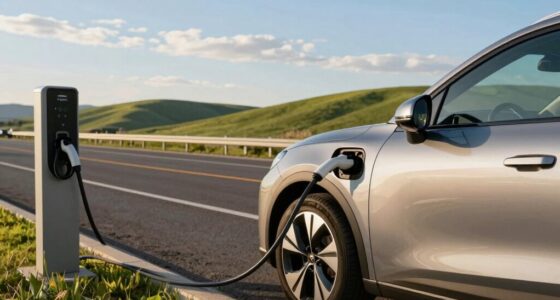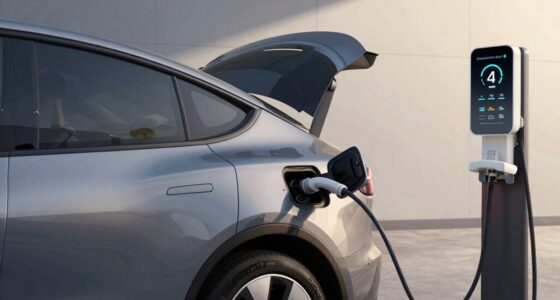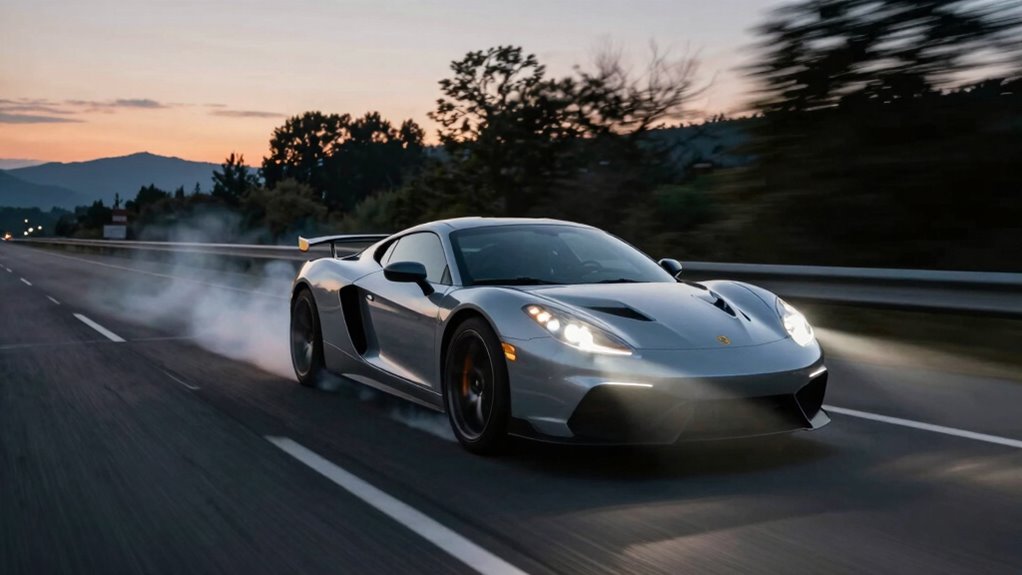

When you drive at highway speeds, your electric vehicle faces much more air resistance, which increases exponentially beyond 60-70 mph. This force makes your motor work harder, drawing more power from the battery and reducing range by up to 40% or more. Aerodynamics help, but can’t fully counteract high-speed resistance. If you want to maximize your EV’s distance, understanding how speed impacts energy use is essential—stick around to learn more.
Key Takeaways
- Increasing speed significantly raises air resistance, causing higher energy consumption and faster battery depletion.
- At highway speeds, aerodynamic drag grows exponentially, making it a major factor in range reduction.
- Higher speeds require more motor effort, leading to increased power draw and decreased driving distance.
- Maintaining steady, moderate speeds helps minimize aerodynamic resistance and conserves battery life.
- Accelerating or driving aggressively at high speeds greatly accelerates energy loss and shortens range.
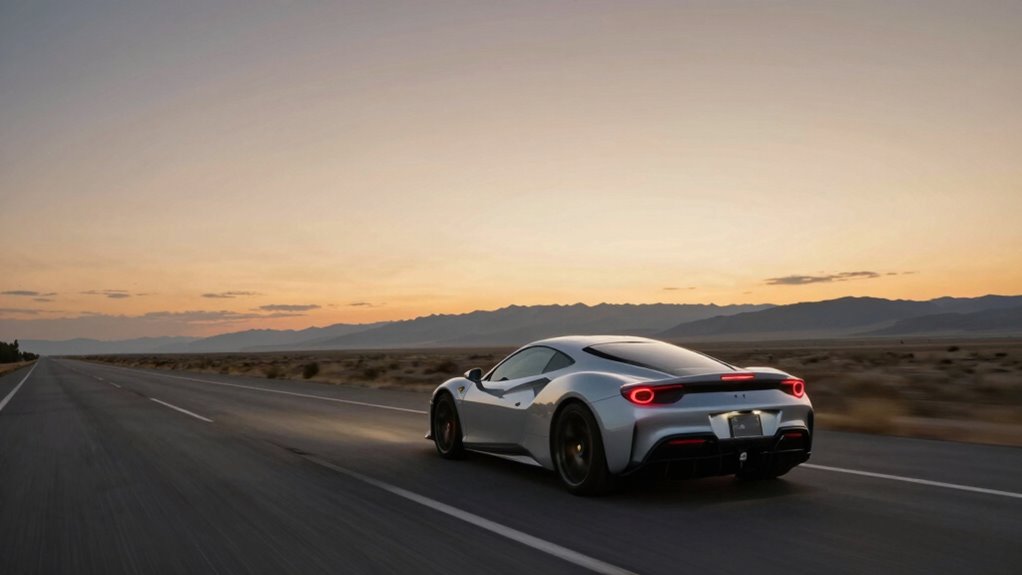
Driving at highway speeds may seem efficient, but it markedly reduces your electric vehicle’s range. When you accelerate to high speeds, your car’s electric vehicle technology has to work harder to maintain that pace. This increased effort leads to greater energy consumption, draining your battery faster than you might expect. High speeds result in more resistance against your vehicle, especially from air, which becomes a significant factor at highway velocities. This is where aerodynamic design plays an essential role. Vehicles with sleek, aerodynamic shapes cut through the air more efficiently, reducing drag and helping conserve energy. If your EV has a well-optimized aerodynamic design, it can mitigate some of the range loss caused by high-speed driving, but it won’t completely eliminate it.
The faster you go, the more you fight against air resistance, which grows exponentially with speed. At 60 mph, aerodynamic drag is manageable, but pushing to 75 or 80 mph causes a sharp increase in resistance. Your electric motor has to work harder to overcome this force, which means higher power draw from your battery. This increased load leads to faster depletion of your range, sometimes by as much as 40% or more, depending on your vehicle’s design and driving conditions. Even minor adjustments, like maintaining a steady speed or avoiding rapid acceleration, can help reduce this extra energy drain. But ultimately, the physics of airflow make high-speed driving inherently less efficient for EVs. Aerodynamic design plays a crucial role in mitigating some of these losses. Additionally, battery capacity limitations mean that the overall energy storage capacity impacts how much range you can lose at higher speeds.
Furthermore, vehicle weight can influence how much energy is needed to sustain high speeds, with lighter vehicles generally experiencing less drag and energy loss. Modern electric vehicle technology is continually improving, with batteries that last longer and motors that operate more efficiently. Still, these advancements can’t fully counteract the energy costs associated with high-speed travel. Efficiency improvements in EV technology are helping to reduce overall energy consumption, but they do not negate the fundamental physics involved. Aerodynamic improvements also help, but they are just one piece of the puzzle. The bottom line is that when you’re cruising at highway speeds, your vehicle’s energy efficiency drops markedly, limiting your overall range. If you want to maximize your EV’s range, it’s best to stick to moderate speeds whenever possible. Not only will you extend your driving distance, but you’ll also reduce wear and tear on your vehicle and help promote a smoother, more energy-efficient ride. Additionally, driving habits can significantly influence your overall energy consumption and vehicle efficiency.
As an affiliate, we earn on qualifying purchases.
Frequently Asked Questions
How Does Tire Type Affect Range at Highway Speeds?
Tire type considerably impacts your range at highway speeds through tire rolling resistance and tread design. Low rolling resistance tires reduce energy loss, helping you go further on a charge. Meanwhile, tires with optimized tread design minimize drag and improve aerodynamics, enhancing efficiency. Choosing tires with these features means less energy is wasted, so you can enjoy longer drives and better range at highway speeds.
Do Weather Conditions Significantly Impact Electric Vehicle Range?
Weather conditions do critically impact your electric vehicle’s range. Cold weather causes battery degradation, reducing efficiency and overall range, especially if you don’t precondition your battery. Hot temperatures can also drain power faster for cooling systems. Additionally, charging infrastructure becomes essential during extreme weather, as you might need more frequent charges. Planning for weather variations helps you maximize range and avoid surprises on your trip.
How Does Vehicle Weight Influence Efficiency at High Speeds?
Your vehicle’s weight dramatically impacts efficiency at high speeds, turning your drive into a battle of physics. Heavier cars demand more energy to overcome inertia and air resistance, especially during aggressive drive cycles. When battery temperature drops or rises, it worsens the effect, making acceleration and deceleration even more taxing. So, the heavier your vehicle, the more energy you drain, drastically cutting your range—especially when cruising fast on the highway.
Can Regenerative Braking Improve Highway Range?
Yes, regenerative braking can improve highway range by recapturing energy during deceleration, reducing reliance on the battery. This process helps minimize battery degradation over time, maintaining efficiency. However, its impact depends on your charging infrastructure; if charging stations are scarce, you’ll benefit less since you can’t recharge effectively. By maximizing regenerative braking, you extend your range, but a robust charging network is essential for consistent gains.
What Role Does Aerodynamics Play in High-Speed Range Reduction?
Aerodynamics considerably impacts your high-speed range because air resistance, driven by the drag coefficient, increases exponentially as you go faster. The lower your vehicle’s drag coefficient, the less air resistance it faces, helping you conserve battery power. You might think aerodynamics only matters at high speeds, but even small improvements in design can reduce drag, making a noticeable difference in your range when traveling on the highway.
As an affiliate, we earn on qualifying purchases.
Conclusion
Remember, driving at highway speeds is like pouring water into a bucket with a big hole—most of your effort goes to maintaining speed, not reaching your destination. I once took a road trip where I kept my speed steady around 60 mph, and my range tripled compared to speeding. It’s a simple shift that can save you a lot of time and energy, proving that sometimes, slow and steady truly wins the race.
As an affiliate, we earn on qualifying purchases.
highway driving efficiency gadgets
As an affiliate, we earn on qualifying purchases.
As an affiliate, we earn on qualifying purchases.