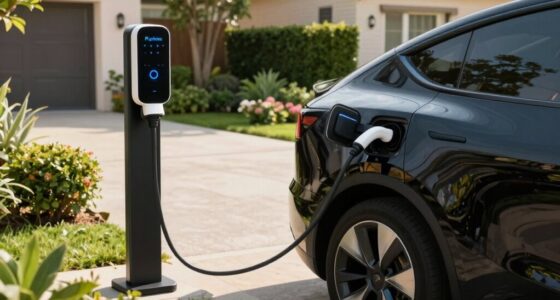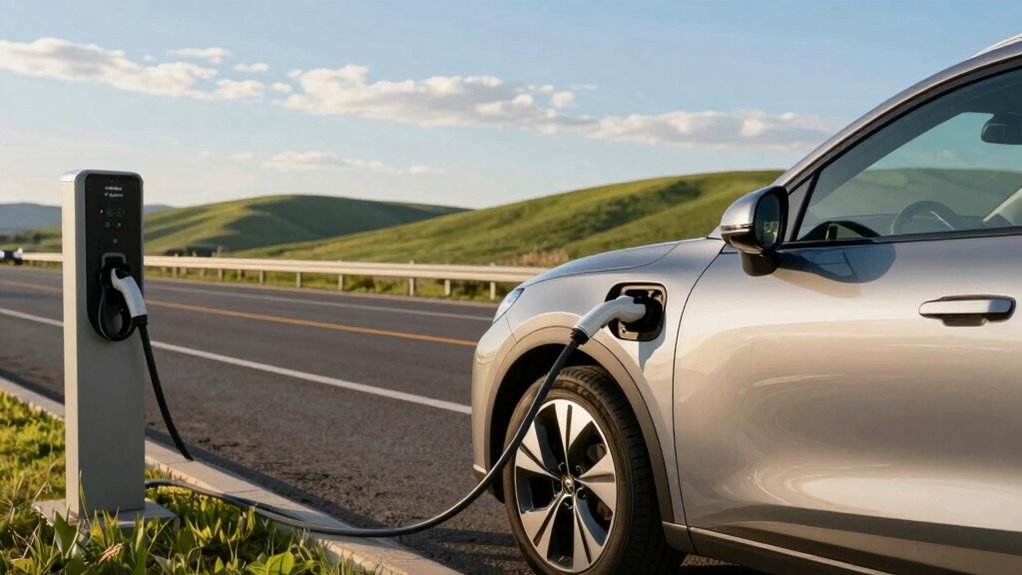

After a long highway drive, it’s best to recharge your EV within the 20-80% range to protect the battery’s health. Use the appropriate charger for your vehicle’s needs and follow manufacturer instructions. Be considerate of others by unplugging once charged and keeping the area clean. Properly maintaining your battery helps extend its lifespan and ensures your vehicle is ready for your next journey. If you want to learn more about safe and efficient charging, keep going.
Key Takeaways
- Recharge the battery to at least 20%, ideally within the 20-80% range, to preserve battery health after a long drive.
- Use appropriate fast chargers for quick replenishment, following manufacturer instructions for safety and efficiency.
- Unplug once the vehicle reaches a sufficient charge to free the station for others.
- Keep the charging port and surrounding area clean to ensure proper connection and safety.
- Practice courteous charging habits, including timely unplugging and respecting shared charging infrastructure.
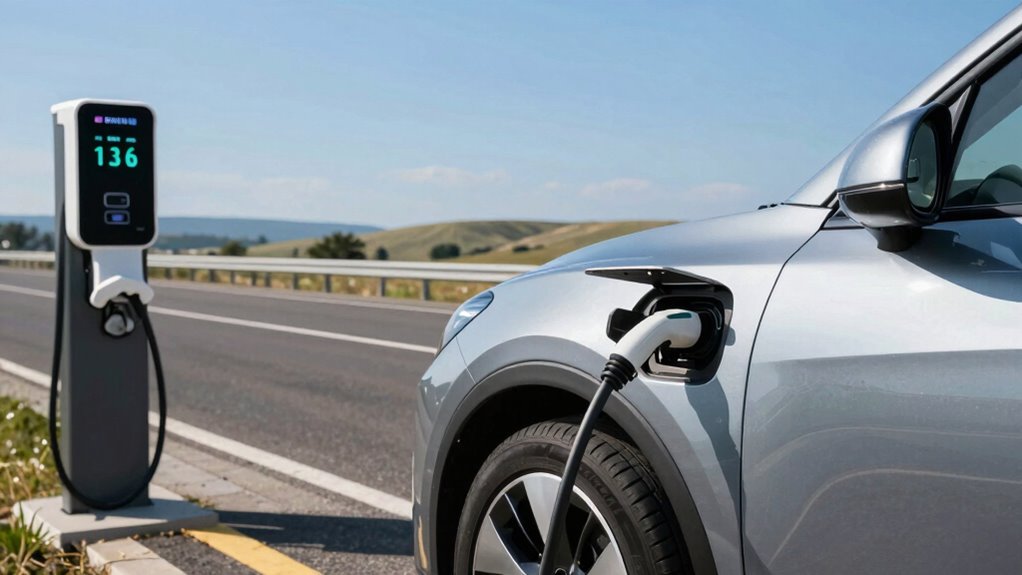
After a long highway drive, charging your electric vehicle (EV) becomes a critical step to guarantee you’re prepared for your next trip. Once you’ve reached a charging station, it’s essential to approach the process with a clear understanding of battery maintenance and charging etiquette. Proper battery maintenance ensures your EV’s health remains ideal, helping you get the most out of each charge and prolonging the lifespan of your battery. Avoid letting the battery drain completely before recharging, as this can strain the cells and cause long-term damage. Instead, aim to keep your battery within a healthy range—generally between 20% and 80%—to minimize stress and maximize efficiency. This practice is especially important after a lengthy drive when the battery might have been pushed to its limits. Some EVs are equipped with features that help enhance charging and battery health, so familiarize yourself with your vehicle’s guidelines to make the most of these tools.
Charging etiquette also plays a fundamental role when you’re at a public station, especially during busy times. Be considerate of other drivers who might also be waiting to recharge. Once your vehicle is sufficiently charged for your upcoming journey, consider unplugging to free up the station for others. Many charging stations are designed for quick stops, so it’s courteous to avoid occupying the charger longer than necessary. If you’re sharing a charger with others, be mindful of the recommended charging time and communicate politely if needed. Remember, not all chargers are the same—some deliver fast charging, while others are slower. Use the appropriate charger based on your vehicle’s capabilities and your needs, but always follow the manufacturer’s instructions for safety and efficiency.
Another aspect of good charging etiquette involves keeping the charging port and surrounding area clean and free of debris. This not only ensures proper connection but also demonstrates respect for shared infrastructure. Additionally, if you encounter any issues—such as a charging station malfunction—report it to the station’s management so it can be repaired for the next user. Properly maintaining your battery and practicing considerate charging habits helps foster a smoother experience for everyone. It’s about respecting the shared resources and ensuring your EV remains in top condition, ready for your next adventure. After a long drive, taking these steps makes the charging process more efficient, safer, and more courteous for all EV users.

AIMILER Level 2 Electric Vehicle (EV) Charger(WIFI APP/Plug-play), 32A, 25ft Cable ETL Certified, 220V-240V NEMA 14-50P Plug EVSE w/ J1772 Connector, Portable EV Car Charging Stations for Home Level 2
❤ [Equipped with Nema 14-50 plug 240V, Compatible with 110-120V Nema 5-15p to 14-50r EV Adapter(Not packaged) or…
As an affiliate, we earn on qualifying purchases.
As an affiliate, we earn on qualifying purchases.
Frequently Asked Questions
How Long Should I Wait Before Charging After a Long Drive?
You should wait about 15-30 minutes before charging your EV after a long drive. This pause allows the battery to cool, protecting its health and optimizing charging speed. Charging a hot battery can reduce efficiency and potentially harm the battery over time. By giving it a short break, you guarantee the battery’s temperature stabilizes, allowing for faster, safer charging and better long-term battery health.
Can I Charge My EV at a Standard Household Outlet?
You can charge your EV at a standard household outlet, but it’ll be slow—think about adding only a few miles of range overnight. For example, a homeowner used a regular outlet and charged their vehicle safely, but it took longer. Remember, proper battery maintenance and charging safety are essential; avoid overloading circuits and don’t leave the vehicle unattended for extended periods. Using a dedicated charger is usually more efficient and safer.
Is Fast Charging Recommended After a Long Highway Trip?
Yes, fast charging is recommended after a long highway trip because it quickly replenishes your EV’s battery, helping you get back on the road sooner. However, keep in mind that frequent fast charging can impact your battery health over time. To balance charging speed and battery longevity, consider using fast chargers only when necessary and opt for slower charging methods when you’re not in a hurry.
How Does Temperature Affect Charging After a Long Drive?
Temperature profoundly impacts EV charging, especially after long drives. Did you know that charging in extreme temperatures can reduce battery efficiency by up to 20%? When you charge, battery cooling and temperature management are essential; high temperatures can cause overheating, while cold temps slow chemical reactions. Ensuring proper battery cooling and managing temperature helps optimize charging speed and battery health, making your long drive more efficient and safer.
Are There Specific Charging Tips for Different EV Models?
You should check your EV model’s specific charging tips, as they vary widely. Confirm proper battery calibration by occasionally allowing the battery to fully discharge and recharge. Also, verify charging station compatibility before plugging in, especially for fast chargers or different connector types. This way, you optimize battery health, get the fastest charge, and avoid potential compatibility issues, making your long drive more convenient and efficient.

WenStorm 50A 21ft J1772 EV Extension Cable, Level 2 EV Charger Extension Cord, Heavy-Duty 240V EV Extension Cable for Fast Charging (21FT)
Extended Charging Reach – Park Freely, Charge Anywhere: Add 21FT reach with this extra long EV charging cable….
As an affiliate, we earn on qualifying purchases.
As an affiliate, we earn on qualifying purchases.
Conclusion
After a long highway drive, it is crucial to give your EV time to recharge properly, especially if you’ve used a fast charger that can cause battery wear over time. For example, Sarah took her EV on a 300-mile trip, and after charging at a fast station, she noticed her battery performance slightly declined over months. Regularly balancing fast charges with slower, deeper charges helps maintain battery health, ensuring your EV stays reliable and efficient for future long drives.

KICTeam – EV Charger Cleaning Kit with Cleaning Brushes, Cleaning Swabs, Scraper & Pick Tools, EV Touchscreen Cleaner and Microfiber Screen Cloths – Safely Cleans EV Charging Station & EV Touchscreens
Complete Cleaning Solution: This kit includes all the essential cleaning tools to effectively clean your EV Charging Station,…
As an affiliate, we earn on qualifying purchases.
As an affiliate, we earn on qualifying purchases.

ChargePoint HomeFlex Level 2 EV Charger J1772 – Fast Smart Battery Power Charging at Home for Electric Automobile Vehicles – Hardwired for Electric Car
Charge with Confidence: ChargePoint builds reliable, flexible EV charging stations for home, business, and fleets. Get 24/7 support…
As an affiliate, we earn on qualifying purchases.
As an affiliate, we earn on qualifying purchases.