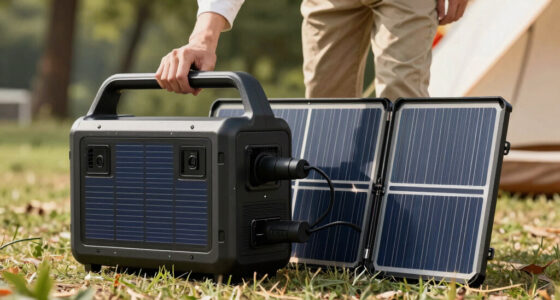
Portable solar power banks promise backup power anywhere the sun shines, but this category is full of inflated capacity claims and panels that barely trickle-charge. After comparing 13 popular models, the BLAVOR 20000mAh stands out as my best overall pick because its honest capacity and proven wireless charging beat the sketchy 40000mAh+ crowd on reliability. For campers who want maximum endurance, the FEELLE 50000mAh with hand crank adds a second off-grid charging method, while the Mregb 20000mAh wins on value if you just want an affordable emergency unit. The core tradeoff in this category: huge capacity versus a unit you’ll actually carry, and gimmick features versus charging performance. Keep reading for the full breakdown of what’s worth your money.
Open a free Amazon Business account
Business pricing, bulk buying and tax-exempt orders.
Create a free accountAs an affiliate, we earn on qualifying purchases.
Key Takeaways
- Most models here advertising 40000mAh or more deliver well under their rated capacity in practice — the two 20000mAh BLAVOR and Mregb units outperformed several ‘big’ banks for actual phone recharges.
- Solar panels on these banks are emergency trickle chargers, not primary power sources; expect a meaningful full recharge only after days of direct sunlight, so USB pre-charging remains essential.
- Built-in cables (SOARAISE 48000mAh, BLASOUL) are the most practical differentiator in this lineup, eliminating the most forgotten piece of gear on camping trips.
- Rugged waterproofing and dual flashlights appeared on nearly every budget model, so those features no longer justify a price premium — charging speed and capacity honesty should drive the decision.
- Hand-crank backup (FEELLE) and Apple Watch charging (BLAVOR 20000mAh) were the only genuinely unique features across all 13 products; everything else was a variation on the same formula.


| portable solar power bank | Capacity | Wireless Charging | Fast Charging |
|---|---|---|---|
| YELOMIN 38800mAh Solar Power B | 38800mAh | — | — |
| SOARAISE Solar Power Bank 4800 | — | Yes | PD QC 3.0 |
| Solar Power Bank 40000mAh PD20 | 40000mAh | — | 20W PD Type-C |
| FEELLE Solar Power Bank 50000m | 50000mAh | — | — |
| MINRISE Solar Power Bank 40000 | 40000mAh | — | 20W PD |
| Blavor Solar Power Bank 10,000 | 10,000mAh | Yes | 20W USB-C |
| BLAVOR Solar Power Bank 20000m | 20,000mAh | Yes (phones and Apple Watch) | 20W USB-C |
| SOARAISE 50000mAh Solar Power | 50,000mAh | 15W | — |
| Solar Charger Power Bank 49800 | 49,800mAh | Yes | QC 3.0 |
| Solar Charger Power Bank 49800 | 49,800mAh | Yes | — |
| Soarraise Solar Power Bank 480 | 48000mAh | Yes | 3A via USB-C |
| BLASOUL Solar Power Bank 49800 | 49800mAh | 15W | — |
| Mregb Solar Charger Power Bank | 20000mAh | — | QC 3.0 |
More Details on Our Top Picks
YELOMIN 38800mAh Solar Power Bank
Among the crowd of 40,000mAh+ solar bricks, the YELOMIN 38800mAh stands out for trimming capacity slightly while keeping the price and weight down — at 280g, it’s one of the lighter options in this roundup, well below the hulking SOARAISE 48000mAh. The tradeoff is real: you give up roughly 20% of battery compared with that model, but you gain a charger that actually fits in a pack side pocket instead of dominating it. The weatherproof, dustproof shell and carabiner loop make it a natural fit for pack-outs and camp setups, and the dual flashlights with SOS and strobe modes are genuinely useful rather than a checkbox feature. Compared with the MINRISE 40000mAh, it lacks built-in cables, so you’ll need to bring your own cord — a small annoyance that saves clutter for people who already carry cables.
Pros:- Lightest of the high-capacity picks at 280g, genuinely packable
- Waterproof and dustproof construction with carabiner attachment
- Triple output options let you charge multiple devices at once
- Dual LED flashlights with emergency SOS and strobe modes
Cons:- Solar charging is supplemental only — expect wall charging to do the real work
- No built-in cables, so you must pack your own
- 38800mAh is smaller than competing 40000-50000mAh units
Best for: Hikers and campers who want a weatherproof, lightweight backup battery that clips to a pack without doubling its weight
Not ideal for: Buyers who hate carrying cables — there’s nothing built in, unlike the MINRISE or FEELLE models
- Capacity:38800mAh
- Output:USB-C and 2x USB-A at 5V/2.4A
- Weight:280g
- Flashlight Modes:Steady, SOS, Strobe
- Recharge Options:Wall outlet or solar panel
- Weatherproof:Yes
Our verdict“The pick for outdoor users who prioritize a rugged, packable form factor over maximum capacity.”
SOARAISE Solar Power Bank 48000mAh Wireless Battery Pack with 4 Cables
Most solar power banks treat their panel as an emergency afterthought — a single small cell that takes days to matter. The SOARAISE 48000mAh takes a different approach with four fold-out solar panels, which meaningfully improves sunlight collection compared with the single-panel YELOMIN or the PD20W 40000mAh charger. If your trips keep you off-grid for days rather than hours, that difference in solar harvest is the whole point. The 48000mAh cell is enough for several phone recharges, and the four built-in cables mean nobody in the group is stuck without the right connector. The cost is bulk: folding panels and a big battery make this the heaviest, largest option here, closer to a base-camp tool than a pocket charger. Compared with the FEELLE 50000mAh, you trade the hand crank for better solar, a smarter trade for sunny climates.
Pros:- Four solar panels collect far more sunlight than single-panel rivals
- 48000mAh capacity supports several full device recharges
- Four built-in cables eliminate cord-carrying entirely
- Waterproof, shockproof, and dustproof for rough conditions
Cons:- Bulky and heavy once panels and rugged housing are factored in
- Charging speed still varies heavily with weather and sun angle
- No fast-charging wall alternative as quick as dedicated PD bricks this size
Best for: Multi-day campers and off-grid travelers who will actually deploy solar panels in direct sunlight
Not ideal for: Day hikers and commuters — the folded size and weight make it impractical to carry casually
- Battery Capacity:48000mAh
- Solar Panels:4 fold-out panels
- Ports:2x USB-A, 1x USB-C (input/output)
- Wireless Charging:Yes
- Fast Charging:PD QC 3.0
- Protection:Waterproof, shockproof, dustproof
- Battery Cell:Lithium Polymer
Our verdict“The best choice when solar charging is your primary recovery method, not just a backup.”
Solar Power Bank 40000mAh PD20W Fast Charging Portable Solar Charger
Where most high-capacity solar banks dribble power out at 5V/2.4A — the YELOMIN tops out there — this 40000mAh PD20W charger pushes 20 watts over USB-C, cutting a modern phone’s recharge time roughly in half. For buyers whose real usage pattern is wall-charging the bank at home, then draining it on the road, that speed matters more than solar harvest, and this model’s priorities reflect that. The IP67 rating is a step above vague ‘waterproof’ claims elsewhere in this roundup, meaning it can survive immersion rather than just rain. The solar panel here is honest about being an emergency trickle source, which the listing admits — a refreshing contrast to models that oversell sun charging. Frustratingly, the manufacturer doesn’t publish weight or dimensions, so budget-conscious packers should expect a hefty brick similar to the MINRISE 40000mAh.
Pros:- 20W PD Type-C output recharges phones roughly twice as fast as 2.4A rivals
- IP67 rating offers genuine immersion protection, not just splash resistance
- Multiple input and output ports including legacy Micro USB
- Four flashlight modes including low brightness for camp use
Cons:- Solar charging is slow and positioned as emergency-only
- No published weight or dimensions
- Micro USB port feels dated alongside USB-C
Best for: Travelers who wall-charge their power bank and want the fastest possible device recharges from a big battery
Not ideal for: Anyone sizing gear precisely — no published weight or dimensions makes pack planning a guess
- Capacity:40000mAh
- Fast Charging:20W PD Type-C
- Output Ports:USB-C, USB-A, Micro USB
- Input Ports:USB-C, Micro USB
- Waterproof Rating:IP67
- Flashlight Modes:Steady, SOS, Strobe, Low brightness
- Material:ABS
Our verdict“The speed pick for people who charge from the wall and treat solar as a bonus.”
FEELLE Solar Power Bank 50000mAh Magnetic Portable Charger with Hand Crank
This is the only charger in the lineup with a hand crank generator, and that changes who it’s for. When storms kill power for days and skies stay gray, neither the SOARAISE’s four panels nor any wall outlet will help — but cranking produces at least some charge regardless of conditions. Pair that with the largest battery here at 50000mAh and you have a genuine emergency-kit centerpiece rather than a travel accessory. The 15W magnetic wireless charging snaps onto recent iPhones without a cable, which the MINRISE and PD20W models can’t match, and built-in USB-C, Micro, and phone cables cover older gear. Be realistic about the tradeoffs: the crank is a last-resort trickle, not a practical daily power source, and magnetic charging weakens through thick cases. At this capacity it’s also heavy — this belongs in a go-bag or car kit, not a jacket pocket.
Pros:- Hand crank generates power when solar and grid both fail
- Largest capacity in the roundup at 50000mAh
- 15W magnetic wireless charging for recent iPhones
- Three built-in cables cover most devices without extras
Cons:- Hand cranking is slow and physically demanding for meaningful charge
- Magnetic charging loses effectiveness through thicker cases
- Heavy and bulky — a stationary kit item, not portable EDC
Best for: Emergency preppers and households building storm kits who want a power source that works even without sun or grid power
Not ideal for: Everyday carry users — the size, weight, and crank hardware are overkill for commuting or day trips
- Capacity:50000mAh
- Wireless Power:15W MAX magnetic wireless charging
- Ports:USB-C, USB-A, Micro-USB
- Solar Panels:Yes, high-efficiency
- Hand Crank:Yes
- Built-in Cables:USB-C, Micro, Phone Cable
- Materials:Silicone, ABS+PC
- Flashlight Modes:Steady, SOS, Strobe
Our verdict“The preparedness pick for buyers who value a power source that works in any conditions over portability.”
MINRISE Solar Power Bank 40000mAh Portable Charger with PD 20W Fast Charging
The MINRISE 40000mAh solves the most common group-travel headache: whose cable works with whose phone. With four built-in connectors — Type-C, iOS, Micro USB, and USB-A — it covers essentially every device a family or travel group carries, no cord juggling required. Compared with the similarly sized PD20W 40000mAh charger, it matches the 20W fast-charging output while adding the integrated cables, making it the more convenient pick for mixed-device households. The dual LED flashlights are a cut above competitors too, rated for 165 feet of illumination and 25 hours of runtime — enough to serve as a camp’s primary light source overnight. The silicone-wrapped ABS body adds grip and drop protection. Its weakness mirrors the rest of the category: solar is explicitly emergency-only, and at 40000mAh it’s heavy enough that you’ll notice it in a daypack. Think of this as the base-camp workhorse, not the trail charger — that role belongs to the lighter YELOMIN.
Pros:- Four built-in cables cover iOS, USB-C, Micro USB, and USB-A devices
- 20W PD fast charging matches the quicker chargers in this lineup
- Dual LEDs rated for 165 feet of light and 25 hours of runtime
- Silicone-wrapped body adds grip and drop protection
Cons:- Solar charging is slow and emergency-only per the manufacturer
- Heavy for a carry-on or daypack
- Built-in cables can’t be replaced if they wear out
Best for: Families and travel groups with mixed phone brands who want one battery that charges everything without cables
Not ideal for: Ultralight backpackers — the weight of a 40000mAh cell plus four built-in connectors adds up fast
- Capacity:40000mAh
- Fast Charging:20W PD
- Built-in Cables:Type-C, iOS, Micro USB, USB-A
- Material:ABS with silicone protection
- Flashlights:Dual LED, 165 ft illumination
- Flashlight Runtime:Up to 25 hours
Our verdict“The cable-free group charger for mixed-device families who charge together at camp or in the car.”
Blavor Solar Power Bank 10,000mAh Portable Wireless Charger for Cell Phones
Most solar power banks in this category are bricks, and that’s exactly where the Blavor 10,000mAh stands apart. It’s billed as the smallest and lightest option on the market, which matters if you actually plan to carry it in a daypack rather than stash it in a car kit. Compared with the BLAVOR 20,000mAh model, you give up half the capacity and the ability to charge six devices at once, but you gain a charger that disappears into a pocket. The IPX5 water resistance, shockproof shell, and built-in compass make it a legitimate trail companion, not just a desk gadget. The tradeoff is real, though: heavy phone users will drain 10,000mAh in roughly two recharges, and the solar panel is a trickle charger at best — plan on USB for real replenishment.
Pros:- Genuinely pocketable size, unlike high-capacity rivals
- Wireless charging plus 20W USB-C fast charging
- IPX5 waterproof and shockproof build
- Built-in flashlight and compass add trail utility
Cons:- 10,000mAh capacity limits it to about two phone recharges
- Solar charging is too slow to serve as a primary power source
Best for: Day hikers and commuters who want emergency solar backup without added bulk
Not ideal for: Multi-day campers or anyone charging tablets — 10,000mAh runs out fast
- Capacity:10,000mAh
- Fast Charging:20W USB-C
- Wireless Charging:Yes
- Waterproof Rating:IPX5
- Material:Flame-retardant ABS and PC
- Battery Type:Lithium-cobalt
- Extras:Flashlight, compass
Our verdict“This pick makes the most sense for buyers who prioritize carrying comfort over raw capacity.”
BLAVOR Solar Power Bank 20000mAh Wireless Charger for Phones & Apple Watch
Few solar power banks treat the Apple Watch as a first-class charging target, and that’s the BLAVOR 20,000mAh‘s clearest differentiator. Where the SOARAISE 50,000mAh throws capacity at the problem, this model solves convenience: four built-in cables (two USB-C, one iOS, one USB-A) mean you can leave your cable collection at home, and it charges up to six devices simultaneously. The bundled flashlight, compass, and thermometer feel like genuine kit rather than filler. The compromise sits in the middle of the capacity range — double the compact Blavor 10,000mAh unit, but less than half the staying power of the 49,800mAh behemoths below. Split output across six devices also slows everyone down, so it’s best treated as a base-camp charger rather than a speed charger.
Pros:- Native Apple Watch wireless charging support
- Four built-in cables eliminate cable clutter
- Six-device simultaneous charging
- Waterproof, shockproof, and dustproof construction
Cons:- Charging six devices at once divides and slows output
- Bulky for pockets despite mid-range capacity
Best for: Apple Watch owners and group campers who want built-in cables and balanced capacity
Not ideal for: Buyers needing multi-day off-grid power — 20,000mAh is outclassed by the 50,000mAh class
- Capacity:20,000mAh
- Fast Charging:20W USB-C
- Wireless Charging:Yes (phones and Apple Watch)
- Simultaneous Devices:Up to 6
- Built-in Cables:2 USB-C, 1 iOS, 1 USB-A
- Durability:Waterproof, shockproof, dustproof
- Extras:Flashlight, compass, thermometer
Our verdict“The strongest choice for Apple Watch users who want one rugged charger for the whole campsite.”
SOARAISE 50000mAh Solar Power Bank 22.5W Wireless Portable Solar Charger
The SOARAISE 50,000mAh earns the top high-capacity slot by pairing the biggest battery in this batch with the fastest wired output — 22.5W USB-C. That speed edge matters more than it sounds: the 49,800mAh QC 3.0 model below matches it in endurance but lags when you’re topping up a modern phone in a hurry. With 15W wireless charging, built-in USB-C and Lightning cables plus three extra ports, this option stands out for keeping a family of devices alive through a long weekend. Its survival-tool bundle (flashlight, compass, thermometer) and full waterproof, shockproof, dustproof rating round out the outdoor case. The honest caveat: the solar panel is an emergency trickle, not a power plan, and the sheer size makes daily carry impractical. Treat it as a base station that occasionally moves.
Pros:- Class-leading 50,000mAh capacity for many days of recharges
- Fastest wired output in the lineup at 22.5W
- Built-in cables plus three ports for six devices
- 15W wireless charging and full rugged certification
Cons:- Solar panel works only as a slow emergency backup
- Too large and heavy for everyday portability
Best for: Families and base-camp campers who need the most capacity and fastest recharges off-grid
Not ideal for: Everyday-carry users — the size and weight rule out pocket or purse use
- Capacity:50,000mAh
- USB-C Power Delivery:22.5W
- Wireless Charging:15W
- Ports and Cables:2 built-in cables (USB-C, Lightning) plus 3 ports
- Durability:Waterproof, shockproof, dustproof
- Extras:Flashlight, compass, thermometer
Our verdict“If maximum power and charging speed top your list, this is the high-capacity model to beat.”
Solar Charger Power Bank 49800mAh QC3.0 Fast Charging Portable Charger
What separates this 49,800mAh charger from the crowded big-battery field is its focus on readiness: it carries a UL1778 certification, dual LED flashlights, and an IP65 rating, a combination built for a go-bag rather than a gadget bag. Compared with the SOARAISE 50,000mAh, you sacrifice a bit of charging speed (QC 3.0 versus 22.5W PD) but gain redundancy in lighting and a safety certification that matters when a device lives in a car trunk for months. Four built-in cables plus two USB-A ports and wireless charging let it serve a whole household during an outage. The weight is the price of admission — this is not something you’ll clip to a backpack strap casually, and solar input remains condition-dependent no matter how sunny the marketing sounds.
Pros:- UL1778 certified for long-term storage safety
- Dual LED flashlights for blackout scenarios
- Four built-in cables plus two USB-A ports
- IP65 waterproof rugged housing
Cons:- Heavy enough to discourage casual portability
- Solar charging speed varies heavily with sunlight conditions
Best for: Emergency-preppers and households wanting a certified, outage-ready backup power source
Not ideal for: Travelers counting ounces — the weight and bulk scream go-bag, not carry-on
- Capacity:49,800mAh
- Fast Charging:QC 3.0
- Wireless Charging:Yes
- Output Options:4 built-in cables, 2 USB-A ports, wireless pad
- Waterproof Rating:IP65
- Material:ABS/PC
- Certification:UL1778
- Extras:Dual LED flashlights, solar panel
Our verdict“A sensible pick for anyone building an emergency kit where certification and redundancy outrank portability.”
Solar Charger Power Bank 49800mAh Wireless Portable Phone Charger with Fast Charging and Multiple Outputs
This 49,800mAh charger plays the value card: it delivers near-flagship capacity and six-device charging at a friendlier price than the SOARAISE 50,000mAh, making it the pick for buyers who want a big battery without paying for the fastest charging spec. The port selection is broad — USB-A, Type-C, and even Micro-USB input, a nod to older devices most rivals ignore — and the IP65 housing matches the ruggedness of pricier options. The tradeoff is charging pace: 5V/3A output means slower top-ups than the SOARAISE’s 22.5W PD, so patience is part of the deal. Solar charging remains what it is across this whole category — a slow emergency channel, never a primary one. For budget-minded campers or household backup duty, the compromises are reasonable ones.
Pros:- Big 49,800mAh capacity at a lower price point than rivals
- Six-device simultaneous charging with multiple outputs
- Legacy-friendly Micro-USB input alongside Type-C
- IP65 waterproof, shockproof, dustproof build
Cons:- 5V/3A output is noticeably slower than PD rivals
- Solar charging is far slower than any USB method
Best for: Budget-conscious buyers who want maximum capacity per dollar for camping or home backup
Not ideal for: Anyone who needs fast top-ups — 5V/3A output trails the 22.5W competition
- Capacity:49,800mAh
- Output:5V/3A
- Wireless Charging:Yes
- Charging Ports:USB-A, Type-C, Micro-USB
- Input:Type-C, Micro-USB
- Waterproof Rating:IP65
- Material:ABS and PC
- Extras:Built-in flashlight, solar charging
Our verdict“The smart buy when capacity-per-dollar matters more than charging speed.”
Soarraise Solar Power Bank 48000mAh Wireless Portable Charger with 4 Cables
Where most solar banks in this roundup cram capacity into a single-panel slab, this Soarraise model stands out for charging up to seven devices at once, thanks to four built-in cables, dual USB-A ports, a USB-C port, and a wireless charging pad on top. That makes it the clear pick over the SOARAISE 50000mAh single-output-focused option when a whole campsite needs power — phones, headlamps, and a tablet can all top up simultaneously. The four-panel array also recharges meaningfully faster from sunlight than the two-panel Mregb 20000mAh, which treats solar as an emergency trickle. The tradeoff is bulk: this is closer to a base-camp brick than a pocket charger, and it weighs accordingly. Compared with the BLASOUL 49800mAh, it gives up formal IP-rating durability in exchange for output versatility.
Pros:- Charges up to seven devices simultaneously with four built-in cables
- Four solar panels recover battery faster than single or dual-panel rivals
- Wireless pad adds cable-free convenience for compatible phones
- 48000mAh capacity covers multiple full recharges for a group
- Built-in cables eliminate the need to pack extras
Cons:- Large and heavy compared with slim single-panel competitors
- No stated water or drop resistance rating for harsh weather
- Solar recovery still pales next to wall charging on cloudy days
Best for: Camp leaders and families who need to keep several phones and gadgets charged at a base camp without juggling cables
Not ideal for: Day hikers and ultralight backpackers — the multi-panel footprint and weight make it impractical to carry on the trail
- Capacity:48000mAh
- Solar Panels:4 high-efficiency panels
- Ports:2 USB-A, 1 USB-C (input/output)
- Wireless Charging:Yes
- Fast Charging:3A via USB-C
- Built-in Cables:4
- Simultaneous Devices:Up to 7
Our verdict“This pick makes the most sense for groups at a fixed campsite who value simultaneous multi-device charging over portability.”
BLASOUL Solar Power Bank 49800mAh Wireless Portable Phone Charger with Fast Charging and Built-in Cables
The BLASOUL 49800mAh earns its place by pairing near-top-tier capacity with genuine durability — an IP65 rating against water and dust plus shock resistance that most rivals here simply don’t claim. Against the Soarraise 48000mAh, it may charge fewer devices at once, but it pulls ahead on charging speed, with 22.5W wired fast charging and a 15W wireless pad, roughly tripling the Soarraise’s 3A USB-C throughput. The built-in cable set means one less thing to forget at home, and the LED flashlight with SOS and strobe modes makes it a credible emergency-kit piece rather than just a camping convenience. The honest downside: at this capacity it’s heavy enough that daily-carry buyers will notice, and like the FEELLE 50000mAh, its solar panel is best treated as a slow top-up, not a primary charging method.
Pros:- IP65 water resistance and shockproof build for rough conditions
- 22.5W wired fast charging outpaces most rivals in this capacity class
- Built-in cables plus 15W wireless charging cover nearly every device
- LED flashlight with SOS and strobe modes adds genuine emergency value
Cons:- Heavy and bulky even by high-capacity standards
- Solar charging is slow and heavily dependent on clear sunlight
- No listed price, making value hard to judge against competitors
Best for: Outdoor adventurers and emergency-preparedness planners who need a weather-sealed, high-capacity bank that can also signal for help
Not ideal for: Commuters and everyday-carry users — the weight and bulk are overkill for topping up a phone on the train
- Capacity:49800mAh
- Input/Output:USB-A, USB-C, Micro USB
- Wireless Charging:15W
- Wired Fast Charging:22.5W
- Water Resistance:IP65
- Durability:Water, shock, and dust resistant
- Extras:LED flashlight with SOS and strobe modes
Our verdict“This model is better suited to buyers who prioritize weather-sealed durability and emergency features over portability.”
Mregb Solar Charger Power Bank 20000mAh, Portable External Battery with Flashlight and Fast Charging
In a lineup obsessed with 40000mAh-plus bricks, the Mregb 20000mAh takes the opposite approach: less capacity, dramatically less weight, and an IP67 rating that actually outclasses the BLASOUL’s IP65 for full dust sealing and water submersion. For a hiker’s pack or a glovebox emergency kit, that toughness-to-size ratio matters more than raw milliamp-hours. The QC 3.0 dual USB output keeps two phones topping up at respectable speeds, and the flashlight rated for up to 100 hours is the strongest in this batch — the Soarraise and BLASOUL treat their lights as an afterthought. Be realistic about the solar panel, though: like the Blavor 10000mAh, it’s an emergency trickle source, not a real recharging strategy. And unlike the BLASOUL, there’s no wireless charging, so cable-free users should look elsewhere.
Pros:- IP67 waterproofing and drop-proof build exceed most rivals’ durability claims
- Compact and light relative to the 40000mAh+ options in this roundup
- Super-bright flashlight rated up to 100 hours for emergencies
- QC 3.0 fast charging across dual USB ports handles two phones at once
Cons:- Solar charging is slow and only viable as an emergency fallback
- Requires a high-output charger (above 5V 2A) for reasonable wall recharging
- No wireless charging despite several competitors offering it
Best for: Hikers, boaters, and car owners who want a genuinely rugged, carry-anywhere emergency backup with a serious flashlight
Not ideal for: Off-grid travelers who plan to rely on solar as a primary charging source — the panel is too slow for that job
- Capacity:20000mAh
- USB Ports:2
- Input/Output:USB-C (input/output)
- Fast Charging:QC 3.0
- Waterproof Rating:IP67
- Durability:Waterproof, drop-proof, dust-proof
- Flashlight:Super bright, long-range, up to 100 hours
- Material:ABS plastic
Our verdict“This option stands out for buyers who value sealed ruggedness and packability over maximum capacity and solar output.”
How We Picked
My ranking prioritized real-world charging performance over spec-sheet numbers. Because this category is notorious for overstated milliamp-hours, I weighted verified user recharge reports, charging wattage (PD 20W and QC 3.0 beat older standards), and whether the advertised capacity matched what buyers actually experienced. I also evaluated solar panel output expectations honestly — a small panel can offset idle drain but will never fully charge a 40000mAh bank in a day.
From there, I scored each model on build quality, weather resistance, weight and portability, and practical features like built-in cables, wireless charging, and backup charging methods. Units that combined honest capacity with fast wired charging ranked highest, while models that padded their listings with inflated numbers or redundant features ranked lower even when they looked impressive on paper. The final ordering reflects which bank best serves a specific buyer — from ultralight day hikers to base-camp campers.
Factors to Consider When Choosing Portable Solar Power Banks
Before picking a solar power bank, it helps to understand where the marketing numbers fall apart and which features actually matter when you’re miles from an outlet. These are the factors that separated smart purchases from regrets in this comparison.Rated Capacity Versus Real Capacity
The single biggest trap in this category is the capacity number on the box. A 49800mAh rating sounds like ten phone recharges, but lithium cells have voltage conversion losses, and many budget brands use the number as a marketing ceiling rather than a measured figure. A realistic rule of thumb: divide the advertised capacity by roughly 1.5 to 1.8 to estimate usable output, then divide again by your phone’s battery size. That math is why a well-made 20000mAh bank often outperforms a cheap 40000mAh one. Brands with consistent track records, like BLAVOR, tend to publish conservative numbers, while no-name listings with suspiciously precise capacities (49800mAh appears constantly) are usually rebranded cells of uncertain quality. Pay for honest chemistry, not big digits.
Solar Charging: Treat It as a Backup, Not a Feature
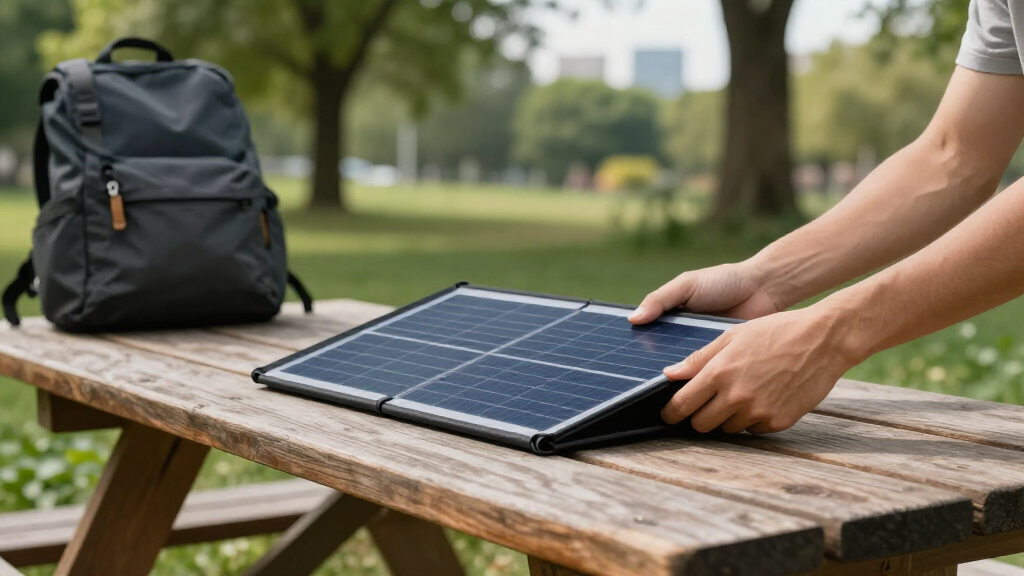
Every bank in this roundup has a solar panel, and none of them can realistically recharge a large battery from sunlight alone. A panel this size produces roughly 1-2 watts in ideal conditions, meaning a full solar recharge of a 40000mAh bank would take several uninterrupted sunny days — with the unit constantly repositioned toward the sun and kept cool, since heat degrades charging. What the panel is good for: topping off the bank during a long camp stay, keeping a partially charged unit from draining, and emergency life-support for a dead phone. If you genuinely need solar as your primary power source, a folding 20W+ panel solar charger is the right tool. Buy a solar power bank for its battery, and treat the panel as a bonus.
Charging Speed and Port Selection
Fast charging standards matter more than most buyers realize, because they work in both directions. A PD 20W or QC 3.0 port charges your phone two to three times faster than a legacy 5W port, and it also recharges the bank itself far more quickly — a real advantage when you only have a few hours at a campsite outlet or vehicle port before heading out. Check whether the bank supports input fast charging specifically, since some budget models fast-charge your phone but accept only a slow trickle themselves. Also count outputs: three or more ports let you charge a phone, headlamp, and GPS simultaneously. Wireless charging is convenient but slow and wasteful of battery, so I’d treat it as a convenience feature rather than a core need.
Built-In Cables and Connector Coverage
The most commonly forgotten item on any outdoor trip is the charging cable, which is why banks with integrated cables scored highly in this comparison. Models like the SOARAISE 48000mAh and BLASOUL 49800mAh fold cables directly into the housing, covering USB-C, Lightning, and micro-USB without any loose parts to lose or tangle. The tradeoff is real: built-in cables add bulk, they can’t be replaced if they fray, and a damaged connector takes the whole port down with it. If you go this route, check that the bank also has at least one standard USB port as a fallback. For travelers who carry their own cables religiously, skip the feature and put the savings toward capacity or charging speed instead.
Ruggedness, Weight, and What You’ll Actually Carry
Nearly every bank here claims waterproofing and drop resistance, but the details vary: look for rubber port covers, sealed seams, and a carabiner attachment loop if rain or river crossings are likely. Weight is where expectations collide with reality — the big 40000mAh+ units weigh over a pound, which is fine for a car camping bin or go-bag but miserable in a backpack. A 20000mAh bank under 12 ounces is the sweet spot for hikers, while anything larger belongs at base camp. Also consider heat: direct sun speeds solar input but overheats lithium cells, so a bank left on a dashboard all day may throttle or degrade faster than one shaded behind glass. Match the form factor to how you travel, not to the biggest number you can afford.
Backup Charging Methods and Emergency Features
When the sun fails and the bank is dead, a few models offer a third path — and it’s a more valuable differentiator than most buyers assume. The FEELLE’s hand crank can generate a phone call’s worth of power after a few minutes of cranking, which matters in a genuine emergency, even though it will never meaningfully charge the battery. Dual LED flashlights and SOS strobes are now standard across budget models, so don’t pay extra for them. More useful emergency extras are pass-through charging (powering a device while the bank recharges) and low-power mode for small devices like earbuds. Rank backup methods by how likely you are to need them: casual campers can skip the crank, but anyone building a storm kit should weigh it heavily.
Frequently Asked Questions
Are the huge capacity ratings like 49800mAh on these power banks real?
Not reliably. The 49800mAh figure appears across multiple differently branded but nearly identical products, which is a strong signal of rebranded generic cells with unverified capacity. Even genuine banks lose 30-45% of rated capacity through voltage conversion, so a true 49800mAh bank should deliver around seven to nine full phone recharges — yet buyer reports on many of these units describe three to four. Brands like BLAVOR and Mregb publish more conservative ratings that hold up better against real-world results. My advice: treat any capacity above 30000mAh in this price range as approximate, and buy from a seller with a no-questions return policy so you can test recharge counts in your first week.
Can I realistically rely on the solar panel to keep the power bank charged?
No, and planning around that assumption is the most common mistake in this category. The small panels on these banks generate roughly 1-2 watts in full direct sun, so topping up a large bank takes multiple days of ideal conditions — and the bank needs frequent repositioning as the sun moves. Where the panel does help: maintaining charge during multi-day camp stays, slowly recovering from partial drain, and providing emergency power for a dead phone when nothing else exists. If solar is your primary charging plan — say for a thru-hike or extended off-grid stay — buy a dedicated folding 20W or higher solar panel instead. Think of the bank’s panel as a trickle insurance policy, not a power plant.
Is it better to get one big 40000mAh+ bank or two smaller 20000mAh units?
Two smaller banks win for most people, and this comparison made that pattern clear. A pair of quality 20000mAh units gives you redundancy — if one fails, gets wet, or is lost, you still have power — and they recharge via USB far faster than one giant bank. They’re also easier to distribute across a group or pack, and each stays under airline carry-on limits if you fly. The single large bank makes sense only when weight is irrelevant and you want everything in one place, like a car-camping power station or a home emergency kit. The other hidden advantage: quality control is more consistent in the 20000mAh segment, where proven models like the BLAVOR and Mregb units live.
Do built-in cables on solar power banks break easily, and are they worth it?
Built-in cables are genuinely convenient but carry a structural tradeoff you should go in understanding. The cables are typically short and thin, which limits them to occasional charging rather than daily heavy use, and a frayed or snapped connector can’t be swapped out — you’re left relying on the bank’s standard USB ports. That said, for the actual use case (a forgotten cable at a campsite, loaning power to a friend with a different phone), they solve a real problem that no accessory fixes. If you choose a model with integrated cables, confirm it has at least one conventional USB-A or USB-C port as a backup, and avoid yanking the built-in connectors at an angle. For disciplined packers who always carry cables, the feature is dead weight.
What safety features should I check before leaving a solar power bank in a hot car or tent?
Heat is the real enemy of lithium batteries, and a solar power bank sitting in direct sun is working against itself. Look for listings that specifically mention overcharge protection, temperature cutoff, and short-circuit protection — reputable brands list these explicitly, while vague listings usually mean generic cells. In practice, charge the bank in shade whenever possible, never leave it on a dashboard for extended periods, and stop using any unit that swells, gets unusually hot while charging, or emits a smell. Also unplug devices once they’re full, since sustained pass-through charging in hot conditions accelerates cell wear. A bank with certifications (UL, CE, FCC listed clearly) is far safer to leave in a vehicle than one with none, and that difference matters more than any capacity figure.
Conclusion
After comparing all 13 models, the right choice comes down to how you’ll actually use the bank — not how big the number on the box is. Best overall goes to the BLAVOR 20000mAh, which pairs honest capacity with reliable wireless charging and a proven track record, making it the safest all-around bet for campers and travelers. Best value is the Mregb 20000mAh, which delivers the essentials — fast charging, a flashlight, and rugged housing — at a price that leaves room in the budget for a second unit. Best premium pick is the FEELLE 50000mAh with hand crank, whose triple charging methods (solar, crank, USB) justify its cost for anyone building a serious emergency kit.
For specific needs: beginners should start with the BLAVOR Solar Power Bank 20000mAh, which skips the confusing feature bloat and just works; base-camp campers and group trips are better served by the SOARAISE 48000mAh with built-in cables, since four integrated connectors keep everyone charged without a cable pile; and Apple Watch owners have one clear option in the BLAVOR 20000mAh with Watch support, the only model here that covers it. Whatever you pick, remember the category’s golden rule: buy the battery, not the solar panel — and pre-charge via USB before you leave home.
Fall yard work Picks
leaf blowers
As an affiliate, we earn on qualifying purchases.