
This checklist is for homeowners preparing for a power outage with solar, battery, and generator equipment. It covers a mix of backup-power products and accessories, with each section focused on a specific role in outage preparation. Choose for your home by considering what you need to keep powered and which equipment you already have.

Get backup power and energy gear delivered free with Prime
- Fast, free delivery on millions of items
- Prime Video, Amazon Music and more included
- Member-only deals all year
The sections are organized by product type: panel covers, sump-pump backup, battery-powered heating, transfer switches, generator inlet boxes, and solar power banks. Some picks are portable power stations, while others connect to or support specific home systems. Check the product’s role against your outage plan before treating any item as a substitute for another.
Use the checklist to compare fit, compatibility, and intended use before buying. Confirm that electrical equipment matches your existing setup, and review the manufacturer’s instructions for installation and operation. For home wiring or transfer equipment, verify compatibility with a qualified professional when needed. A careful match helps make your backup plan easier to understand and use.
Solar Panel Covers
This section is labeled for solar panel covers, but the listed pick is a portable power station bundled with a solar panel. That distinction matters: a solar panel is not a cover, and a power station is a different kind of equipment again. Start by deciding whether you need portable generation and storage, or an actual protective cover for a panel. Match the product to the slot before comparing features, and confirm the package contents in the product listing.
Common buying mistakes include assuming a bundled panel protects other panels, or that a portable station automatically connects to a home solar system. Check the panel’s dimensions and the intended placement, then confirm the power station’s input and output compatibility with the devices you plan to use. If you need a cover, verify its dimensions, mounting method, and intended panel type separately. Do not infer cover function from the words “solar panel” in a bundle title.
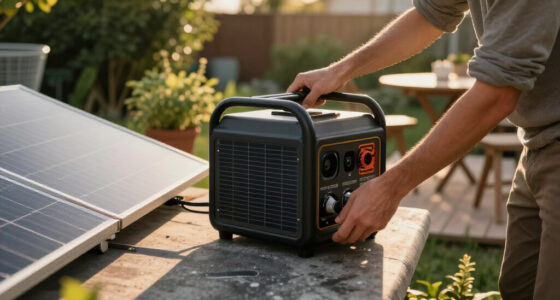
The listed pick is the SolarPlay Q3600 Portable Power Station with 400W Solar Panel, 3840Wh L. Its title identifies a portable station and panel; confirm all specifications and compatibility details with the seller before purchase. Keep the use case clear: portable backup power and panel protection solve different needs.
What to look for:
- Confirm whether the listing includes a cover or a portable power station and panel.
- Check solar-panel dimensions and placement requirements.
- Verify power-station input and output compatibility with planned devices.
- Confirm what accessories are included in the bundle.
- Match the product to your existing solar setup and outage plan.
SolarPlay Q3600 Portable Power Station with 400W Solar Panel, 3840Wh LiFePO4 Bat
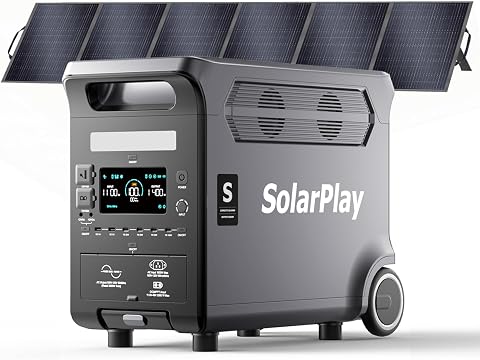
This portable power station provides 3600W continuous AC output, 5500W surge capacity, and a 3840Wh LiFePO4 battery. It supports AC and solar charging, includes a 400W solar panel, and has multiple output ports, wheels, a telescopic handle, and a UPS mode for backup power at home or outdoors.
Pros:
- High 3600W continuous output with 5500W surge capacity
- LiFePO4 battery rated for 3500+ charge cycles
- Multiple output ports support a range of devices
- Wheels and telescopic handle aid transport
Cons:
- Heavy at 93.7 pounds
- The included 400W solar panel is below the station’s 2000W maximum solar input
Best for: Shoppers seeking a portable power station and bundled solar panel
Not ideal for: Anyone specifically looking for a solar-panel cover
Bottom line: Confirm the product’s actual contents and intended use before buying it for panel protection.
Battery Backup Sump Pumps
A sump-pump backup is a focused part of an outage plan: it is intended for keeping a sump pump available when normal power is interrupted. The listed pick is a battery system, so check that it is designed for your pump and installation before purchase. Pump compatibility comes first; a system that does not match the pump’s electrical requirements or connections will not meet the need.
A common mistake is treating a battery backup as a complete sump-pump replacement or assuming its runtime without checking the product specifications. Confirm the pump type, voltage, power draw, and connection method against the backup system’s documentation. Check whether installation components are included and whether the system fits the available space. The title mentions a remote LCD, but it does not establish what information the display provides, so review the listing for those details. Verify runtime claims using the manufacturer’s stated conditions and your pump’s requirements.
The listed pick is the 2500 Watt Sump Pump Backup Battery System with Remote LCD. Before buying, confirm suitability for your existing pump and the installation requirements. If wiring or plumbing changes are involved, consult a qualified professional. Plan around your pump, rather than selecting by the product name alone.
What to look for:
- Confirm the backup system matches your pump’s voltage and power requirements.
- Check connection type and whether installation components are included.
- Review manufacturer-stated runtime conditions for your pump load.
- Measure the available installation space.
- Confirm what the remote LCD displays and how it is powered.
2500 Watt Sump Pump Backup Battery System with Remote LCD

This 2500W pure sine wave backup system provides seamless, grid-like power for sump pumps during outages. It features fast charging, multiple safety protections, and a remote LCD display for monitoring voltage, power, and battery status.
Pros:
- Pure sine wave output ensures safe, interference-free power
- Multiple safety protections extend device and battery life
- Easy installation with no extra wiring required
- Remote LCD display for real-time monitoring
Cons:
- Not compatible with non-deep-cycle batteries
- Limited to 12V battery systems
- Requires proper mounting for optimal placement
Best for: Homeowners checking a battery backup for a compatible sump pump
Not ideal for: Buyers who have not confirmed pump requirements or installation fit
Bottom line: Compare the system’s documented electrical and installation requirements with your sump pump before purchase.
Solar Battery Heaters
This section is titled for solar battery heaters, while the listed item is a portable cordless heating pad with a battery. It may serve a personal comfort need, but its name alone does not establish that it can heat a room, connect to a solar battery, or provide whole-home backup heat. Separate personal heating from heating a home or protecting plumbing when planning for an outage.
Before choosing a cordless heating pad, check its dimensions, power settings, charging method, and the manufacturer’s instructions for safe use. Confirm whether the battery is included and how it is recharged; the title references a 10000mAh battery but does not provide runtime information. Consider who will use it and whether its size and controls suit that person. A frequent mistake is assuming a battery capacity translates directly into a particular amount of heat or operating time. Use stated runtime details from the product documentation rather than estimating from the title.
The listed pick is the Vofuoti Portable Cordless Heating Pad with 10000mAh Battery, 3 Heat Se. Check the complete product listing for the full model name, included accessories, and operating guidance. If you need backup heat for a room, choose equipment specifically designed and rated for that purpose. Confirm the intended use before adding this item to a home-heating plan.
What to look for:
- Confirm whether the battery is included and how it recharges.
- Check the pad’s dimensions and fit for the intended user.
- Review the stated heat settings and operating instructions.
- Look up manufacturer-provided runtime information.
- Distinguish personal comfort use from room or plumbing heat.
Vofuoti Portable Cordless Heating Pad with 10000mAh Battery, 3 Heat Settings, 12

This portable heating pad features a cordless design with a high-capacity rechargeable battery, allowing use anywhere. It offers three heat levels for quick warmth and is made of soft, washable fabric, suitable for back, abdomen, neck, and shoulders.
Pros:
- Cordless and rechargeable for convenience and portability
- Multiple heat settings for personalized comfort
- Soft, washable fabric for easy cleaning
- Adjustable strap for a snug fit during activity
Cons:
- Limited to 20-minute sessions for skin safety
- Battery life may vary with usage
- Some users may experience skin redness
Best for: Shoppers seeking a cordless personal heating pad
Not ideal for: Anyone needing backup heat for a room or plumbing
Bottom line: Treat this as a personal heating product and confirm its full specifications before relying on it.
Backup Power Transfer Switches
A transfer switch is part of connecting backup power to selected home circuits. The listed pick is described as a manual 50A, 12-circuit, 120/240V transfer switch, so its fit depends on the home’s electrical panel, backup source, and intended circuits. Panel and source compatibility should guide the selection, not the headline specifications alone.
Common mistakes include assuming the circuit count means every desired load can run together, or choosing a switch without checking the generator or power source connection. Compare the switch’s documented voltage, amperage, circuit capacity, and wiring requirements with your existing equipment. Decide which circuits matter during an outage and have a qualified electrician assess the installation. Transfer equipment must be installed and operated according to the manufacturer’s directions and applicable requirements. Plan the circuits first so the switch can serve the loads you actually intend to use.
The listed pick is the Nature’s Generator 50A Manual Transfer Switch, 12-Circuit, 120/240V. Confirm compatibility with your panel and backup source, and verify installation requirements with a qualified professional. The product title provides useful identifying details, but does not settle whether it fits a particular home. Professional review matters for a permanent electrical connection.
What to look for:
- Match amperage and voltage to the backup source and panel.
- Confirm the switch’s circuit capacity suits the selected loads.
- Check compatibility with the intended generator or power source connection.
- Review manufacturer installation requirements with a qualified electrician.
- Identify priority circuits before choosing a configuration.
Nature’s Generator 50A Manual Transfer Switch, 12-Circuit, 120/240V

This UL-listed manual transfer switch supports up to 12 circuits at 120/240V and can be configured for twelve 120V circuits or six 240V circuits. It has an indoor steel enclosure and includes a CS6375 50A inlet, inlet box, power cord, and pre-wired components for connecting a compatible portable generator.
Pros:
- Supports flexible 120V and 240V circuit configurations
- Includes a 50A inlet and power cord
- Compatible with generators using a 50A CS6375 inlet
- UL listed
Cons:
- Manual operation requires switching circuits by hand
- Rated for indoor installation
Best for: Homeowners planning manual backup for selected circuits
Not ideal for: Anyone without a confirmed panel and power-source match
Bottom line: Have a qualified electrician verify compatibility and installation requirements before buying.
Generator Inlet Boxes
A generator inlet box provides a connection point for generator power, so it needs to match the generator, transfer equipment, and planned installation. The listed pick is described as a 50-amp power distribution box with GFCI outlets. That description does not by itself establish that it functions as a generator inlet box or is compatible with a particular transfer switch. Confirm the connection type and intended use in the product documentation.
A common buying mistake is confusing a distribution box with an inlet box. Check whether the product accepts power from a generator or distributes power through outlets, and confirm the connector type, amperage, voltage, and weather or location requirements for your installation. Verify that the selected generator and transfer equipment use compatible connections. The title mentions GFCI outlets, but does not specify their number or configuration. Check the complete specifications and installation instructions rather than relying on the category label.
The listed pick is the Champion Power Equipment 50-Amp Power Distribution Box with GFCI Outle. Confirm the full model details and whether it is intended for the role you need. For a fixed generator connection, have a qualified electrician assess the setup and applicable requirements. Match every connection across the generator, box, and transfer equipment.
What to look for:
- Confirm whether the product is an inlet box or a distribution box.
- Match connector type, amperage, and voltage with the generator.
- Check compatibility with the transfer switch and planned installation.
- Review location and installation requirements in the documentation.
- Confirm the full outlet and GFCI configuration.
Champion Power Equipment 50-Amp Power Distribution Box with GFCI Outlets and RV
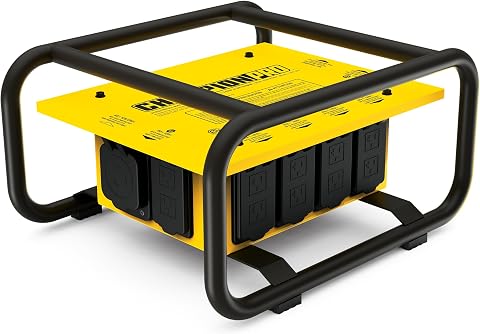
This OSHA-compliant power distribution box has six GFCI-protected 120V duplex outlets and one 120/240V 30A locking outlet, with individual overload protection. Its steel frame, corrosion-resistant enclosure, weather-resistant covers, built-in surge protection, and included RV adapters make it suitable for job sites and outdoor events.
Pros:
- Six individually protected GFCI duplex outlets
- Includes 30A and 50A RV adapters
- Weather-resistant covers and corrosion-resistant enclosure
- Built-in surge protection and locking safety door
Cons:
- 50A power cord is not included
- Weighs 22.1 pounds
Best for: Buyers who need a compatible generator connection point
Not ideal for: Anyone relying on the category label without checking product function
Bottom line: Verify the product’s actual connection role and compatibility before using it in a generator setup.
Solar Power Banks
A solar power bank or portable power station can be part of an outage kit for devices and other compatible loads. The listed pick is identified as a Jackery HomePower 3600 Plus Portable Power Station with Two 200W Solar panels. Its title suggests a station bundled with panels, but it does not establish how much power a specific household load will receive or for how long. Start with your essential devices and confirm their requirements.
Common mistakes include assuming a portable station can power every household circuit, or that solar panels will recharge it under all conditions. Check the station’s documented outputs, input limits, supported charging method, and the appliances you intend to connect. Confirm the included panel count and ratings in the full listing, as well as any required cables or adapters. Consider storage and placement for both the station and panels. Compare actual device needs with the manufacturer’s specifications before relying on a bundle.
The listed pick is the Jackery HomePower 3600 Plus Portable Power Station with Two 200W Solar. Confirm model details, included accessories, and compatibility with your devices before purchase. Use manufacturer guidance to plan charging and operation during an outage. Build around priority loads so the station is assigned to the devices that matter most to your household.
What to look for:
- Confirm the station’s output types and supported loads.
- Check solar input limits and panel compatibility.
- Verify the number of panels and accessories included.
- Compare appliance requirements with manufacturer specifications.
- Plan where the station and panels will be stored and used.
Jackery HomePower 3600 Plus Portable Power Station with Two 200W Solar Panels, 3

This portable power station provides 3584Wh of capacity and 3600W of AC output, with expansion options up to 21kWh per unit. It features LFP battery cells, a wheeled luggage-style design, and four charging methods, including hybrid AC and DC charging.
Pros:
- High 3600W output and expandable battery capacity support home backup needs.
- LFP battery cells are rated for 6,000 cycles.
- Four charging options include hybrid AC and DC charging.
- Wheels and a telescopic handle make the unit easier to move.
Cons:
- The 77.2 lb unit may be heavy to lift.
- The power station and solar panels may arrive in separate packages.
Best for: Households seeking a portable station with solar panels
Not ideal for: Anyone expecting it to power all home circuits without checking capacity
Bottom line: Match essential devices and charging needs to the station’s documented specifications.
When organizing purchases, start with the outage need that could have the greatest consequence for your home, such as maintaining a compatible sump-pump backup or setting up selected circuits with a properly matched transfer switch. Then consider portable power for priority devices and personal comfort. Add connection equipment only after confirming how it fits with your generator and existing setup. Buy for your specific loads and verify product roles before filling gaps in the checklist.
You do not need to solve every outage need at once. Write down the devices and circuits you want to support, check their requirements, and use each product’s documentation to confirm fit. A plan built around compatible equipment is easier to review and maintain. Take one practical step at a time, and revisit the checklist as your household’s needs change.