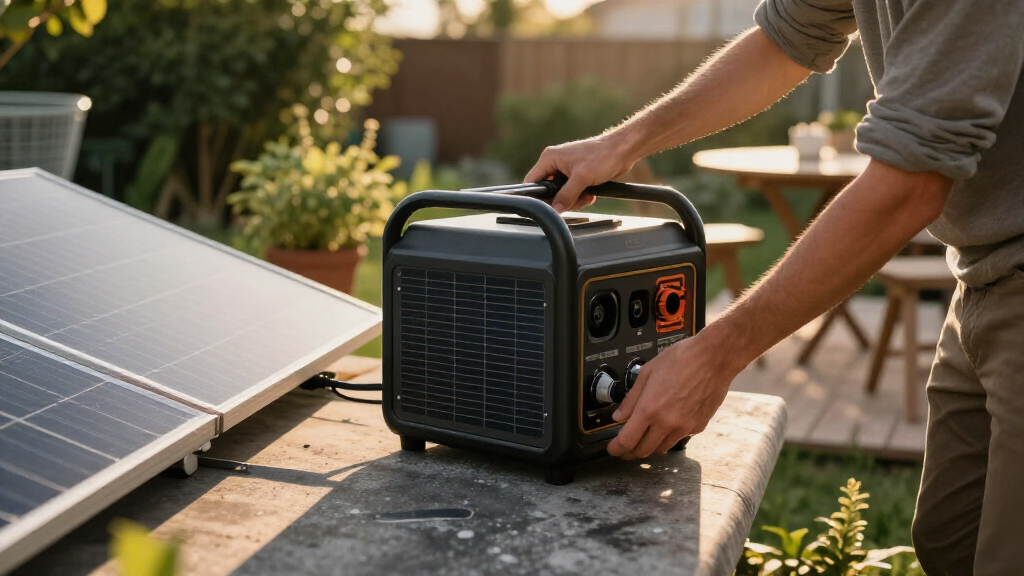

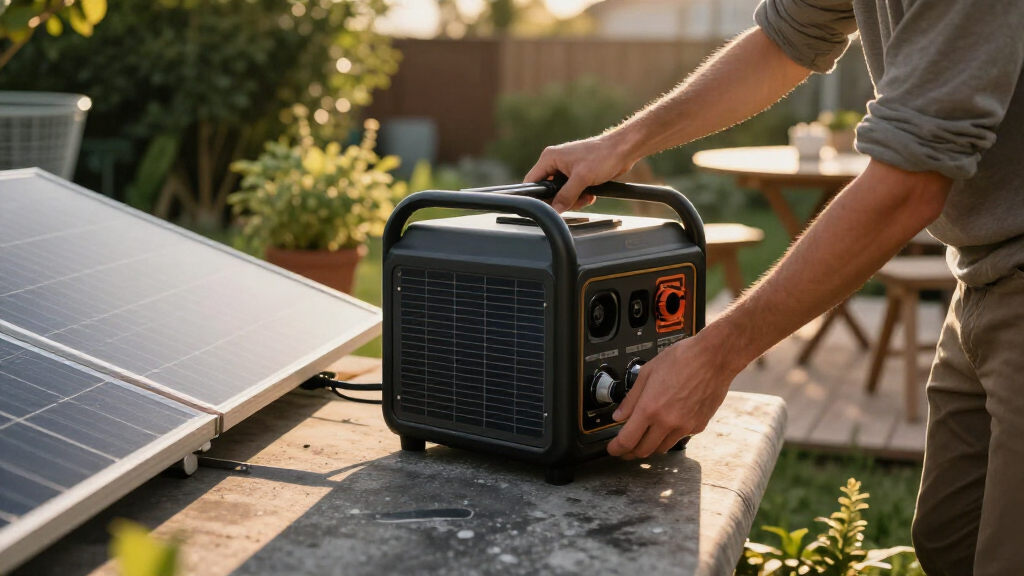
Solar-powered backup generators range from compact 160Wh units that charge a phone a few times to 3.6kW systems capable of running a refrigerator through a multi-day outage, and the gap between those extremes is where most buyers get lost. The Jackery HomePower 3600 Plus stands out as the best overall pick for genuine home backup thanks to its 3600W output, expandable capacity up to 21kWh, and long-lived LFP battery chemistry. For smaller budgets and occasional camping trips, the MARBERO 237Wh kit bundles a panel and power station at a fraction of the price, while the Jackery Solar Generator 1000 V2 splits the difference with enough capacity for meaningful emergency use. The main tradeoff in this category is capacity versus cost and portability — the models that can actually back up a home cost five to ten times more than the ones that fit in a backpack. Battery chemistry is the second big fork in the road, with LFP units lasting far longer than older lithium-ion designs. Keep reading for the full breakdown of all 14 options.

Get backup power and energy gear delivered free with Prime
- Fast, free delivery on millions of items
- Prime Video, Amazon Music and more included
- Member-only deals all year
Complete the kit


Key Takeaways
- Only two models in this lineup — the Jackery HomePower 3600 Plus and, to a lesser degree, the Jackery 1000 V2 — have enough sustained output to run major appliances, so true home backup requires shopping at the top of the price range.
- Six of the 14 products include a solar panel in the box, but bundled panels are often just 40W, meaning a full recharge on a 300Wh station can still take a full day of good sun — buyers should budget for extra panels.
- LFP (LiFePO4) battery models like the BLAVOR 1600W and BROWEY 1600W offer roughly four times the cycle life of standard lithium-ion competitors, which matters more than raw watt-hours if you plan to use the generator weekly.
- Built-in solar panels (BLAVOR, BROWEY) trade convenience for slow charging; detachable panel setups recharge faster because the panel can be angled at the sun while the battery stays in the shade.
- Sub-$200 kits dominate the budget end but max out around 280Wh with 300W inverters — fine for phones, lights, and a laptop, but not for microwaves, heaters, or medical equipment.
| Jackery Explorer 300 Portable Power Station, 292Wh |  | Best Small Power Station for Long-Term Reliability | Capacity: 292Wh | Rated Output: 300W (600W peak) | Outlets: 2 AC, 1 USB-C PD, 2 USB-A, 1 car port | VIEW LATEST PRICE | See Our Full Breakdown |
| 200W Solar Powered Generator with 40W Solar Panel – Portable Power Station |  | Best Budget Starter Kit | Capacity: 146Wh / 39,600mAh | Inverter: 200W pure sine wave | Outputs: 2 x 110V AC, 4 x USB, 1 x DC | VIEW LATEST PRICE | See Our Full Breakdown |
| MARBERO 237Wh Solar Generator with Solar Panel Included |  | Best Value Complete Kit | Capacity: 237Wh / 64,000mAh | Power Output: 300W continuous, 375W peak | Outputs: 2 AC, 4 USB-A, 1 USB-C, 1 DC | VIEW LATEST PRICE | See Our Full Breakdown |
| Jackery HomePower 3600 Plus Portable Power Station, 3600W, 3584Wh |  | Best Premium Home Backup | Capacity: 3,584Wh, expandable to 21kWh | Power Output: 3,600W (7,200W parallel) | Voltage: 120V, 240V in parallel | VIEW LATEST PRICE | See Our Full Breakdown |
| Portable Solar Generator 300W with 40W Solar Panel |  | Best for Lighting and Device Charging Off-Grid | Capacity: 220Wh | Wattage: 300W continuous, 600W peak | Output Ports: 2 AC, 3 USB-A, 2 USB-C, 1 DC carport | VIEW LATEST PRICE | See Our Full Breakdown |
| UDPOWER S1000 Pro Portable Power Station |  | Best for High-Wattage Appliances | Continuous Output: 2200W | Peak Surge Power: 3000W | Battery Type: LFP (Lithium Iron Phosphate) | VIEW LATEST PRICE | See Our Full Breakdown |
| BLAVOR Portable Power Station 1600W with Built-in Solar Panel |  | Best All-in-One Solar Design | Capacity: 1024Wh | Rated Power: 1600W | Peak Power: 3200W | VIEW LATEST PRICE | See Our Full Breakdown |
| ZeroKor Portable Power Station 300W, 280Wh |  | Best Budget Entry Point | Output Wattage: 300W | Capacity: 280Wh | Voltage: 110V | VIEW LATEST PRICE | See Our Full Breakdown |
| Jackery Solar Generator 1000 V2 with 200W Solar Panel |  | Best Fast-Charging Package | Capacity: 1070Wh | AC Output: 1500W (3000W surge) | Battery Type: LFP | VIEW LATEST PRICE | See Our Full Breakdown |
| BROWEY 1600W Portable Power Station with Built-in Solar Panel |  | Best Safety-Focused Mid-Size Option | Power Output: 1600W (3200W peak) | Capacity: 1024Wh | Battery Type: LiFePO4 | VIEW LATEST PRICE | See Our Full Breakdown |
| Solar Powered Generator 100W with 40W Solar Panels |  | Best Budget Starter Kit | Capacity: 146Wh / 39600mAh | Output: 100W | Solar Panel: 40W included | VIEW LATEST PRICE | See Our Full Breakdown |
| Anker SOLIX C300 Portable Power Station, 288Wh |  | Best for Fast Recharging | Capacity: 288Wh | Output: 300W (600W surge) | Ports: 11 total, incl. 3x AC, 2x USB-C, car socket | VIEW LATEST PRICE | See Our Full Breakdown |
| Jackery Solar Generator 300 and 40W Solar Panel, 292Wh |  | Best Longevity Pick | Capacity: 292Wh | Output: 300W AC | Battery: LiFePO4, 4,000+ cycles | VIEW LATEST PRICE | See Our Full Breakdown |
| Portable Solar Generator 300W with 60W Solar Panel |  | Best Solar Charging Value | Power Output: 300W | Solar Panel: 60W monocrystalline foldable | Conversion Efficiency: 20.5% | VIEW LATEST PRICE | See Our Full Breakdown |
| solar-powered backup generator | Capacity | Weight |
|---|---|---|
| Jackery Explorer 300 Portable | 292Wh | 7.5 lbs |
| 200W Solar Powered Generator w | 146Wh / 39,600mAh | 3.0 lbs |
| MARBERO 237Wh Solar Generator | 237Wh / 64,000mAh | — |
| Jackery HomePower 3600 Plus Po | 3,584Wh, expandable to 21kWh | — |
| Portable Solar Generator 300W | 220Wh | 5 lbs |
| UDPOWER S1000 Pro Portable Pow | — | 41 lbs |
| BLAVOR Portable Power Station | 1024Wh | — |
| ZeroKor Portable Power Station | 280Wh | ~5 lbs |
| Jackery Solar Generator 1000 V | 1070Wh | 23.8 lbs |
| BROWEY 1600W Portable Power St | 1024Wh | — |
| Solar Powered Generator 100W w | 146Wh / 39600mAh | 3.3 lbs |
| Anker SOLIX C300 Portable Powe | 288Wh | 4.13 kg (9.1 lbs) |
| Jackery Solar Generator 300 an | 292Wh | 7.5 lbs |
| Portable Solar Generator 300W | — | — |
More Details on Our Top Picks
Jackery Explorer 300 Portable Power Station, 292Wh
This option stands out for its LiFePO4 battery chemistry rated for over 4,000 charge cycles, which is a step above the standard lithium-ion cells found in the MARBERO 237Wh unit — it should still hold useful capacity after a decade of regular use. At 7.5 lbs with a full outlet spread (two AC, USB-C PD, two USB-A, and a car port), it covers phones, laptops, drones, and CPAP machines without much compromise. The catch is that the solar panel is sold separately, so the true cost of a complete solar setup lands closer to a bundled kit like the MARBERO. And with a 300W ceiling, anything with a heating element or a heavy motor is off the table.
Pros:- LiFePO4 chemistry with 4,000+ cycles far outlasts typical lithium-ion rivals
- Genuinely light at 7.5 lbs with a carry-friendly form factor
- USB-C PD plus six total outlets covers modern device mixes
- Recharges to full in roughly 4 hours
Cons:- No solar panel included, so it is not a complete solar generator out of the box
- 300W rated output cannot run kettles, hair dryers, or power tools
Best for: Campers and emergency preppers who want a compact unit they can recharge for years without battery degradation worries
Not ideal for: Buyers on a tight budget who need solar panels included — the panel costs extra, unlike the bundled kits in this roundup
- Capacity:292Wh
- Rated Output:300W (600W peak)
- Outlets:2 AC, 1 USB-C PD, 2 USB-A, 1 car port
- Battery Chemistry:LiFePO4
- Charge Cycles:Over 4,000
- Weight:7.5 lbs
- Charging Time:Approximately 4 hours
Our verdict“This pick makes the most sense for buyers who prioritize battery longevity and already own or plan to buy panels separately.”
200W Solar Powered Generator with 40W Solar Panel – Portable Power Station
This is the cheapest complete package in this batch — station plus a 40W foldable panel for one low price — which is exactly what makes it a low-risk entry point compared to the panel-less Jackery Explorer 300. At 3 lbs total, it disappears into a backpack, and the 200W pure sine wave inverter delivers clean power for laptops and cameras. The tradeoff is capacity: 146Wh is roughly half the MARBERO’s 237Wh, so it is a weekend charger, not a multi-day power source. A full wall recharge also takes 5-6 hours, and the small panel means solar top-ups are slow at best.
Pros:- Panel included, making it a true solar generator at a budget price
- Ultra-light 3 lb design is the easiest to carry here
- Pure sine wave output is safe for sensitive electronics
- Three recharge methods: wall, car, and solar
Cons:- Smallest capacity in the lineup at 146Wh
- 40W panel is slow to recharge the station, especially in weak sun
Best for: First-time buyers and day-trip campers who want to try solar power without a big upfront spend
Not ideal for: Anyone backing up a fridge, CPAP machine, or multi-day off-grid trip — 146Wh runs out fast
- Capacity:146Wh / 39,600mAh
- Inverter:200W pure sine wave
- Outputs:2 x 110V AC, 4 x USB, 1 x DC
- Solar Panel:40W foldable
- Weight:3.0 lbs
- Recharge Time:5-6 hours via wall outlet
- Dimensions:7.87 x 1.81 x 5.71 inches
Our verdict“Choose this if you want the cheapest way to own a working solar generator; skip it if you need real endurance.”
MARBERO 237Wh Solar Generator with Solar Panel Included
This model hits the sweet spot between the bare-bones 200W budget kit and the pricier Jackery Explorer 300: you get 237Wh of capacity, a 300W inverter, and a 60W foldable panel in one box — meaningfully more solar harvesting than the 40W panels bundled with the budget picks. The panel’s 21.5-23.5% conversion efficiency shortens sunny-day recharges compared to the cheaper 40W kits, and the built-in flashlight with strobe and SOS modes adds genuine emergency utility. Compared to the Jackery Explorer 300, you give up LiFePO4 chemistry and a little capacity, but you pay noticeably less and skip the separate panel purchase entirely.
Pros:- Full bundle: 237Wh station plus efficient 60W panel for under standalone-station pricing
- Eight output ports charge a phone, laptop, and camera at once
- Emergency flashlight with strobe and SOS modes is a real safety feature
- High-efficiency panel recharges faster than rival 40W bundles
Cons:- 300W ceiling rules out kitchen appliances and power tools
- Lithium-ion chemistry lacks the cycle life of LiFePO4 competitors
Best for: Value-focused campers and emergency-kit builders who want everything included at a mid-range price
Not ideal for: Buyers planning daily cycling for years — standard lithium-ion cells will degrade faster than the Jackery’s LiFePO4 battery
- Capacity:237Wh / 64,000mAh
- Power Output:300W continuous, 375W peak
- Outputs:2 AC, 4 USB-A, 1 USB-C, 1 DC
- Solar Panel:Foldable 60W, 21.5-23.5% efficiency
- LED Flashlight:Yes — flashlight, strobe, SOS modes
- Use Case:Camping, outdoor, emergency backup
Our verdict“This is the smartest buy for anyone who wants a complete, working solar setup on day one without overspending.”
Jackery HomePower 3600 Plus Portable Power Station, 3600W, 3584Wh
In a lineup dominated by sub-300Wh camping units, this is the only option that can genuinely run a refrigerator, microwave, or well pump through an outage. The 3,584Wh capacity expands to 21kWh with extra batteries, and 7,200W of parallel output with 240V support covers whole-circuit backup. Charging is remarkably fast — full solar recharge in about 4 hours, or 2.5 hours from a wall outlet — and the 6,000-cycle LiFePO4 cells with a 10-year lifespan put even the Explorer 300’s durability to shame. The price is the obvious hurdle, panels are sold separately, and at this class you may want an electrician for a proper transfer-switch installation.
Pros:- 3,600W output (7,200W parallel) runs high-draw appliances no other pick here can handle
- Expandable from 3,584Wh to 21kWh for multi-day outages
- 6,000-cycle LiFePO4 cells rated for 10 years of service
- Fast charging: solar in 4 hours, AC in 2.5, hybrid in 2
Cons:- Premium price places it far above every other option in this roundup
- Solar panels and home-integration hardware cost extra
Best for: Homeowners, RV owners, and off-grid dwellers who need appliance-grade power during multi-day outages
Not ideal for: Casual campers and small-apartment dwellers — it is expensive and far more capacity than a phone-and-laptop user needs
- Capacity:3,584Wh, expandable to 21kWh
- Power Output:3,600W (7,200W parallel)
- Voltage:120V, 240V in parallel
- Battery:LFP, 6,000 cycles, 10-year lifespan
- Charging Time:AC 2.5 hrs, solar 4 hrs, hybrid 2 hrs
- Design:Wheels and telescopic handle; ~34% smaller than comparable models
Our verdict“If a real power outage at home is the scenario you are preparing for, this is the only pick here that is up to the job.”
Portable Solar Generator 300W with 40W Solar Panel
What separates this unit from the similarly priced MARBERO kit is the integrated LED floodlight — a genuinely useful feature for campsites and power-outage nights, not just a gimmick. With 220Wh of capacity and seven output ports including dual USB-C, it charges a broader mix of modern devices than the budget 200W kit, and the 600W surge rating handles brief motor starts the cheaper unit cannot. But the numbers tell a hard story at full load: roughly two hours at 300W, and the 40W panel cannot keep pace with meaningful drain. Compared to the MARBERO, you trade 17Wh of capacity and a bigger panel for the floodlight and port variety.
Pros:- Built-in LED floodlight doubles as campsite or emergency lighting
- Seven ports, including two USB-C, charge more devices simultaneously than rivals
- 600W surge handles short power spikes from small motors
- Compact 5 lb body with a 12-month warranty
Cons:- Only about 2 hours of runtime at maximum load
- 220Wh capacity drains quickly without steady solar input
Best for: Campers and van-lifers who value built-in area lighting and want plenty of ports for phones, cameras, and laptops
Not ideal for: Buyers prioritizing maximum recharge speed — the 40W panel and 2-hour full-load runtime limit extended off-grid use
- Capacity:220Wh
- Wattage:300W continuous, 600W peak
- Output Ports:2 AC, 3 USB-A, 2 USB-C, 1 DC carport
- Solar Panel:40W included
- Weight:5 lbs
- Runtime:Up to 2 hours at full load
- Warranty:12 months
Our verdict“Pick this over the MARBERO if lighting and port variety matter more to you than raw capacity and panel wattage.”
UDPOWER S1000 Pro Portable Power Station
The UDPOWER S1000 Pro earns its spot with a 2200W continuous output — the highest in this batch — which means it can actually run a microwave, hair dryer, or space heater where the 1600W-class units like the BLAVOR and BROWEY would trip their limits. The LFP battery rated for 3000+ cycles translates to roughly a decade of regular use before meaningful degradation, a meaningful edge over older NMC-based stations. Where the Jackery 1000 V2 wins on charging speed, the S1000 Pro wins on raw appliance headroom. The tradeoff is weight: at 41 pounds, this is closer to a rolling home unit than something you lug to a campsite, and the 12V architecture may frustrate buyers with 24V gear. It’s a home-backup machine that happens to have a handle.
Pros:- 2200W continuous output handles most household appliances
- 3000+ cycle LFP battery for years of reliable service
- 3000W surge capacity covers motor-driven device startup
- Quiet operation makes it viable for indoor emergency use
Cons:- 41 pounds is heavy for genuinely portable use
- 12V output limit may not suit all device types
- Pricing transparency is limited at retail
Best for: Homeowners who want backup power for kitchen appliances and space heaters during outages
Not ideal for: Hikers and car campers — at 41 pounds it’s far heavier than 300W-class options like the ZeroKor
- Continuous Output:2200W
- Peak Surge Power:3000W
- Battery Type:LFP (Lithium Iron Phosphate)
- Charge Cycles:3000+
- Weight:41 lbs
- Dimensions:9.5″ x 15.8″ x 10.1″
- Voltage:12V
Our verdict“Buy this if you need to run real appliances during an outage and don’t plan to carry it far from the house.”
BLAVOR Portable Power Station 1600W with Built-in Solar Panel
What sets the BLAVOR apart is its built-in foldable 40W solar panel — you’re never left hunting for cables or buying panels separately, a complaint that applies to both the ZeroKor 300W (panel sold separately) and the Jackery 1000 V2 (shipped separately). Paired with a 1024Wh LiFePO4 battery rated past 3500 cycles, this option makes sense for buyers who want true grab-and-go solar capability out of one box. The 100W USB-C fast charge also means you can top it up from a laptop charger in a pinch. The honest tradeoff: 40W of panel is trickle-charging territory, so a full solar recharge takes days of good sun. Compared with the nearly identical BROWEY 1600W, BLAVOR’s long-standing reputation in solar accessories gives it a slight credibility edge.
Pros:- Built-in foldable solar panel eliminates separate panel purchases
- 1024Wh LiFePO4 battery with 3500+ charge cycles
- 100W USB-C fast charging from common GaN chargers
- 3200W peak power handles startup surges
Cons:- 40W built-in panel charges far too slowly for full solar recharges
- No published weight or dimensions makes portability planning difficult
Best for: Campers and van-lifers who want one self-contained unit with zero extra accessories to buy or lose
Not ideal for: Anyone expecting fast solar recharging — the built-in 40W panel is too small for quick top-ups
- Capacity:1024Wh
- Rated Power:1600W
- Peak Power:3200W
- Battery Type:LiFePO4
- Built-in Solar Panel:40W foldable
- USB-C Output:100W fast charge
- Charge Cycles:3500+
Our verdict“The right pick if you value a single, self-sufficient package over raw charging speed.”
ZeroKor Portable Power Station 300W, 280Wh
The ZeroKor 300W is the cheapest way into solar backup in this lineup, and it’s honest about what it is: a 5-pound, 280Wh unit for phones, laptops, cameras, lights, and CPAP-style devices. Next to the Jackery Explorer 300 (292Wh) it offers similar capacity with seven output ports at a lower price, though Jackery’s build quality and warranty reputation are stronger. The 300W ceiling is a hard limit — no refrigerators, microwaves, or power tools here — but for a weekend campsite or a desk-and-router outage kit, that ceiling doesn’t matter. The catch is that the solar panel is sold separately, so budget for one if off-grid charging is the goal. Treat it as a starter unit to learn your real power needs before spending on a 1000Wh+ station.
Pros:- Roughly 5 pounds — genuinely backpack-friendly
- Seven output ports cover AC, DC, and USB simultaneously
- Multiple recharge options: AC outlet, car port, or solar
- Built-in LED flashlight adds emergency utility
Cons:- Solar panel sold separately, adding to the true cost
- 300W cap excludes nearly all kitchen appliances
- Needs periodic recharging even in storage to protect the battery
Best for: Budget-conscious buyers and camping newcomers who need phone, laptop, and light device charging
Not ideal for: Anyone backing up a fridge or medical equipment — the 300W limit rules out high-draw appliances
- Output Wattage:300W
- Capacity:280Wh
- Voltage:110V
- Total Outlets:7
- Weight:~5 lbs
- Charging Methods:AC, car port, solar (panel sold separately)
- Runtime:Up to 9 hours
Our verdict“A low-risk first purchase for light-duty backup — just add a panel and set expectations accordingly.”
Jackery Solar Generator 1000 V2 with 200W Solar Panel
The Jackery 1000 V2 is the speed champion of this batch: a one-hour recharge to 80% from the wall is unmatched here, and the included 200W panel can fully recharge the 1070Wh battery in about six hours of sun — roughly four times faster than the BLAVOR’s built-in 40W panel could ever manage. At 23.8 pounds with a foldable handle, it’s also far more portable than the 41-pound UDPOWER S1000 Pro, despite giving up 700W of continuous output. The 4000+ cycle LFP battery is the most durable cell spec in the roundup. Tradeoffs exist: fast charging requires an app activation step some buyers find annoying, and the panel ships separately from the station, so deliveries may arrive days apart.
Pros:- 1-hour wall recharge is the fastest in this lineup
- Included 200W panel delivers roughly 6-hour solar recharges
- 4000+ cycle LFP battery rated for 10+ years
- 23.8 lbs with foldable handle is remarkably portable for 1070Wh
Cons:- Fast charging requires app activation before first use
- Station and solar panel ship separately, splitting deliveries
- 1500W output trails the UDPOWER’s 2200W
Best for: Travelers and emergency preppers who prioritize quick recharges and a complete solar bundle out of the box
Not ideal for: Buyers who want to run high-draw appliances — 1500W can’t match the UDPOWER’s 2200W ceiling
- Capacity:1070Wh
- AC Output:1500W (3000W surge)
- Battery Type:LFP
- Charge Cycles:4000+
- Weight:23.8 lbs
- Included Panel:200W
- Charging Time:1 hr fast, 3 hrs full AC, 6 hrs solar
- Ports:2 USB-C, 1 USB-A, 1 DC car port, 3 AC
Our verdict“The best-balanced pick if recharge speed and portability matter more than maximum wattage.”
BROWEY 1600W Portable Power Station with Built-in Solar Panel
The BROWEY 1600W shares its core DNA with the BLAVOR — same 1024Wh LiFePO4 capacity, same 1600W/3200W output, same built-in solar panel concept — but differentiates itself with an MPPT charge controller and layered BMS protection, which together mean more efficient solar harvesting and tighter safeguards against overcharge and short circuits. Pure sine wave output makes it safe for sensitive electronics like laptops and CPAP machines, something cheaper modified-sine units can’t claim. An 80% charge in three hours from the wall is respectable for this capacity class. The drawbacks mirror its rival’s: the built-in panel is slow, the unit is heavy and bulky for its class, and the price sits well above small 300W stations like the ZeroKor. Choose it over the BLAVOR if safety circuitry and inverter quality rank above brand familiarity.
Pros:- Pure sine wave output protects sensitive electronics
- MPPT controller maximizes solar charging efficiency
- 8 charging ports including 100W USB-C PD
- 3-hour AC charge to 80% for quick turnaround
Cons:- Heavy and bulky compared with the Jackery 1000 V2 at similar capacity
- Higher price than small-format 300W stations
- Built-in panel output is too low for meaningful fast recharging
Best for: Buyers powering sensitive electronics — CPAP machines, laptops, audio gear — who prioritize clean power and safety systems
Not ideal for: Weight-sensitive campers and budget shoppers — it’s bulky and priced well above entry-level units
- Power Output:1600W (3200W peak)
- Capacity:1024Wh
- Battery Type:LiFePO4
- Charging Ports:8 (AC/DC/USB-C PD 100W)
- Charging Time:3 hours to 80%
- Solar:Built-in panel with MPPT controller
- Safety:BMS protection, pure sine wave output
Our verdict“A solid mid-size choice when clean power output and battery protection matter more than portability or price.”
Solar Powered Generator 100W with 40W Solar Panels
This is the cheapest way into solar backup in this lineup, and at 3.3 lbs it’s also the lightest thing here by a wide margin. You get a 40W panel included, an AC adapter, and a car cable — everything needed to start living off-grid on day one, which the panel-less Portable Power Station 300W can’t claim. Compared with the Jackery Solar Generator 300, capacity is roughly half (146Wh vs 292Wh), so this pick makes the most sense for keeping phones, cameras, and a laptop alive rather than running anything demanding. The 100W output ceiling means mini-fridges and CPAP machines are out of the question. Still, for the price of a nice dinner, this option stands out as a low-risk entry point into solar power.
Pros:- Complete kit with 40W panel and all charging cables included at a low price
- Featherweight at 3.3 lbs — genuinely backpack-friendly
- Surprising panel efficiency even in low light
- Six output ports cover every common device connector
Cons:- 100W output cap rules out most appliances and power tools
- 146Wh capacity drains fast with a laptop and phone charging together
- Solar charging is slow and weather-dependent with only 40W of panel
Best for: Casual campers and first-time buyers who want a complete, ultra-light solar kit for charging phones, cameras, and laptops without spending much.
Not ideal for: Anyone prepping for real emergencies — 146Wh won’t run medical devices, fridges, or multiple devices through an outage.
- Capacity:146Wh / 39600mAh
- Output:100W
- Solar Panel:40W included
- Ports:2x 110V AC, 2x USB, 1x USB-C, 1x DC 12V
- Weight:3.3 lbs
- Extras:LED flashlight, BMS, AC adapter, car cable
Our verdict“Buy this if you want the cheapest all-in-one solar starter kit for light device charging; skip it if you need real emergency capacity.”
Anker SOLIX C300 Portable Power Station, 288Wh
The headline here is speed: the C300 recharges to full in about 68 minutes, which changes how you actually use a small power station — top-ups between activities instead of overnight waits. Compared with the Jackery Solar Generator 300, which takes nearly three hours to hit 80% even with a 100W panel, the Anker is simply faster to get back in action. Eleven ports, including 140W USB-C, mean a modern traveler can leave the bricks and cables at home. The LiFePO4 chemistry and 5-year warranty also beat most budget kits in this roundup. The tradeoffs: no panel is included at this price, solar panel compatibility is limited (the PS30 won’t work with it), and the shoulder strap costs extra — annoying on a unit this shape.
Pros:- Full recharge in about 68 minutes — fastest in this roundup
- 140W USB-C charging doubles as a laptop supercharger
- LiFePO4 battery with a 5-year warranty
- 11 ports cover nearly every device without adapters
Cons:- No solar panel included; compatible panel options are limited
- 288Wh ceiling is tight for multi-day off-grid trips
- Shoulder strap sold separately despite the awkward form factor
Best for: Travelers and remote workers who value rapid recharges and USB-C-first charging over raw solar off-grid capability.
Not ideal for: Buyers wanting a complete solar kit out of the box — no panel is included, and compatible panels are a separate expense.
- Capacity:288Wh
- Output:300W (600W surge)
- Ports:11 total, incl. 3x AC, 2x USB-C, car socket
- Recharge Time:~68 minutes
- Battery Type:LiFePO4
- Weight:4.13 kg (9.1 lbs)
- Warranty:5 years
Our verdict“This is the pick if you prioritize quick top-ups and premium build over included solar hardware.”
Jackery Solar Generator 300 and 40W Solar Panel, 292Wh
Where the budget kits in this roundup use standard lithium cells that degrade after a few hundred cycles, the Jackery Explorer 300 uses LiFePO4 batteries rated for over 4,000 charge cycles — meaning it should still be going strong a decade from now. That durability, plus Jackery’s reputation, justifies the price gap over the 100W budget kit. The integrated handle and 7.5 lb weight make it friendlier for frequent camping than the blockier Anker SOLIX C300, though the Anker recharges twice as fast. One caution: with the included 40W panel, expect 7.5 hours of sun to reach 80% — pair it with a 100W panel to cut that to under 3 hours. At 300W output, it handles drones, cameras, and laptops comfortably, but not kettles or fridges.
Pros:- LiFePO4 cells rated for 4,000+ cycles for years of service
- 40W solar panel included in the box
- Genuinely portable at 7.5 lbs with a built-in handle
- 100W USB-C PD output charges laptops at full speed
Cons:- Slow solar charging with the included 40W panel (7.5 hrs to 80%)
- Panel may ship separately from the power station
- 300W ceiling excludes most kitchen appliances
Best for: Repeat campers and off-grid hobbyists who want a battery that won’t meaningfully degrade after a few seasons of use.
Not ideal for: Home-backup shoppers — 292Wh and 300W output can’t touch what the Jackery HomePower 3600 Plus or BLAVOR 1600W deliver.
- Capacity:292Wh
- Output:300W AC
- Battery:LiFePO4, 4,000+ cycles
- Ports:2x AC, 1x USB-C PD 100W, 2x USB-A, car port 120W
- Solar Panel:40W included
- Solar Charge Time:80% in 7.5 hrs (40W) or 2.8 hrs (100W panel)
- Weight:7.5 lbs
Our verdict“The smart choice if you’ll use it often enough that battery lifespan matters more than upfront savings.”
Portable Solar Generator 300W with 60W Solar Panel
This kit’s differentiator is the 60W monocrystalline panel — 50% more solar input than the 40W panels bundled with the budget 100W kit or the Jackery 300, which translates directly into faster off-grid recharges without buying extra hardware. At 20.5% conversion efficiency, the panel performs respectably in mixed light conditions. The station itself matches the Jackery and Anker on paper at 300W output, though without a stated LiFePO4 battery or cycle rating, long-term durability is less certain than the Jackery’s 4,000-cycle cells. The BMS with short-circuit and over-voltage protection covers the safety basics. One genuine flaw: the panel’s junction box isn’t waterproof, so rain or heavy dew demands attention the other kits don’t require.
Pros:- 60W panel is the largest included in this small-kit tier
- 20.5% panel efficiency holds up in low light
- Three-way recharging via solar, AC, and car power
- Built-in BMS with short-circuit and over-voltage protection
Cons:- Junction box is not waterproof and needs protection from moisture
- Battery chemistry and cycle life are unspecified compared with LiFePO4 rivals
- Capacity degrades if the unit sits uncharged for long periods
Best for: Off-grid campers who want the fastest included solar recharge per dollar and don’t need brand-name pedigree.
Not ideal for: Anyone in wet climates or planning permanent outdoor panel setups — the non-waterproof junction box is a real limitation.
- Power Output:300W
- Solar Panel:60W monocrystalline foldable
- Conversion Efficiency:20.5%
- Ports:2x AC, 1x DC, 4x USB incl. quick charge
- Recharging:Solar, AC, or car power
- Safety:BMS with short-circuit and over-voltage protection
Our verdict“The best solar-throughput value for dry-climate campers who recharge off-grid frequently.”
How We Picked
I ranked these solar-powered backup generators on four buyer-relevant criteria. First, usable capacity and output: watt-hours tell you how long a unit runs, but the inverter’s watt rating determines what it can run at all, so a 300Wh station with a 300W inverter fails where a 1000Wh station with a 1500W inverter succeeds. Second, battery chemistry and cycle life: LFP batteries rated for 3,000+ cycles justify a higher price over standard lithium-ion units rated for around 500. Third, solar recharge practicality — whether a panel is included, how many watts it delivers, and how long a full recharge actually takes in real conditions. Fourth, value per watt-hour after adjusting for included panels, build reputation, and warranty support.
The ranking order reflects intended use rather than raw specs alone. Units capable of whole-home circuits sit at the top because backup power is the core promise of the category. Mid-range kits that balance capacity, portability, and included panels fill the middle. Small 160Wh–300Wh units rank lower for backup purposes even when they are excellent camping products, because they cannot sustain an outage — though I flag the best of them for buyers whose needs are genuinely modest.
Factors to Consider When Choosing Solar-powered Backup Generators
Before settling on a specific model, it helps to understand the mistakes that catch most first-time buyers in this category. The six factors below shape whether a generator actually covers your needs or ends up as an expensive paperweight.Match Watt-Hours to What You Actually Need to Run
The most common mistake in this category is buying capacity based on price rather than on a load calculation. A 300Wh station runs a 10W LED light for 30 hours but powers a 700W microwave for less than 25 minutes, and it cannot run a space heater at all. Write down the devices you genuinely need during an outage — usually a phone, a router, some lights, and possibly a refrigerator — and add up their daily watt-hour consumption before comparing specs. A refrigerator alone typically draws 1,500–2,000Wh per day, which immediately rules out every sub-500Wh unit in this roundup for that job. Buyers who skip this step tend to overpay for capacity they never use or, worse, underspend and discover the limitation mid-outage.
Check the Inverter Rating, Not Just the Battery Size
Watt-hours and inverter watts measure different things, and marketing often blurs them. A 300W inverter cannot start most refrigerators or power tools even briefly, because compressor startup surges can demand two to three times a device’s running wattage. That is why the 1500W and 1600W units in this comparison occupy a different class than the 300W units despite some overlap in battery size. Look at both the continuous rating and the surge rating, and if you plan to run anything with a motor or compressor, treat 1,000W continuous as a practical floor. Pure sine wave output is another quiet differentiator — modified sine wave inverters can cause motors and some electronics to run hot or behave erratically.
Battery Chemistry Determines How Many Years You Get
Standard lithium-ion (NMC) batteries typically tolerate around 500 full charge cycles before capacity fades to roughly 80 percent, while LiFePO4 (LFP) chemistry is usually rated for 3,000-plus cycles. If you recharge weekly for camping season, an NMC unit may start showing age within two years; an LFP unit could last a decade. LFP also tolerates being stored at full charge better, which matters for an emergency device that sits plugged in for months at a time. The tradeoff is weight — LFP stores less energy per pound, so equivalent-capacity LFP units run heavier. For occasional-outage buyers, either chemistry works; for frequent users, the chemistry choice often matters more than an extra 200 watt-hours.
Do the Math on Solar Recharge Time
A bundled 40W panel sounds generous until you calculate that recharging a 300Wh battery at real-world efficiency takes most of a sunny day — and a 1,000Wh battery takes several. Panel wattage, not battery capacity, is usually the bottleneck in these kits, which is why the 200W panel included with the Jackery 1000 V2 changes the ownership experience compared with 40W kits. Also factor in conditions: clouds, winter sun angles, and panel placement on a car dashboard can cut output by half or more. A practical rule is to buy panel wattage equal to at least 20–30 percent of your battery capacity if you want daytime recharging to keep pace with consumption. Budget units almost always need a panel upgrade to be self-sustaining.
Bundled Panels and Built-in Panels Are Not Equal
This roundup includes three approaches: no panel, a detachable bundled panel, and built-in folding panels. Built-in panels (as on the BLAVOR and BROWEY) are convenient because nothing extra is carried or lost, but the station must sit in direct sun, which heats the battery, degrades charging efficiency, and shortens battery life over time. Detachable panels let the battery stay cool in shade while the panel tracks the sun, and they can be expanded later with additional panels. No-panel units are cheapest upfront but shift the compatibility research onto you — check the input voltage range and connector type before buying third-party panels. For serious backup use, detachable panels are the most flexible architecture.
Know When to Pay More — and When Not To
The price curve in this category is steep and nonlinear: the Jackery HomePower 3600 Plus costs many times what the budget 300W kits do, but it delivers roughly twelve times the capacity plus household-level output. Paying up makes sense when refrigeration, medical devices, or well pumps are in the picture, or when expandability lets you start small and add batteries later. Paying up makes less sense for occasional campers and apartment dwellers who need phone and laptop charging — the sub-$250 kits handle that job completely. Warranty length and brand service networks are part of what the premium buys; a backup device that fails during an outage with no support path is worthless regardless of its spec sheet. Match the spend to the failure scenario you are actually insuring against.
Frequently Asked Questions
Can a 300Wh solar generator actually power my home during an outage?
Not in any whole-home sense, but it can cover the essentials for a short period. A 300Wh station will run LED lights for many hours, keep phones and a laptop charged, and power a Wi-Fi router for the better part of a day — which covers most people’s communication and lighting needs. It will not run a refrigerator meaningfully, cannot touch a space heater or microwave, and a 300W inverter will refuse to start anything with a compressor motor. If your outage priorities include food storage, you need to move up to the 1,000Wh-plus class with at least a 1,000W inverter, like the Jackery 1000 V2. The honest framing is that small stations are convenience devices, not backup generators in the traditional sense.
Is it better to buy a generator with a built-in solar panel or a detachable one?
Detachable panels win for most buyers, despite the appeal of built-in convenience. A built-in panel forces the entire battery unit into direct sunlight, and lithium batteries lose charging efficiency and long-term lifespan as they heat up — you may gain convenience while quietly trading away battery health. Detachable panels also let you angle toward the sun throughout the day while keeping the station shaded indoors or under cover, which typically yields noticeably more harvested watt-hours. The one clear case for built-in panels is grab-and-go portability for campers who value a single self-contained unit over maximum charging speed. If backup power at home is the primary mission, detachable is the better architecture.
How long do LFP batteries really last compared to standard lithium-ion in these generators?
Manufacturer cycle ratings tell most of the story: LFP (LiFePO4) units in this roundup are typically rated for around 3,000 cycles to 80 percent capacity, while standard NMC lithium-ion units are rated closer to 500. Used weekly, an NMC battery could show meaningful fade within two to three years, while an LFP unit could run a decade at the same pace. LFP also handles being stored fully charged — the natural state for an emergency backup device — with less degradation, and it is more thermally stable as a safety bonus. The counterpoint is weight: LFP delivers less energy per pound, so equivalent capacity costs you carrying comfort. For a station that sits waiting for outages, chemistry matters less; for frequent camping or RV use, it is worth paying extra for LFP models like the BLAVOR or BROWEY.
Why does the included 40W panel take so long to recharge these stations?
Because panel wattage is the bottleneck, and 40W is small relative to these battery sizes. At real-world efficiency of roughly 70–80 percent after charge-controller losses, a 40W panel delivers about 30 watts, meaning a 300Wh battery needs ten or more hours of good sun for a full recharge — effectively a full day. Clouds, winter sun angles, or a panel propped in a suboptimal spot can stretch that further. The kits bundle 40W panels because they keep the price down, not because they match the battery’s capacity. If you expect the solar input to keep pace with daily use, plan to add panels — a reasonable target is panel wattage equal to 25–30 percent of your battery capacity, which is why the 200W panel paired with the Jackery 1000 V2 is a meaningfully better ownership experience.
Should I buy one large generator or several smaller ones for backup?
One large unit usually wins if home backup is the goal, for three reasons. First, large inverters — 1,500W and above — can run appliances that small units physically cannot start, no matter how many small units you own. Second, one big battery charges from one panel array and one wall outlet, while multiple small stations multiply the charging logistics during an outage. Third, capacity scales cheaper per watt-hour at the large end. The case for multiple small stations is redundancy and distribution: two 300Wh units let you keep one charging in the sun while the other is in use, and a failure only takes out half your capacity. Families with distant outbuildings, campers, or apartment dwellers who cannot store a 40-pound unit may also prefer the split approach. For a typical homeowner insuring against outages, a single 1,000Wh-plus station is the stronger play.
Conclusion
The right pick depends entirely on what you are backing up. For best overall, the Jackery HomePower 3600 Plus is the only unit here that delivers genuine household backup — 3600W of output, LFP chemistry, and expandability to 21kWh make it the serious choice for refrigerator-running, multi-day outages. The Jackery Solar Generator 1000 V2 earns best value for emergency prep, pairing meaningful 1070Wh capacity with a 200W panel and 1500W inverter at a far lower price than whole-home systems. For best budget kit, the MARBERO 237Wh bundle covers lights, phones, and a router at an entry-level price with a panel included. The BLAVOR 1600W takes best for frequent campers with its long-lived LFP battery and built-in panel, matched closely by the BROWEY for buyers who prefer that form factor. And for beginners and light-duty users, the Jackery Explorer 300 or Anker SOLIX C300 offer polished, fool-proof entry points. Whatever you choose, buy for the outage you actually expect, not the one the spec sheet implies.
Fall Picks
fall essentials
As an affiliate, we earn on qualifying purchases.