
In 2025, I recommend the SVBONY SV605CC for deep sky imaging because of its high-resolution 9MP sensor, excellent cooling, and high QE, making it perfect for capturing faint objects. The Astromania SGCMOS series is also great due to its versatility and auto-guiding capabilities. Both offer solid software compatibility and reliable performance. Keep going to discover more details on why these cameras stand out and how they can transform your astrophotography.
Key Takeaways
- High-resolution sensors like the IMX533 deliver detailed deep sky images with excellent QE and low noise.
- Dual-stage TEC cooling reduces thermal noise, enabling longer exposures for faint object capture.
- USB 3.0 connectivity ensures fast data transfer, essential for efficient imaging workflows.
- Compatibility with popular control software (ASCOM, SharpCap) facilitates automation and remote operation.
- Expert reviews favor cameras like the SVBONY SV605CC for their image quality, cooling efficiency, and software integration.
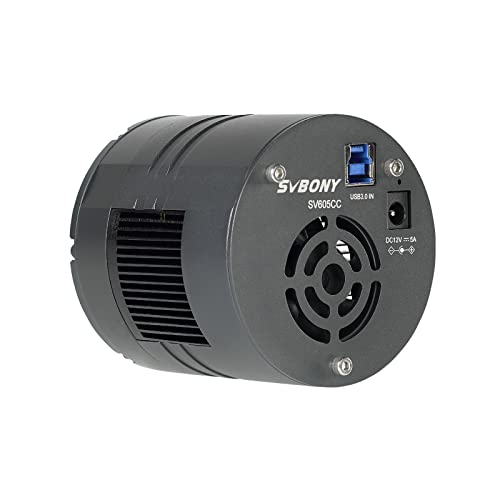
SVBONY SV605CC Cooled Astrophotography Camera, 9MP IMX533 CMOS Color Camera
SV605CC deep sky camera is suitable for deep space photography enthusiasts; suitable for deep space photography; panoramic astronomy;...
As an affiliate, we earn on qualifying purchases.
SVBONY SV605CC Cooled Astronomy Camera

Are you serious about deep sky photography and need a camera that can deliver clear, detailed images? The SVBONY SV605CC cooled astronomy camera might be just what you’re looking for. It features a 1-inch IMX533 sensor with 9MP resolution, offering excellent detail and high quantum efficiency at 80%. The camera’s dual-stage TEC refrigeration cools it to 30°C below ambient, substantially reducing thermal noise. Its CMOS chip minimizes glow, enhancing image clarity. Plus, with USB 3.0 support, data transfer is fast and efficient. Perfect for deep space, meteor monitoring, or lucky imaging, this camera combines performance with reliability for dedicated astrophotographers.
Best For: dedicated astrophotographers seeking high-resolution, low-noise deep sky images with efficient data transfer and thermal noise reduction.
Pros:
- High-resolution 9MP IMX533 sensor with 80% quantum efficiency for detailed images
- Effective dual-stage TEC refrigeration cooling to 30°C below ambient, reducing thermal noise
- USB 3.0 interface supports fast, reliable data transfer suitable for demanding astrophotography workflows
Cons:
- May require additional accessories or mounts for optimal use in specific astrophotography setups
- Potentially higher cost compared to basic or entry-level astrophotography cameras
- Cooling performance depends on ambient conditions and proper setup to achieve optimal temperature reduction

Astromania SGCMOS Series Telescope CMOS Camera - Great Camera for auto-Guiding and Multiple Types of Astrophotography - Multicolour Imaging
Carefully selected sensor with high sensitivity and fast frame rate and long time exposure; Aluminum CNC housing with...
As an affiliate, we earn on qualifying purchases.
Astromania SGCMOS Series Telescope CMOS Camera
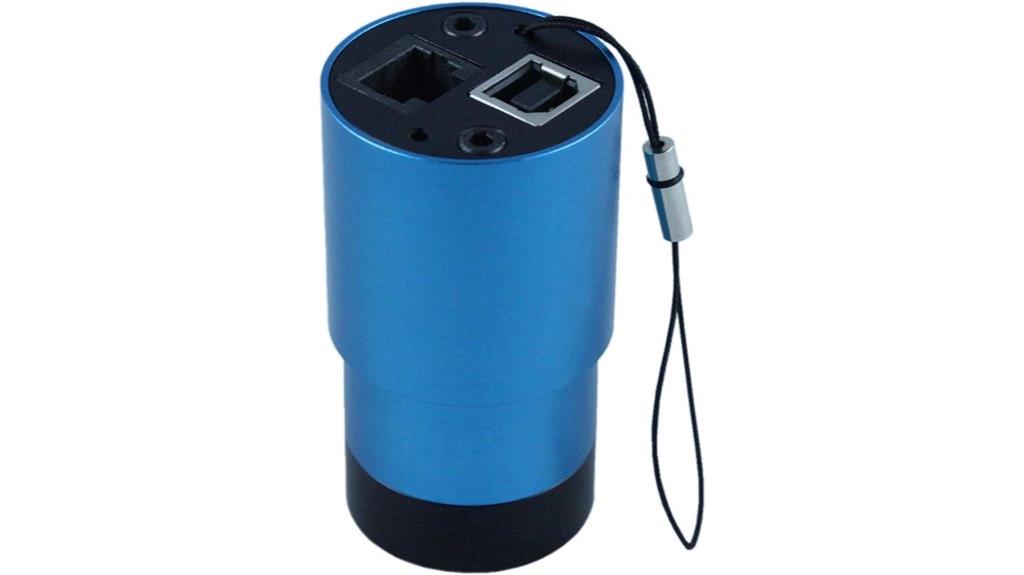
The Astromania SGCMOS Series Telescope CMOS Camera stands out as an ideal choice for astrophotographers seeking versatile imaging capabilities, especially those interested in auto-guiding and multicolor astrophotography. Its high-sensitivity sensor offers fast frame rates, long exposure options, and efficient thermal management. The 1.25-inch nosepiece ensures precise focusing and compatibility with filters, while the built-in ST4 port simplifies auto-guiding setups. Supported by dedicated software and compatible with ASCOM and WDM drivers, it integrates seamlessly with various imaging tools. Its rugged CNC aluminum housing, combined with multiple accessories like filters and cables, makes it a flexible, reliable option for both amateurs and advanced users.
Best For: amateur and advanced astrophotographers seeking versatile, high-sensitivity imaging with auto-guiding and multicolor capabilities.
Pros:
- High-sensitivity sensor with fast frame rates and long exposure support for detailed astrophotography
- Built-in ST4 auto guider port simplifies auto-guiding setup and integration
- Compatible with dedicated software, ASCOM, and WDM drivers for seamless operation
Cons:
- Slightly heavier compared to smaller, more compact camera options
- Requires additional accessories like filters and cables for full functionality
- Limited to 1.25-inch interface, which may restrict some larger lens or filter options
Factors to Consider When Choosing Cooled CMOS Astro Cameras for Deep Sky Imaging

When selecting a cooled CMOS astro camera for deep sky imaging, I focus on key factors like sensor sensitivity and quantum efficiency to guarantee bright, detailed images. I also consider cooling efficiency levels to reduce noise, along with image resolution and compatibility with my equipment. Additionally, I evaluate exposure and frame rates to find a balance that captures clear, sharp data without sacrificing performance.
Sensor Sensitivity and QE
Have you ever wondered how well a cooled CMOS astro camera can detect faint deep sky objects? Sensor sensitivity, measured by quantum efficiency (QE), plays a pivotal role here. A higher QE means the camera converts more incoming photons into electrical signals, boosting low-light performance. Cooled CMOS sensors often boast QE values of 80% or higher, enabling better detection of faint objects with shorter exposure times. This higher sensitivity reduces the need for prolonged exposures, helping to capture finer details. Additionally, the spectral response influences how well the sensor detects different wavelengths, affecting color accuracy and the ability to capture specific astronomical phenomena. Cooling further enhances sensitivity by minimizing thermal noise, allowing for longer exposures without image degradation. Overall, high QE and sensitivity are essential for successful deep sky imaging.
Cooling Efficiency Levels
Cooling efficiency levels directly impact a cooled CMOS astro camera’s ability to produce clear images during long exposures. The better a camera can lower its sensor temperature below ambient—typically between 20°C and 40°C—the more thermal noise it reduces, resulting in cleaner images. Effective cooling systems like TEC (Thermoelectric Cooling) are designed to keep temperatures stable over extended sessions, preventing residual noise and glow. The camera’s thermal design, heat dissipation capacity, and insulation are key factors that determine how well it maintains consistent cooling performance. Precise monitoring and control of the sensor temperature ensure ideal image quality by minimizing noise artifacts. When choosing a camera, prioritize models with high cooling efficiency to maximize detail and clarity in your deep sky captures.
Image Resolution Quality
Choosing a cooled CMOS astro camera involves considering how its image resolution will impact your deep sky imaging results. Higher resolution sensors, like the 3008×3008 pixel IMX533, capture finer details of celestial objects, improving image clarity and scientific value. This resolution strikes a good balance between detailed imaging and manageable data sizes, making it suitable for both amateurs and professionals. However, increasing resolution results in larger file sizes, requiring more storage and processing power. High-resolution sensors also enhance the ability to resolve small or distant objects, ideal for detailed astrophotography and research. Pixel size, such as 3.76μm, works with resolution to influence light-gathering ability, affecting image quality in low-light conditions. Overall, resolution is key to achieving sharp, detailed deep sky images.
Connectivity Compatibility
Selecting a cooled CMOS astro camera with the right connectivity options is essential for seamless integration into your astrophotography setup. I look for cameras that support common interfaces like USB 3.0, USB 2.0, or C-mount, ensuring smooth communication with my computer or telescope. Compatibility with my preferred software, whether through native drivers, ASCOM, or WDM, is also fundamental. I verify that the camera can connect with other peripherals, such as auto-guiders and filters, via appropriate ports like ST4 or threaded interfaces. Additionally, I check that its data transfer protocol and bandwidth are sufficient for high-resolution, long-exposure imaging without bottlenecks. Finally, I consider whether the connectivity options allow for easy remote operation or automation, which greatly enhances my workflow.
Exposure and Frame Rates
Have you ever wondered how to balance exposure time and frame rate to get the best deep sky images? Longer exposures are essential for capturing faint objects, often needing seconds to minutes, to gather enough light. Meanwhile, higher frame rates allow us to catch rapid sky changes, which is critical for lucky imaging and planetary details. Cooled CMOS cameras with adjustable settings give us the flexibility to optimize this balance based on our target. Fast frame rates help reduce atmospheric turbulence effects, improving image sharpness through techniques like lucky imaging. Conversely, longer exposures boost sensitivity to dim objects, enhancing detail and signal-to-noise ratio. Striking the right balance between these factors ensures we get high-quality images, whether we’re focusing on faint nebulae or planetary details.
Software and Control Options
When evaluating cooled CMOS astro cameras for deep sky imaging, ensuring compatibility with popular control software is essential for smooth operation. I look for cameras that work seamlessly with software like ASCOM, Maxim DL, or SharpCap, which simplifies integration and control. Dedicated software for real-time preview, image capture, dark frame subtraction, and post-processing helps streamline my workflow. Compatibility with third-party imaging and guiding software expands my options and improves overall functionality. Remote control and automation features are critical for long exposures and remote operation, saving time and effort. Finally, I verify that the camera manufacturer provides regular software updates and driver support to keep everything compatible with evolving astrophotography workflows, ensuring my investment remains future-proof.
Frequently Asked Questions
How Does Cooling Impact Noise Reduction in CMOS Astro Cameras?
Cooling markedly reduces noise in CMOS astro cameras by lowering the sensor’s temperature, which minimizes thermal noise during long exposures. When I cool my camera, I notice cleaner images with less grain and better detail, especially in low-light conditions. It’s like giving my camera a breather, allowing it to produce sharper, more accurate captures. Without proper cooling, noise can overwhelm faint details, making cooling essential for high-quality deep sky imaging.
Which Camera Offers the Best Value for Beginner Deep Sky Astrophotographers?
If you’re just starting out, I recommend the ZWO ASI294MC Pro. It offers incredible value with excellent image quality, good cooling performance, and user-friendly features. Its affordability makes it perfect for beginners, yet it still delivers professional results. I’ve found it balances performance and cost well, helping new astrophotographers capture stunning deep sky images without breaking the bank. It’s a solid choice to kickstart your astrophotography journey.
Can Cooled CMOS Cameras Be Used Effectively With Amateur Telescopes?
Absolutely, cooled CMOS cameras can work effectively with amateur telescopes. I’ve seen stunning images emerge from modest setups, thanks to their sensitivity and low noise levels. Imagine capturing deep-sky objects in crisp detail, even with entry-level gear—it’s possible. As long as you match the camera’s specifications with your telescope’s capabilities and use proper adapters, you’ll be amazed at what you can achieve in your astrophotography journey.
What Are the Maintenance Requirements for Cooled CMOS Astro Cameras?
Cooled CMOS astro cameras require regular maintenance to perform at their best. I make certain to keep the sensor and cooling system clean, avoiding dust and debris that can affect images. I also check for firmware updates and verify proper connections. Periodically, I inspect the camera’s cooling functions to confirm they’re working efficiently. Proper maintenance prolongs the camera’s lifespan and ensures high-quality deep sky images every time I use it.
How Does Sensor Size Influence Image Quality in Deep Sky Imaging?
Oh, the grand adventure of sensor size! Bigger sensors capture more light, making your deep sky images sharper and more detailed, like peering through a telescope with eagle eyes. Smaller sensors? They’re like tiny, overworked hamsters on a wheel—less light, more noise. So, if you crave stunning images with rich detail, go for the larger sensor. Trust me, your astrophotography will thank you!
Conclusion
Choosing the right cooled CMOS astro camera is like finding the perfect lens for a masterpiece—you want clarity, precision, and reliability. Both the SVBONY SV605CC and Astromania SGCMOS series stand out as top contenders for deep sky imaging in 2025. Trust your instincts, consider your needs, and you’ll capture the universe’s wonders with the sharpness of a crystal-clear window into the cosmos. Your stellar journey begins with the right camera—ready to explore?