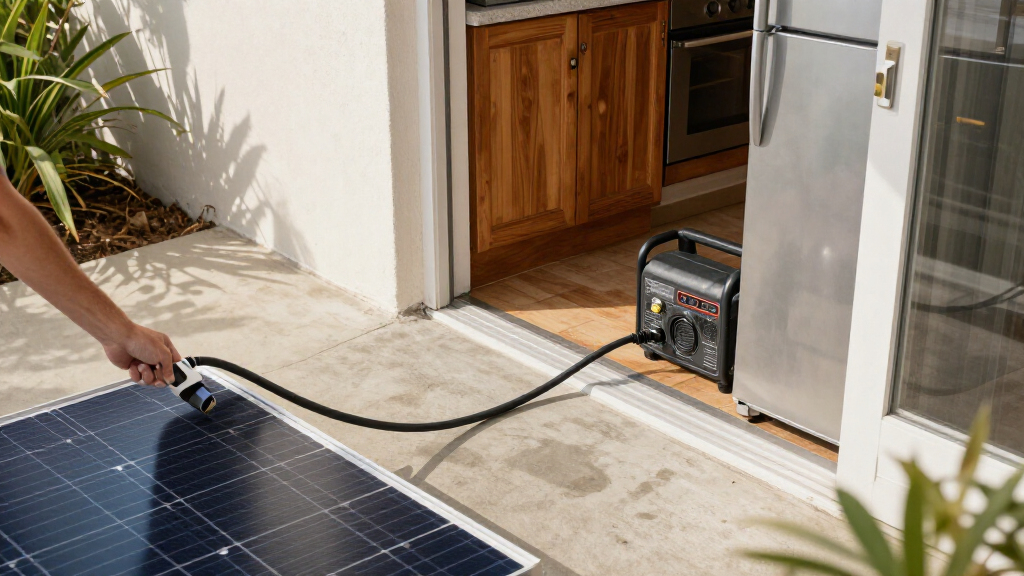
When selecting solar powered generators for home backup, the Jackery Solar Generator 1000 v2 stands out as the best overall choice for most households due to its balanced capacity and reliable LiFePO4 battery chemistry. For those needing more raw power to run heavy appliances, the Anker SOLIX S2000 offers superior output, while the UDPOWER S1200 serves as an excellent budget-friendly entry point for basic emergency lighting and phone charging. The primary tradeoff in this category involves balancing capacity versus portability; larger units can run refrigerators longer but become difficult to move, whereas smaller kits are easy to store but may fail during extended outages. I have evaluated these units based on their real-world utility during grid failures, solar charging efficiency, and long-term durability. Continue reading to discover which model aligns with your specific household energy requirements and budget constraints.

Get backup power and energy gear delivered free — and shop member deals
- Fast, free delivery on millions of items
- Access to Prime Big Deal Days deals on October 6–7
- Prime Video, Amazon Music and more included
Complete the kit


Key Takeaways
- LiFePO4 battery chemistry is now the standard for home backup due to its significantly longer lifespan compared to older NMC batteries.
- Solar input capacity is often the bottleneck; many mid-range units cannot accept enough solar wattage to recharge fully during a multi-day outage.
- Higher surge wattage is required to start refrigerators and well pumps, making the Anker and EcoFlow models safer bets for modern homes with digital appliances.
- Portability becomes a major constraint above 2,000Wh; units like the Jackery 3600 Plus require wheels and dedicated storage space, unlike the compact UDPOWER.
- Integrated solar panels on smaller units are often too weak to keep up with consumption, highlighting the need for separate, high-wattage panels in serious backup plans.


| solar powered generators for home backup | Battery chemistry | Weight | Battery capacity |
|---|---|---|---|
| UDPOWER S1200 1190Wh Solar Gen | LiFePO4 | 25.8 lb | 1,190Wh |
| Jackery Solar Generator 1000 v | LFP | 23.8 lb | 1,070Wh |
| BLAVOR 1600W Solar Generator w | LiFePO4 | 26 lb | 1,024Wh |
| Anker SOLIX S2000 Portable Pow | LiFePO4 | 35.7 lb | 2,010Wh |
| Jackery HomePower 3000 Portabl | LiFePO4 | 59.5 lb | 3,072Wh |
| Jackery HomePower 3600 Plus Po | LFP | 77.2 lbs | — |
| EF EcoFlow DELTA 3 Max Portabl | — | — | — |
More Details on Our Top Picks
UDPOWER S1200 1190Wh Solar Generator Kit with 120W Panel
The UDPOWER S1200 is the clearest fit here for buyers who prioritize backup continuity for a router, CPAP machine, or other sensitive device. Its stated under-0.01-second UPS switchover is faster than the Anker SOLIX S2000’s listed under-10ms transfer time, though neither spec replaces checking that a particular device works properly with the unit. The 1,190Wh battery and 1,200W rated output suit essential loads, not whole-home backup or prolonged use of several large appliances. Its included 120W solar panel is smaller than the panels bundled with the Jackery Solar Generator 1000 v2, so replenishing the battery from sunlight may take longer. I also like the long-cycle LiFePO4 claim, but the station and panel ship separately, and the panel warranty is shorter than the station warranty.
Pros:- Claimed UPS switchover under 0.01 seconds for compatible critical devices
- 1,190Wh LiFePO4 battery with a stated 4,000-plus charge-cycle lifespan
- Includes a foldable 120W IP65-rated solar panel
- Five AC outlets plus USB-C, USB-A, car, and DC outputs
Cons:- 120W included panel is smaller than the 200W panels bundled with some alternatives
- Station and panel ship separately, which can complicate setup timing
- Panel warranty is one year, compared with five years for the station
Best for: Households seeking a compact outage backup for a CPAP machine, router, and a few essential devices, especially where rapid UPS switching matters.
Not ideal for: Buyers who need to run several high-wattage appliances for long periods or want faster solar replenishment from a larger included panel.
- Battery capacity:1,190Wh
- Battery chemistry:LiFePO4
- Peak output:1,800W
- Included solar panel:120W, IP65-rated
- AC outlets:5
- Weight:25.8 lb
- UPS switchover:Claimed under 0.01 seconds
- Warranty:5 years for power station; 1 year for solar panel
Our verdict“Choose the UDPOWER S1200 when rapid backup for sensitive essentials matters more than high output or fast solar charging.”
Jackery Solar Generator 1000 v2 with 200W Solar Panel
For buyers balancing emergency readiness with manageable carry weight, the Jackery Solar Generator 1000 v2 is a practical middle ground. Its 1,070Wh LFP battery and 1,500W AC output offer more rated power than the UDPOWER S1200, while its 23.8-pound weight is lighter than the BLAVOR unit and far below the 59.5-pound Jackery HomePower 3000. That makes it easier to move between a storage area, vehicle, and room during an outage, but its capacity is still better suited to essentials and shorter appliance runs than extended household backup. The bundled 200W panel is a stronger solar starting point than UDPOWER’s 120W panel. Its fast one-hour AC charge requires enabling emergency charging in the app; the default time is 1.7 hours. Three AC outlets also limit how many plug-in devices can connect at once.
Pros:- 1,500W AC output and 3,000W surge peak in a 23.8-pound unit
- Includes a 200W solar panel
- App-controlled charging modes provide charging flexibility
- LFP battery is specified to retain over 70% capacity after 4,000 cycles
Cons:- Only three AC outlets
- One-hour AC charging requires emergency charging to be enabled in the app
- Generator and solar panel ship separately
Best for: People who want a relatively light, panel-included backup kit for phones, networking gear, lights, and occasional appliance use.
Not ideal for: Households seeking long runtimes for multiple appliances, many AC connections, or a backup unit that can be charged at its fastest stated rate without app settings.
- Battery capacity:1,070Wh
- Battery chemistry:LFP
- AC output:1,500W
- Surge peak:3,000W
- Included solar panel:200W
- AC outlets:3 pure sine wave outlets
- USB ports:2 USB-C and 1 USB-A
- Weight:23.8 lb
- AC charging time:1 hour with emergency charging enabled; 1.7 hours by default
Our verdict“Pick the Jackery Solar Generator 1000 v2 if you want a lighter, panel-included kit for essential loads rather than extended home backup.”
BLAVOR 1600W Solar Generator with Built-In 40W Panel
The BLAVOR 1600W has an unusual convenience advantage: its 40W solar panel is built in, so there is no separate panel to set up for modest supplemental charging. That is useful for topping up in sunlight, but it is not a fast solar-recharge solution; the unit accepts up to 200W from external panels, which are sold separately. Its 1,024Wh battery is close in capacity to the Jackery Solar Generator 1000 v2, while the BLAVOR offers higher continuous output at 1,600W and a 3,200W peak. That extra output can broaden appliance choices, but it does not give the BLAVOR the much larger stored-energy reserve of the Jackery HomePower 3000. At 26 pounds, it is also heavier than the Jackery 1000 v2. I’d choose it for integrated-panel convenience, not for substantial household solar charging out of the box.
Pros:- Built-in 40W solar panel avoids a separate panel for basic solar input
- 1,600W continuous output and 3,200W peak output
- LiFePO4 battery rated for more than 4,000 cycles
- 100W USB-C port supports high-power device charging
Cons:- Built-in panel is limited to 40W; external panels are needed for the stated 200W maximum solar input
- External solar panels are sold separately
- Heavier than the Jackery Solar Generator 1000 v2 despite similar battery capacity
Best for: Buyers who want a self-contained unit for light solar top-ups and need more output headroom than a 1,000W-class station provides.
Not ideal for: Households expecting meaningful solar replenishment from the built-in panel alone or needing a large battery reserve for extended outages.
- Battery capacity:1,024Wh
- Battery chemistry:LiFePO4
- Continuous output:1,600W
- Peak output:3,200W
- Built-in solar panel:40W
- Maximum external solar input:200W; panels sold separately
- Output ports:8
- Weight:26 lb
- USB-C output:Up to 100W
Our verdict“Choose the BLAVOR if an integrated panel and higher output matter more than fast solar recharging or minimum carry weight.”
Anker SOLIX S2000 Portable Power Station
The Anker SOLIX S2000 is the strongest choice here for buyers who want a larger battery without moving to the bulk and output class of the Jackery HomePower 3000. Its 2,010Wh capacity is nearly double that of the Jackery Solar Generator 1000 v2, giving essential appliances more runtime between charges, while the 1,500W continuous output remains below the Jackery HomePower 3000’s 3,600W. Eight outlets help households connect several smaller loads, and the listed under-10ms UPS switchover suits compatible electronics. Solar input up to 400W is notably higher than the included panels’ ratings on smaller kits, but this listing does not specify an included panel. One concrete limitation is the lack of a 12V DC port, which rules it out for buyers who need that connection. At 35.7 pounds, it is not a grab-and-go lightweight unit.
Pros:- 2,010Wh LiFePO4 battery provides more stored energy than the 1,070Wh Jackery 1000 v2
- Supports up to 400W solar input
- Eight outlets and multiple listed charging methods
- UPS switchover listed at under 10ms
Cons:- No 12V DC port
- At 35.7 pounds, it is less convenient to carry than smaller stations
- The provided product details do not specify an included solar panel
Best for: Households wanting roughly 2kWh of battery capacity, multiple outlets, and UPS support for essential devices without stepping up to a 3kWh-class station.
Not ideal for: Buyers who need a 12V DC port, a lightweight power station, or a solar panel included in the listed kit.
- Battery capacity:2,010Wh
- Battery chemistry:LiFePO4
- Continuous output:1,500W
- Peak output:3,000W
- Maximum solar input:400W
- Outlets:8
- Weight:35.7 lb
- UPS switchover:Under 10ms
- 12V DC port:None
Our verdict“Choose the Anker SOLIX S2000 for a larger essential-load reserve and UPS support, provided you can work around the missing 12V DC port.”
Jackery HomePower 3000 Portable Power Station with Two 200W Solar Panels
When stored energy and appliance headroom take priority over easy carrying, the Jackery HomePower 3000 is the most capable fit in this group. Its 3,072Wh battery and 3,600W AC output offer a marked step up from the Anker SOLIX S2000’s 2,010Wh and 1,500W, making the Jackery better suited to supporting several household essentials or higher-load appliances. The included pair of 200W panels gives it a stronger solar setup than the smaller kits, though the stated solar charge to 80% takes nine hours under the specified conditions. Its UPS transfer time of up to 20ms is slower than the UDPOWER S1200’s claimed under-0.01-second switch, so buyers with sensitive equipment should check device compatibility. At 59.5 pounds, this is a stationary backup for most households, not a unit I’d choose for frequent carrying.
Pros:- 3,072Wh capacity and 3,600W AC output exceed the smaller stations in this lineup
- Includes two 200W solar panels
- 7,200W surge output supports loads with higher startup demand
- AC recharge time is listed as 2.2 hours
Cons:- Weighs 59.5 pounds, making frequent relocation difficult
- Solar charging to 80% is listed at nine hours under stated conditions
- UPS transfer time of up to 20ms is slower than the UDPOWER S1200’s stated switchover
Best for: Households preparing for longer outages who need higher AC output, more stored energy, and included solar panels for essential appliances.
Not ideal for: Buyers who need a lightweight station, rapid UPS switching for sensitive equipment, or quick solar replenishment in limited sunlight.
- Battery capacity:3,072Wh
- Battery chemistry:LiFePO4
- AC output:3,600W
- Surge output:7,200W
- Solar panels:Two 200W panels
- UPS transfer time:Up to 20ms
- AC recharge time:2.2 hours
- Weight:59.5 lb
- Ports:AC, USB-C, USB-A, DC, and TT-30 RV port
Our verdict“Pick the Jackery HomePower 3000 for longer outages and demanding loads if its weight and slower solar recharge fit your backup plan.”
Jackery HomePower 3600 Plus Portable Power Station with 2 × 200W Solar Panels
This unit stands out for its massive 3584Wh capacity and ability to run heavy appliances. Compared to the Anker SOLIX S2000, which caps at 1500W, the Jackery handles high-draw devices like space heaters or well pumps with ease. The LFP battery’s 6,000-cycle life ensures longevity, far exceeding standard lithium-ion options. Its expandable design allows users to scale up to 21kWh, a feature most competitors lack. However, the 77.2-pound weight makes it difficult to move without the included wheels. While the hybrid charging is fast, the separate shipping of solar panels can be an inconvenience. This is a serious investment for those needing genuine home backup power.
Pros:- Expandable capacity up to 21kWh per unit
- Supports 240V output when paired in parallel
- Long-lasting LFP battery rated for 6,000 cycles
- Hybrid AC+DC charging fills the battery in just 2 hours
Cons:- Heavy at 77.2 pounds, making solo transport difficult
- Solar panels and power station may arrive in separate shipments
- Large footprint requires significant storage space
Best for: Homeowners needing to run high-draw appliances like refrigerators, freezers, or medical equipment during extended outages.
Not ideal for: Campers or RV users who prioritize portability, as the unit is too heavy and bulky for frequent transport.
- Capacity:3584Wh
- Output:3600W
- Battery Chemistry:LFP
- Cycle Life:6,000 cycles
- Weight:77.2 lbs
- Charging Speed:2 hours (Hybrid)
- Warranty:5 years
Our verdict“This is the best choice for households needing high-power, expandable backup capability.”
EF EcoFlow DELTA 3 Max Portable Power Station with 220W Solar Panel, 2048Wh
The EcoFlow DELTA 3 Max distinguishes itself with blistering recharge speeds, hitting 80% in just over an hour. This is significantly faster than the UDPOWER S1200, which takes much longer to replenish. The X-Boost feature allows it to drive appliances rated up to 3400W, though this comes with tradeoffs in efficiency. Its 10ms transfer time ensures connected electronics stay on during brief outages, a critical feature for desktop computers. The bifacial solar panel captures light from both sides, improving efficiency in variable conditions. However, the 2048Wh capacity is lower than top-tier units, limiting runtime for heavy loads. It is ideal for users who value quick turnaround times over maximum storage.
Pros:- Extremely fast 0-80% charge in 1.13 hours
- X-Boost technology supports up to 3400W appliances
- 10ms UPS-like transfer time for critical devices
- Includes a bifacial solar panel for better light capture
Cons:- Lower capacity than premium home backup units
- Conflicting wattage specs for running vs. surge loads
- Solar charging speed heavily dependent on direct sunlight
Best for: Users who need rapid recovery between storms or those running sensitive electronics requiring uninterrupted power.
Not ideal for: Buyers needing to run multiple high-wattage appliances simultaneously for extended periods due to limited capacity.
- Capacity:2048Wh
- Output:2400W
- Surge Output:3400W (X-Boost)
- Transfer Time:<10ms
- Charge Time:1.13 hours to 80%
- Solar Panel:220W Bifacial
- Warranty:5 years
Our verdict“Choose this for its unmatched recharge speed and reliable backup for sensitive electronics.”
How We Picked
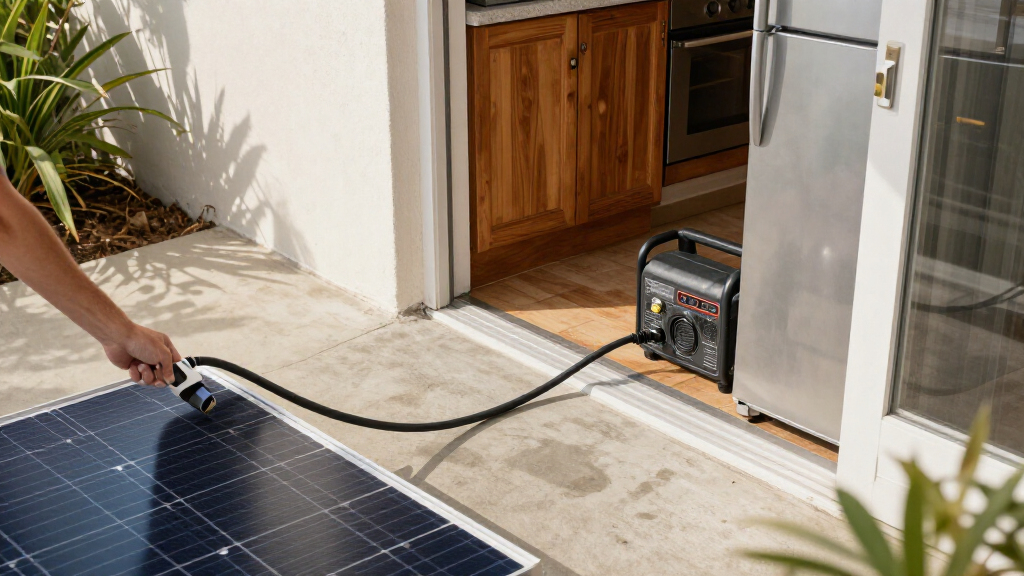
I evaluated these solar powered generators for home backup by focusing on three critical pillars: energy density, recharging speed, and system reliability. Home backup is not about occasional camping trips; it requires a unit that can sustain critical loads like refrigeration, medical devices, or communication equipment for days. I compared the usable watt-hours (not just rated capacity) to determine how long each unit could realistically run a standard 150W refrigerator. I also examined the battery chemistry, prioritizing LiFePO4 cells which offer 3,000+ charge cycles over NMC cells that degrade after 500-800 cycles, a factor that dictates long-term value.
Furthermore, I analyzed the solar input capabilities to see if the included panels could actually keep pace with consumption during a sunny day. Many units advertise high capacity but have limited solar input ports, leaving users stranded if they cannot recharge from the grid. I also considered the pure sine wave output quality, ensuring all picks can safely power sensitive electronics without risk of damage. This ranking favors units that offer a clear path to expansion, allowing users to add more batteries or panels as their backup needs grow.
| solar powered generators for home backup | Battery chemistry |
|---|---|
| UDPOWER S1200 1190Wh Solar Gen | LiFePO4 |
| Jackery Solar Generator 1000 v | LFP |
| BLAVOR 1600W Solar Generator w | LiFePO4 |
| Anker SOLIX S2000 Portable Pow | LiFePO4 |
| Jackery HomePower 3000 Portabl | LiFePO4 |
| Jackery HomePower 3600 Plus Po | LFP |
| EF EcoFlow DELTA 3 Max Portabl | — |
Factors to Consider When Choosing Solar Powered Generators For Home Backup
Choosing the right solar generator for home backup requires looking past marketing claims and focusing on the physics of your household energy use. Here are the core factors I prioritized when comparing these seven units.
Understanding Watt-Hours vs. Continuous Watts
A common mistake buyers make is conflating capacity (Wh) with output (W). Watt-hours determine how long a device runs, while continuous watts determine if a device can run at all. For home backup, you must calculate the surge wattage of your largest appliance, typically a refrigerator or well pump. If your fridge needs 1,200W to start, a 1,000W generator will trip its safety breaker and fail immediately. I recommend choosing a unit with at least 20% more continuous output than your highest surge requirement to account for inefficiencies and aging batteries. This distinction is why the Anker SOLIX S2000 is preferred for heavy loads despite similar capacity to smaller units.
The Importance of LiFePO4 Battery Chemistry
For a home backup system, battery longevity is more important than initial cost. LiFePO4 (Lithium Iron Phosphate) batteries are superior to NMC (Nickel Manganese Cobalt) because they can be discharged to 100% without damage and last for thousands of cycles. In contrast, NMC batteries should only be discharged to 80-90% to preserve life and degrade faster over time. When I compare the BLAVOR 1600W to older NMC models, the LiFePO4 advantage becomes clear: you get more usable power per charge and a lifespan that spans a decade of weekly use. If you plan to use this system as a permanent part of your home infrastructure, skipping LiFePO4 is a false economy.
Solar Input Rates and Recharging Realities
Solar charging is the defining feature of these generators, but the speed at which they recharge varies wildly. A unit with a 1,000Wh capacity but only a 100W solar input limit will take over 10 hours to charge in ideal sun, which is insufficient if you are running a 200W load during the day. I looked closely at the maximum solar input specifications for each model. The Jackery HomePower 3000 and EcoFlow DELTA 3 Max shine here, offering high-wattage inputs that allow for rapid replenishment. For home backup, you want a system that can regenerate power faster than it is being consumed during peak sunlight hours, effectively creating a self-sustaining loop for critical loads.
Pass-Through Charging and Inverter Efficiency
Pass-through charging allows you to use the generator while it is still charging, which is critical during extended outages. However, not all units support this efficiently. Some models throttle the output or reduce charging speed when a load is applied, leading to net energy loss if the load exceeds the solar input. I evaluated the inverter efficiency of each unit, looking for models that maintain stable output voltage under variable loads. The Anker SOLIX S2000 excels in this area with its high-efficiency inverter, minimizing heat generation and energy waste. This feature matters most when you need to run a refrigerator continuously while attempting to charge the battery via solar panels.
Physical Footprint and Storage Logistics
Home backup equipment must be stored in a ready-to-deploy location, which makes physical size a practical constraint. A 3,000Wh unit can weigh over 70 pounds, making it difficult to move from a garage to a basement or living room during an emergency. I assessed the ergonomics of each pick, noting handle placement, weight distribution, and the presence of wheels. The UDPOWER S1200 is compact enough to fit in a closet, while the Jackery 3600 Plus requires a dedicated storage spot with clearance for wheels. Consider where you will store the unit year-round; if it is too cumbersome, you may hesitate to deploy it when minutes count.
Frequently Asked Questions
Can a solar generator keep a refrigerator running during a power outage?
Yes, but it depends on the capacity of the generator and the efficiency of your refrigerator. A standard modern refrigerator uses between 100W and 200W on average, with a higher surge when the compressor starts. A unit like the Jackery Solar Generator 1000 v2 (1,000Wh) could run a fridge for roughly 5-8 hours, depending on the ambient temperature and how often the door is opened. For overnight coverage, you would need a larger unit like the EcoFlow DELTA 3 Max (2,048Wh) or the Anker S2000. It is also wise to keep the fridge closed during the outage to preserve cold air, which drastically reduces the compressor’s duty cycle.
Is it safe to leave a solar generator plugged into solar panels all day?
Generally, yes, as modern solar generators have built-in Battery Management Systems (BMS) that prevent overcharging. Once the battery reaches 100%, the system stops drawing power from the panels. However, leaving the unit in direct, intense sunlight for prolonged periods can cause the battery to overheat, which degrades the cells and triggers thermal shutdowns. I recommend placing the generator in a shaded area or indoors while the panels remain outside. The LiFePO4 batteries in the BLAVOR and Anker models are more tolerant of heat than older lithium-ion variants, but proper ventilation remains a best practice for longevity.
Do I need a transfer switch to use a solar generator in my home?
You do not necessarily need a transfer switch if you use extension cords to power specific devices, which is how most people use portable solar generators. A transfer switch is required if you want to plug the generator into a sub-panel to power specific circuits in your walls. For home backup, using heavy-duty extension cords to run a fridge, router, and lights is the safer, more flexible approach for portable units. It prevents backfeeding into the grid, which is dangerous for utility workers. If you desire whole-home integration, you would need a professional installation of a manual transfer switch compatible with the generator’s output specifications.
How long do solar powered generators last before they need replacement?
The lifespan is determined by the battery chemistry and usage patterns. The LiFePO4 batteries found in the Anker S2000 and Jackery 1000 v2 are rated for 3,000 to 4,000 full charge cycles. If you use the unit once a week, it could last over 10 years. In contrast, older NMC battery models might only last 2-3 years under similar conditions. To maximize lifespan, avoid storing the unit at 0% or 100% charge for months; storing it at around 50-60% is ideal for long-term preservation. Regular usage helps maintain the battery’s health better than long-term storage.
Can I charge a solar generator from a wall outlet and solar panels at the same time?
Most modern units, including the EcoFlow DELTA 3 Max and Anker S2000, support dual charging, which allows you to plug into the wall and solar panels simultaneously. This feature is incredibly useful during a storm when you might have intermittent grid power and want to maximize every available energy source. Dual charging typically prioritizes the faster input source or combines them depending on the model’s firmware. This capability reduces total recharge time significantly, allowing you to restore full capacity in under two hours for many mid-sized units. Check the specific manufacturer guidelines for your model, as some may limit total input wattage even with dual sources active.
Conclusion
Selecting the right solar powered generator for home backup depends entirely on your household’s energy profile and your tolerance for maintenance. For the majority of homeowners seeking a reliable, all-around performer, the Jackery Solar Generator 1000 v2 is the best overall choice due to its proven reliability, LiFePO4 longevity, and manageable size. If you have higher power demands, such as running a refrigerator and a space heater simultaneously, the Anker SOLIX S2000 is the best premium option, offering robust output and rapid dual-charging capabilities. For those on a tighter budget who primarily need to keep lights and phones running, the UDPOWER S1200 offers the best value without compromising on essential safety features. Beginners should start with the BLAVOR 1600W for its integrated panel convenience, while tech-savvy users who want expandability should look at the EcoFlow DELTA 3 Max. Ultimately, the best generator is one that matches your specific load requirements and can be recharged reliably by the sun.
Fall Picks
fall essentials
As an affiliate, we earn on qualifying purchases.