The best EV home charging stations balance charging speed, connector fit, and installation needs—not just headline amperage. My best overall pick is the Autel Level 2 Home Smart EV Charger NACS, which pairs a high-power hardwired setup with a long cable for compatible vehicles. The ChargePoint HomeFlex J1772 stands out for drivers who need a plug-in station, while the EMPORIA Pro with PowerSmart suits buyers who want a 48-amp unit with power-management features. The main tradeoffs are plug-in convenience versus hardwired output, vehicle connector compatibility, and whether your electrical panel can support the charger you want. Read on for the full comparison and guidance on matching a station to your home.

Get backup power and energy gear delivered free — and shop member deals
- Fast, free delivery on millions of items
- Access to Prime Big Deal Days deals on October 6–7
- Prime Video, Amazon Music and more included
Key Takeaways
- Connector choice changes the shortlist: the lineup includes NACS models for compatible vehicles and J1772 models for broad compatibility, so confirm your car’s inlet and adapter needs before comparing other features.
- Hardwired models lead on installation flexibility and high output: several Autel options and the 80-amp MaxiCharger are hardwired, while plug-in stations trade some installation permanence for easier connection to a suitable NEMA 14-50 outlet.
- Amperage alone does not determine charging speed: your vehicle’s onboard charger and the home circuit limit how much power it can accept, so a 50- or 80-amp station may not charge every car faster than a lower-output unit.
- The roundup spans distinct household needs: the AIMILER and other plug-in units favor simpler setups, while the EMPORIA Pro adds PowerSmart for households with electrical-load constraints.
- Similar-looking stations have meaningful differences: cable length, Wi-Fi or Bluetooth features, included holsters, connector type, and installation method separate the choices even when their power ratings are close.


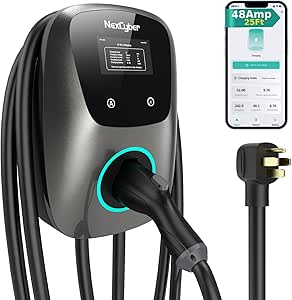


| EV home charging station | Connector | Cable length | Warranty | Amperage |
|---|---|---|---|---|
| Autel Level 2 Home Smart EV Ch | NACS | 25 ft | 3 years | — |
| Level 2 EV Charger | SAE J1772 | 25 ft | — | — |
| Autel Level 2 EV Charger up to | J1772 | 25 ft | 3 years | — |
| EMPORIA Pro Level 2 EV Charger | J1772 | 25 ft | 3 years | — |
| AIMILER Level 2 Electric Vehic | J1772 | 25 ft | — | — |
| ChargePoint HomeFlex Level 2 E | J1772 | — | 3 years | 50 A |
| Autel MaxiCharger Level 2 EV C | NEMA 14-50 | 25 feet | 3 years | Up to 40 A |
| Tesla Level 2 Charger NACS 40A | NACS | 25 feet | — | 40 A |
| Autel Home Level 2 EV Charger | — | 25 feet | — | Up to 50 A |
| Leviton Level 2 Smart EV Charg | SAE J1772 | 25 feet | — | 40 A |
| Level 2 EV Charger 50Amp J1772 | J1772 | — | — | 50 amps |
| Level 2 EV Charger with WiFi A | J1772 | 25 feet | 3 years | 48 amps |
| EVIQO Level 2 EV Charger J1772 | J1772 | 25 feet | 3 years | 40 amps |
| Autel MaxiCharger Level 2 EV C | SAE J1772 | — | 5 years | Up to 80 amps |
| ChargePoint HomeFlex Level 2 E | NACS | — | 3 years | — |
More Details on Our Top Picks
Autel Level 2 Home Smart EV Charger NACS, Up to 50Amp, Hardwired 240V EV Charge Station, Indoor/Outdoor Car Charging Station, Flexible 25-Foot Cable, Compatible with Tesla
I’d shortlist this Autel for Tesla drivers who want a NACS connector, a long reach across the garage or driveway, and high charging capacity. Its stated output reaches 50 amps and 12 kW, above the 40-amp IYILO and 32-amp AIMILER, though your vehicle and home circuit determine the charging rate you can actually use. The 25-foot cable adds flexibility when the parking position or charge port is awkward. App scheduling and remote management are useful for setting a routine, while CSA certification and indoor/outdoor suitability support a permanent installation. The tradeoff is that this is hardwired, with no plug, so setup may call for an electrician and the listing gives limited compatibility detail for non-Tesla vehicles. Choose it for the Tesla-focused connector and capacity, not for plug-in convenience.
Pros:- NACS connector is suited to compatible Tesla vehicles without relying on a J1772 connector.
- Up to 50A and 12 kW capacity offers more headroom than the 40A IYILO and 32A AIMILER.
- 25-foot cable helps reach vehicles parked in different positions.
- App scheduling and stated indoor/outdoor use support flexible home charging.
Cons:- Hardwired installation and circuit requirements can add electrical work.
- No plug-in option for homes that prefer a NEMA outlet connection.
- Product details provide limited confirmation of compatibility with non-Tesla vehicles.
Best for: Tesla owners planning a hardwired 240V installation who need a long cable and want app-based scheduling.
Not ideal for: Drivers who want a plug-in charger, cannot accommodate hardwired installation, or need clearly documented non-Tesla connector compatibility.
- Connector:NACS
- Maximum current:50 A
- Power:Up to 12 kW
- Input voltage:240 V
- Cable length:25 ft
- Installation:Hardwired; no plug
- Mounting:Wall mount
- Warranty:3 years
Our verdict“Pick this Autel if you have a compatible Tesla and want a high-capacity hardwired charger with extra cable reach.”
Level 2 EV Charger, 40Amp/9.6KW/240V, NEMA 14-50P, Wi-Fi (2.4 GHz)
The IYILO makes the most sense for buyers who want a 40A J1772 charger with app features but prefer a NEMA 14-50 plug over a hardwired unit. Its 9.6 kW rating sits between the 32A AIMILER and the higher-capacity Autel J1772, giving many EV owners a practical balance of charging speed and installation flexibility. The 25-foot cable and 6A-to-40A adjustment can help match charging to a home circuit and daily routine; the description also lists energy tracking, overheat protection, and load balancing. Its stated certification set is broad, but the charger needs a 50A breaker, and plug-in does not necessarily mean a new outlet is ready to use. Wi-Fi is limited to 2.4 GHz, and Tesla drivers need a separate adapter. Compared with AIMILER, it offers more current and listed load-management features, but is less appealing for Tesla owners seeking a direct connector match.
Pros:- 40A, 9.6 kW output is faster on paper than the 32A AIMILER.
- NEMA 14-50 plug offers an alternative to hardwired installation when a suitable outlet is available.
- Adjustable current and app-based energy tracking support more tailored charging.
- Description lists UL, ETL, Energy Star, and CSA certifications, plus overheat protection.
Cons:- Requires a 50A breaker, which may mean electrical work even with its plug-in design.
- Wi-Fi supports 2.4 GHz only.
- Tesla adapter is not included.
Best for: J1772 EV or PHEV owners who want 40A charging, app controls, and a NEMA 14-50 connection.
Not ideal for: Tesla drivers who do not want to buy an adapter, or households without a suitable 50A circuit and 2.4 GHz Wi-Fi coverage.
- Connector:SAE J1772
- Maximum current:40 A
- Power:9.6 kW
- Voltage:240 V
- Cable length:25 ft
- Plug:NEMA 14-50P
- Wi-Fi:2.4 GHz
- Dimensions:9.8 × 8.7 × 4.4 in
- Certifications:UL, ETL, Energy Star, CSA
Our verdict“Choose the IYILO if you want a 40A J1772 charger with app controls and already have, or plan to install, a suitable 14-50 circuit.”
Autel Level 2 EV Charger up to 50Amp, 240V, Indoor/Outdoor Car Charging Station with J1772 Connector, Wi-Fi and Bluetooth Enabled EVSE, Hardwired, 25-Foot Cable with Separate Holster, Dark Gray
This Autel stands out for buyers who want 50A capacity with a J1772 connector and both Wi-Fi and Bluetooth. Like the NACS Autel in this lineup, it is hardwired and rated up to 50A; the distinction is connector fit and the more clearly specified J1772 compatibility. That makes it a stronger match for many non-Tesla EVs than the Tesla-focused Autel, while the IYILO is the more approachable option for someone who wants a plug-in unit. A 25-foot cable, separate holster, and NEMA Type 4 weather rating suit garages and exposed installation locations. App-based scheduling adds control, but the hardwired setup calls for professional installation in many homes, and the listing limits compatibility to J1772 vehicles. I’d choose it for a robust outdoor-capable installation, not for buyers prioritizing low installation complexity or a direct NACS connector.
Pros:- Up to 50A and 12 kW capacity exceeds the IYILO’s 40A rating.
- J1772 connector offers clearly stated compatibility with J1772 electric vehicles.
- Wi-Fi and Bluetooth provide two connection options for app management.
- NEMA Type 4 rating and 25-foot cable suit indoor or outdoor placement.
Cons:- Hardwired installation can require an electrician and suitable electrical capacity.
- J1772 connector limits direct use with vehicles that require another connector standard.
- Higher-current capacity may exceed what some vehicles or home circuits can use.
Best for: J1772 EV owners seeking a high-current, hardwired charger for a garage or weather-exposed home location.
Not ideal for: Drivers who need a plug-in charger, have a vehicle without J1772 compatibility, or want to avoid professional electrical installation.
- Connector:J1772
- Maximum current:50 A
- Output voltage:240 V
- Power:Up to 12 kW
- Cable length:25 ft
- Connectivity:Wi-Fi and Bluetooth
- Installation:Hardwired
- Warranty:3 years
Our verdict“Pick this Autel for a high-capacity J1772 installation where outdoor suitability and dual wireless connectivity matter more than plug-in convenience.”
EMPORIA Pro Level 2 EV Charger with PowerSmart – 48 Amp Fast Home Charging Station with J1772 Connector and 25′ Cable
I’d put the EMPORIA Pro on the list for households where managing electrical load matters as much as charging speed. Its 48A output falls just below the 50A Autel models, while PowerSmart load balancing, scheduling, and energy tracking aim to help coordinate charging with household electricity use. That makes it a distinctive choice for homes weighing a higher-output charger against existing electrical demand. The product description also lists hardwired and NEMA plug installation options, giving it more setup flexibility than either hardwired Autel. The tradeoff is that the source does not specify the plug type, so buyers should confirm the configuration before planning installation. It remains a 240V J1772 unit, not a standard-outlet solution, and professional setup may be preferable for load management. Compared with the 40A IYILO, it offers more current and a stronger focus on balancing household demand.
Pros:- 48A output offers more capacity than the 40A IYILO.
- PowerSmart load balancing is aimed at coordinating EV charging with home electrical demand.
- App features include scheduling and real-time energy tracking.
- Description lists both hardwired and NEMA plug installation options.
Cons:- Requires a 240V supply and is not suitable for a standard household outlet.
- Plug type is not specified in the provided product details, so installation fit needs confirmation.
- J1772 connector may require an adapter for vehicles using another connector standard.
Best for: Homeowners with higher charging needs who want app-based energy insights and load management alongside a J1772 connection.
Not ideal for: Drivers limited to standard household outlets or shoppers who need the exact plug configuration confirmed before purchasing.
- Connector:J1772
- Maximum current:48 A
- Input voltage:240 V
- Cable length:25 ft
- Load management:PowerSmart
- Installation options:Hardwired or NEMA plug, plug type not specified
- Dimensions:3 × 8.25 × 12.25 in
- Warranty:3 years
Our verdict“Choose the EMPORIA Pro if you want a 48A J1772 charger with load-management tools and will confirm the installation configuration first.”
AIMILER Level 2 Electric Vehicle (EV) Charger 32A, 25ft Cable, Wi-Fi App Control, NEMA 14-50P Plug, ETL Certified, 220V-240V, Portable Home Charging Station
The AIMILER is the simplest fit here for buyers who value a portable, plug-in setup over maximum charging output. At 32A and up to 7.68 kW, it trails the 40A IYILO and 48A EMPORIA Pro on stated capacity, but its NEMA 14-50P plug and adjustable amperage make it a practical option for homes with a suitable outlet and drivers who may want to move the charger. The 25-foot cable helps with parking flexibility, while Wi-Fi app control supports remote operation and scheduling. Its J1772 connector serves many North American EVs and PHEVs, though Tesla owners need an adapter. The product lists ETL and FCC certification and a NEMA Type 4 protection rating. Compared with the IYILO, AIMILER gives up charging current and some listed smart load features in exchange for a portable form and a lower-current operating profile.
Pros:- NEMA 14-50P plug supports a portable setup when a compatible outlet is available.
- Adjustable 32A output can suit buyers who do not need the higher capacity of the 40A IYILO or 48A EMPORIA Pro.
- 25-foot cable provides useful reach around a garage or driveway.
- Wi-Fi app control, ETL and FCC certification, and NEMA Type 4 protection are listed.
Cons:- 32A and 7.68 kW output are lower than the other higher-current chargers in this batch.
- J1772 connector requires an adapter for Tesla vehicles.
- Needs a suitable 240V NEMA 14-50 outlet; it does not plug into a standard household outlet.
Best for: J1772 EV or PHEV owners with a compatible 14-50 outlet who want a portable charger with app control.
Not ideal for: Drivers seeking the highest charging rate, Tesla owners who do not want an adapter, or households without a suitable 240V outlet.
- Connector:J1772
- Maximum current:32 A
- Power:Up to 7.68 kW
- Input voltage:220–240 V
- Cable length:25 ft
- Plug:NEMA 14-50P
- Connectivity:Wi-Fi with app control
- Certifications:ETL, FCC
Our verdict“Choose the AIMILER if portability and a 14-50 plug matter more to you than the higher output of the IYILO or EMPORIA Pro.”
ChargePoint HomeFlex Level 2 EV Charger J1772 – NEMA 14-50 Plug
The ChargePoint HomeFlex makes sense for drivers who want a familiar app-led charging routine alongside a plug-in setup. Its listed 50A rating and charging capability of up to 45 miles per hour can shorten home charging sessions, while the app adds control and monitoring beyond a basic charger. Compared with the Leviton Level 2 Smart EV Charger, HomeFlex is described as faster, but it also carries a higher-cost tradeoff and calls for an electrician to set up the circuit and outlet. Its J1772 connector suits many non-Tesla EVs; Tesla drivers need an adapter. The UL-certified, weather-resistant build supports indoor or outdoor placement, though buyers should verify that their electrical circuit and vehicle can use its full output.
Pros:- Listed 50A output and charging capability up to 45 miles per hour
- App supports charging control and management
- UL-certified, weather-resistant construction for indoor or outdoor installation
- J1772 connector works with many non-Tesla EVs
Cons:- Requires an electrician and a suitable NEMA 14-50 circuit
- Tesla vehicles need an adapter
- Higher cost than basic home chargers
Best for: Non-Tesla EV owners who want app controls, outdoor installation flexibility, and a faster-rated plug-in charger.
Not ideal for: Tesla owners seeking a direct NACS connection, or buyers who want the simplest low-cost charger and do not need app features.
- Output voltage:240 volts
- Input voltage:240 volts
- Amperage:50 A
- Connector:J1772
- Plug:NEMA 14-50
- Ports:1
- Weight:13.8 pounds
- Warranty:3 years
Our verdict“Choose HomeFlex if app control and a higher charging ceiling matter more than minimizing setup cost or using a native Tesla connector.”
Autel MaxiCharger Level 2 EV Charger up to 40Amp, 240V, Indoor/Outdoor Fast Electric Vehicle Charging Station with 25-Foot Cable and NEMA 14-50 Plug
The Autel MaxiCharger 40A combines a plug-in installation with features that can help manage who uses a shared home charger: RFID security sits alongside app control. Its adjustable amperage gives owners some flexibility when matching charging output to their circuit, and the 25-foot cable can reach vehicles parked farther from the outlet. Compared with the Leviton Level 2 Smart EV Charger, Autel adds RFID access control, while both are 40A plug-in options with smart features. That makes this a stronger fit for households or small shared parking areas where charging access matters, but not for buyers seeking multiple ports: it serves one vehicle at a time. It also depends on a NEMA 14-50 receptacle, so the plug-in convenience only helps if the right circuit is already available.
Pros:- RFID security adds an access-control option beyond app management
- Adjustable amperage can suit different circuit limits
- 25-foot cable offers flexible parking reach
- Rated for indoor and outdoor installation
Cons:- Requires a NEMA 14-50 receptacle
- Single-port design cannot charge two vehicles at once
- 40A output is lower than the 50A Autel hardwired model in this lineup
Best for: Households with multiple drivers or shared parking who want RFID access, app controls, and a long cable.
Not ideal for: Drivers without a NEMA 14-50 receptacle, or anyone who needs simultaneous charging for more than one vehicle.
- Input voltage:240 volts
- Output voltage:240 volts
- Amperage:Up to 40 A
- Connector:NEMA 14-50
- Cable length:25 feet
- Ports:1
- Dimensions:12 x 16 x 5 inches
- Warranty:3 years
Our verdict“Pick this Autel when RFID access and cable reach matter more than the higher output of a hardwired charger.”
Tesla Level 2 Charger NACS 40A – Plug-in NEMA 14-50 240V EV Charger
This 40A NACS charger is the clearest fit here for drivers whose vehicles use a native NACS inlet: it avoids the J1772-to-NACS adapter requirement that applies to the ChargePoint HomeFlex for Tesla charging. A 25-foot cable gives useful parking flexibility, and Wi-Fi app controls support remote start, stop, and scheduling. Its weatherproof housing and listed UL, ETL, FCC, and Energy Star certifications make it suitable for indoor or outdoor placement. The tradeoff is that it needs a dedicated NEMA 14-50 outlet and tops out at 40A, below the 50A rating of the Autel Home Level 2 hardwired charger. Non-Tesla drivers should check connector compatibility before buying, since an adapter is not included. This is a focused plug-in choice, not the most adaptable option for mixed connector needs.
Pros:- Native NACS connector suits compatible Tesla and other NACS vehicles
- Wi-Fi app offers remote control and charging schedules
- 25-foot cable provides generous reach
- Weatherproof housing and listed safety certifications
Cons:- Requires a dedicated 240V NEMA 14-50 outlet
- Adapter for non-NACS vehicles is not included
- 40A maximum is below the 50A Autel hardwired option
Best for: Tesla owners and other NACS-equipped EV drivers who have a NEMA 14-50 outlet and want Wi-Fi scheduling.
Not ideal for: J1772-only EV owners who do not want to source an adapter, or drivers seeking output above 40A.
- Amperage:40 A
- Voltage:240 V
- Connector:NACS
- Plug:NEMA 14-50
- Cable length:25 feet
- Connectivity:Wi-Fi, 2.4 GHz
- Certifications:UL, ETL, FCC, Energy Star
- Housing:Sealed, weatherproof
Our verdict“Choose this model for a straightforward NACS connection and Wi-Fi scheduling if 40A output meets your charging needs.”
Autel Home Level 2 EV Charger up to 50Amp, 240V, Indoor/Outdoor Car Charging Station, 25-Foot Cable, Hardwired, Silver
For buyers willing to hardwire a charger, the Autel Home 50A offers the strongest stated output among these five picks: up to 12 kW with a 25-foot cable. That higher ceiling can support quicker charging than the 40A plug-in Autel MaxiCharger or the Leviton, provided the vehicle and home circuit support it. Its NEMA 4 rating is a useful distinction for exposed outdoor locations, while app controls add scheduling and management. The cost of that performance is installation flexibility: this model is hardwired and calls for professional installation, unlike the plug-in choices. The listing also notes compatibility with specific EV models tested, so buyers should confirm their vehicle is supported rather than assume universal fit. It is best for a planned, permanent installation, not a portable setup.
Pros:- Up to 50A and 12 kW output
- NEMA 4-rated construction suits outdoor installation
- 25-foot cable supports flexible parking positions
- App control supports charging schedules and management
Cons:- Hardwired installation requires a professional
- Not portable or readily moved between locations
- Buyers should confirm their EV is among the compatible models tested
Best for: EV owners planning a permanent, professionally installed outdoor charger who want up to 50A output.
Not ideal for: Renters, frequent movers, or buyers who need a plug-in charger or have not confirmed vehicle compatibility.
- Amperage:Up to 50 A
- Voltage:240 V
- Power:12 kW
- Cable length:25 feet
- Installation:Hardwired
- Indoor/outdoor use:Yes
- Certification:CSA
Our verdict“Select the Autel Home 50A for a permanent installation when your vehicle and electrical service can make use of its higher output.”
Leviton Level 2 Smart EV Charger with Wi-Fi, 40 Amp, 9.6kW, 25′ Cable, NEMA 14-50P, Indoor/Outdoor
The Leviton 40A Smart EV Charger is a practical match for J1772 drivers who want a plug-in station with Wi-Fi scheduling and a 25-foot cable, without stepping up to a hardwired installation. Its 9.6 kW output suits many home charging routines, and the weather-resistant enclosure allows indoor or outdoor placement. Compared with the ChargePoint HomeFlex, Leviton is rated at 40A rather than 50A, so it gives up some maximum charging capacity; the benefit is a clear, broadly compatible J1772 setup for owners whose cars do not need the higher ceiling. My main caveat is that its smart features depend on Wi-Fi and the My Leviton app. It also requires a NEMA 14-50P receptacle, so buyers without that outlet will need electrical work before they can use it.
Pros:- 9.6 kW output provides Level 2 home charging
- Wi-Fi and My Leviton app enable remote control, scheduling, and monitoring
- 25-foot cable helps reach different parking positions
- UL and Energy Star certifications with a weather-resistant enclosure
Cons:- Smart controls rely on a Wi-Fi connection
- Requires a NEMA 14-50P receptacle
- 40A rating is lower than the ChargePoint HomeFlex’s listed 50A
Best for: J1772 EV owners who want a 40A plug-in charger with app scheduling and a long cable.
Not ideal for: Drivers whose vehicle can benefit from more than 40A, or homes without Wi-Fi and a NEMA 14-50 receptacle.
- Input voltage:240 volts
- Amperage:40 A
- Power:9.6 kW
- Connector:SAE J1772
- Plug:NEMA 14-50P
- Cable length:25 feet
- Ports:1
- Certifications:UL, Energy Star
Our verdict“Choose Leviton for J1772 compatibility and app scheduling in a 40A plug-in package, provided your outlet and Wi-Fi are ready.”
Level 2 EV Charger 50Amp J1772, NEMA 14-50/Hardwire 240V Charging Station
Choose this charger when installation flexibility matters as much as charging speed. Its 50-amp output and choice of a NEMA 14-50 plug or hardwiring can suit homes with an existing compatible outlet as well as installations planned around a dedicated connection. That makes it more adaptable than the hardwired-only Autel MaxiCharger 80A, though the Autel offers substantially more output for homes equipped to support it. App-based scheduling adds a way to manage charging remotely, while the slim, weather-resistant design can suit a tighter garage space or an outdoor location.
The tradeoff is that the product information does not specify cable length or safety certifications, details buyers may want before installation. Tesla owners also need a separate adapter for the J1772 connector, and hardwiring calls for professional installation. It is a flexible 50-amp option, not a plug-and-play Tesla charger.
Pros:- Offers up to 50 amps at 240 volts.
- Supports either NEMA 14-50 plug-in or hardwired installation.
- App controls include scheduling and remote management.
- Weather-resistant, slim design is suited to outdoor or space-constrained locations.
Cons:- Tesla vehicles require a separate adapter for the J1772 connector.
- Hardwired installation requires professional help.
- The supplied product details do not specify cable length or safety certifications.
Best for: Homeowners choosing between a compatible NEMA 14-50 outlet and a hardwired installation who want app controls and outdoor use.
Not ideal for: Tesla owners who want a native connector, or buyers who need confirmed cable-length and certification details before choosing a charger.
- Amperage:50 amps
- Voltage:240 volts
- Connector:J1772
- Installation:NEMA 14-50 plug or hardwired
- EV compatibility:Major EVs; Tesla requires an adapter
- Weather resistance:Weather-resistant design
- Wiring material:Oxygen-free pure copper
Our verdict“Pick this 50-amp charger if you want plug-in or hardwired installation options and can accommodate its J1772 connector.”
Level 2 EV Charger with WiFi App, 48A NEMA 14-50P, 25ft Cable, ETL Certified, J1772 Connector
The 25-foot cable is the defining advantage here: it gives more room to reach a vehicle parked away from the charging unit than the EVIQO Level 2’s similarly long cable, while WiFi app controls support remote monitoring and charging management. The listed 48-amp rating points to a fast home-charging setup, though actual charging speed depends on the vehicle and electrical installation; the stated range-per-hour figure is not a guarantee for every EV. ETL, FCC, and Energy Star certifications also give buyers specific compliance information that is not supplied for every charger in this group.
Outdoor placement is a limitation. The product data cautions against direct sun or rainy conditions, so it is a weaker fit for exposed locations than the weatherproof EVIQO. Tesla drivers need an adapter, and installation should be handled with suitable electrical expertise. This is the better match for reach and certifications than for exposed outdoor mounting.
Pros:- 25-foot cable offers useful reach across a garage or driveway.
- WiFi app enables remote management and monitoring.
- Listed ETL, FCC, and Energy Star certifications.
- 48-amp rating supports high-output Level 2 charging when the circuit and vehicle allow it.
Cons:- Product information warns against direct sunlight or rainy outdoor conditions.
- Tesla vehicles require a separate J1772 adapter.
- Professional installation is recommended for safe setup.
Best for: Drivers whose parking position needs a 25-foot cable and who want WiFi controls plus listed safety and efficiency certifications.
Not ideal for: Homeowners mounting a charger in an exposed, rainy, or sun-baked location, or Tesla owners unwilling to use an adapter.
- Amperage:48 amps
- Voltage:240 volts
- Connector:J1772
- Cable length:25 feet
- Plug:NEMA 14-50P
- Certifications:ETL, FCC, Energy Star
- Warranty:3 years
Our verdict“Choose this charger for its long cable and listed certifications if you can install it in a sheltered location.”
EVIQO Level 2 EV Charger J1772 40A NEMA 14-50 – 240V Wall Charging Station
EVIQO is the clearest fit for buyers who want a 40-amp charger with stated certifications and weatherproofing. Its UL, ETL, FCC, and Energy Star listings provide more certification detail than the 50-amp charger above, and its outdoor-ready design contrasts with the WiFi 48A charger, whose listing cautions against rain and direct sun. The 25-foot cable helps reach a vehicle parked beyond the immediate wall area; WiFi app controls add scheduling and remote management.
The compromise is output: at 40 amps, it sits below the 48- and 50-amp options in this batch, so buyers focused on maximum charging capacity may prefer those models if their home circuits and vehicles can use the extra output. Installation also calls for a dedicated 50-amp NEMA 14-50 outlet, and the setup may take more effort for less technical owners. This is a practical, certification-forward choice rather than the highest-output pick.
Pros:- Weatherproof design supports indoor and outdoor placement.
- UL, ETL, FCC, and Energy Star certifications are listed.
- 25-foot cable offers flexible vehicle reach.
- WiFi app supports remote control and scheduling.
Cons:- 40-amp output is lower than the 48- and 50-amp options in this batch.
- Requires a dedicated 50-amp NEMA 14-50 outlet.
- Setup may be challenging for buyers unfamiliar with charger configuration.
Best for: Non-Tesla EV and plug-in hybrid owners who need a weatherproof charger, a long cable, and clearly listed certifications.
Not ideal for: Drivers seeking the highest available output or homeowners without a dedicated 50-amp NEMA 14-50 outlet.
- Amperage:40 amps
- Voltage:240 volts
- Connector:J1772
- Cable length:25 feet
- Outlet requirement:Dedicated 50-amp NEMA 14-50 outlet
- WiFi:2.4 GHz
- Certifications:UL, ETL, FCC, Energy Star
- Warranty:3 years
Our verdict“Choose EVIQO if certified, weatherproof 40-amp charging matters more than maximum output.”
Autel MaxiCharger Level 2 EV Charger, 80 Amp Fast Charging, Indoor/Outdoor, J1772, Hardwired
With up to 80 amps and 19.2 kW, this Autel is the high-output choice in the batch. Its capacity is well beyond the 40-amp EVIQO and 48-amp WiFi charger, making it a better match for homes with a compatible electrical system and vehicles capable of accepting high-power AC charging. The hardwired setup supports its output, while indoor/outdoor use, temperature monitoring, theft protection, and app controls add features suited to a permanent installation.
That capacity comes with a significant electrical requirement: full 80-amp operation calls for a 100-amp circuit, which can make the installation more involved than the plug-in options. Buyers should also check their vehicle’s onboard charging limit, since a charger’s maximum output does not mean every EV will use it. Tesla drivers need an adapter. Compared with the ChargePoint HomeFlex NACS, this Autel favors power and broad J1772 compatibility over a native Tesla connector.
Pros:- Up to 80 amps and 19.2 kW for high-output Level 2 charging.
- Temperature monitoring and theft protection add useful safeguards.
- App controls support scheduling and remote management.
- Indoor/outdoor design and J1772 connector suit a range of North American EVs.
Cons:- Full 80-amp output requires a 100-amp circuit and hardwired installation.
- Electrical upgrades and professional installation may add complexity.
- Tesla vehicles require an adapter, which is not included.
Best for: Homeowners with a suitable high-capacity electrical service and an EV that can make use of high-output Level 2 charging.
Not ideal for: Drivers with limited electrical capacity, vehicles with lower AC charging limits, or Tesla owners seeking a native NACS connector.
- Amperage:Up to 80 amps
- Power output:Up to 19.2 kW
- Voltage:240 volts
- Connector:SAE J1772
- Installation:Hardwired
- Circuit for full output:100 amps
- Certifications:CSA, UL
- Warranty:5 years
Our verdict“Choose the Autel MaxiCharger if your electrical system and vehicle can use its 80-amp output and you are prepared for hardwired installation.”
ChargePoint HomeFlex Level 2 EV Charger, Hardwired NACS Charging Station – Tesla Compatible, Fast Charge Solution for Electric Vehicles
This ChargePoint’s native NACS connector makes it the straightforward pick for Tesla owners who would rather not rely on a J1772 adapter. The app adds remote charging management, and the unit is listed for indoor or outdoor installation. Compared with the 80-amp Autel MaxiCharger, it is less focused on maximum output and instead prioritizes a Tesla-ready connection and a more compact listed footprint. Its stated charging rate is up to 45 miles of range per hour, though actual results vary with the vehicle and electrical setup.
The main tradeoff is flexibility: this model is hardwired, calls for professional installation, and its listed compatibility is centered on Tesla vehicles. By comparison, the J1772 EVIQO directly suits many non-Tesla EVs without an adapter. Buyers should also check the electrical output details against their vehicle and installation plans, since amperage is not specified in the supplied data. It makes most sense for Tesla households that value native NACS over broad connector flexibility.
Pros:- Native NACS connector is compatible with Tesla vehicles.
- App supports smart charging management.
- Listed for indoor and outdoor installation.
- Compact listed dimensions suit installations where wall space is limited.
Cons:- Hardwired installation requires professional electrical work.
- Supplied compatibility details focus on Tesla vehicles, limiting clarity for mixed-brand households.
- Amperage is not provided in the supplied specifications.
Best for: Tesla owners who want a hardwired home charger with a native NACS connector and app-based management.
Not ideal for: Households with several non-Tesla EVs or buyers who need a clearly stated amperage before choosing a charger.
- Connector:NACS
- Voltage:240 volts
- Installation:Hardwired
- Ports:1
- Compatible vehicles:Tesla vehicles
- Listed charging rate:Up to 45 miles of range per hour
- Dimensions:7.06 × 11.19 × 5.2 inches
- Warranty:3 years
Our verdict“Pick this ChargePoint for a Tesla-focused home setup where native NACS matters more than broad connector coverage.”
How We Picked
I compared these stations on the factors that shape daily home charging: vehicle compatibility, usable output, installation type, cable reach, controls, and indoor/outdoor suitability. I gave more weight to a good fit for common home setups than to the highest amperage alone, since a charger’s practical output depends on both the home circuit and the vehicle. I also looked at whether the stated setup is plug-in or hardwired, whether smart connectivity is specified, and whether the cable length and accessories appear useful for typical parking arrangements.
The ranking reflects how well each model serves its intended buyer, not a claim that one station is best for every home. Versatile choices with a clear mix of compatibility, output, and usable setup rank ahead of models aimed at narrower needs; straightforward plug-in units earn a place for buyers who value a less involved installation. High-output and premium models rank lower for general use when they call for more electrical capacity or offer benefits many drivers may not need. Product names and listed specifications provide the basis for this editorial comparison; installation requirements and local electrical rules should be confirmed with a qualified electrician.
| EV home charging station | Connector |
|---|---|
| Autel Level 2 Home Smart EV Ch | NACS |
| Level 2 EV Charger | SAE J1772 |
| Autel Level 2 EV Charger up to | J1772 |
| EMPORIA Pro Level 2 EV Charger | J1772 |
| AIMILER Level 2 Electric Vehic | J1772 |
| ChargePoint HomeFlex Level 2 E | J1772 |
| Autel MaxiCharger Level 2 EV C | NEMA 14-50 |
| Tesla Level 2 Charger NACS 40A | NACS |
| Autel Home Level 2 EV Charger | — |
| Leviton Level 2 Smart EV Charg | SAE J1772 |
| Level 2 EV Charger 50Amp J1772 | J1772 |
| Level 2 EV Charger with WiFi A | J1772 |
| EVIQO Level 2 EV Charger J1772 | J1772 |
| Autel MaxiCharger Level 2 EV C | SAE J1772 |
| ChargePoint HomeFlex Level 2 E | NACS |
Factors to Consider When Choosing Best EV Home Charging Stations
Before choosing a charger, I would match the unit to the whole charging setup: car, circuit, parking position, and household charging routine. These factors can prevent a common mistake—buying a station based on its maximum rating only to find the car or electrical service cannot use that output.
Match the Connector to Your Vehicle
Start with the charge port on the vehicle, then check whether the station’s connector matches it directly or requires a compatible adapter. This roundup includes both NACS and J1772 models, so the connector is a real dividing line rather than a minor accessory choice. If you own more than one EV or expect a different vehicle later, flexibility may matter more than the convenience of a connector tailored to your current car. Check whether an adapter is approved for the intended charging setup and whether it affects how you store or handle the cable. Avoid assuming that a station marketed for one vehicle brand is automatically the best match for every car in the household. A connector mismatch can add cost and inconvenience even when the charger’s power rating looks ideal.
Choose Output Around Your Circuit and Car
A charger’s advertised amperage describes its capacity, not a promise that every vehicle will receive that full output. The vehicle’s onboard charging hardware sets one limit, and the home circuit and installation set another. Ask an electrician what continuous load your panel and proposed circuit can support before choosing among 40-, 48-, 50-, or 80-amp options. A higher-rated station may make sense if you have a compatible vehicle, suitable electrical capacity, and plans to keep the unit for years. If those conditions are absent, a lower-output charger can meet overnight needs without driving an electrical upgrade. Compare the actual charging routine you need with the additional installation work, rather than treating the largest number as the default choice.
Decide Between Plug-In and Hardwired Installation
Plug-in stations can be appealing when a suitable outlet is already installed in a convenient location, but the outlet, wiring, and circuit must all be rated for the intended use. A NEMA 14-50 plug does not make an unsuitable outlet safe or turn an existing household circuit into a high-capacity EV circuit. Hardwired units avoid the plug-and-receptacle connection and can support installations designed for higher output, though they require a fixed electrical connection and professional planning. Think about whether you may want to relocate the charger, change homes, or remove it later; those plans affect which format is practical. Have the installer confirm the breaker, wire, mounting location, and local code requirements rather than relying on the charger’s plug type alone.
Measure Parking Position and Cable Reach
Measure from the planned mounting point to the vehicle’s charge port with the car parked in its usual position. A listed 25-foot cable can make a station easier to use when the port is on the far side of the car or the parking position varies, but real reach is reduced by routing around obstacles. Check whether the cable can hang without touching the ground and whether its holster or storage point fits near the charger. Do not plan around stretching the cable across a walkway or driveway where it can be damaged or create a trip hazard. If two cars share a parking area, map both parking positions before choosing the mounting location. A few minutes of measuring can matter more day to day than a small difference in rated output.
Choose Smart Features for a Real Need
Wi-Fi, Bluetooth, and app controls can support charging schedules, monitoring, or adjustments, but the listed feature set differs across models and should be checked for the exact unit. These functions are most useful when you want to coordinate charging with household electricity use or see charging activity remotely. They may add little value if you prefer a simple plug-in routine and have no need for app-based control. Check whether the charger can still start and deliver power if the home internet is unavailable, and whether its controls work through Bluetooth or require a network connection. Households with limited electrical capacity may value load-management functions more than general app access. Treat smart features as a practical tool, not a substitute for confirming the electrical installation.
Plan for Weather, Mounting, and Household Expansion
For an outdoor installation, confirm the specific model’s environmental ratings and follow its mounting instructions; a general indoor/outdoor label does not remove the need for a protected, code-compliant installation. Consider sun exposure, rain, snow, cable storage, and whether the connector can be kept clean between sessions. If you expect a second EV or other large electrical loads, discuss future capacity with an electrician before the first charger is installed. A load-management feature may help a home work within its available electrical service, but it is not a substitute for a panel assessment. Leave enough space for the cable to reach the car without blocking doors, paths, or other equipment. A setup that accommodates the household’s next vehicle can avoid an inconvenient relocation later.
Frequently Asked Questions
Should I choose a J1772 charger or a NACS charger?
Choose based on the charge port on the vehicle you plan to charge and the adapters approved for that vehicle. This roundup includes J1772 stations such as the ChargePoint HomeFlex and NACS options such as the Autel smart model and Tesla HomeFlex. If you expect to charge different EVs at home, compare the cost and convenience of compatible adapters with the benefits of a connector that fits your current car directly. Check whether the vehicle maker permits the intended adapter for home AC charging. Connector fit matters more than choosing a station because of its brand name.
Can I plug a 48-amp or 50-amp charger into a standard NEMA 14-50 outlet?
Do not infer compatibility from the plug shape or the charger’s advertised amperage. A charger’s continuous charging current must be supported by the circuit, outlet, wiring, and the unit’s own configuration, and a 14-50 receptacle does not automatically allow every plug-in model to deliver its maximum rating. Check the manufacturer’s installation instructions and have an electrician confirm the circuit capacity and permitted settings. Some higher-output stations are hardwired rather than plug-in, which changes their installation requirements. If the circuit cannot support the target output, choose a suitable lower setting or plan an electrical upgrade.
Is an 80-amp home charger worth choosing over a 40- or 50-amp model?
An 80-amp station makes sense only when the vehicle can accept that level of AC power and the home has an appropriately designed electrical installation. Many drivers will get no practical charging-time benefit from the higher rating if their vehicle’s onboard charger is the limiting factor. The hardwired Autel MaxiCharger is the lineup’s high-output option, but it is a more specialized fit than the plug-in and mid-output choices. Ask an electrician about panel capacity, wiring, and installation needs before treating extra amperage as useful headroom. For routine overnight charging, a lower-rated station may already meet your schedule.
When does a hardwired charger make more sense than a plug-in model?
Hardwired installation is a stronger fit when you want a fixed setup, need a configuration beyond what a plug-in outlet supports, or are planning a higher-output station. A plug-in unit can be convenient if a properly installed, suitably rated outlet is already in the right place and you value easier removal or relocation. Neither format makes an existing circuit safe by default, and installing a receptacle solely for EV charging still requires proper electrical work. Compare the complete installation plan, including outlet, breaker, cable route, and local rules. A qualified electrician can advise which format fits the home rather than just the charger.
Will a charger with Wi-Fi still work if my internet goes down?
That depends on the individual charger and which functions rely on its app or network connection. Before buying, check the manual for whether charging can start locally, whether schedules remain active offline, and whether Bluetooth offers a direct control option. Basic charging and remote monitoring are different functions, so a lost connection might affect one without affecting the other. If dependable charging matters more to you than app features, favor a model with clear offline operating instructions. Test the setup after installation so you know how to start a session without relying on a cloud connection.
Conclusion
For most buyers, I would start with the Autel Level 2 Home Smart EV Charger NACS as the best overall fit in this lineup, provided the connector suits the vehicle and the home supports its hardwired installation. The AIMILER 32A is my best value-style pick for shoppers who want a plug-in charger with app control and can use its output; the EMPORIA Pro with PowerSmart is the best premium choice for households that can benefit from power management. Beginners with a suitable NEMA 14-50 outlet may prefer a clearly specified plug-in station such as the ChargePoint HomeFlex J1772, while drivers seeking the highest listed output can look at the hardwired Autel MaxiCharger 80A after confirming vehicle and panel capacity. For Tesla-compatible NACS charging, compare the Tesla HomeFlex with the Autel NACS model; for a mixed or J1772 vehicle household, focus on the J1772 options. My final choice would follow the connector and electrician’s assessment first, then cable reach, output, and smart features.
Fall Picks
fall essentials
As an affiliate, we earn on qualifying purchases.