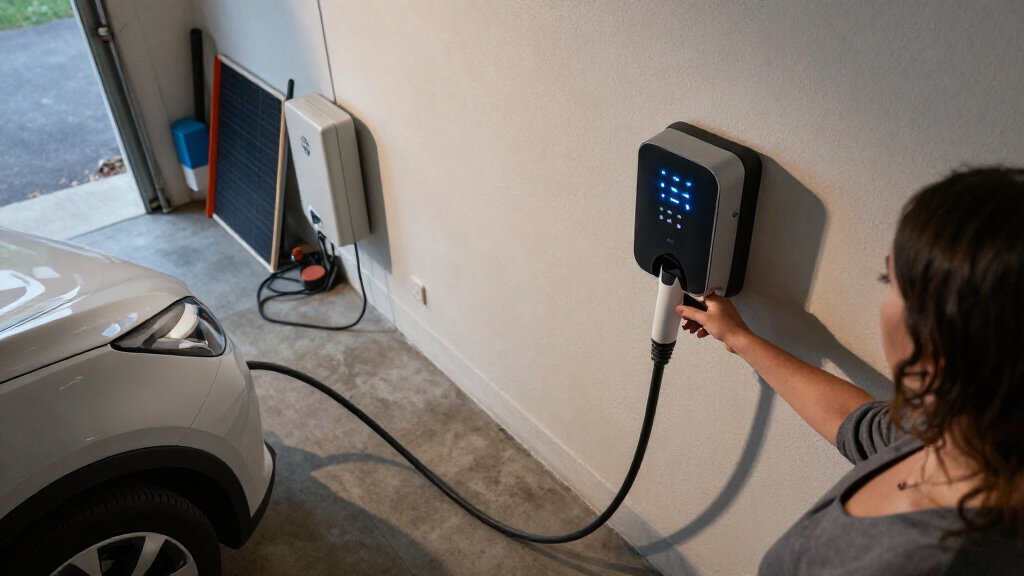

The best time-of-use EV chargers let you schedule charging around your utility’s cheaper hours, but the right choice depends on how much control you need and how your home is wired. I’d start with the Emporia Level 2 48A for its Wi-Fi scheduling features, while the Emporia Pro stands out for buyers who want added energy-management capability and the ChargePoint HomeFlex for a familiar plug-in setup. Hardwired models can support higher output, but they call for more installation planning; plug-in units are easier to approach but may be limited by the outlet and circuit. Utility rate plans and vehicle scheduling can also affect whether a charger’s app is the best place to set charging times. Read on for how the six options compare and which tradeoffs matter most.

Get backup power and energy gear delivered free with Prime
- Fast, free delivery on millions of items
- Prime Video, Amazon Music and more included
- Member-only deals all year
Key Takeaways
- Emporia Level 2 48A is the strongest all-around fit for scheduled charging because it combines Wi-Fi control with a hardwired, higher-output design.
- Emporia Pro with PowerSmart is the more specialized pick: its extra energy-management features make sense for buyers coordinating EV charging with household power use.
- ChargePoint HomeFlex and Aimiler 32A use NEMA 14-50 plugs, offering a different installation path from the lineup’s hardwired 48A and 50A options.
- The two Autel 50A hardwired chargers suit buyers prioritizing high-output home charging, but buyers should compare their control features and compatibility with their utility plan before choosing between them.
- A charger’s maximum amperage does not guarantee lower off-peak charging costs: the utility rate schedule, circuit capacity, vehicle charge limits, and scheduling settings all shape the result.


| time-of-use EV charger | Charger level | Voltage | Cable length | Connector |
|---|---|---|---|---|
| ChargePoint HomeFlex Level 2 E | Level 2 | 240 V | 23 ft | J1772 |
| Emporia Level 2 EV Charger | Level 2 | 240 V | 25 ft | SAE J1772 |
| Aimiler Level 2 EV Charger | Level 2 | 240 V | 25 ft | — |
| Autel MaxiCharger AC Home 50A | Level 2 | 240 V AC | 25 ft | J1772 |
| Emporia Pro Level 2 EV Charger | Level 2 | 240 V AC | 25 ft | SAE J1772 |
| Autel 50A Level 2 Hardwired EV | — | — | — | — |
More Details on Our Top Picks
ChargePoint HomeFlex Level 2 EV Charger, J1772, NEMA 14-50 Plug
The ChargePoint HomeFlex suits drivers who want app-based charge controls without committing to a hardwired charger. Its NEMA 14-50 plug connects to a compatible 240 V outlet, while the app provides charging information, reminders, and controls that can help you coordinate charging with your utility’s off-peak hours. The 23-foot cold-resistant cable offers useful reach, though it is shorter than the 25-foot cables on the Emporia Level 2 and Aimiler.
Compared with the hardwired Emporia 48 A, HomeFlex is easier to relocate if your setup changes, but it requires a suitable outlet and a 40 A or 50 A circuit. Its listed maximum of up to 45 miles of range per hour depends on the vehicle. I’d choose it for a straightforward plug-in setup, not for buyers seeking built-in whole-home energy monitoring or an included Tesla adapter.
Pros:- App provides charging controls, reminders, and charging information for coordinating sessions with off-peak hours.
- NEMA 14-50 plug offers a plug-in alternative to hardwired models such as the Emporia 48 A.
- 23-foot cable is cold-resistant and supports indoor or outdoor installation.
- UL listed with a 3-year parts warranty.
Cons:- Requires a compatible 240 V NEMA 14-50 outlet and a 40 A or 50 A circuit.
- Tesla vehicles need a separate adapter.
- Electrician installation is specified, and the cable is shorter than the 25-foot alternatives listed here.
Best for: J1772 EV owners with a NEMA 14-50 outlet who want app controls and the flexibility of a plug-in charger.
Not ideal for: Drivers without a compatible 240 V outlet, or Tesla owners who do not want to obtain a separate adapter.
- Charger level:Level 2
- Voltage:240 V
- Connector:J1772
- Plug:NEMA 14-50
- Circuit requirement:40 A or 50 A
- Cable length:23 ft
- Installation:Indoor or outdoor; electrician installation
- Certification and warranty:UL listed; 3-year parts warranty
Our verdict“Choose HomeFlex if you want app-controlled, plug-in charging on a compatible circuit and can work with its 23-foot cable.”
Emporia Level 2 EV Charger, 48 Amp, 240V, WiFi, J1772 Connector, 25-Foot Cable, Hardwired
The Emporia Level 2 is a strong fit for drivers whose main time-of-use tool is Wi-Fi scheduling. Its app supports scheduled charging and real-time energy data, letting owners plan sessions around lower-rate periods rather than relying on a basic plug-in setup. The 25-foot cable also gives it more reach than the ChargePoint HomeFlex, while its 48 A rating supports up to 46 miles of range per hour under suitable conditions.
That performance comes with a hardwired installation, so it is less easy to move than the HomeFlex or Aimiler. The Aimiler offers adjustable amperage and a display, but this Emporia adds ENERGY STAR certification and a 3-year warranty. It is a J1772 charger, not a direct fit for Tesla or NACS ports. I’d pick it for a fixed home installation where app scheduling matters more than plug-in flexibility.
Pros:- Wi-Fi app supports scheduled charging and real-time energy data.
- 48 A output can provide up to 46 miles of range per hour under suitable conditions.
- 25-foot cable offers more reach than the ChargePoint HomeFlex cable.
- UL listed, ENERGY STAR certified, and backed by a 3-year warranty.
Cons:- Hardwired installation is recommended to be performed professionally.
- J1772 connector does not directly fit Tesla or NACS charge ports.
- A fixed hardwired setup is less portable than the plug-in ChargePoint HomeFlex or Aimiler.
Best for: J1772 EV owners planning a permanent hardwired installation who want Wi-Fi scheduling and charging data for off-peak use.
Not ideal for: Renters or households that may need to relocate the charger, and Tesla or NACS drivers without a compatible solution.
- Charger level:Level 2
- Voltage:240 V
- Maximum current:48 A
- Connector:SAE J1772
- Cable length:25 ft
- Installation:Hardwired with whip
- Connectivity:2.4 GHz Wi-Fi
- Certifications and warranty:UL listed; ENERGY STAR certified; 3 years
Our verdict“Choose this Emporia if you want app-scheduled off-peak charging in a permanent hardwired J1772 setup.”
Aimiler Level 2 EV Charger, 32A, 25 ft Cable, NEMA 14-50 Plug, J1772 Connector
The Aimiler makes time-of-use charging accessible with a screen, Wi-Fi app, and scheduling in a portable NEMA 14-50 charger. Adjustable current from 16 A to 32 A gives owners some flexibility when sharing a circuit or matching the charger to their electrical setup. Its 25-foot cable is longer than the ChargePoint HomeFlex cable, and the display offers a quick status check without opening an app.
Compared with the 48 A Emporia models, Aimiler has a lower maximum output of 7.68 kW, so it is better suited to overnight charging than buyers prioritizing faster replenishment. It also asks for more care in placement: the product description advises against direct sunlight and rain exposure. For a sheltered location and a compatible outlet, this is a practical scheduling-focused alternative; it is not the pick for exposed outdoor installation.
Pros:- Wi-Fi app supports scheduled charging and status monitoring.
- Adjustable 16–32 A current can suit different circuit capacities.
- 25-foot cable provides more reach than the ChargePoint HomeFlex.
- Screen displays charging information, with built-in leakage detection and protection.
Cons:- Maximum output is 7.68 kW, below the 48 A Emporia models’ stated charging capacity.
- Requires a 240 V NEMA 14-50 outlet and a suitable circuit.
- Description advises against direct sunlight or rain exposure.
Best for: Drivers with a sheltered NEMA 14-50 outlet who want adjustable amperage, a display, and app scheduling for overnight off-peak charging.
Not ideal for: Households needing a higher-output charger or planning to mount the unit in direct sun or where rain can reach it.
- Charger level:Level 2
- Voltage:240 V
- Adjustable current:16–32 A
- Maximum charging power:7.68 kW
- Plug and connector:NEMA 14-50; J1772
- Cable length:25 ft
- Safety feature:Built-in CCID-20 anti-leakage detection and protection
- Certifications:ETL; FCC
Our verdict“Choose Aimiler for adjustable, app-scheduled overnight charging when your plug-in location is sheltered and 32 A is sufficient.”
Autel MaxiCharger AC Home 50A Level 2 EV Charger (Hardwired, J1772, 25ft Cable)
The Autel MaxiCharger is the outdoor-focused choice in this group. Its NEMA Type 4 rating supports indoor or outdoor use, and the 25-foot cable is specified to remain flexible down to -40°C. For a charger mounted in a cold garage or exposed installation area, those details matter more than the Aimiler’s plug-in flexibility or the ChargePoint HomeFlex’s simpler outlet connection.
It also offers Wi-Fi, Bluetooth, and Ethernet, plus app scheduling and remote firmware updates for managing charging around off-peak rates. The tradeoff is a hardwired installation that calls for professional electrical work. Its stated 12 kW output and 50 A rating are substantial, though the listed charging estimate is up to 37 miles of range per hour and actual range depends on the vehicle. J1772 compatibility also means Tesla and NACS drivers need a compatible solution.
Pros:- NEMA Type 4 rating supports indoor or outdoor installation.
- 25-foot cable remains flexible in temperatures down to -40°C.
- Wi-Fi, Bluetooth, and Ethernet support app access and remote firmware updates.
- 50 A rating and 12 kW output provide a high-capacity hardwired option.
Cons:- Hardwired installation requires professional electrical work.
- J1772 connector is not a direct fit for Tesla or NACS vehicles.
- Listed range-per-hour estimate is up to 37 miles, lower than the stated estimates for some 48 A alternatives.
Best for: J1772 EV owners installing a hardwired charger outdoors or in a cold climate who want app scheduling and multiple connectivity options.
Not ideal for: Renters seeking a portable plug-in charger, or owners who need a connector that directly fits a Tesla or NACS port.
- Charger level:Level 2
- Voltage:240 V AC
- Amperage and power:50 A; 12 kW
- Connector:J1772
- Cable length:25 ft
- Connectivity:Wi-Fi, Bluetooth, and Ethernet
- Certification and warranty:CSA certified; 3 years
Our verdict“Choose the Autel if outdoor durability and cold-weather cable flexibility matter more to you than plug-in portability.”
Emporia Pro Level 2 EV Charger with PowerSmart, 48 A, J1772 Connector, 25 ft Cable
The Emporia Pro stands apart for buyers who want to schedule charging without ignoring the rest of the home’s electrical demand. Its PowerSmart load management adjusts charging based on available electrical capacity, while the included Vue 3 monitor and app provide whole-home energy insights, usage tracking, and scheduling. That combination makes it a more detailed energy-management option than the standard Emporia 48 A, which offers Wi-Fi scheduling and charging data but does not list the included Vue 3 monitor.
With plug-in or hardwired installation, the Pro is also more flexible to set up than that hardwired Emporia, though its 48 A output still requires a suitable electrical installation. The J1772 connector serves many North American EVs, but Tesla owners need an adapter. I’d choose it when coordinating off-peak charging with household loads is the priority, rather than when the simplest or most portable charger will do.
Pros:- PowerSmart adjusts charging rates based on available home electrical capacity.
- Included Vue 3 monitor provides real-time and historical whole-home energy insights.
- App supports scheduling, energy tracking, and solar management.
- Offers NEMA 14-50 plug-in or hardwired installation.
Cons:- Tesla vehicles require a separate adapter.
- Hardwired setup may require an electrician.
- Its energy-monitoring and load-management features may be more than needed for households seeking only scheduled charging.
Best for: EV households with limited panel capacity or solar plans that want scheduled charging alongside whole-home energy monitoring.
Not ideal for: Buyers who only need basic off-peak scheduling, or Tesla owners who do not want to use a separate adapter.
- Charger level:Level 2
- Voltage:240 V AC
- Current:48 A
- Connector:SAE J1772
- Cable length:25 ft
- Installation:NEMA 14-50 plug or hardwired
- Energy monitor:Emporia Vue 3 included
- Connectivity and certification:Wi-Fi and Bluetooth; UL certified
Our verdict“Choose the Emporia Pro if you want off-peak scheduling coordinated with household load data and flexible installation options.”
Autel 50A Level 2 Hardwired EV Charger with 25 ft J1772 Cable
The Autel Maxi US AC W12 is a strong fit for drivers who want to shift charging into off-peak hours while keeping control over charging speed. Its app supports scheduling, remote control, and session monitoring over Wi-Fi or Bluetooth, and adjustable current from 6A to 50A lets owners match charging to their vehicle or household electrical setup. Compared with the plug-in ChargePoint HomeFlex, this Autel offers a higher stated maximum output and a longer cable, but it requires permanent hardwired installation rather than using a compatible outlet. Its 25-foot J1772 cable and NEMA 4X enclosure add placement flexibility indoors or outdoors. The tradeoff is that its scheduling features depend on the app and connectivity, and vehicles with a different inlet may need an adapter.
Pros:- App scheduling can move charging sessions to preferred off-peak hours.
- Adjustable 6A–50A current accommodates different charging needs and electrical setups.
- 25-foot cable offers more reach than a shorter lead may provide.
- NEMA 4X enclosure is designed for indoor or outdoor installation.
Cons:- Hardwired installation requires a permanent electrical connection.
- J1772 connector may require an adapter for vehicles with other inlet types.
- App-based scheduling and monitoring rely on Wi-Fi or Bluetooth connectivity.
Best for: EV owners with a hardwired 240V setup who want app-based off-peak schedules, adjustable charging current, and extra cable reach.
Not ideal for: Renters or homeowners who want to use an existing NEMA 14-50 outlet, or drivers whose vehicles need a connector other than J1772 and do not want to use an adapter.
- Charging level:Level 2
- Input voltage:240V
- Maximum current:50A
- Adjustable current:6A–50A
- Maximum power:12kW
- Connector and cable:J1772, 25 ft
- Installation:Hardwired
- Connectivity:Wi-Fi and Bluetooth
- Enclosure and warranty:NEMA 4X; 3 years
Our verdict“Choose the Autel if you want app-controlled off-peak scheduling, adjustable output, and a long cable in a hardwired home installation.”

How We Picked
I ranked these chargers around their usefulness for time-of-use charging, not simply their maximum amperage. The comparison weighs whether a model offers a practical way to schedule charging, its installation format, stated output, cable reach, and how well its features fit common home setups. I also considered whether extra energy-management capabilities add meaningful control or complexity for a buyer who mainly wants to charge during cheaper hours.
The Emporia Level 2 48A leads for its combination of Wi-Fi features and hardwired output; the Emporia Pro follows for buyers who can use its added PowerSmart capability. The ChargePoint HomeFlex and Aimiler 32A offer plug-in alternatives, with the Aimiler’s lower stated amperage placing it better for simpler needs than maximum charging speed. The Autel 50A models round out the list for hardwired, higher-output setups, where installation requirements and the buyer’s preferred controls matter more than a small difference in headline amperage. Product fit can change with local electrical rules, vehicle limits, and utility plans, so I treat those as part of the buying decision rather than assuming one charger suits every home.
| time-of-use EV charger | Connector | Installation |
|---|---|---|
| ChargePoint HomeFlex Level 2 E | J1772 | Indoor or outdoor; electrician installation |
| Emporia Level 2 EV Charger | SAE J1772 | Hardwired with whip |
| Aimiler Level 2 EV Charger | — | — |
| Autel MaxiCharger AC Home 50A | J1772 | — |
| Emporia Pro Level 2 EV Charger | SAE J1772 | NEMA 14-50 plug or hardwired |
| Autel 50A Level 2 Hardwired EV | — | Hardwired |
Factors to Consider When Choosing Best Time-of-use EV Chargers
Time-of-use savings depend on more than the charger: your utility’s rate windows, your car’s controls, and your home circuit all affect the best setup. I’d sort out these practical details before choosing between a plug-in unit and a hardwired model.
Decide Where Scheduling Should Happen
Charging schedules can be set in the charger app, the vehicle, or sometimes through a utility program, and those controls do not always work well together. Pick one primary scheduler to avoid conflicting start times or a car that is ready later than expected. Check whether your utility changes its off-peak window by season or day, since a fixed schedule can miss savings when rate periods shift. If you rely on an app, confirm that its scheduling functions are available in your region and fit your home Wi-Fi coverage. Buyers who prefer a simple routine may find vehicle scheduling sufficient, while households managing several energy loads may value charger-side controls. The practical win is a schedule you can set once and trust, not the longest feature list.
Match the Charger to Your Circuit and Installation
Do not choose a charger’s amperage before checking what your electrical panel and circuit can support. A hardwired 48A or 50A charger generally calls for a suitable dedicated circuit and qualified installation, while a plug-in model depends on an appropriate NEMA 14-50 outlet and circuit. A plug does not automatically make installation easy: an existing outlet may be unsuitable, incorrectly wired, or positioned inconveniently. Ask an electrician to verify capacity, wiring, and local requirements before ordering. If your circuit is limited, a lower-output charger may still refill the car overnight, making extra amperage unnecessary. Buying for a larger rating than your home or vehicle can use may add installation work without improving your daily routine.
Check the Utility Rate Plan Before Chasing Off-Peak Hours
First confirm that your electricity plan has a time-of-use rate and identify the actual low-cost periods. Some households have flat rates, while others face demand charges or peak periods that make the timing of other appliances relevant too. Compare the utility’s terms with the charger’s scheduling options rather than assuming a smart charger automatically finds the cheapest hours. If enrollment in a utility-managed charging program is required for a special rate, check compatibility and any participation rules. Keep a record of your usual departure time and charging needs so an off-peak schedule does not leave too little charge after an unexpectedly long drive. The best schedule balances lower-rate hours with having the range you need when you leave.
Treat Amperage as One Part of Charging Speed
Higher amperage can shorten charging time when the home circuit and vehicle both support it, but it does not make every charging session cheaper. The car’s onboard charging limit may cap the power it accepts, and a long overnight window can make a 32A model adequate for many drivers. Estimate your usual daily energy use and the hours your car sits at home before paying for more output. A higher-output charger can be useful for short parking windows, multiple drivers, or future vehicle changes, but it may require a more involved electrical installation. Compare the actual charging need with the available off-peak window, not just the charger’s maximum specification. That approach avoids overspending on speed that your routine rarely uses.
Measure Cable Reach and Mounting Location
A 25-foot cable gives flexibility, but the best parking position still depends on where the charging port sits on your vehicle and where the charger can be mounted. Measure the route from the proposed mounting point to the port with the car parked in its usual spot, allowing room for the cable to reach without stretching. Check whether the cable can be stored neatly and kept clear of walkways or vehicle tires. Outdoor placement also calls for attention to the charger’s installation requirements and exposure to weather; confirm the manufacturer’s instructions rather than relying on a general assumption. A convenient reach matters every day, while a badly placed unit can turn scheduled charging into a repeated chore. Consider future parking changes before fixing the mounting location.
Pay for Energy Management Only If You Will Use It
More advanced energy controls can help households coordinate EV charging with other electrical loads, but they are not necessary for every time-of-use buyer. Before choosing a feature-rich model, identify whether you want basic start-and-stop scheduling or broader management of home energy. Check what equipment, setup, and compatible systems those added controls require, since a feature may depend on hardware beyond the charger itself. If your only goal is to begin charging during a known low-rate window, a simpler schedule may be easier to maintain. Buyers with solar, constrained electrical capacity, or several high-demand appliances may have more reason to investigate advanced controls. Paying for capability makes sense when it solves a real household problem, not just because it appears on a specification list.
Frequently Asked Questions
Can I save on time-of-use rates with a charger that does not have Wi-Fi?
Possibly: many vehicles offer their own charging schedules, so the car can delay charging until your utility’s lower-rate window. Check whether your vehicle can start and stop reliably at the required times and whether it keeps that schedule when unplugged or after software updates. A Wi-Fi charger can offer another control point, but it is not automatically needed for scheduled charging. Avoid setting schedules in both the car and charger unless you understand how they interact. If your utility requires managed charging through a particular app or program, verify that requirement before choosing a basic setup.
Should I choose a 32A plug-in charger or a 48A or 50A hardwired charger?
Start with your daily driving needs, the vehicle’s onboard charging limit, and the time available for charging at home. A 32A charger can be enough when the car sits overnight and you do not need a rapid refill between trips. A 48A or 50A hardwired model can help when charging windows are shorter or you want more capacity for future use, but it may call for a larger circuit and more installation work. Ask an electrician to check your panel and wiring before settling on a rating. The higher number is useful only if the car and home installation can take advantage of it.
Can I use both my EV’s schedule and the charger’s schedule?
You can, but overlapping schedules may prevent charging when you expect it or delay it past the cheapest period. Choose one device as the primary schedule control, then use the other only if its settings clearly complement the first. Test the arrangement on a night when you can check that charging starts and finishes as planned. Revisit the settings if the utility changes its rate windows or you adjust your departure routine. If schedules are confusing, clearing one and using a single control point is usually the simpler fix.
Is a NEMA 14-50 plug-in charger always easier to install than a hardwired model?
Not always. A plug-in charger avoids directly wiring the unit, but it still needs a correctly installed, suitably rated outlet on a dedicated circuit in a practical location. If that outlet does not already exist, installing one can require substantial electrical work. A hardwired charger can be a cleaner fit for a planned installation or a circuit that does not suit a plug, though it also calls for professional electrical work. Have an electrician review the site and local rules before treating either format as the easier option. The existing condition of your panel and outlet matters more than the connector alone.
What should I check before relying on off-peak charging savings?
Confirm that your utility offers a time-of-use plan and check the exact low-rate hours, seasonal changes, and any enrollment conditions. Then make sure your charger or vehicle can follow those hours and that your usual parking routine leaves enough time to charge. Check whether your plan has demand charges or other terms that could affect the value of shifting charging. Compare the car’s charging limit and your circuit capacity so the vehicle can receive the energy it needs during the available window. If your rates are flat, scheduled charging may still help manage household demand, but it will not shift energy to a cheaper rate by itself.
Conclusion
For most buyers seeking a smart, hardwired setup, I’d choose the Emporia Level 2 48A as the best overall fit. The Aimiler 32A is the best value-style choice for drivers whose overnight charging needs are modest and who can use a NEMA 14-50 outlet. For buyers seeking more advanced energy management, the Emporia Pro with PowerSmart is the premium pick, provided its added capabilities match their home setup. The ChargePoint HomeFlex is the better starting point for someone who prefers a plug-in format and a familiar charging option, while the Autel 50A hardwired models suit buyers who prioritize higher-output charging and are ready for a hardwired installation. Before choosing, confirm your utility’s rate schedule, vehicle charging limit, and electrical capacity; those details decide whether the charger’s headline features will pay off in your routine.