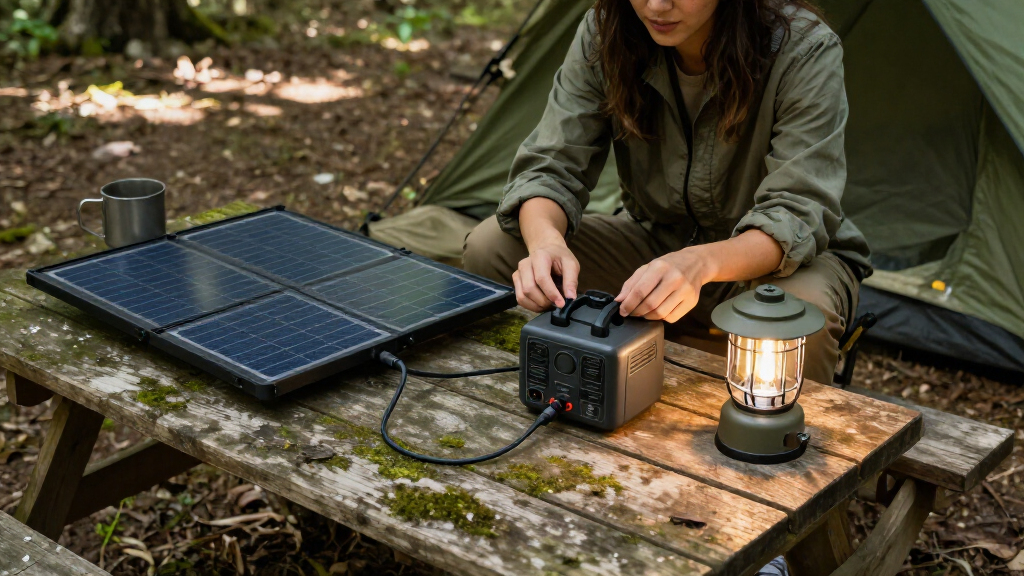
For most campers, I’d start with the Jackery Solar Generator 300 with 40W panel: its 292Wh capacity and included panel make a practical balance for small devices and short trips. The Jackery Solar Generator 1000 v2 is the standout for longer stays and larger loads, while the MARBERO 155Wh kit suits campers who value a lighter, simpler setup. The main tradeoff is between capacity and portability: more stored energy can run more gear, but it usually means carrying a larger unit and planning around slower solar charging. Panel wattage, output limits, and whether a panel is included also change how useful a generator is away from an outlet. Read on for the full breakdown of all 15 options and how to match one to your camping style.

Get backup power and energy gear delivered free with Prime
- Fast, free delivery on millions of items
- Prime Video, Amazon Music and more included
- Member-only deals all year
Complete the kit


Key Takeaways
The Jackery 300 kit is the balanced pick: 292Wh and an included 40W panel give it a stronger all-around camping case than the smaller MARBERO kits, though the panel is modest for replenishing energy quickly.
The Jackery 1000 v2 separates itself by capacity and AC output: its 1070Wh battery and 1500W AC rating suit larger loads better than the many 300W-class choices, at the cost of a bulkier camp setup.
Included panels are not interchangeable with fast recharging: several kits bundle 30W or 40W panels, while listed 60W-panel kits offer more solar input on paper; actual recovery still depends on sunlight and compatibility.
Small-capacity options serve a narrow but useful role: the MARBERO 88Wh, 111Wh, and 155Wh models make more sense for phones and small electronics than for multi-day power needs.
Product labels can obscure meaningful differences: compare stated watt-hours, continuous AC output, surge rating, and included accessories rather than relying on a “solar generator” name or panel bundle alone.


| portable solar generators for camping | Battery capacity | Weight | Dimensions |
|---|---|---|---|
| Jackery Solar Generator 300 wi | 292Wh | 12.9 lb | 15.43 × 9.92 × 11.89 in |
| Portable Power Station 300W | 280Wh | About 5 lb | — |
| Portable Power Station 300W MA | 237Wh | 4.6 lb | 8.15 × 3.9 × 5.83 in |
| MARBERO 155Wh Solar Generator | 155Wh | 3.7 lb | 8.14 × 3.77 × 7.08 in |
| Portable Solar Generator | 220Wh | — | 6.7 × 4.1 × 8.5 in |
| Portable Power Station with 40 | Not specified | 3.3 lb | 7.6 × 3.7 × 6.1 in |
| Portable Solar Generator 300W | — | — | — |
| Jackery Solar Generator 1000 v | 1070Wh | 23.8 lb | 12.87 × 8.82 × 9.72 in |
| Jackery Explorer 300 Portable | — | 7.5 lb | 9.1 × 5.2 × 7.8 in |
| LIBRIDS Portable Power Station | — | — | 8.3 × 6.9 × 8.2 in |
| MARBERO 111Wh Solar Generator | 111Wh (30,000mAh) | — | — |
| Anker SOLIX C1000 Gen 2 Portab | 1,024Wh | 11.3 kg | 15.1 x 8.2 x 9.6 in |
| Solar Powered Generator 100W w | 146Wh (39,600mAh) | 3.3 lb | 7.5 x 3.7 x 6.1 in |
| Portable Solar Generator 300W | 296Wh | 6.5 lb | — |
| MARBERO Portable Power Station | 88Wh (24,000mAh) | 1.04 kg | 6.5 x 4.6 x 3.1 in |
More Details on Our Top Picks
Jackery Solar Generator 300 with 40W Solar Panel, 292Wh, 300W AC
I’d put this Jackery ahead of the other 300W choices when a camping trip calls for a ready-to-use solar setup: its 292Wh battery is paired with an included 40W panel, so solar charging does not depend on a separate purchase. At 12.9 pounds, though, it is far heavier than the 5-pound Portable Power Station 300W and the 4.6-pound MARBERO 237Wh. The trade is more capacity and LiFePO4 cells rated for over 4,000 cycles for a noticeably less packable unit. Its 300W output suits phones, lights, and other modest camping electronics, not high-draw appliances. I’d choose it for a campsite where the extra battery reserve matters more than carrying weight; backpackers should favor a smaller station.
Pros:- Includes a 40W solar panel, so the kit is ready for solar charging without sourcing a panel separately.
- 292Wh capacity offers more stored energy than the MARBERO 237Wh and 220Wh options in this group.
- LiFePO4 battery chemistry is specified for over 4,000 charge cycles.
- Multiple charging options include AC, USB-C, USB-A, and a car port.
Cons:- At 12.9 pounds, it is substantially heavier than the 5-pound and 4.6-pound 300W alternatives.
- The 300W output rules out many high-wattage camping appliances.
- The included 40W panel is a modest solar input for replenishing the battery.
Best for: Car campers who want a bundled solar panel, durable battery chemistry, and enough capacity for several small devices.
Not ideal for: Backpackers and campers prioritizing the lightest possible load, or anyone needing to run appliances above 300W.
- Battery capacity:292Wh
- Starting wattage:600W
- Included solar panel:40W
- Battery chemistry:LiFePO4; over 4,000 charge cycles stated
- Weight:12.9 lb
- Outlets:3 total power outlets
- Dimensions:15.43 × 9.92 × 11.89 in
Our verdict“Choose this Jackery for car camping when a bundled panel and larger battery reserve matter more than low carry weight.”
Portable Power Station 300W, 110V Solar Generator 280Wh (Without Solar Panel)
For campers who want a 300W station without carrying a bulky unit, this model’s 5-pound weight is its clearest advantage over the 12.9-pound Jackery Solar Generator 300. Its 280Wh capacity is also close to the Jackery’s 292Wh, though this listing does not include a solar panel. That omission matters off-grid: solar charging requires an additional panel, while the Jackery arrives with a 40W one. The stated seven outlets give you room to charge several small devices, and built-in protection and cooling are useful safeguards during a trip. Still, 300W limits it to modest loads, and the listed nine-hour runtime should not be read as a promise for every device. I’d pick it when low carry weight matters more than having a complete solar kit.
Pros:- At about 5 pounds, it is much easier to carry than the Jackery Solar Generator 300.
- 280Wh capacity is close to the Jackery’s 292Wh despite the lower listed weight.
- Seven listed outlets support charging several small devices.
- Built-in protection features and a cooling system are specified.
Cons:- Solar panel is not included, unlike the Jackery Solar Generator 300 and the MARBERO 155Wh kit.
- 300W output limits use to lower-power devices.
- The product data advises regular recharging during storage.
Best for: Car campers and day-trip users who want a light station for phones, lights, and small electronics and already own or plan to source a solar panel.
Not ideal for: Campers who need a ready-to-use solar bundle, higher-wattage appliance support, or long-term storage without regular recharging.
- Battery capacity:280Wh
- Voltage:110V
- Weight:About 5 lb
- Outlets:7
- Solar panel:Not included
- Listed runtime:9 hours
- Power sources:Battery, AC/DC, solar with a separately supplied panel
Our verdict“Pick this lightweight station if you can supply your own solar panel and do not need more than 300W of output.”
Portable Power Station 300W MARBERO 237Wh Camping Solar Generator Backup Lithium Battery with Pure Sine Wave 110V AC Outlet, USB C, USB A, DC for Outdoors Camping, Emergency, Home
The MARBERO 237Wh is the lineup’s compact-lightweight choice: at 4.6 pounds and 8.15 inches long, it is easier to fit into a crowded camping setup than the heavier Jackery Solar Generator 300. Its 300W output and multiple ports cover common small-device charging, while built-in LED lanterns add campsite light without needing a separate lamp. The compromise is battery reserve: 237Wh is below both the Jackery’s 292Wh and the 280Wh station from Portable Power Station 300W, so extended use or multiple devices will call for more careful power management. Solar charging is supported, but no panel is included; the MARBERO 155Wh kit does include one, though it offers less capacity and a lower 100W output. This MARBERO fits campers who value portability and integrated lighting over a bundled panel.
Pros:- At 4.6 pounds, it is lighter than the Jackery Solar Generator 300 and the 5-pound 280Wh station.
- Compact listed dimensions make it easier to stow with camping gear.
- Built-in LED lanterns provide campsite lighting without a separate lamp.
- Supports wall, car, and solar charging.
Cons:- 237Wh capacity is lower than the 280Wh and 292Wh alternatives in this group.
- Solar panel is not included.
- 300W maximum output is unsuitable for many high-power appliances.
Best for: Campers packing light who want a compact station with built-in lanterns for phones, lights, and other low-power electronics.
Not ideal for: Extended-trip campers needing a larger energy reserve, or buyers who want a solar panel included in the box.
- Battery capacity:237Wh
- Output power:300W
- Weight:4.6 lb
- Dimensions:8.15 × 3.9 × 5.83 in
- Outlets:8
- Charging methods:Wall, car, and solar
- Solar panel:Not included
Our verdict“Choose this MARBERO for compact car-camping power and built-in lighting, not for long runtimes or a complete solar kit.”
MARBERO 155Wh Solar Generator with 30W Solar Panel Kit
This MARBERO kit makes the most sense for campers who want a simple solar entry point rather than a high-capacity power source. The 155Wh station, 30W panel, and power converter come together as a bundle, unlike the MARBERO 237Wh and Portable Power Station 300W, which require a separately sourced panel. At 3.7 pounds, it is the lightest option in this batch, and its 100W output is suited to phones, small lights, and similarly modest loads. That low output and capacity set a clear ceiling: it cannot match the 300W models for device flexibility or the Jackery’s 292Wh reserve. The stated solar charging time of 6–7 hours also calls for patience. I’d choose it for short trips where a bundled panel and low carry weight matter more than running several devices for long.
Pros:- Includes a 30W solar panel and power converter rather than requiring a separate panel purchase.
- At 3.7 pounds, it is lighter than every other product in this batch.
- Built-in LED flashlight offers an extra source of emergency or campsite lighting.
- Multiple output ports support basic device charging.
Cons:- 155Wh capacity is far below the 237Wh, 280Wh, and 292Wh stations in this group.
- 100W output limits the range of devices it can run compared with the 300W models.
- Listed solar charging time of 6–7 hours may not suit campers needing a quick refill.
Best for: New solar-generator buyers on short camping trips who want a light, bundled setup for phones and small lighting.
Not ideal for: Campers running several devices over multiple days, or anyone whose equipment needs more than 100W.
- Battery capacity:155Wh
- Output wattage:100W
- Maximum engine power:150W
- Included solar panel:30W
- Weight:3.7 lb
- Voltage:110V AC
- Outlets:2 total power outlets
- Dimensions:8.14 × 3.77 × 7.08 in
- Solar charging time:6–7 hours
Our verdict“Buy this kit for low-weight, basic solar charging on short trips, but choose a higher-capacity station for longer stays.”
Portable Solar Generator, 300W Power Station with 40W Solar Panel
This 300W station pairs a 40W solar panel with a compact body and built-in LED floodlight, giving it a useful campsite role beyond charging electronics. Its listed dimensions are 6.7 × 4.1 × 8.5 inches, and the included panel gives it an advantage over the MARBERO 237Wh and the 280Wh Portable Power Station 300W, which do not come with solar panels. The catch is the 220Wh capacity: it is lower than both, so the panel bundle does not mean longer runtime. The product data lists about two hours at full load, making sustained use of the full 300W a poor fit. I’d favor it for evening lighting and intermittent charging, while the Jackery Solar Generator 300 is the stronger choice when extra battery capacity and stated LiFePO4 cycle life matter more.
Pros:- Includes a 40W solar panel, unlike the MARBERO 237Wh and 280Wh 300W station.
- Built-in LED floodlight can serve as campsite illumination.
- Seven listed outlets allow several small devices to connect.
- Digital display and overcharge protection are specified.
Cons:- 220Wh capacity is below the Jackery Solar Generator 300, MARBERO 237Wh, and 280Wh station.
- Listed runtime is about two hours, with actual runtime depending on the connected load.
- 300W output limits use with high-power appliances.
Best for: Campers who want an included solar panel and floodlight for campsite illumination and intermittent charging of small electronics.
Not ideal for: Extended-trip users who need a larger battery reserve or anyone expecting to run a 300W load continuously for long periods.
- Battery capacity:220Wh
- Starting wattage:600W
- Included solar panel:40W
- Outlets:7
- Voltage:110V
- Listed runtime:About 2 hours
- Dimensions:6.7 × 4.1 × 8.5 in
- Additional features:Digital display, automatic shutdown, overcharge protection
Our verdict“Choose this model for an included panel and campsite floodlight, but not for sustained high-load or multi-day power needs.”
Portable Power Station with 40W Solar Panel, 100W Solar Powered Generator
At 3.3 pounds, this kit is the easiest of these five to carry from the car to a campsite, and the included 40W foldable panel means solar charging gear is part of the package. Its 100W output suits phones, lights, and other small electronics, but leaves little room for higher-draw camping equipment. Compared with the Portable Solar Generator 300W with 60W Solar Panel, it gives up output and panel wattage in exchange for a much smaller, lighter setup. The battery capacity is not specified, so I would not choose it when a predictable runtime matters. The panel’s junction box also needs to stay dry, and solar charging can slow in poor light. It makes the most sense for minimalist trips where portability matters more than powering several devices for long stretches.
Pros:- Very light at 3.3 pounds for easy campsite transport
- Includes a 40W foldable monocrystalline solar panel
- AC, USB, and DC outputs cover common small-device charging needs
- Built-in battery management protection
Cons:- 100W output rules out higher-power camping appliances
- Battery capacity is not specified, making runtime hard to estimate
- Solar panel junction box is not waterproof and performance can drop in low light
Best for: Solo campers carrying only phones, headlamps, and other small devices who want a very light station with a panel included
Not ideal for: Campers running appliances or planning to power multiple devices for long periods; its 100W output and unspecified battery capacity limit those uses
- Output wattage:100W
- Battery capacity:Not specified
- Included solar panel:40W foldable monocrystalline
- Weight:3.3 lb
- Dimensions:7.6 × 3.7 × 6.1 in
- Power sources:AC, DC, USB, and solar
- Voltage:120V
Our verdict“Choose this kit for lightweight trips centered on small electronics, not for powering appliances or extended high-demand use.”
Portable Solar Generator 300W with 60W Solar Panel
This kit steps up from the 100W Portable Power Station with 40W Solar Panel by pairing 300W output with a larger 60W foldable panel. That gives campers more flexibility for charging several small devices and running compatible gear, while keeping the panel included rather than requiring a separate purchase. It is a more capable package than the 100W option, but its battery capacity and weight are not provided, so I cannot gauge how long it will run equipment or how comfortable it will be to carry. The 300W ceiling still excludes higher-demand appliances, and the junction box is not waterproof. Compared with the Jackery Solar Generator 1000 v2, this is a smaller-output camping choice rather than a power source for substantial loads. Its appeal is the ready-to-charge kit, not long runtimes.
Pros:- 300W output offers more device flexibility than the 100W kit
- Includes a 60W foldable solar panel
- Can recharge from AC, solar, or car power
- Includes overload and short-circuit protection
Cons:- Battery capacity and product weight are not specified
- Devices drawing more than 300W exceed its stated output limit
- Solar panel junction box is not waterproof and output can decline after prolonged inactivity
Best for: Campers who want an included solar panel and enough output for several small devices without moving up to a large power station
Not ideal for: Campers who need documented battery runtime, waterproof solar hardware, or power for devices above 300W
- Output wattage:300W
- Included solar panel:60W foldable
- Power sources:Battery, solar, AC, and car power
- Voltage:110V
- Recommended uses:Camping, home, RV, and outdoor adventures
- Protection:Overload and short-circuit protection
Our verdict“Pick this for a bundled panel and moderate camping loads, but skip it if you need a known runtime or higher-wattage appliance support.”
Jackery Solar Generator 1000 v2 with 200W Solar Panel, 1070Wh, 1500W AC
Among these five, the Jackery 1000 v2 has the clearest advantage for campsites with heavier power needs: its 1070Wh battery and 1500W AC output can support a wider range of gear than the 300W options from LIBRIDS or the Portable Solar Generator 300W with 60W Solar Panel. The included 200W panel also gives solar charging a more substantial role than the smaller panels bundled with those compact kits. That capacity comes with a tradeoff: at 23.8 pounds, it is better suited to car camping than a long carry into a site. The stated two-hour runtime applies to full-load operation, not every use case, so actual runtime depends on what is connected. Fast charging is available, though the one-hour emergency mode must be enabled; the solar panel may also ship separately.
Pros:- 1070Wh capacity supports longer use than the compact 300W stations
- 1500W AC output handles a broader range of compatible equipment
- 200W solar panel provides more charging capacity than the smaller bundled panels
- Fast charging and multiple AC, USB-C, and USB-A ports
Cons:- 23.8-pound weight is a burden for carrying far from a vehicle
- One-hour emergency charging requires enabling a special mode
- Solar panel and station may ship separately, delaying a complete setup
Best for: Car campers and road-trippers who need to run higher-wattage equipment or recharge several devices from a large battery
Not ideal for: Backpackers and campers prioritizing a lightweight kit, or buyers who require the solar panel to arrive alongside the station
- Battery capacity:1070Wh
- AC output:1500W
- Starting wattage:3000W
- Included solar panel:200W
- Weight:23.8 lb
- Dimensions:12.87 × 8.82 × 9.72 in
- Voltage and frequency:120V, 60Hz
- AC outlets:3
Our verdict“Choose the Jackery for car camping with demanding loads and a larger energy reserve; choose a lighter 300W kit for simpler trips.”
Jackery Explorer 300 Portable Power Station, 292Wh
The Explorer 300 is a strong fit for campers who want a 7.5-pound station with enough capacity for routine device charging, but it is not a complete solar kit: no panel is included. Its 292Wh capacity and 300W maximum output sit above the 100W compact option in this lineup, while remaining far below the Jackery 1000 v2 for demanding loads. I like the mix of AC, USB-C, USB-A, and car-port outputs on paper because it lets campers charge different devices without relying on one connection type. The listed LiFePO4 chemistry and 4,000-plus charge-cycle claim are also a long-life feature, though the supplied runtime figure is only up to five hours and will vary by load. Choose it when compactness matters and you already have compatible solar gear or can recharge from another source.
Pros:- 7.5-pound weight is practical for portable camping setups
- 292Wh capacity exceeds the 100W station’s unspecified battery capacity
- LiFePO4 battery is specified for over 4,000 charge cycles
- AC, USB-C, USB-A, and car-port outputs support varied devices
Cons:- Solar panel is not included
- 300W maximum output limits appliance choices
- Up-to-five-hour runtime varies with the connected load
Best for: Campers who want a lightweight station for phones, cameras, and small electronics and already own a compatible solar panel
Not ideal for: Buyers seeking an all-in-one solar kit, longer appliance runtimes, or output above 300W
- Capacity:292Wh
- Maximum power:300W
- Weight:7.5 lb
- Dimensions:9.1 × 5.2 × 7.8 in
- Battery chemistry:LiFePO4
- Outlets and ports:2 AC, 1 USB-C, 2 USB-A, 1 car port
- Charge time:4 hours
- Listed runtime:Up to 5 hours
Our verdict“Buy this compact station if you have a way to recharge it; choose a bundled-panel kit if you want solar equipment included.”
LIBRIDS Portable Power Station 640Wh, 1200W Surge, Solar Generator with 4 AC Outlets
LIBRIDS occupies a useful middle ground: its 640Wh LiFePO4 battery offers more stored energy than the Explorer 300’s 292Wh, while its compact listed dimensions are a smaller footprint than the Jackery 1000 v2. The four AC outlets can make a shared campsite setup easier when several people need to plug in, and the pure sine wave inverter is intended for stable power delivery to sensitive electronics. Its 1200W surge rating adds headroom for brief startup demands, but the product data does not give a continuous output rating, so I would verify compatibility before planning around larger appliances. Weight is also missing, which makes it hard to judge for carrying to a remote pitch. The stated indoor-use limitation is a particular concern for camping: this is best kept in a dry, sheltered setup, unlike a kit designed around exposed outdoor use.
Pros:- 640Wh capacity provides more stored energy than the Explorer 300
- LiFePO4 battery is rated for 4,000-plus cycles
- Four AC outlets support several plugged-in devices
- Pure sine wave inverter and stated 1.5-hour charge time
Cons:- Indoor-use-only guidance makes exposed or wet campsite use unsuitable
- Weight is not specified, limiting confidence about portability
- Continuous output rating is not provided; 1200W is listed as surge power
Best for: Car campers who need more capacity than a compact 300W station and can keep their equipment in a dry, protected area
Not ideal for: Backpackers or campers who need verified continuous output, known carry weight, or equipment suitable for wet outdoor conditions
- Capacity:640Wh
- Surge power:1200W
- Battery type:LiFePO4
- Battery cycles:4000+
- AC outlets:4
- Charge time:1.5 hours
- Dimensions:8.3 × 6.9 × 8.2 in
- Inverter:Pure sine wave
Our verdict“Choose LIBRIDS for a higher-capacity, multi-outlet setup in a dry car-camping shelter, not for backpacking or wet-site use.”
MARBERO 111Wh Solar Generator with 30W Solar Panel Kit
The 111Wh battery and included 30W foldable panel make this a straightforward starter kit for short camping trips: the panel is already part of the package, and the 3.5-pound power station is easy to pack. Its 120W peak output and 80W maximum AC output suit phones, cameras, and other modest loads, but not power-hungry appliances. Compared with the MARBERO 155Wh Solar Generator, this model gives up some stored energy, so it is a weaker fit when several devices need charging over multiple days. It does offer a useful range of connections, including USB-C and two AC outlets. The 30W panel keeps the kit light, though solar replenishment may be slow when sunlight is limited or the battery is depleted.
Pros:- Power station weighs 3.5 pounds, making it easy to carry between campsite and vehicle.
- Includes a 30W foldable solar panel, so solar charging is available without sourcing a separate panel.
- USB-C, four USB-A, two AC, and DC outputs support a mix of small devices.
- Smart charging protection is listed for the solar panel.
Cons:- 111Wh capacity is limited for multi-day use or several energy-hungry devices.
- 80W maximum AC output rules out many appliances.
- The 30W panel can take a long time to replenish the battery, especially in weak sun.
Best for: Solo campers or weekend hikers who want a lightweight power station with a solar panel included for phones, cameras, and small electronics.
Not ideal for: Campers running appliances or charging several devices across a long trip; the 111Wh capacity and 80W AC limit constrain those uses.
- Battery capacity:111Wh (30,000mAh)
- Battery type:Lithium-ion
- AC output:80W maximum; 120W peak
- Ports:2 AC, 4 USB-A, 1 USB-C, 1 DC
- Power station weight:3.5 lb
- Power station dimensions:6.5 x 3.1 x 4.6 in
- Included solar panel:30W; 1.8 lb
- Panel conversion rate:21.5–23.5%
Our verdict“Choose this kit for lightweight, short camping trips where an included solar panel matters more than extended runtime.”
Anker SOLIX C1000 Gen 2 Portable Power Station
The 1,024Wh LiFePO4 battery and 2,000W output put the Anker SOLIX C1000 Gen 2 in a different class from the small, panel-included kits here. It can support a broader range of camping equipment and offers far more stored energy than the MARBERO 111Wh Solar Generator, making it a better match for longer stays or a group with several devices. The tradeoff is carry weight: at 11.3 kg, it is better suited to car camping than trips where the power station must be carried any distance. Its stated 49-minute recharge and 1.8-hour solar recharge times are appealing, but solar performance depends on suitable conditions and compatible charging setup. The description does not specify an included panel, so check what is bundled before planning around solar charging.
Pros:- 1,024Wh LiFePO4 battery provides much more stored energy than the compact MARBERO kits.
- 2,000W output with a 3,000W peak supports a wider range of equipment.
- Nine outlets allow multiple devices to connect at once.
- Listed recharge times are fast: 49 minutes by the stated method and 1.8 hours for solar recharging.
Cons:- At 11.3 kg, it is substantially heavier than the 3.3–3.5 lb compact options.
- The product information does not confirm that a solar panel is included.
- Its size and capacity are more than many short, phone-focused camping trips require.
Best for: Car campers and small groups who need substantial stored power for several devices or higher-wattage gear and can manage an 11.3 kg unit.
Not ideal for: Backpackers and minimalist campers who prioritize low carry weight, or buyers who need a confirmed solar panel in the box.
- Battery capacity:1,024Wh
- Battery type:LiFePO4
- Output:2,000W; 3,000W peak
- Number of outlets:9
- Weight:11.3 kg
- Dimensions:15.1 x 8.2 x 9.6 in
- AC recharge time:49 minutes
- Solar recharge time:1.8 hours
Our verdict“Pick the C1000 Gen 2 for car camping that calls for high capacity and strong output, not for lightweight travel.”
Solar Powered Generator 100W with 40W Solar Panels – Portable Power Station
At 3.3 pounds, this 146Wh station is the lightest power unit in this group, while its included 40W solar panels give it more panel capacity than the MARBERO 111Wh kit’s 30W panel. That combination makes it a sensible fit for campers who want to keep phones and small electronics topped up without carrying a larger station. The 100W output ceiling, however, places it alongside other compact options rather than the higher-output Anker SOLIX C1000 Gen 2; it cannot serve as a substitute for a station intended for demanding appliances. Capacity is also modest for extended trips, and solar charging depends on available sunlight. Seven outlets and an SOS flashlight add practical campsite flexibility, but the product details do not specify the battery chemistry or a recharge time.
Pros:- Power station weighs 3.3 pounds, less than the other listed compact units.
- Includes 40W solar panels, offering more panel power than the MARBERO 111Wh kit.
- Seven outlets provide several connection options for small electronics.
- Built-in LED flashlight includes an SOS mode.
Cons:- 100W output limits which AC-powered devices it can run.
- 146Wh capacity may not cover extended use or a group’s charging needs.
- Solar charging speed varies with sunlight, and no recharge time is specified.
Best for: Weight-conscious car campers or short-trip travelers who want an included 40W solar panel for phones, cameras, and other low-power devices.
Not ideal for: Campers relying on high-wattage appliances or needing enough stored energy to power multiple devices for several days.
- Battery capacity:146Wh (39,600mAh)
- Output:100W
- Solar panel power:40W
- Outputs:7 outlets: 2 AC, USB, USB-C, and 12V DC
- Weight:3.3 lb
- Dimensions:7.5 x 3.7 x 6.1 in
- Frequency:60Hz
- Panel material:Monocrystalline silicon and tempered glass
Our verdict“Choose this lightweight kit for modest device charging and a stronger included panel, but skip it if your campsite gear needs substantial output.”
Portable Solar Generator 300W Power Station with 60W Foldable Solar Panel
With a 296Wh battery, 300W output, and listed 60W foldable panel, this kit bridges the gap between pocketable stations and the much larger Anker SOLIX C1000 Gen 2. It offers more than twice the stored energy of the 111Wh MARBERO, giving campers more room to charge phones, a laptop, and small electronics before seeking a recharge. At 6.5 pounds, it remains manageable for car camping, although it is not as easy to carry as the 3.3-pound 100W model. The 300W ceiling still excludes high-demand appliances, and the panel’s listed dimensions are useful to check against available packing space. The product title and details indicate a foldable panel, though the pros note it may not be included in the main package; confirm the bundle contents before buying.
Pros:- 296Wh capacity offers more stored energy than the 111Wh MARBERO and 146Wh 100W kit.
- 300W output can handle more modest AC loads than the 100W and 120W-peak compact stations.
- Listed ports include AC, USB-A, USB-C, and DC for varied campsite devices.
- Supports solar, wall, and 12V car charging.
Cons:- At 6.5 pounds, it weighs more than the smallest stations in this roundup.
- The product information conflicts on whether the solar panel is included; confirm package contents.
- A 300W output limit still rules out many high-power appliances.
Best for: Car campers who want a moderate capacity for multiple small devices and are willing to verify that the 60W panel is included in their package.
Not ideal for: Backpackers who need the lightest setup, or campers who plan to run appliances above 300W or need guaranteed solar-panel inclusion.
- Battery capacity:296Wh
- Output:300W
- Weight:6.5 lb
- Power station dimensions:9 x 5.5 x 7.5 in
- Solar panel:60W foldable; inclusion should be confirmed
- Solar panel dimensions:28.3 x 20.6 x 0.12 in
- Output ports:2 AC, 2 USB-A, 1 USB-C, 1 DC
- Charging methods:Solar, AC wall outlet, 12V car socket
Our verdict“This is a good middle-ground choice for car campers who want more runtime than compact stations provide and have confirmed the panel is bundled.”
MARBERO Portable Power Station 88Wh, 120W Surge, Solar Generator 24,000mAh
The MARBERO 88Wh is the smallest-capacity pick here, but its 1.04 kg weight and compact footprint make it easy to tuck into a car-camping setup as backup for phones, lights, or a camera. Unlike the MARBERO 111Wh kit, this product description does not list an included solar panel, so it is less ready for solar charging out of the box. Its 120W surge rating also does not make it a strong choice for appliances; the limited battery capacity is the bigger constraint for campers expecting repeated or extended use. Eight ports, a built-in flashlight with SOS mode, and a stated two-hour charge to 80% offer useful convenience. Compared with the 146Wh 100W generator, though, it stores less energy and is best treated as a compact electronics backup.
Pros:- At 1.04 kg, it is easy to carry and pack in a compact camping setup.
- Eight output ports provide a range of connection options.
- Built-in flashlight offers adjustable brightness and an SOS mode.
- Listed input charging time reaches 80% in two hours.
Cons:- 88Wh capacity is lower than every other product in this batch.
- No solar panel is listed as included, unlike the MARBERO 111Wh kit.
- The 120W surge rating and small battery limit its usefulness with appliances.
Best for: Campers who want a small, lightweight backup for phones, lights, and other modest electronics, especially on short trips.
Not ideal for: Anyone needing solar-ready equipment in the package, sustained power for appliances, or enough capacity for several days of device charging.
- Battery capacity:88Wh (24,000mAh)
- Surge power:120W
- Weight:1.04 kg
- Dimensions:6.5 x 4.6 x 3.1 in
- Output ports:8
- Input charging time:2 hours to 80%
- Voltage:230V
- Frequency:60Hz
Our verdict“Choose this MARBERO as a lightweight electronics backup for short trips, not as the main power source for a solar-dependent campsite.”
How We Picked
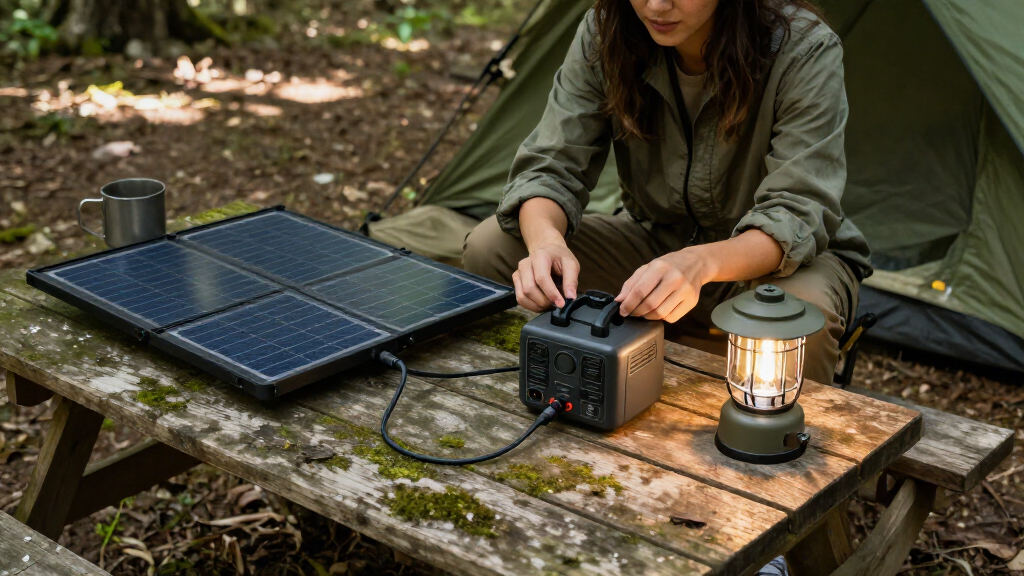
I ranked these generators for camping, not general home backup. The main criteria were usable battery capacity, AC output for likely camp appliances, solar-panel inclusion and stated wattage, and how well the size of the power system matches a weekend or longer trip. I also weighed practical details implied by the listings, such as multiple outlet types, portability cues, and whether a buyer must source a compatible panel separately.
The order favors useful capability without asking campers to carry far more battery than their needs warrant. The Jackery 300 kit leads as a balanced, ready-to-charge option; the Jackery 1000 v2 ranks higher for campers who need substantial capacity and output, but its size makes it less suitable for minimalist trips. Smaller MARBERO units rank as focused choices for light electronics, while models with sparse specifications or no included panel sit lower because buyers have less information or must budget for a separate solar setup. I did not treat a panel bundle as proof of fast recharging, and the listed specifications do not establish real-world charging time or runtime.
Factors to Consider When Choosing Portable Solar Generators For Camping
Before choosing, I’d work backward from the gear you plan to power and the way you reach camp. A generator that suits a car campsite may be an awkward burden on a walk-in site, and battery capacity alone does not tell you whether it can run an appliance. These factors help narrow the field beyond the individual product differences above.
Match Battery Capacity to Your Trip, Not a Guess
Start by listing devices and estimating how long you’ll use each one; phones, lights, and camera batteries call for much less stored energy than a cooler or cooking appliance. A watt-hour rating describes stored energy, while actual runtime varies with device draw, conversion losses, temperature, and how often you recharge. A common mistake is buying the largest battery available without accounting for its weight and how it will be transported. For a short weekend with small electronics, a compact unit may be easier to live with than a high-capacity station. For several days away from outlets, add a buffer for cloudy conditions and unplanned use. If your demand is uncertain, choosing a little reserve is usually more useful than relying on perfect solar weather.
Check Continuous Output and Surge Requirements
Capacity answers how much energy is stored; wattage answers whether the generator can run a particular device at all. Check the appliance’s running draw and any brief startup surge, then compare both with the station’s continuous and surge ratings. A fridge compressor or other motor may need a short burst above its normal draw, while a laptop charger is usually a steadier load. Do not add up only the average use of several devices if you expect to run them at the same time. For camping, USB and DC outputs can avoid conversion losses for compatible small electronics, while AC outlets offer flexibility for household-style plugs. When appliance requirements are unclear, choosing a higher output rating does not replace confirming compatibility.
Treat Solar Panels as a Recharging Plan
A bundled panel makes a kit easier to start with, but its rated wattage is not a promise of that much energy throughout the day. Sun angle, shade, clouds, panel temperature, and the generator’s input limits all affect charging. Campgrounds often place tents and vehicles under trees, so a panel may need to sit in a sunnier spot away from the campsite. Before buying a separate panel, verify connector type, supported voltage, and maximum solar input; a panel that physically connects may still be a poor match. Think about whether you can recharge from a vehicle or wall outlet before the trip, since solar may only top up the battery during a short stay. A small panel can extend use, but it may not restore a heavily depleted station between days.
Choose Portability for Your Actual Campsite
For car camping, weight and shape matter most when loading the vehicle and arranging gear at camp; for walk-in camping, every pound competes with food, shelter, and water. Larger capacity can reduce the need to ration power, but it also takes up more room and can be harder to carry over uneven ground. Consider the full kit rather than the station alone, including the panel, cables, and any storage case. A foldable panel may pack neatly, yet still need room to unfold in a clear patch of sun. Decide where the generator will sit while charging and whether you can keep it protected from rain and dirt. Neither a portable label nor a compact-looking product name tells you how comfortable it will be to transport, so check the listed dimensions and weight before choosing.
Prioritize the Outputs You Will Use
Campers often focus on the number of AC outlets, but the right ports depend on the devices they bring. USB-C may simplify charging newer phones and laptops, while USB-A and DC can suit older accessories or compatible camp gear. Multiple AC outlets are helpful when several plug-in devices run together, though they do not increase the station’s total available power. Check whether a product lists a pure sine wave inverter if you plan to use sensitive electronics, and confirm the output rating for each port type. A generous selection of ports can be less useful than one correctly rated outlet for your main device. Avoid buying on outlet count alone; map each device to a port and check simultaneous-use limits when the specifications provide them.
Pay More Only for Capability You Can Use
A premium, higher-capacity station makes sense when it replaces frequent recharging or supports gear that smaller units cannot run. It is poor value for a camper who only needs occasional phone and headlamp charging, especially if added bulk makes the unit less likely to come along. At the other end, the smallest battery can become frustrating if several people share it or a trip lasts multiple nights. Compare the complete system: station capacity, output, included panel, and any panel you would need to buy separately. Also check warranty terms, battery-care guidance, and the maker’s instructions for storage and charging, since upkeep affects long-term usefulness. Spend on verified capacity and compatible charging rather than a larger number on the box that does not match your planned loads.
Frequently Asked Questions
Can a 300W-class portable generator run a camping fridge?
It depends on both the fridge’s running draw and its startup surge, so the 300W label alone is not enough to answer. Check the refrigerator specifications and compare them with the generator’s continuous and surge ratings. Battery capacity then determines how long the fridge can run before recharging, and compressor cycling makes actual runtime variable. A 300W-class model with modest watt-hours may handle a compatible fridge briefly but still fall short for a multi-day trip. If refrigeration is a priority, choose based on the appliance’s exact requirements and plan for a larger energy reserve or regular recharging.
Is a solar panel included with every generator in this roundup?
No. Several listed products are bundles with panels, while options such as the 280Wh 300W station and the Jackery Explorer 300 are listed without one. That difference affects the complete camping setup: a station without a panel may be suitable if you can recharge before and after a trip, but solar use requires a compatible panel bought separately. Check the product listing for the exact bundle contents, since similar names can refer to different configurations. Also confirm the station’s solar input limits and connector requirements before purchasing a separate panel. A panel’s rated wattage alone does not predict daily energy recovery at camp.
How much battery capacity do I need for a weekend camping trip?
There is no reliable single capacity for every weekend because device use varies widely. Add up the energy needs of the devices you expect to charge, using their watt-hour figures when available or estimating from their power draw and hours of use. Leave room for conversion losses and unexpected needs, then decide whether you can recharge during the trip. Campers powering phones and lights may be comfortable with a smaller station, while shared use or appliances call for more capacity. If you cannot estimate your loads yet, tracking a typical day at home or on a prior trip can give you a more useful starting point than choosing by trip length alone.
Are the included 30W, 40W, or 60W panels enough for camping?
They can help replenish a station in favorable sunlight, but they may not replace all the energy you use each day. Shade, cloud cover, sun angle, panel placement, and the generator’s input limit all affect charging. A modest panel is more likely to keep up when your loads are light and you conserve power than when you run an appliance for hours. For a camping spot with tree cover, think about whether you can place the panel in direct sun away from your tent or vehicle. If you rely on solar for several nights, check estimated daily energy needs and compatible panel capacity rather than assuming the bundled panel will fully recharge the battery.
Should I choose the Jackery 1000 v2 or a smaller 300Wh-class station?
Choose around your loads and transport limits, not the model number. The Jackery 1000 v2’s listed 1070Wh capacity and 1500W AC output give it more room for larger devices and extended use than the 300Wh-class options. That extra capability is useful for car camping or trips where power demand is high, but it adds bulk compared with a smaller station. A 300Wh-class model is a more sensible match for charging personal electronics and running light camp gear when portability matters more than appliance support. If your device list fits within a smaller station’s output and energy limits, the larger unit may add weight without improving your trip.
Conclusion
For the broadest mix of weekend camping needs, I’d choose the Jackery Solar Generator 300 with 40W panel as best overall: it pairs useful midrange capacity with a panel in the box. The best value depends on what you already own; the Jackery Explorer 300 can suit buyers who need the station only and already have a compatible charging plan, while campers wanting a ready-made light-use bundle can look at the MARBERO 155Wh kit. For best premium capability, the Jackery 1000 v2 stands apart for its higher capacity and AC output, especially for car campers with larger loads. The best beginner pick is the Jackery 300 kit because its station-and-panel format makes the basic setup straightforward. For specific needs, choose a MARBERO 88Wh or 111Wh model for a compact, small-device role, or consider the LIBRIDS 640Wh station when higher listed capacity and several AC outlets matter; verify the detailed output and solar compatibility before committing. Match your device list, trip length, and carrying method to the specs, and the right choice becomes much clearer.
Fall Picks
fall essentials
As an affiliate, we earn on qualifying purchases.