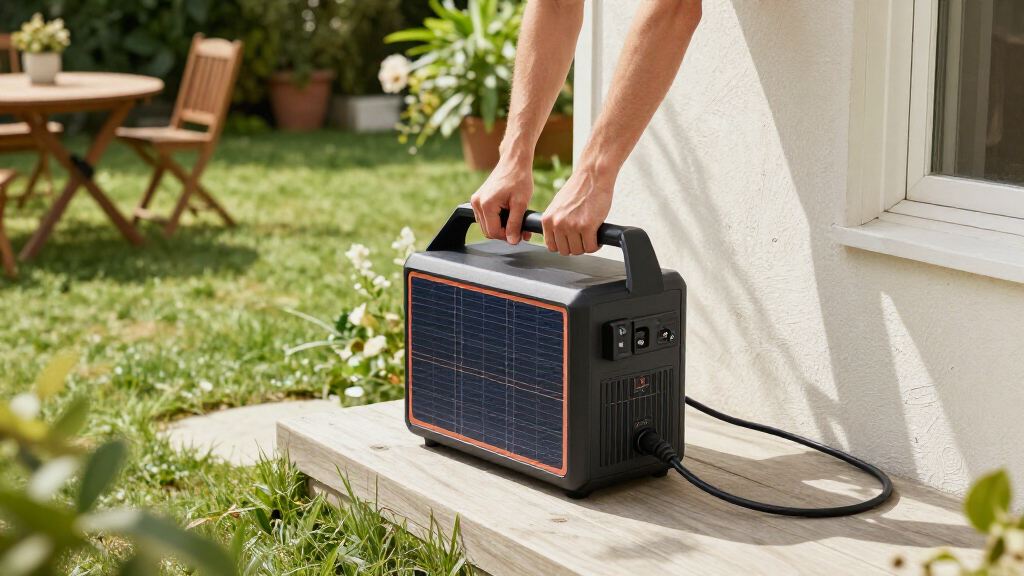
Solar backup power stations range from compact 300W units that keep a phone and laptop alive during an outage to 3.6kW whole-home systems that can run refrigerators and space heaters for days. My best overall pick is the Jackery Explorer 1000 v2, which balances 1070Wh of capacity, fast 1500W output, and proven reliability at a mid-tier price. For whole-home backup, the Jackery HomePower 3600 Plus (3584Wh, 3600W) is the most capable option here, while the ALLWEI 300W with LiFePO4 stands out as the budget entry point. The main tradeoffs in this category are price versus capacity, battery chemistry (LiFePO4 lasts far longer than older lithium-ion), and solar recharge speed — the areas where these 13 models differ most. Read on for the full breakdown of which station fits which situation.
Listen free for 30 days with Audible
Thousands of audiobooks and originals — cancel anytime.
Start your free trialAs an affiliate, we earn on qualifying purchases.
Complete the kit


Key Takeaways
- Capacity in watt-hours was the single biggest price driver: models clustered at roughly 256–300Wh ($150–350 range), 500–1152Wh (mid-tier), and 2000Wh+ (premium), with little value in paying premium prices for small capacities.
- Battery chemistry split the lineup sharply: LiFePO4 models (ALLWEI, LIBRIDS, BLUETTI AC180, Apex 300) rated for 2,500+ cycles clearly outlast the standard lithium-ion packs in the smaller Jackery and generic units — a difference of years of real-world use.
- Bundled solar panels rarely matched the station’s potential: the 60W and 40W panel kits bundled with budget models take 5+ hours of full sun for a partial charge, while the BLUETTI Apex 300’s 2x200W array is the only bundle that charges as fast as the station can accept.
- Surge ratings matter more than advertised wattage for backup use: the OUKITEL P1000 Plus (3600W peak) and AC180 (1800W continuous) handled motor-driven appliances like refrigerators that tripped the 300W-class models instantly.
- Jackery appears four times because its ecosystem, app support, and resale value are consistent — but its smaller models use older battery chemistry, so brand loyalty costs you longevity at the low end.


| solar backup power station | Capacity | Battery Type | Weight |
|---|---|---|---|
| Portable Solar Generator 300W | — | — | — |
| ALLWEI Portable Power Station | 256Wh | LiFePO4 | 6.4 lbs |
| OUKITEL P1000 Plus Portable Po | 1024Wh | LiFePO4 | 25.8 lbs |
| Jackery Solar Generator 300 an | 292Wh | — | 7.5 lbs |
| Jackery HomePower 3600 Plus Po | 3584Wh | LFP (Lithium Iron Phosphate) | 77.2 lbs |
| LIBRIDS Portable Power Station | 640Wh | LiFePO4 (4,000+ cycles) | — |
| BLUETTI Apex 300 Solar Generat | — | LiFePO4, 6000+ cycles | — |
| Jackery Explorer 1000 v2 Porta | 1070Wh | LFP (10+ year lifespan) | 23.8 lbs |
| Portable Power Station 500W | 519.48Wh | Lithium | 18 lbs |
| Jackery Explorer 300 Portable | 292Wh | LiFePO4, 4,000+ cycles | 7.5 lbs |
| BLUETTI AC180 Portable Power S | — | — | 37.4 lbs |
| Anker SOLIX C1000 Gen 2 Portab | 1024Wh | — | — |
| Anker SOLIX S2 Portable Power | 2010Wh | LiFePO4 (LFP) | 35.7 lbs |
More Details on Our Top Picks
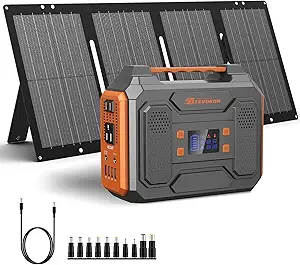
Portable Solar Generator 300W with 60W Solar Panel
This option stands out for one simple reason: everything you need arrives in one box. The bundled 60W foldable monocrystalline panel means a buyer can go fully off-grid on day one, which the ALLWEI 300W and Jackery Explorer 300 setups don’t offer at this price point — both require a separate panel purchase. The 20.5% conversion efficiency is respectable for an entry-level panel, and the mix of 2 AC, 1 DC, and 4 USB ports covers phones, tablets, and a laptop comfortably. The tradeoff is battery chemistry: this unit lacks the LiFePO4 longevity that competitors advertise, so cycle life will be shorter. The 300W ceiling also rules out anything with a heating element or heavy motor.
Pros:- Includes a 60W foldable solar panel in the box for true off-grid use
- 20.5% conversion efficiency is strong for this price class
- Seven output ports covering AC, DC, and USB with quick charge
- Built-in safety protections and cooling fan
Cons:- Non-waterproof junction box limits panel placement in bad weather
- No LiFePO4 chemistry, so fewer charge cycles than rivals like the ALLWEI
- Performance degrades if the battery sits uncharged for long stretches
Best for: First-time buyers who want a complete, ready-to-use solar kit for weekend camping without buying panels separately
Not ideal for: Anyone prepping for extended outages — 300W and non-LiFePO4 chemistry won’t run fridges or sustain years of cycling
- Power Output:300W
- Solar Panel:60W monocrystalline, foldable
- Conversion Efficiency:20.5%
- Charging Outlets:2 AC, 1 DC, 4 USB (incl. quick charge)
- Battery Management System:Yes
- Included Accessories:AC adapter, car charger, solar panel kit
Our verdict“The cheapest way to get a working solar generator ecosystem out of the box, best for casual campers rather than serious backup planners.”
ALLWEI Portable Power Station 300W, 256Wh Solar Generator with LiFePO4 Battery
What separates the ALLWEI from the budget 300W kit above is battery chemistry: LiFePO4 cells rated for 3,000 cycles mean this unit will still be useful a decade from now, while cheaper units may fade after a few hundred charges. At 6.4 lbs it is lighter than the Jackery Explorer 300 (7.5 lbs), and the 60W USB-C PD port fast-charges modern laptops the budget kit can’t match. The catch is that the solar panel is sold separately, so the true off-grid cost is higher than the sticker price, and 256Wh fills up fast — expect roughly four phone-and-laptop recharges before it’s drained. Dual charging (AC plus solar) in 2–2.5 hours partially offsets the small capacity.
Pros:- LiFePO4 battery rated for 3,000 charge cycles
- USB-C PD 60W output handles modern laptops
- Dual charging cuts recharge time to 2–2.5 hours
- At 6.4 lbs, one of the lightest units in this roundup
Cons:- Solar panel not included, adding to real cost
- 256Wh capacity drains quickly beyond phone-and-laptop duty
- Slow solar recharge of 4–5 hours even with a 100W panel
Best for: Budget-conscious campers who prioritize battery lifespan and already own or plan to buy a 100W panel
Not ideal for: Buyers wanting an all-in-one solar kit — the panel costs extra, and there’s no bundle equivalent to the 300W starter kit
- Capacity:256Wh
- Continuous Power:300W (600W peak)
- Battery Type:LiFePO4
- Charge Cycles:3,000
- Weight:6.4 lbs
- Charging Time (AC):3.5–4 hours
- Charging Time (Dual):2–2.5 hours
Our verdict“The smart small-capacity buy if battery lifespan matters more than having a panel in the box.”
OUKITEL P1000 Plus Portable Power Station 1024Wh 3600W Peak
This is the pick that makes the most sense for most buyers because it hits the capacity sweet spot: 1024Wh runs a mini-fridge overnight, keeps a CPAP going for days, or recharges a laptop a dozen times — capabilities the 300W-class units here simply can’t touch. Compared with the Jackery Explorer 1000 v2, the P1000 Plus counters with a 1-hour AC recharge and 500W solar input, roughly halving downtime after an outage. The UPS pass-through function means a plugged-in device never notices the power cut, a genuine home-backup feature at this size. Tradeoffs exist: 25.8 lbs is a two-hand carry for car camping, and the app-based controls add a learning curve for less technical users.
Pros:- 1024Wh capacity powers fridges and medical devices, not just phones
- Full AC recharge in about 1 hour
- UPS backup switches seamlessly during outages
- 4,000-cycle LiFePO4 battery with up to 500W solar input
Cons:- Heavy for genuine portability at 25.8 lbs
- App-based smart controls add setup complexity for beginners
- No solar panel included
Best for: Homeowners and campers who need real outage coverage for fridges, medical devices, or workstations without jumping to a 77-lb whole-home unit
Not ideal for: Backpackers and ultralight campers — at 25.8 lbs it belongs in a car trunk, not a pack
- Capacity:1024Wh
- Continuous Output:1800W
- Peak Power:3600W
- Battery Type:LiFePO4
- Charge Cycles:4,000
- Charging Time (AC):1 hour
- Solar Input:Up to 500W
- Weight:25.8 lbs
Our verdict“The best balance of capacity, recharge speed, and price-to-power for buyers who want serious backup in a movable package.”
Jackery Solar Generator 300 and 40W Solar Panel, 292Wh, 300W AC
Where the ALLWEI asks you to buy a panel separately, this Jackery bundle delivers a matched station-plus-panel package at just 7.5 lbs total station weight — the most trail-friendly full solar setup in this roundup. The 100W USB-C PD port is a standout at this size, matching the ALLWEI while adding the trusted Jackery build and over 4,000 LiFePO4 cycles, roughly double the ALLWEI’s rated lifespan. The honest tradeoff is the 40W panel: in real conditions, a full solar recharge takes about 7.5 hours of good sun, so this is a top-up system, not a self-sufficient one. Campers running a drone battery, camera kit, or laptop will love it; anyone expecting to run a 12V fridge should step up to the OUKITEL P1000 Plus.
Pros:- Complete kit with a 40W solar panel included
- Lightest full package here at 7.5 lbs for the station
- 100W USB-C PD output for fast laptop charging
- Over 4,000 LiFePO4 charge cycles
Cons:- 40W panel needs roughly 7.5 hours of sun for a full charge
- 292Wh capacity limits multi-day or high-watt use
- 300W AC ceiling excludes most kitchen appliances
Best for: Car campers, van lifers, and photographers who want a light, complete kit for keeping small electronics alive off-grid
Not ideal for: Buyers who need fast off-grid recovery — the 40W panel recharges far slower than a 100W setup
- Capacity:292Wh
- AC Output:300W, 2 outlets
- USB-C PD:100W
- USB-A Ports:2
- Car Port:120W
- Battery Cycles:Over 4,000 (LiFePO4)
- Weight:7.5 lbs
Our verdict“The lightest way to carry a complete solar charging setup, ideal for small-device campers with patience for slow sun recharges.”
Jackery HomePower 3600 Plus Power Station, 3584Wh, 3600W AC Output
This is the roundup’s serious outage machine. At 3584Wh and 3600W, it runs refrigerators, well pumps, and even 240V appliances when paired in parallel — capabilities three times beyond the OUKITEL P1000 Plus, which is the closest mid-size competitor here. The 6,000-cycle, 10-year-rated LFP cells outlast every other battery in this lineup, which matters when the unit’s whole job is sitting ready for the next storm. Wheels and a telescopic handle make 77 lbs manageable, though loading it into a vehicle alone is still a struggle. The genuine weakness is only two AC outlets — anyone running several appliances will need a heavy-duty power strip, and the price of admission is far above the smaller units.
Pros:- 3584Wh capacity delivers multi-day household runtime
- 3600W output with 240V parallel support for major appliances
- 6,000-cycle LFP battery rated for 10 years of service
- Flexible charging via AC, solar, gas generator, or hybrid
Cons:- 77.2 lbs is genuinely difficult to move without help
- Only 2 AC outlets despite the massive output capacity
- Premium pricing well beyond mid-size alternatives
Best for: Homeowners in outage-prone regions who want days of fridge, heating, and appliance runtime without a gas generator
Not ideal for: Campers and mobile users — at 77.2 lbs and two outlets, it’s designed to live in a garage, not a campsite
- Capacity:3584Wh
- Output Power:3600W
- Voltage:120V; 240V in parallel
- Battery Type:LFP (Lithium Iron Phosphate)
- Lifespan:6,000 cycles / 10 years
- AC Outlets:2
- Charging Options:AC, solar, gas generator, hybrid
- Weight:77.2 lbs
Our verdict“A whole-home backup investment for storm-prone households — overkill for camping, unmatched for outages.”
LIBRIDS Portable Power Station 640Wh, 1200W Surge, Solar Generator with LiFePO4 Battery
For buyers focused strictly on outage readiness rather than off-grid adventures, this LIBRIDS unit makes a strong case. The LiFePO4 chemistry rated for 4,000+ cycles means it will still hold up years from now, unlike cheaper lithium-ion packs, and the 1.5-hour recharge gets it back to full between storm warnings. The pure sine wave inverter is the differentiator here — it runs laptops, TVs, and CPAP machines safely, where the generic 500W station elsewhere in this lineup cuts corners. Eight simultaneous outputs let a household keep phones, a router, and a lamp alive at once.
The tradeoff is honesty in its own limitations: it is designed for indoor, dry use only, so campers expecting rain-resistant durability should look at the Jackery Explorer 1000 v2 instead. And 600W of continuous output rules out space heaters or microwaves. Still, the five-year warranty beats most rivals at this price.
Pros:- LiFePO4 battery rated for 4,000+ cycles with a 5-year warranty
- Full recharge in about 1.5 hours keeps it storm-ready
- Pure sine wave output protects sensitive electronics
- 8 output ports run multiple household devices at once
Cons:- Indoor dry-use only; unsuitable for wet outdoor conditions
- 600W continuous output cannot run high-draw appliances
Best for: Apartment dwellers and small households who want a safe, indoor-friendly emergency power source for electronics and small appliances
Not ideal for: Campers and outdoor users — it is not rated for rain, moisture, or exposed conditions
- Capacity:640Wh
- Continuous Output:600W
- Surge Power:1200W
- Battery Type:LiFePO4 (4,000+ cycles)
- Inverter:Pure sine wave
- Total Outlets:8
- Recharge Time:~1.5 hours
- Warranty:5 years
Our verdict“A dependable, safety-first backup for home electronics during outages — as long as you keep it inside and under 600 watts.”
BLUETTI Apex 300 Solar Generator with 2x200W Solar Panels
This is the heavyweight of the batch, and it earns that status. With 2,764.8Wh of capacity and the ability to accept 2,400W of solar input, the Apex 300 sits in an entirely different class from mid-size options like the Jackery Explorer 1000 v2 — roughly two and a half times the stored energy. That is the difference between running a fridge overnight and running a fridge, a router, and lights through a multi-day outage. The 6,000+ cycle lifespan and expandable capacity make it a genuine foundation for an off-grid setup rather than a one-off purchase.
Naturally, there are real costs. It is heavy and bulky by portable standards, the panels ship separately, and the price reflects the whole-home ambition. Buyers who just want weekend camping power will be paying for capacity they never touch — the Jackery Explorer 300 handles that job for a fraction of the cost.
Pros:- 2,764.8Wh capacity powers appliances for days, not hours
- 2,400W solar input with dual MPPT enables fast off-grid recharging
- Expandable capacity lets the system grow with your needs
- 6,000+ cycle LiFePO4 battery built for a decade of service
Cons:- Heavy and bulky — this is a rolling station, not a backpack unit
- Panels ship separately, adding logistical hassle
- Premium price that exceeds casual-buyer budgets
Best for: Off-grid cabins, RV owners, and households preparing for extended multi-day outages
Not ideal for: Casual campers and day-trippers — the weight and price are wasted on small loads
- Battery Capacity:2764.8Wh
- Surge Power:3840W
- Solar Input:2400W (dual MPPT)
- Fast Charging:80% in 40 minutes
- Battery Type:LiFePO4, 6000+ cycles
- Expandable:Yes
- Included Panels:2x200W (shipped separately)
Our verdict“The pick for serious off-grid and whole-home backup ambitions, provided you accept the size and cost that come with that capability.”
Jackery Explorer 1000 v2 Portable Power Station, 1070Wh, 1500W
If one station had to cover camping trips and home emergencies, this is the one I would point most buyers toward. The 1,070Wh capacity with 1,500W of AC output clears the bar for microwaves, portable coolers, and power tools — loads the LIBRIDS 640Wh and the 500W budget station in this lineup simply cannot start. A full recharge in about one hour is remarkably fast for this class, and the LFP battery’s 10-year service life softens the investment over time.
Compared with the BLUETTI Apex 300, you give up roughly 1,700Wh of capacity and a lot of solar throughput, but you also shed serious weight and cost. The caveats are familiar: solar charging works best with Jackery’s own panels, 23.8 lbs is a two-handed carry, and PO Box delivery is off the table. App control partially compensates by letting you monitor charging remotely.
Pros:- 1,500W AC output runs high-draw appliances most mid-size rivals can’t
- 0-100% recharge in roughly one hour
- LFP battery rated for 10+ years of use
- App control plus 100W USB-C PD for modern device charging
Cons:- Solar charging is optimized around Jackery’s proprietary panels
- 23.8 lbs makes it awkward for solo backcountry use
- Cannot ship to PO Box addresses
Best for: Buyers who want one do-everything station for weekend camping, road trips, and realistic home outage duty
Not ideal for: Budget-first buyers or those needing multi-day whole-home power — the Apex 300 or a cheaper small unit serves those needs better
- Capacity:1070Wh
- AC Output:1500W
- Surge Peak:3000W
- Battery Type:LFP (10+ year lifespan)
- Recharge Time:1 hour (fast), 1.7 hours (default)
- Weight:23.8 lbs
- Ports:3 AC, 2 USB-C, 1 USB-A, 1 DC car
- App Control:Yes
Our verdict“The best balance of power, speed, and portability in this roundup — the default choice unless your needs are very small or very large.”
Portable Power Station 500W, 519.48Wh Solar Generator Backup with 2 AC Outlets, USB-C PD 60W
This no-name-brand station plays the value card well. At 519.48Wh for its price tier, it stores almost as much energy as the LIBRIDS 640Wh while undercutting it on cost, and the ten output options — including wireless charging on top — out-port nearly everything else here. For assembling a budget emergency kit that keeps phones, a fan, a laptop, and a mini fridge alive during an outage, the math works.
Where the savings show: charging is slow across the board, with solar recharges taking 6–9 hours and even wall charging 6–7 hours, versus the Jackery Explorer 1000 v2’s one-hour turnaround. The 500W ceiling means no microwave or kettle duty, and the panel is sold separately. It also lacks the LiFePO4 chemistry and warranty length of the LIBRIDS, which matters if longevity is your priority. As a set-and-forget emergency reserve, though, the tradeoffs are reasonable.
Pros:- 519.48Wh capacity delivers strong runtime for the price
- 10 output options including wireless charging and USB-C PD 60W
- Triple recharge paths: solar, wall, or car
- Built-in safety protections with silent operation
Cons:- Slow recharging — 6–9 hours via solar, 6–7 hours via wall
- 500W output ceiling excludes most kitchen appliances
- No solar panel included
Best for: Budget-conscious households building an emergency kit for phones, laptops, fans, and small appliances
Not ideal for: Anyone needing fast turnaround between uses or appliances over 500W
- Capacity:519.48Wh
- Output:500W (1000W surge)
- Battery Type:Lithium
- Total Outlets:10
- Solar Recharge:6–9 hours (panel not included)
- Wall Recharge:6–7 hours
- Weight:18 lbs
Our verdict“A sensible budget pick for infrequent emergency use, as long as slow recharging and modest output limits fit your expectations.”
Jackery Explorer 300 Portable Power Station, 292Wh
At 7.5 lbs, the Explorer 300 is the station you actually carry — the difference between tossing it in a daypack and leaving it in the car like the 18–24 lb units elsewhere in this roundup. For drone pilots, photographers, and remote workers charging laptops off-grid, the 100W USB-C PD port plus two AC outlets cover the essentials, and the LiFePO4 chemistry’s 4,000+ cycles mean this little unit won’t fade after two seasons the way older lithium-ion packs do.
The limits are structural: 292Wh and 300W will run cameras and laptops happily but will not sustain a fridge through an outage — that job belongs to the Explorer 1000 v2 or larger. Solar recharges run a reasonable ~2.8 hours to 80% with a 100W panel, but stretch to 7.5 hours on a small 40W one, and the panel is not bundled. It earns its slot by being the right tool for light, mobile power rather than pretending to be more.
Pros:- Featherweight 7.5 lbs — genuinely backpack-portable
- 100W USB-C PD charges modern laptops at full speed
- LiFePO4 battery rated for 4,000+ cycles
- Reaches 80% in ~2.8 hours with a 100W solar panel
Cons:- 292Wh / 300W ceiling limits it to small devices
- Solar panel sold separately
Best for: Hikers, drone and camera enthusiasts, and laptop-carrying remote workers who prioritize weight
Not ideal for: Home backup duty — 292Wh and 300W cannot run refrigerators or appliances
- Capacity:292Wh
- Rated Output:300W
- Weight:7.5 lbs
- Battery Type:LiFePO4, 4,000+ cycles
- AC Outlets:2
- USB-C:100W PD
- Solar Recharge (80%):~2.8 hrs (100W panel), 7.5 hrs (40W panel)
Our verdict“The clear choice when portability outranks capacity — buy it for the trail, not the blackout.”
BLUETTI AC180 Portable Power Station 1152Wh 1800W LiFePO4 Solar Generator
The BLUETTI AC180 earns its spot as the most balanced pick here because it splits the difference between capacity and practicality. At 1152Wh with 1800W of output, it can run a microwave or slow cooker during an outage — something the smaller Jackery Explorer 300 simply can’t attempt — while staying far more manageable than the 3584Wh Jackery HomePower 3600 Plus for people who don’t want a permanent fixture in the garage. The headline feature is its one-hour AC recharge, which matters most during multi-day outages when grid power returns briefly and every minute of charging counts. Compared with the Anker SOLIX C1000, the BLUETTI gives you more capacity and an extra outlet, though it gives up some ground on portability at 37.4 pounds. The five-year warranty is longer than most rivals offer, which softens the investment.
Pros:- Full AC recharge in about 1 hour — rare at this capacity
- 1800W output handles power-hungry appliances like microwaves and blenders
- 11 outlets across AC, USB-A, and USB-C for simultaneous device charging
- 5-year warranty, longer than most competitors in this class
Cons:- Heavy at 37.4 pounds despite the ‘portable’ label
- App features and controls are underdocumented, making smart management less useful
Best for: Homeowners who want enough capacity to run kitchen appliances through an outage without the bulk or cost of a whole-home unit
Not ideal for: Backpackers and anyone moving gear on foot — at 37.4 pounds, this is a car-camping and home-emergency machine, not a trail companion
- Battery Capacity:1152Wh LiFePO4
- Output Wattage:1800W
- Number of Outlets:11
- Recharge Time (AC):Approx. 1 hour
- Weight:37.4 lbs
- Dimensions:13.39 x 9.72 x 12.48 inches
- Voltage:120V
- Warranty:5 years
Our verdict“If you want one station that covers both emergency home backup and weekend off-grid trips without overbuying, this is the most sensible middle ground in the lineup.”
Anker SOLIX C1000 Gen 2 Portable Power Station
Where the Anker SOLIX C1000 Gen 2 pulls ahead of similarly sized rivals like the OUKITEL P1000 Plus and Jackery Explorer 1000 v2 is sheer charging speed: HyperFlash recharges it from empty to full in 49 minutes, and solar input up to 600W gets it done in under two hours with the right panel array. For outage-prone households, that speed changes behavior — you can top up between storm windows rather than babysitting a charger overnight. The 2000W continuous output (3000W peak) actually beats the larger BLUETTI AC180 here, so high-wattage appliances aren’t off the table despite the slightly smaller 1024Wh battery. The UPS pass-through feature lets it sit between your router or CPAP and the wall, switching over instantly when power drops — something none of the budget picks in this roundup offer. The tradeoff is price and a capped 600W solar ceiling.
Pros:- 49-minute full recharge via HyperFlash — fastest in this class
- 2000W continuous / 3000W peak output exceeds several larger-capacity rivals
- True UPS switchover protects computers and medical devices during outages
- 4000 battery cycles to 80% capacity means roughly a decade of regular use
Cons:- Premium price compared with similar-capacity stations like the OUKITEL P1000 Plus
- 600W solar input cap limits off-grid recharge speed
- 1024Wh capacity is modest relative to its output capability
Best for: Tech-forward buyers who want UPS-style protection for sensitive electronics and the fastest recharge cycle in the mid-size class
Not ideal for: Off-grid builders planning large solar arrays — the 600W max solar input means slower recharge than higher-spec stations, and panels are sold separately
- Capacity:1024Wh
- Output Power:2000W (3000W peak)
- Recharge Time (AC):49 minutes
- Recharge Time (Solar):1.8 hours
- Max Solar Input:600W
- Number of Ports:10
- Battery Cycles:4,000 cycles to 80% capacity
Our verdict“This model makes the most sense for buyers who prioritize recharge speed and seamless UPS backup over raw capacity per dollar.”
Anker SOLIX S2 Portable Power Station, 2010Wh, 1500W
The Anker SOLIX S2 is defined by one number: 10,000 battery cycles. That’s roughly two to three times the cycle life of the BLUETTI AC180 and far beyond anything else in this roundup, which means this station will likely outlast several generations of your devices — a real factor if you’re buying for recurring outages rather than occasional camping. Its 2010Wh capacity nearly doubles the Anker SOLIX C1000, giving it genuine multi-day runtime for refrigerators and lights, though the 1500W continuous output is actually lower than its smaller sibling, so don’t plan on running a hair dryer alongside a microwave. Charging flexibility is a quiet strength — solar, AC, and even a car outlet are all options — but the 400W solar ceiling means slow off-grid top-ups compared with the C1000’s 600W input. The missing 12V DC port is an annoyance for anyone powering older car accessories or tire inflators.
Pros:- 10,000-cycle LiFePO4 battery far outlasts competing stations
- 2010Wh capacity supports multi-day runtime for fridges and home essentials
- Charges via solar, AC wall power, or car outlet for maximum flexibility
- Compact footprint for its capacity class at 8.2 inches wide
Cons:- No 12V DC port limits compatibility with car accessories
- 400W solar input cap makes off-grid recharging noticeably slow for the capacity
- 1500W continuous output trails smaller rivals like the SOLIX C1000
Best for: Buyers in areas with frequent, prolonged outages who want maximum total lifespan and multi-day runtime for essentials
Not ideal for: RV owners and anyone dependent on 12V DC accessories — the missing DC port means adapters for every car-powered device
- Capacity:2010Wh
- Continuous Power:1500W
- Peak Power:3000W
- Battery Type:LiFePO4 (LFP)
- Battery Life:10,000 cycles
- Max Solar Input:400W
- Weight:35.7 lbs
- Dimensions:8.2 x 11.1 x 12.7 inches
Our verdict“Choose this one when long-term durability and multi-day capacity matter more than peak wattage or fast solar recharge.”
How We Picked
My ranking logic starts with what a backup power station actually has to do: deliver reliable watts during an outage, recharge reasonably fast from solar, and survive years of sitting mostly idle. I weighted usable capacity (watt-hours), continuous and surge output against realistic loads like refrigerators, CPAP machines, and routers, and battery chemistry — because a unit rated for 3,000 cycles at 80% capacity will outlast a 500-cycle pack by years even with identical day-one performance. Solar input acceptance and bundled panel quality separated models that recharge in a day of sun from ones that need three.
Beyond specs, I factored in usability and long-term ownership: app control, UPS-style pass-through charging, port selection (USB-C PD wattage especially), warranty length, and how expandable each system is. Price-to-performance then set the final order — a $300 station that covers essentials beat a $1,200 station that covers the same essentials with unused headroom. That’s why mid-capacity LiFePO4 models like the Explorer 1000 v2 and AC180 rank above both cheaper and pricier alternatives for most buyers.
Factors to Consider When Choosing Solar Backup Power Stations
Before picking a specific model, it helps to understand the bigger picture — most buyers in this category either overbuy capacity they’ll never use or underbuy output and can’t run the appliance they bought it for. These are the factors that actually move the needle.Size to Your Real Loads, Not Your Worst-Case Fantasy
The most common mistake is buying a giant station for an outage scenario that never happens. Instead, list the three essentials you genuinely need running — typically a refrigerator (100–200W, cycling), a router and phones (under 30W), and a few lights or a CPAP machine. Multiply each appliance’s watts by the hours you need it, add 20% for inverter losses, and that’s your minimum capacity. A 300Wh station runs a fridge for about 2–3 hours; a 1000Wh unit stretches that to 8–10 hours. Buyers who skip this math often pay $2,000+ for capacity a $400 unit would have covered.
Battery Chemistry Determines How Many Years You’ll Own It
Standard lithium-ion (NMC) packs typically degrade to 80% capacity after 500–800 charge cycles, while LiFePO4 chemistry is rated for 2,500–4,000 cycles. For a backup unit that sits plugged in and cycles occasionally, chemistry matters less than for daily solar use — but if you plan to camp off-grid or use the station as a regular solar generator, LiFePO4 is worth paying 15–25% more for. The catch: LiFePO4 cells are heavier per watt-hour, so the lightest travel units still use NMC. Don’t pay a chemistry premium for a unit you’ll use twice a year.
Surge Rating Is Where Cheap Stations Fail
Refrigerator compressors, well pumps, and power tools draw 2–3x their running wattage at startup, and an undersized inverter shuts down on that surge even if the continuous rating looks adequate. A 300W station cannot start a typical fridge, period — the surge blows past 600W. Check the peak/surge rating and treat it as a hard ceiling, not marketing fluff. Also verify whether the inverter produces pure sine wave output; modified sine wave can damage sensitive electronics and makes some motors buzz and run hot.
Solar Input Speed — and the Bundled Panel Trap
A station’s solar input ceiling (measured in watts it can accept) matters as much as panel wattage. Pairing a 40W panel with a 1000Wh station means 25+ hours of full sun for a full recharge — fine for topping up, useless in a multi-day outage. Aim for enough panel wattage to recharge your station in one good solar day (roughly capacity ÷ 4–5 sun hours, accounting for real-world panel output of about 70% of rated). Many bundles exist to hit a price point, not to charge the station properly, so budget for extra panels separately if the bundle is underpowered.
Pass-Through Charging and UPS Behavior
If your station’s main job is outage backup, pass-through charging lets it sit plugged into the wall with devices connected, then switch instantly when power drops — effectively working like a UPS for your fridge or home office. Not all models support it, and some that do switch slowly enough to reboot computers. Check whether the unit specifies UPS-grade switching (typically under 20 milliseconds) if you’re protecting electronics. This single feature explains much of the price gap between otherwise similar mid-capacity units.
Weight, Expandability, and Total Cost of Ownership
Everything above 1000Wh weighs 25+ pounds, and 2000Wh+ units cross 40 pounds — manageable for a closet-shelf backup, miserable for camping. If your use is split between home backup and portability, two smaller stations often beat one large one. Also consider expandability: some systems accept extra battery packs later, letting you start small and grow, while others are sealed at purchase. Finally, weigh the warranty — five years of coverage on a premium brand can outweigh a lower sticker price on a generic unit with 12 months of support and no replacement parts pipeline.
Frequently Asked Questions
Can a 300Wh power station actually run my refrigerator during an outage?
Usually not, and this trips up a lot of buyers. A typical refrigerator needs 100–200W to run but surges to 600–1200W when the compressor kicks on, which overloads a 300W inverter and shuts it down immediately. Even if it ran, 300Wh translates to roughly 2–3 hours of fridge runtime — one meal’s worth of food safety, not a day. For refrigerator backup, you need at least 1000Wh of capacity with 1500W+ output, which is why models like the Explorer 1000 v2 and AC180 are the practical entry point for real food-preservation backup. Smaller stations excel at phones, laptops, routers, lights, and CPAP machines instead.
Is LiFePO4 worth the extra cost over standard lithium-ion for backup use?
It depends on how often the unit will cycle. If the station sits idle as emergency backup and gets used a few times a year, the chemistry difference barely matters over a decade — NMC’s 500–800 cycles will outlast your ownership. But if you’re charging it from solar weekly, using it for camping trips, or cycling it as part of a small off-grid setup, LiFePO4’s 2,500–4,000 cycle rating means it still performs like new when an NMC pack needs replacement. The tradeoff is weight: LiFePO4 stores less energy per pound, so ultralight travel units stick with NMC. As a rule of thumb, pay the chemistry premium for anything above 500Wh that you’ll cycle regularly, and skip it for a glove-box emergency unit.
Do I need to buy the bundled solar panel, or should I buy panels separately?
Buy panels separately in most cases, because bundled panels are sized to hit a price point rather than to charge the station properly. The 40W and 60W kits bundled with budget stations in this category need 20+ hours of full sun to fully charge a mid-size battery — fine for trickle-charging between uses, useless during a multi-day outage. A better approach: match your panel wattage to roughly one-quarter of your station’s capacity in watt-hours, so 250W of panels for a 1000Wh station recharges it in one solid sun day. The one exception here is genuinely well-matched bundles like the BLUETTI Apex 300 kit, where the included 400W of panels actually saturates the station’s input ceiling.
How many watt-hours do I need for essential home backup?
Run the math on your must-have list rather than guessing. Add up each device’s wattage multiplied by the hours you need it: a router and modem (15W for 12 hours = 180Wh), phones and a laptop (roughly 100Wh), LED lights (30Wh), and a refrigerator (1,000–1,500Wh per 24 hours, since it cycles). That puts realistic essential-only backup at 1,000–1,500Wh for a full day, or 300–500Wh if you’re only covering communication and medical devices like a CPAP (roughly 300Wh per night with humidifier). Double it if outages in your area routinely last two days, and remember you can stretch any capacity by recharging from solar during the day. Buying for your actual list, not a hypothetical whole-home scenario, usually saves you $1,000 or more.
Can these power stations run a space heater or air conditioner?
Resistive heat is the enemy of portable stations. A small space heater draws 1,500W continuously, which empties a 1000Wh station in under 45 minutes and even the 3584Wh HomePower 3600 Plus in about two hours — heating with batteries is dramatically more expensive per BTU than gas or grid power. Small window AC units are similarly brutal, pulling 500–900W around the clock. Where stations do work well for climate is low-wattage alternatives: a 40W heated blanket, a USB-powered fan, or a 200W oil radiator kept on low in one room. If heating during outages is a priority, a generator or a permanently installed battery wall makes more sense than any portable unit in this class.
Conclusion
The right pick depends entirely on what you’re keeping alive when the grid goes down. For best overall, the Jackery Explorer 1000 v2 hits the sweet spot of capacity, output, and ecosystem support that covers the most common backup needs without overpaying. The BLUETTI AC180 is my best value pick — its LiFePO4 battery and 1800W output deliver more long-term capability per dollar than anything else here. For premium whole-home backup, the Jackery HomePower 3600 Plus is the only option in this lineup that can genuinely carry a household through a multi-day outage, and the BLUETTI Apex 300 with its 400W panel bundle is the strongest premium pick for off-grid solar use.
For beginners and light-duty needs, the ALLWEI 300W offers the cheapest entry with modern battery chemistry, while the Jackery Explorer 300 suits buyers who prioritize portability and brand support over capacity. Specific needs: the OUKITEL P1000 Plus handles motor-heavy loads on a budget, the Anker SOLIX S2 fits buyers who want maximum capacity in a semi-portable package, and the Anker SOLIX C1000 rewards fast-recharge priorities. Whatever you choose, size the purchase to your actual essential loads — that single discipline separates buyers who are satisfied from buyers with buyer’s remorse.
Fall Picks
fall essentials
As an affiliate, we earn on qualifying purchases.