
The best solar-powered laptop charger in this roundup is the Solar Powered Generator 100W with 40W Solar Panels, pairing laptop-ready output with a useful 146Wh battery and a larger bundled panel. The Portable Solar Power Bank with 65W AC Outlet is my value pick because it provides practical laptop output in a smaller format, while the Jackery Explorer 300 is the premium choice for buyers prioritizing capacity and LiFePO4 battery chemistry. The main tradeoffs are solar charging speed, usable battery capacity, output compatibility, and carrying weight. Small solar power banks travel easily but recharge slowly in sunlight, whereas power stations support more laptops at the cost of bulk and higher prices. Continue reading for the full breakdown and a clear match for each buyer type.

Get backup power and energy gear delivered free with Prime
- Fast, free delivery on millions of items
- Prime Video, Amazon Music and more included
- Member-only deals all year
Key Takeaways
- Bundled 40W solar panels separated the strongest off-grid kits from small power banks whose integrated panels are better suited to emergency trickle charging.
- The Solar Powered Generator 100W with 40W Solar Panels offers the best balance of panel size, 146Wh storage, and laptop-ready output in this lineup.
- The Portable Solar Power Bank with 65W AC Outlet is the most appealing value option, but its 24,000mAh rating should not be compared directly with power-station watt-hour figures.
- The Jackery Explorer 300 leads on premium battery capacity and LiFePO4 chemistry, though a compatible solar panel may add cost and carrying bulk.
- Direct USB-C charging can be lighter and more efficient than using an AC outlet, making the 45W foldable panel a strong specialist pick for compatible laptops.
| Blavor Solar Power Bank 20000mAh with Built-in Cables and Wireless Charging |  | Best Phone-First Laptop Companion | Capacity: 20,000mAh | Maximum output: 20W | Ports: USB-C and USB-A | VIEW LATEST PRICE | See Our Full Breakdown |
| Portable Solar Power Bank with AC Outlet 65W and 24000mAh Battery |  | Best Overall for Laptop Charging | Battery capacity: 24,000mAh | AC output: 65W | Solar panel: 30W foldable panel | VIEW LATEST PRICE | See Our Full Breakdown |
| 45W Portable Solar Panel Charger with USB-C, USB-A, and DC Outputs |  | Best Standalone Solar Panel | Rated power: 45W | Ports: 1 USB-C, 1 USB-A, and 1 DC | DC current: 5A maximum | VIEW LATEST PRICE | See Our Full Breakdown |
| Takki Solar Generator 120W Peak Portable Power Station with 21W Solar Panel |  | Best Compact All-in-One Kit | Battery capacity: 88.8Wh | Continuous AC output: 80W | Peak output: 120W | VIEW LATEST PRICE | See Our Full Breakdown |
| SOARAISE Solar Power Bank 48000mAh Wireless Portable Charger with 4 Cables |  | Best High-Capacity Device Hub | Capacity: 48,000mAh | Solar panels: 4 | Ports: 2 USB-A and 1 USB-C | VIEW LATEST PRICE | See Our Full Breakdown |
| Solar Powered Generator 100W with 40W Solar Panels |  | Best Complete Solar Kit | Battery capacity: 146Wh | Solar panel: 40W, included | AC output: 100W | VIEW LATEST PRICE | See Our Full Breakdown |
| Solar Power Bank 20000mAh with 4 Panels |  | Best Phone-First Companion | Battery capacity: 20000mAh | Solar array: 4 integrated high-efficiency panels | Simultaneous devices: Up to 5 | VIEW LATEST PRICE | See Our Full Breakdown |
| Portable Power Station 300W, 220Wh Solar Generator |  | Best for Higher-Wattage Laptops | Continuous output: 300W | Battery capacity: 220Wh | Dimensions: 8.5 × 6.7 × 4.1 inches | VIEW LATEST PRICE | See Our Full Breakdown |
| Portable Power Station 146Wh with AC Outlet and Dual LED Flashlights | 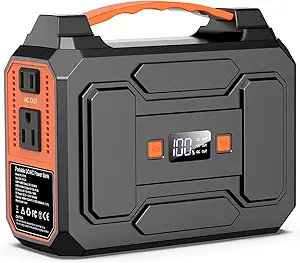 | Best Emergency Backup | Battery capacity: 146Wh / 39600mAh | Output power: 100W | AC voltage: 110V | VIEW LATEST PRICE | See Our Full Breakdown |
| DARAN Portable Power Station 89.6Wh LiFePO4 |  | Best Compact Long-Life Pick | Battery capacity: 89.6Wh | Battery chemistry: LiFePO4 | Continuous output: 100W | VIEW LATEST PRICE | See Our Full Breakdown |
| Portable Power Station with 40W Solar Panel |  | Best Ready-to-Use Solar Kit | Battery capacity: 146Wh | Maximum AC output: 100W | AC outlets: 2 | VIEW LATEST PRICE | See Our Full Breakdown |
| Jackery Explorer 300 Portable Power Station |  | Best for Long-Term Battery Durability | Battery capacity: 292Wh | Battery chemistry: LiFePO4 | Rated charge cycles: Over 4,000 | VIEW LATEST PRICE | See Our Full Breakdown |
| solar-powered laptop charger | Battery capacity | Weight |
|---|---|---|
| Blavor Solar Power Bank 20000m | — | — |
| Portable Solar Power Bank with | 24,000mAh | 1.6 pounds |
| 45W Portable Solar Panel Charg | — | 3.3 pounds |
| Takki Solar Generator 120W Pea | 88.8Wh | — |
| SOARAISE Solar Power Bank 4800 | — | — |
| Solar Powered Generator 100W w | 146Wh | 3.3 lbs |
| Solar Power Bank 20000mAh with | 20000mAh | — |
| Portable Power Station 300W | 220Wh | 5 lbs |
| Portable Power Station 146Wh w | 146Wh / 39600mAh | 3.3 lbs |
| DARAN Portable Power Station 8 | 89.6Wh | 2.54 lbs |
| Portable Power Station with 40 | 146Wh | — |
| Jackery Explorer 300 Portable | 292Wh | 7.5 lbs |
More Details on Our Top Picks
Blavor Solar Power Bank 20000mAh with Built-in Cables and Wireless Charging
I rank the Blavor 20000mAh Solar Power Bank as a supporting charger rather than a primary laptop power source. Its 20W output falls below the needs of most laptops, but it can handle phones, watches, and some low-power USB-C notebooks while preserving a laptop’s own battery. Compared with the Portable Solar Power Bank with 65W AC Outlet, Blavor is easier to carry and better protected against water, dust, and impacts, yet far less capable of running a computer. The built-in cables reduce packing clutter, while wireless charging and outdoor tools add flexibility at camp. I would choose it for keeping smaller electronics alive beside a laptop, not for repeated notebook recharges. Its bulky body and device-specific wireless support also weaken its appeal for minimalist travelers.
Pros:- Rugged waterproof, dustproof, and shock-resistant construction
- Built-in cables reduce the number of accessories packed
- 20,000mAh capacity supports several small-device charges
- Wireless charging and multiple outdoor lights add flexibility
Cons:- 20W output is inadequate for most full-size laptops
- Bulkier than a conventional 20,000mAh battery
- Wireless charging compatibility is narrower than its wired support
Best for: Outdoor travelers who want a rugged solar battery for phones and accessories alongside a low-power USB-C laptop
Not ideal for: Remote workers who need dependable charging for a 45W, 65W, or higher-powered laptop
- Capacity:20,000mAh
- Maximum output:20W
- Ports:USB-C and USB-A
- Built-in cables:2 USB-C, 1 iOS, and 1 USB-A
- Wireless charging:Phones and Apple Watch
- Weather protection:Waterproof, dustproof, and shockproof
- Shell material:ABS and PC with silicone protection
- Outdoor features:Flashlight, camping light, compass, and thermometer
Our verdict“I recommend Blavor as a rugged accessory charger for a laptop kit, but not as the kit’s main laptop power supply.”
Portable Solar Power Bank with AC Outlet 65W and 24000mAh Battery
I put the Portable Solar Power Bank with 65W AC Outlet first for laptop duty because its 65W AC output and included 30W panel form the most practical computer-charging package in this group. Unlike the Blavor and SOARAISE power banks, it can accept a standard laptop wall adapter, which broadens compatibility beyond USB charging. It also weighs less than the standalone 45W Portable Solar Panel, despite including a battery; that makes the system easier to justify for short trips. The compromises are clear: laptops drawing more than 65W are excluded, the outlet must be activated manually, and the solar junction box cannot be exposed to rain. Solar replenishment will also trail wall charging. I rank it highest for buyers who need a compact off-grid setup and can live within a firm power ceiling.
Pros:- 65W AC outlet works with many standard laptop adapters
- Includes a 30W foldable solar panel
- Supports wall, vehicle, and solar input
- Multiple USB and DC outputs serve mixed device kits
Cons:- Cannot run devices drawing more than 65W
- Solar-panel junction box is not waterproof
- AC outlet requires manual activation and may shut off with very light loads
Best for: Campers and mobile workers with laptops that charge from a 65W-or-lower wall adapter
Not ideal for: Gaming-laptop and workstation owners whose power adapters exceed 65W, especially in wet camps
- Battery capacity:24,000mAh
- AC output:65W
- Solar panel:30W foldable panel
- DC output:9V–12.6V, 10A maximum
- USB outputs:USB-A 5V/2.4A and Quick Charge USB up to 9V/2A
- Input methods:Wall outlet, solar panel, or car charger
- Dimensions:6.89 x 3.98 x 1.89 inches
- Weight:1.6 pounds
- Included accessories:Wall adapter, car cable, solar panel kit, and manual
Our verdict“I would choose this package for the clearest balance of laptop compatibility, stored power, and portable solar collection.”
45W Portable Solar Panel Charger with USB-C, USB-A, and DC Outputs
I give the 45W Portable Solar Panel Charger the standalone-panel role because its 45W rated output and IP67 construction suit buyers who already own a compatible battery or low-power USB-C laptop. Compared with the 21W panel bundled with the Takki Solar Generator, it offers more collection capacity and better stated weather resistance. It has no battery, though, so clouds, shade, and changing sun can interrupt charging; pairing it with a power station is the safer arrangement. The USB-C port sounds laptop-friendly, but the supplied data does not state its charging protocol or maximum port wattage, so I would verify compatibility before relying on direct laptop charging. At 3.3 pounds, it is also heavier than its compact description suggests. I favor it for modular systems where durability matters more than all-in-one convenience.
Pros:- 45W rating provides more solar collection potential than smaller bundled panels
- IP67 construction suits exposed outdoor use
- USB-C, USB-A, and DC outputs support several charging arrangements
- Up to 23.5% conversion efficiency makes good use of limited panel area
Cons:- No internal battery for storing collected energy
- USB-C protocol and port-level wattage are not specified
- Output falls with clouds, shade, and poor panel alignment
Best for: Campers who already own a compatible small power station and want a weather-resistant panel for replenishing it
Not ideal for: Buyers seeking stored power or guaranteed direct USB-C laptop charging without checking port compatibility
- Rated power:45W
- Ports:1 USB-C, 1 USB-A, and 1 DC
- DC current:5A maximum
- Conversion efficiency:Up to 23.5%
- Waterproof rating:IP67
- Folded dimensions:14.5 x 9.8 x 0.6 inches
- Weight:3.3 pounds
- Materials:ETFE coating, Oxford fabric, and fiberglass
Our verdict“I recommend this panel for a modular solar setup, provided the buyer confirms laptop or power-station input compatibility.”
Takki Solar Generator 120W Peak Portable Power Station with 21W Solar Panel
I assign the Takki Solar Generator the compact-kit role because it combines an 88.8Wh battery, AC sockets, and a 21W panel in a travel-friendly package. Its 80W continuous inverter gives it more laptop flexibility than the 20W Blavor, while the battery station weighs only 2.29 pounds. Compared with the 65W AC Portable Solar Power Bank, Takki offers a higher continuous ceiling and more output ports, but its panel is weaker and its complete kit has more separate pieces. The 5–7-hour stated solar recharge time also assumes useful sunlight, so an overcast day can stretch recovery. I would reserve it for efficient notebooks and small electronics; it cannot support high-draw gaming laptops or appliances. Charging devices while the station itself is charging may shorten battery life, which limits pass-through use as a daily routine.
Pros:- 80W continuous AC inverter supports many efficient laptops
- Compact 2.29-pound power station is easy to pack
- Seven output ports accommodate mixed electronics
- Included 21W panel creates a complete solar kit
Cons:- 80W continuous limit excludes high-performance laptops and many appliances
- 21W panel provides slower collection than the 30W and 45W alternatives
- Frequent pass-through charging may reduce battery lifespan
Best for: Car campers and emergency-kit buyers running efficient laptops, lights, phones, and other devices below 80W
Not ideal for: Owners of gaming laptops, air pumps, or appliances that draw more than 80W continuously
- Battery capacity:88.8Wh
- Continuous AC output:80W
- Peak output:120W
- Solar panel:21W foldable panel
- Charging time:About 2 hours by AC or 5–7 hours by solar
- Power station weight:2.29 pounds
- Power station dimensions:5.7 x 4.13 x 3 inches
- Output ports:2 AC, 4 USB-A, 1 USB-C PD, and 1 DC
- USB-C output:18W Power Delivery
Our verdict“I would pick Takki for a small, ready-made solar kit built around an efficient laptop and low-wattage camp gear.”
SOARAISE Solar Power Bank 48000mAh Wireless Portable Charger with 4 Cables
I place the SOARAISE 48000mAh Solar Power Bank in the high-capacity support role because its four panels and many built-in charging methods favor long outings with several small devices. It carries more stated capacity than the 20,000mAh Blavor and 24,000mAh AC power bank, while built-in USB-C, phone, USB-A, and Micro cables reduce cable clutter. Yet capacity alone does not make it the strongest laptop charger: the supplied data lists PD and QC 3.0 but gives no maximum output wattage. I would not assume it can sustain a laptop without confirming that figure. Compared with the Takki Solar Generator, it lacks an AC outlet and a published laptop-ready power ceiling, though it offers simpler phone charging and greater nominal capacity. Its large battery and four-panel body also bring extra bulk, and solar recovery still depends heavily on bright sunlight.
Pros:- 48,000mAh stated capacity suits multi-device trips
- Four solar panels provide more collection area than single-panel power banks
- Four built-in cables reduce accessory clutter
- Wireless, PD, QC 3.0, and USB outputs support varied small devices
Cons:- Maximum wired output wattage is not provided
- Large battery and multi-panel design add bulk and weight
- Solar recharge performance remains dependent on strong sunlight
Best for: Group campers carrying phones, tablets, watches, and a low-power USB-C notebook with verified charging compatibility
Not ideal for: Laptop-focused buyers who need a published 45W or 65W output rating and predictable solar recharge times
- Capacity:48,000mAh
- Solar panels:4
- Ports:2 USB-A and 1 USB-C
- Built-in cables:USB-C, phone, USB-A, and Micro
- Wireless charging:Supported
- Fast-charging standards:PD and QC 3.0
Our verdict“I favor SOARAISE for charging a group’s smaller electronics, but laptop buyers should verify its USB-C wattage before purchase.”
Solar Powered Generator 100W with 40W Solar Panels
I rank the Solar Powered Generator 100W as the best ready-made kit here because its 40W solar panel is included. The Portable Power Station 146Wh B0CQLX82NQ has the same stated capacity and output ceiling, yet requires a separate panel. That difference makes this package easier to buy for camping or emergency laptop charging. Its 146Wh battery can provide useful reserve power for many compact laptops, while AC, USB-A, USB-C, and 12V connections support mixed gear. At 3.3 pounds, it is also much easier to carry than the 5-pound 300W station. I would still check a laptop adapter’s rating before buying: the 100W AC limit rules out more demanding machines, and the missing recharge-time figure makes solar planning less predictable. The battery is sized for short outings, not days of heavy computer work.
Pros:- Includes a 40W solar panel, avoiding a separate panel purchase
- 146Wh battery offers practical reserve power for compact laptops
- AC, USB-A, USB-C, and 12V outputs support varied equipment
- 3.3-pound body is easy to carry
Cons:- 100W AC ceiling excludes high-draw laptops and appliances
- 146Wh capacity is limited for prolonged off-grid work
- No stated charging time makes solar replenishment harder to plan
Best for: Campers and emergency-kit buyers who want a lightweight laptop-capable power station with a solar panel included
Not ideal for: Mobile workstation users with laptops or accessories drawing more than 100W, or buyers needing several days of reserve power
- Battery capacity:146Wh
- Solar panel:40W, included
- AC output:100W
- AC outlets:2 × 110V
- Other outputs:USB-A, USB-C, and 12V DC
- Battery chemistry:Lithium-ion
- Weight:3.3 lbs
Our verdict“This is my pick for buyers who want a portable, all-in-one solar laptop charging package without sourcing a separate panel.”
Solar Power Bank 20000mAh with 4 Panels
I place the Solar Power Bank 20000mAh in a phone-first role because the supplied data gives no USB-C wattage or AC outlet rating for laptop charging. Unlike the Solar Powered Generator 100W, it should not be treated as a proven replacement for a laptop’s wall adapter. Its appeal lies elsewhere: four integrated solar panels, built-in cables, five-device charging, and IP67 protection make it convenient around a wet campsite. The lights and 36-month warranty add emergency value, while the folding design avoids carrying a separate panel. I would choose it as a companion that preserves a laptop station’s energy by handling phones and small USB devices. Buyers seeking direct laptop power should skip it unless the seller confirms compatible USB-C Power Delivery output. Solar replenishment can also be slow, and the flashlight and camping light cannot run together.
Pros:- Four integrated panels provide solar charging without a separate accessory
- Built-in cables reduce loose gear at camp
- Can supply up to five devices at once
- IP67 construction and multiple lighting modes suit outdoor emergencies
Cons:- No stated USB-C wattage or Power Delivery profile confirms laptop compatibility
- Solar recharging may take a long time and depends heavily on sunlight
- Flashlight and camping light cannot operate simultaneously
Best for: Campers who already have a laptop power station and want a weather-resistant solar bank for phones, lights, and smaller USB devices
Not ideal for: Buyers seeking a verified primary laptop charger, since USB-C output wattage and Power Delivery support are not stated
- Battery capacity:20000mAh
- Solar array:4 integrated high-efficiency panels
- Simultaneous devices:Up to 5
- Connections:Type-C, USB-A input, USB-A output, and USB-C output
- Cables:Built in
- Weather resistance:IP67
- Lighting:Flashlight with SOS and strobe; camping light with 3 levels
- Warranty:36 months
Our verdict“I recommend this as a rugged solar accessory for small devices, not as the main power source for a laptop.”
Portable Power Station 300W, 220Wh Solar Generator
The Portable Power Station 300W earns its position through greater headroom. Its 300W pure-sine-wave inverter is better suited to powerful laptop adapters and multi-device desks than either 100W Solar Powered Generator in this batch. The 220Wh battery also offers more reserve than their 146Wh packs, while seven-device support helps when a laptop, phone, camera, and lights all need power. I like its balance of capability and portability: five pounds is manageable, though it is less pack-friendly than the 3.3-pound models. The largest catch is central to this roundup: the solar panel costs extra, so it is solar-ready rather than a complete solar charger. It also remains a short-duration power source, not a home-scale backup battery. For buyers who already own a compatible panel, the higher output ceiling is a persuasive advantage.
Pros:- 300W pure-sine-wave output supports a wider range of laptop adapters
- 220Wh capacity exceeds the 146Wh stations in this batch
- Seven-device support suits mixed work and camping equipment
- AC, car, and solar recharge options provide flexibility
Cons:- Solar panel is not included
- Five-pound weight is less convenient for long hikes
- 220Wh remains limited for extended laptop work or appliances approaching 300W
Best for: Remote workers and photographers who use higher-wattage laptop adapters and already own, or plan to buy, a compatible solar panel
Not ideal for: Buyers wanting an all-inclusive solar kit or enough capacity for prolonged off-grid workstation use
- Continuous output:300W
- Battery capacity:220Wh
- Dimensions:8.5 × 6.7 × 4.1 inches
- Weight:5 lbs
- Outputs:2 × 110V AC, 4 × USB, and 1 × DC vehicle port
- Recharge methods:AC wall adapter, car, or solar panel
- Solar panel:Not included
- Battery life:Over 1,000 charge cycles
- Inverter and protection:Pure sine wave with BMS, overload, and short-circuit protection
Our verdict“This is my choice for buyers who value laptop wattage headroom over an included solar panel.”
Portable Power Station 146Wh with AC Outlet and Dual LED Flashlights
I see the Portable Power Station 146Wh as an emergency-focused alternative to the Solar Powered Generator 100W with 40W Solar Panels. Both weigh 3.3 pounds and pair 146Wh capacity with a 100W ceiling, but this model adds dual LED flashlights and seven outputs while omitting the solar panel. That combination suits a vehicle kit or home outage box where wall and car charging will usually come first and solar is a later add-on. It can run compatible laptop adapters through 110V AC and distribute power across USB and DC gear, yet the 100W cap demands careful checking before connecting a performance laptop. I rank it below the complete 40W-panel kit for solar-specific value because the added panel expense changes the real purchase price. Its limited energy reserve also favors brief outages and weekend trips over sustained remote work.
Pros:- Seven outputs can serve laptops, phones, and low-power DC devices
- Dual LED flashlights add practical outage and roadside utility
- 3.3-pound weight makes the station easy to relocate
- Supports wall, car, and optional solar recharging
Cons:- Solar panel must be purchased separately
- 100W output cannot support many performance-laptop adapters
- 146Wh capacity allows only limited off-grid runtime
Best for: Drivers and apartment residents who want a lightweight outage station with strong lighting and may add solar charging later
Not ideal for: Buyers who need a solar panel in the box, use laptop adapters above 100W, or expect multi-day runtime
- Battery capacity:146Wh / 39600mAh
- Output power:100W
- AC voltage:110V
- Number of outputs:7
- Output types:AC, USB, and DC
- Recharge sources:Wall, car, or solar
- Solar panel:Not included
- Battery chemistry:Lithium-ion
- Weight:3.3 lbs
Our verdict“I would buy this for portable emergency lighting and short laptop sessions, provided an included solar panel is not a priority.”
DARAN Portable Power Station 89.6Wh LiFePO4
I give the DARAN Portable Power Station the compact longevity role because its 89.6Wh LiFePO4 battery is rated for more than 3,500 cycles. That is a stronger lifespan claim than the 300W station’s 1,000-plus cycles, and its 2.54-pound body is the lightest power station in this batch. Two AC sockets, dual USB-C, dual USB-A, and DC output make the tiny case flexible for a modest travel setup. The compromise is capacity: compared with the Solar Powered Generator 100W and its 146Wh battery, DARAN provides far less stored energy and still tops out at 100W continuous output. A solar panel is also absent, so the initial package is solar-compatible rather than solar-complete. I would favor it for frequent short trips, backup charging, and battery longevity, but not for long laptop sessions away from mains power. Its 200W peak rating does not raise the sustained 100W limit.
Pros:- LiFePO4 battery is rated for more than 3,500 cycles
- 2.54-pound weight and small body favor frequent travel
- Seven ports include AC, USB-C, USB-A, and DC connections
- Supports AC, USB-C PD, car, and optional solar input
Cons:- 89.6Wh capacity is the smallest among the power stations in this batch
- 100W continuous ceiling limits laptop and accessory choices
- Solar panel is not included
Best for: Frequent travelers who carry a sub-100W laptop and favor low weight, compact dimensions, and long battery cycle life
Not ideal for: Off-grid workers needing long laptop runtime, an included solar panel, or continuous output above 100W
- Battery capacity:89.6Wh
- Battery chemistry:LiFePO4
- Continuous output:100W
- Peak output:200W
- Ports:2 × AC, 2 × USB-C, 2 × USB-A, and 1 × DC5521
- Charging methods:AC, USB-C PD, car, or solar panel
- Cycle life:3,500+ cycles
- Dimensions:6.5 × 3.3 × 4 inches
- Weight:2.54 lbs
Our verdict“This is my compact pick for frequent short charging sessions where battery lifespan matters more than maximum runtime.”
Portable Power Station with 40W Solar Panel
I rank the Portable Power Station with 40W Solar Panel as the best ready-to-use kit because both the 146Wh battery and 40W foldable panel arrive together. Unlike the Jackery Explorer 300, it requires no separate panel purchase before solar charging is possible. Its AC, USB-C, USB-A, and DC connections cover laptops and smaller camp electronics, while the 22.8% panel efficiency helps make limited daylight more productive. The compromise is a firm 100W output ceiling, which rules out many gaming laptops and power-hungry appliances. Its 146Wh capacity is also half the Jackery’s, so extended laptop work may demand daily recharging. I would also shelter the panel’s non-waterproof junction box, making this a better fit for fair-weather trips than unattended outdoor setups.
Pros:- Includes a 40W foldable solar panel, so no separate panel purchase is needed
- AC, USB-C, USB-A, and DC outputs support varied low-power electronics
- 22.8% solar conversion efficiency makes better use of available sunlight
- Wall, car, and solar recharging provide useful backup options
Cons:- 100W maximum output excludes many gaming laptops and high-draw appliances
- 146Wh capacity may require frequent solar or mains recharging
- Solar-panel junction box is not waterproof
Best for: Occasional campers and emergency-preparedness buyers who want a complete solar laptop-charging setup in one purchase
Not ideal for: Gaming-laptop users, heavy daily power users, or wet-weather campers who need more than 100W output and a fully weather-resistant panel
- Battery capacity:146Wh
- Maximum AC output:100W
- AC outlets:2
- Solar panel power:40W
- Solar panel efficiency:22.8%
- USB connections:2 USB-A, 1 QC USB-A, 1 USB-C
- DC output:9V–12.6V, 10A maximum
- Included accessories:AC adapter, cigarette-lighter adapter, car-charging cable, and solar-panel kit
Our verdict“I recommend this kit for buyers who value immediate solar readiness over high output, large capacity, or all-weather placement.”
Jackery Explorer 300 Portable Power Station
I place the Jackery Explorer 300 highest for long-term battery ownership because its LiFePO4 cells are rated for more than 4,000 charge cycles. Its 292Wh capacity doubles that of the Portable Power Station with 40W Solar Panel, giving remote workers more laptop runtime between sunny periods. At 7.5 pounds, it remains easier to carry than many similarly sized stations, and a compatible 100W panel can bring it to 80% in 2.8 hours. Yet this is not a complete solar package: the panel costs extra, weakening its value for buyers starting from scratch. The 292Wh reserve also remains modest beside larger home-backup stations, and the 600W surge rating should not be mistaken for sustained appliance capability. I favor it for repeated trips, not whole-house outages.
Pros:- LiFePO4 battery is rated for more than 4,000 charge cycles
- 292Wh capacity provides more laptop runtime than the 146Wh bundled kits
- 7.5-pound body balances useful capacity with portability
- Can reach 80% charge in 2.8 hours when paired with a 100W solar panel
Cons:- Solar panel is not included, adding cost before off-grid charging is possible
- 292Wh capacity is limited for prolonged outages or appliance backup
- 600W surge capability does not indicate equivalent continuous output
Best for: Frequent campers, van travelers, and remote workers who already own a compatible solar panel or accept paying extra for one
Not ideal for: First-time solar buyers seeking an all-in-one kit or households needing sustained power for large appliances
- Battery capacity:292Wh
- Battery chemistry:LiFePO4
- Rated charge cycles:Over 4,000
- Weight:7.5 lbs
- AC outlets:2
- USB ports:1 USB-C PD and 2 USB-A
- Peak surge:600W
- Solar charging:80% in 2.8 hours with a 100W panel
Our verdict“I would choose the Explorer 300 for frequent, long-term use when battery longevity matters more than getting a bundled solar panel.”
How We Picked
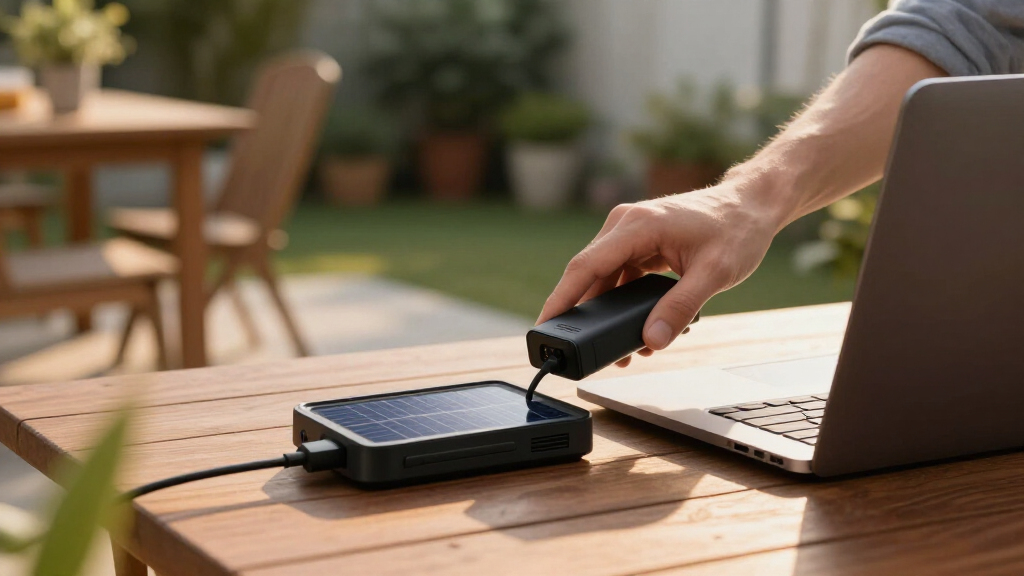
I ranked these products by how well they function as solar-powered laptop chargers, rather than rewarding battery size or accessory count alone. My main criteria were laptop-compatible output, usable energy storage, solar input capability, panel usefulness, and portability. Products with AC outlets or suitable USB-C output ranked above phone-focused banks that may lack the voltage or wattage a laptop requires. Bundled panels also earned credit when their rated output was large enough to make daylight recharging practical.
I then weighed battery chemistry, capacity, connection flexibility, weather protection, lighting features, and overall value. Larger power stations placed higher when their added weight produced a meaningful gain in runtime or output, while compact models earned distinct roles when they solved a portability problem. I treated integrated miniature panels as backup features rather than full replacements for foldable panels. Final placement reflects how confidently each option fits a buyer type, including off-grid workers, occasional campers, emergency-preparedness users, and owners of low-wattage USB-C laptops.
Factors to Consider When Choosing Solar-powered Laptop Chargers
Choosing among solar-powered laptop chargers starts with the laptop, not the solar panel. I would identify its charging wattage and port type, then match those requirements to a battery and panel combination that fits the expected trip length. The points below explain where specifications can mislead and when extra capacity or panel area is worth carrying.
Match Output Wattage to the Laptop
A charger must provide enough continuous power for the laptop, not merely include a compatible-looking port. Many lightweight USB-C notebooks accept 45W or 65W Power Delivery, while gaming laptops and mobile workstations may demand 100W or more. If output falls below the laptop’s requirement, charging may be slow, pause under load, or fail altogether. An AC outlet offers broad compatibility, but converting battery power to AC wastes more energy than a direct USB-C connection. I would choose USB-C PD for an efficient single-laptop setup and AC when proprietary charging bricks make direct charging impossible. Buyers should also distinguish continuous output from peak output, since a peak figure does not describe sustained laptop charging.
Compare Capacity in Watt-Hours
Watt-hours provide the clearest capacity comparison across power stations, while milliamp-hour figures on power banks can create misleading impressions. A 24,000mAh bank is commonly rated at its internal cell voltage, not at the higher voltage delivered to a laptop. Conversion losses reduce the energy that reaches the computer, particularly through an AC inverter. I would compare a charger’s watt-hour rating with the laptop battery’s watt-hour capacity, then allow roughly 15% to 30% for conversion losses. A 146Wh station may deliver around one to two substantial laptop charges, depending on the computer and connection method. Paying for 220Wh or 292Wh makes more sense for multi-day trips, power-hungry laptops, or charging several devices.
Treat Panel Size as a Charging-Time Decision
The small panel attached to a power bank rarely gathers enough energy to refill a large battery during an ordinary day. It works better for maintaining emergency reserves or adding a small amount of phone power. Foldable 21W, 40W, and 45W panels provide a more credible path to laptop energy, though their advertised ratings assume strong sunlight and favorable positioning. Clouds, heat, shadows, and a poor panel angle can cut real output sharply. I would pair a larger battery with at least a 40W panel for recurring off-grid use, then plan around several hours of good sun. Buyers relying on solar as their only source should favor panel area over decorative built-in solar features.
Balance Portability Against Runtime
A pocketable bank is easier to carry, but that advantage matters little if it cannot power the intended laptop. At the other end, a 220Wh or 292Wh station brings longer runtime and broader device support while occupying more pack space. I would separate travel into three patterns: daily commuting, short camping trips, and stationary emergency use. Commuters benefit from a 45W panel or 65W battery pack, campers may prefer a 100W station with a bundled panel, and home backup favors higher capacity. Handles, folding dimensions, cable storage, and panel weight matter alongside the battery specification. The best balance is the smallest system that covers the expected charging cycle with some reserve.
Know When Better Battery Chemistry Is Worth Paying For
LiFePO4 batteries generally suit frequent cycling because they are associated with longer cycle life and good thermal stability. That makes the Jackery Explorer 300 and DARAN 89.6Wh models appealing for repeated travel or emergency routines rather than occasional use. Conventional lithium-ion products can still make sense when low purchase cost and reduced weight matter more than years of regular cycling. I would pay extra for LiFePO4 when the station will be discharged often, stored as a preparedness tool, or expected to serve for many seasons. Battery chemistry does not fix weak solar input, so it must be judged alongside panel compatibility and charging speed. A durable battery paired with an undersized panel may still be frustrating off-grid.
Check the Complete Solar Setup Before Buying
The phrase solar generator does not always mean a panel is included. Some listings describe a solar-compatible battery station, while others bundle a 21W or 40W panel. I would check package contents, solar-input voltage, connector type, maximum input wattage, and whether an adapter is required. Proprietary connectors can make later panel upgrades harder, while common DC standards provide more flexibility. Buyers should also verify that a folding panel includes the cable needed for the selected station. A lower-priced station can become the costlier choice once a compatible panel and adapters are added.
Frequently Asked Questions
Can a solar-powered charger run my laptop while its battery is charging?
Some power stations support pass-through charging, but the feature should be confirmed for the exact model. Even when supported, the panel must generate enough power to cover the laptop load and leave surplus energy for the battery. A 40W panel cannot keep pace with a laptop drawing 60W continuously, especially outside ideal sunlight. I would reduce laptop power use, charge the station during peak sun, and run the computer from stored energy when conditions weaken. This approach also avoids depending on rapidly changing solar output during important work.
Is a built-in solar panel enough to recharge a laptop power bank?
For most large power banks, a built-in panel is too small for routine full recharging. Its surface area limits energy collection, so replenishing 20,000mAh to 48,000mAh may take many days of favorable sunlight. Multiple folding panels, such as the four-panel design in this roundup, improve collection but still trail a dedicated 40W or 45W panel. I view integrated panels as emergency backup features, not the main charging method. Buyers planning regular laptop use away from outlets should choose a separate foldable panel.
Should I choose USB-C Power Delivery or an AC outlet?
USB-C Power Delivery is usually the better choice when the laptop supports the charger’s wattage because it avoids inverter losses and requires less equipment. An AC outlet is more flexible for laptops with proprietary adapters or charging requirements above the available USB-C output. That flexibility reduces runtime because the station converts battery energy into AC before the laptop charger converts it again. I would choose direct USB-C for lightweight travel and AC for broad compatibility. Buyers using AC should verify both the station’s continuous wattage and the laptop adapter’s input rating.
How large should the battery be for one day of laptop work?
The answer depends on the laptop battery size, workload, and access to sunlight during the day. A low-power notebook may get useful support from an 89.6Wh or 146Wh station, while a demanding laptop can consume that reserve much faster. For a full workday away from outlets, I would start near 146Wh for efficient laptops and move toward 220Wh or 292Wh when runtime matters more than pack weight. Screen brightness, video calls, and processor-heavy tasks can raise consumption sharply. Solar input should be treated as an extension of runtime rather than guaranteed same-day replacement.
Is the Jackery Explorer 300 worth buying without a bundled solar panel?
The Jackery Explorer 300 makes sense for buyers who value its 292Wh capacity, LiFePO4 chemistry, and established power-station format. It is less compelling for shoppers seeking an inexpensive all-in-one solar kit because a compatible panel may raise the total cost. Compared with the bundled 40W systems here, Jackery provides more stored energy but may require another purchase before it can collect solar power. I would choose it for frequent use, longer runtime, or a panel setup that can be expanded later. A bundled 100W station is the simpler choice for occasional campers who want everything in one package.
Conclusion
For the strongest all-around balance, I recommend the Solar Powered Generator 100W with 40W Solar Panels; its 146Wh battery and useful bundled panel suit camping, remote work, and emergency charging. The Portable Solar Power Bank with 65W AC Outlet is my best-value choice for buyers who want laptop compatibility without carrying a full-size station. Beginners should start with the Takki 120W Peak Power Station and 21W Solar Panel, since the bundled setup removes much of the compatibility guesswork, though solar refilling will be slower. The Jackery Explorer 300 is the premium pick for buyers prioritizing capacity and LiFePO4 battery chemistry. For direct USB-C charging with minimal bulk, the 45W Waterproof Foldable Solar Panel is the specialist choice, while the DARAN 89.6Wh LiFePO4 Station better suits compact battery backup. Buyers needing the highest AC headroom should choose the 300W, 220Wh Portable Power Station, accepting extra weight and the possible cost of adding a panel.
Halloween Picks

10 ft Halloween Inflatable Archway with Built-in LEDs

10.5 ft Lighted Pumpkin and Ghost Halloween Inflatable Archway

12.2 ft Halloween Inflatable Outdoor Decoration – Giant Pumpkin
As an affiliate, we earn on qualifying purchases.