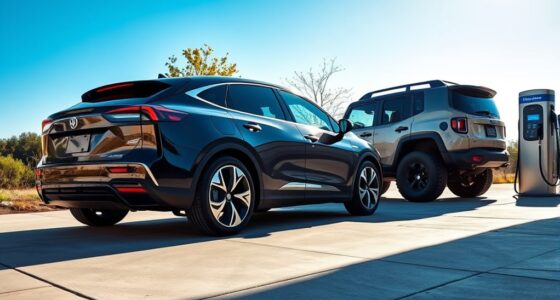

When talking to friends about your EV, be confident and share your positive experiences with charging and costs. Explain how charging stations are widely available, especially in urban areas and along highways, which makes long trips easier. Highlight the lower fuel and maintenance costs, and mention any incentives you received. If you’re honest and clear, you’ll help dispel myths and answer common questions while showing that EVs are practical and budget-friendly—more details await if you keep going.
Key Takeaways
- Share your positive personal experiences with charging convenience and cost savings to build confidence in EV ownership.
- Explain the expanding charging infrastructure, including public stations and home charging options, to address range concerns.
- Highlight long-term savings on fuel and maintenance costs to justify the higher initial investment.
- Mention government incentives and decreasing EV prices to make the transition more accessible and affordable.
- Dispelling myths with factual updates about EV range, charging speed, and infrastructure growth encourages understanding.

Have you ever hesitated to bring up your electric vehicle (EV) with friends? Maybe you’re unsure how to explain its benefits or worried about their reactions. One common concern they might have revolves around charging infrastructure. You can reassure them that charging stations are quickly becoming more widespread, especially in urban areas and along major highways. Public charging networks are expanding, making it easier than ever to find a station when you’re out and about. Home charging is also convenient—most EV owners install a dedicated charger in their garage or driveway, allowing for overnight charging that’s both cost-effective and simple. Explaining that you can plan longer trips around available charging points helps ease worries about being stranded or having limited access. As infrastructure continues to grow, the process of charging your EV becomes more seamless, much like refueling a gasoline car used to be.
Cost considerations are another point that often comes up. Many people assume EVs are prohibitively expensive, but that’s a misconception. While the initial purchase price can be higher than traditional cars, you save money in the long run through lower fuel costs and reduced maintenance. Electricity is generally cheaper than gasoline, and charging at home often costs just a fraction of what you’d spend filling up a gas tank. Plus, many regions offer incentives, rebates, or tax credits that cut down the upfront cost considerably. When discussing this, highlight that your EV saves you money over time, especially as fuel prices fluctuate. Maintenance costs are lower because EVs have fewer moving parts, no oil changes, and less wear on brakes thanks to regenerative braking systems. This can be a compelling point for friends who worry about the financial implications of switching to electric.
You might also want to mention that the initial investment is becoming more accessible as prices for EV models decrease and a wider range of options hits the market. Automakers are offering more affordable models, making electric cars a viable choice for many budgets. When friends ask about costs, emphasize the long-term savings and the potential for government incentives, which can make the transition more financially feasible. Ultimately, sharing your own positive experiences with charging and costs can help demystify the process. Let them know that charging infrastructure is improving steadily, and the cost considerations are increasingly favorable, making owning an EV a smart and sustainable decision. By being honest and prepared with facts, you can help dispel myths and encourage friends to consider their own electric future.
Frequently Asked Questions
How Long Does an EV Battery Typically Last?
An EV battery typically lasts between 8 to 15 years, depending on usage and climate. Battery longevity is improved with proper maintenance, and most manufacturers offer warranty coverage that protects against significant capacity loss for around 8 years or up to 100,000 miles. Keep in mind that battery performance might gradually decline, but with proper care, your EV can serve you well for many years.
Are EVS Safe in Extreme Weather Conditions?
Yes, EVs are generally safe in extreme weather conditions. Modern EVs are designed with battery durability and climate resilience in mind, so they perform well even in very hot or cold temperatures. Manufacturers incorporate advanced thermal management systems to protect the battery and maintain ideal performance. While you should take precautions, such as pre-conditioning the vehicle in extreme cold or heat, overall, EVs are built to handle diverse weather challenges safely.
What Are the Costs of EV Maintenance?
You’ll find that EV maintenance costs are generally lower than traditional cars, mainly because there are fewer moving parts. Battery lifespan is a key factor, and most batteries last 8-10 years with minimal maintenance. You won’t need oil changes, and brake wear is reduced thanks to regenerative braking. Overall, your maintenance costs stay predictable, and you’ll save money over time, making your EV a smart, cost-effective choice.
How Do EV Charging Times Compare to Refueling Gas Cars?
Charging times for EVs vary depending on your charging infrastructure and battery technology. Fast chargers can top off your battery in about 30 minutes, similar to refueling a gas car, while home chargers might take several hours. Battery advances continue to improve charging speeds, making EVs more convenient. Overall, as charging stations expand and battery tech advances, you’ll find that charging becomes increasingly comparable to traditional refueling times.
Can EVS Handle Long Road Trips Comfortably?
Yes, EVs can handle long road trips comfortably. Thanks to growing charging infrastructure and advancements in battery technology, you can enjoy extended drives with confidence. Fast chargers let you quickly recharge, minimizing downtime, while modern batteries provide increased range. Plan your trip with charging stops in mind, and you’ll find that long journeys become more manageable and convenient, making EV travel a practical and pleasant experience.
Conclusion
Talking to friends about your EV can feel tricky, but it’s all about honesty and confidence. Some say EVs aren’t as reliable as gas cars, but studies show they’re often more dependable with fewer moving parts. So, next time someone questions your choice, share the facts and your experience. You might just change a mind or two—and remember, your EV journey is uniquely yours, proving that green driving can be practical and exciting.