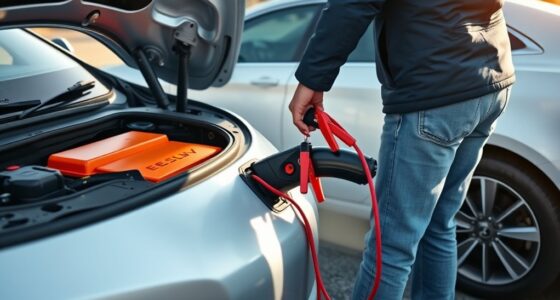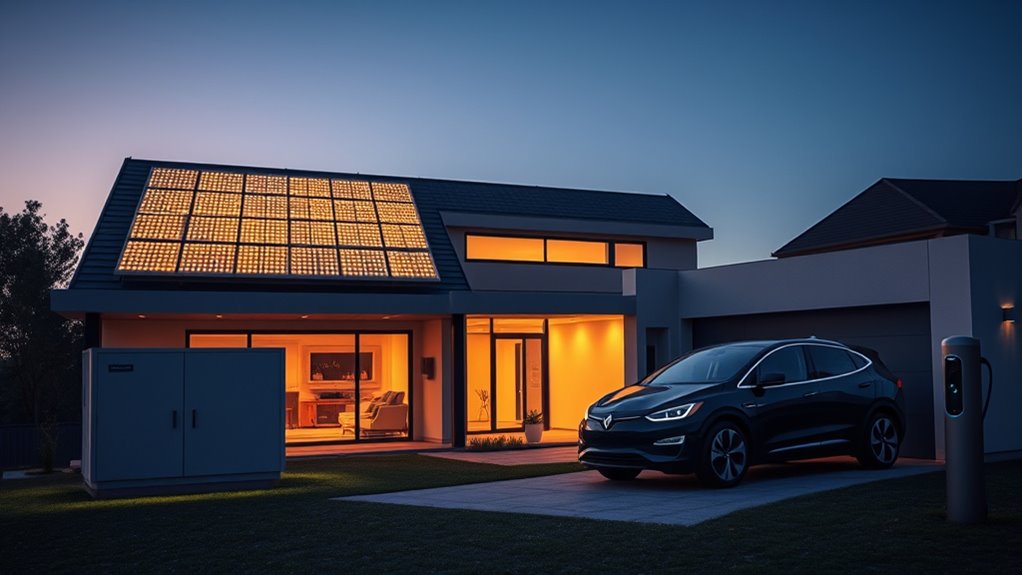

By integrating your home’s solar panels and batteries with your EV charger, you can create a smart energy system that maximizes renewable use and reduces grid reliance. You’ll be able to store excess solar power, charge your car during off-peak hours, and automate energy management for cost savings. This seamless setup also improves efficiency and sustainability. Keep exploring to see how advanced automation and wireless charging can further optimize your energy ecosystem.
Key Takeaways
- Integrate solar panels, batteries, and EV chargers into a smart system for coordinated energy management.
- Use real-time energy data to schedule EV charging during peak solar production or off-peak times.
- Automate charging to maximize renewable energy use, reduce costs, and lower carbon footprint.
- Implement wireless charging solutions for convenience and seamless integration into home automation.
- Future-proof your system with adaptable technology that evolves with innovations in storage, scheduling, and wireless charging.
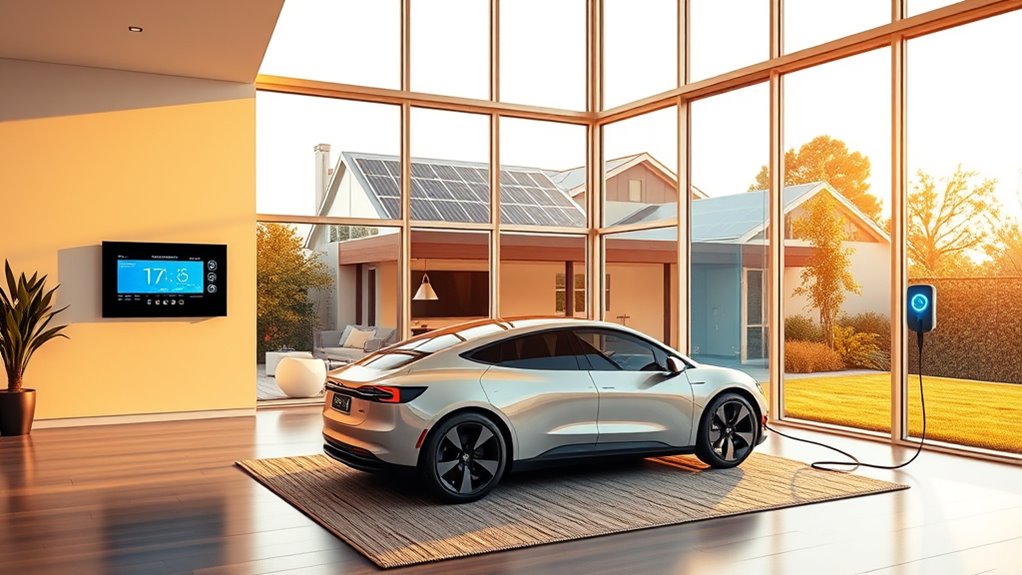
As more households adopt electric vehicles, integrating them seamlessly into smart home systems has become essential. Your goal is to maximize energy efficiency and reduce costs while making EV charging as convenient as possible. One way to do this is by leveraging your home’s energy storage capabilities. If you have a solar power system paired with batteries, you can store excess energy generated during the day and use it to charge your EV at night. This strategy not only cuts down your reliance on the grid but also guarantees your car charges with clean, renewable energy. By integrating your solar panels and batteries with your EV charging station, your home becomes a truly smart energy hub, balancing consumption and storage dynamically. Additionally, local automation can help coordinate charging schedules based on real-time energy use and grid conditions, further optimizing your system’s efficiency. Wireless charging is another game-changer you should consider. Imagine simply parking your car over a designated spot that automatically charges your EV without the need for plugging in. This technology is advancing rapidly, and many smart home systems now support wireless charging pads that can be integrated into your garage floor or driveway. These systems communicate with your home’s smart network, scheduling charging times during off-peak hours or when energy prices are lowest. Wireless charging also enhances convenience—no more fumbling with cords or worrying about wear and tear on cables. As the technology becomes more affordable and widely available, it’s a smart upgrade that aligns with your home’s automation features. To truly optimize your EV integration, you should synchronize your smart home’s energy management system with your EV charger. When your solar panels produce surplus electricity, your system can prioritize charging your car, especially if you have a sizable energy storage setup. This real-time coordination helps you make the most of renewable energy, reduce your carbon footprint, and save money. Additionally, automation can be set to trigger charging during times when electricity rates are lowest or when your home’s battery system indicates a surplus. This level of control ensures your EV is always ready when you need it, without waste or unnecessary energy draw from the grid. Incorporating these smart features into your home isn’t just about convenience; it’s about creating a sustainable, efficient energy ecosystem. As technologies evolve, expect even more seamless integration options—wireless charging, enhanced energy storage management, and smarter scheduling—making your EV a natural extension of your smart home. The key is to stay informed and invest in systems that can adapt as new innovations emerge, ensuring your vehicle and home operate harmoniously for years to come.

DARAN Portable Power Station 89.6Wh LiFePO4 Battery 100W(200W Peak) Solar Power Bank, Portable Charger Small Generator with AC Outlets & PD Fast Charging for Home/Laptop/Camping(Solar Panel Optional)
- Compact and Lightweight: Size of a smartphone, weighs 2.54 lbs
- Portable Design: Ergonomic soft handle for easy carrying
- Multiple Output Ports: 7 ports including AC, USB-C, USB-A, DC
As an affiliate, we earn on qualifying purchases.
Frequently Asked Questions
Can I Retrofit My Existing Home With Integrated Solar and EV Charging Systems?
Yes, you can retrofit your existing home with integrated solar and EV charging systems. Start by consulting a professional for a home retrofit that includes solar integration tailored to your energy needs. They’ll assess your roof’s capacity, electrical system, and charging station options. With proper planning, you’ll efficiently incorporate solar panels and EV chargers, reducing your carbon footprint and energy costs while making your home smarter and more sustainable.
What Are the Costs Involved in Upgrading to a Smart Home EV Integration System?
You’ll need to do a cost analysis to understand the total expenses involved in upgrading to a smart home EV integration system. Costs vary depending on the complexity of your setup and the vendor you choose. Expect to spend on equipment, installation, and possibly upgrades to your electrical system. Carefully compare vendors to find the best value, ensuring the system fits your budget and meets your needs effectively.
How Secure Is the Data Transmitted Between Home Energy Systems and the Vehicle?
The data transmitted between your home energy systems and vehicle is generally secure thanks to data encryption, which protects your information from unauthorized access. However, privacy concerns still exist, so it is crucial to choose systems with robust security measures. Regular updates and strong passwords can further enhance security, ensuring your energy data remains private and safe from potential cyber threats.
Are There Any Government Incentives for Installing Integrated Solar, Batteries, and EV Chargers?
Yes, you can benefit from government incentives like tax credits and rebates when installing integrated solar panels, batteries, and EV chargers. These programs aim to promote renewable energy and reduce carbon footprints. You should check federal, state, and local programs, as eligibility varies. Taking advantage of these incentives can substantially lower your upfront costs, making it more affordable to upgrade to a sustainable energy system that powers your home and EV efficiently.
How Does Weather Impact the Efficiency of Solar-Powered EV Charging Systems?
Weather impacts your solar-powered EV charging system by causing solar variability, which affects energy production. Cloud cover, rain, and snow reduce sunlight hitting your panels, decreasing efficiency. To mitigate this, rely on weather forecasting to plan charging during sunnier periods. Also, installing batteries helps store excess energy generated on sunny days, ensuring your EV charges reliably despite changing weather conditions.

Porch Shield Waterproof Universal Generator Cover 38 x 28 x 30 inch - for Most Generators 5500-15000 Watt, Black
- Compatibility: Fits 5500W to 15000W generators
- Durable Material: Made of 600D water-resistant polyester
- All-Weather Protection: Protects against sun, rain, snow, wind, dust
As an affiliate, we earn on qualifying purchases.
Conclusion
By integrating your smart home with your EV, solar, and batteries, you’re truly maximizing energy efficiency and convenience. Imagine a future where your home intelligently manages power, charging your car when it’s most sustainable. Isn’t it time you took control of your energy? With smart technology, you can simplify your life, save money, and reduce your carbon footprint—all from the comfort of your own home. Why wait to make your home smarter today?
Porch Shield Waterproof Universal Generator Cover 32 x 24 x 24 inch - for Most Generators 5000-10000 Watt, Black
- Compatibility: Fits 5000-10000W generators
- Durable Material: Made of water-resistant 600D polyester
- All-Around Protection: Protects against sun, rain, snow, dust
As an affiliate, we earn on qualifying purchases.

Jackery Portable Power Station Explorer 300, 292Wh Backup LiFePO4 Battery, Solar Generator for Outdoors Camping Travel Hunting Blackout (Solar Panel Optional)
- Lightweight Design: Only 7.5 lbs with 292Wh capacity
- Multiple Device Compatibility: Power for laptops, drones, cameras, and more
- Versatile Charging Ports: 2 AC outlets, USB-C, USB-A, car port
As an affiliate, we earn on qualifying purchases.