If you don’t have a garage, choose weatherproof chargers with high IP ratings and install them in sheltered, well-lit areas away from water and foliage to prevent damage. Secure the setup with tamper-resistant features, keep fire safety gear nearby, and guarantee proper spacing for safety. Regularly inspect and maintain your equipment and cover it during storms. With careful placement and precautions, you can safely charge outdoors—more tips await to help you protect your setup long-term.
Listen free for 30 days with Audible
Thousands of audiobooks and originals — cancel anytime.
As an affiliate, we earn on qualifying purchases.
Key Takeaways
- Install weatherproof, IP65/IP66-rated charging stations in sheltered, accessible locations away from flammable materials.
- Use outdoor-rated GFCIs and secure enclosures to protect equipment from moisture, dust, and vandalism.
- Position chargers near existing power sources under canopies or overhangs to shield from rain, snow, and direct sunlight.
- Maintain clear, well-lit areas with security measures like cameras and tamper-resistant cables to deter theft and vandalism.
- Regularly inspect and maintain the station, keeping the area free of debris and combustible materials to ensure safety and longevity.
weatherproof EV charging station
As an affiliate, we earn on qualifying purchases.
As an affiliate, we earn on qualifying purchases.
Choosing the Right Weatherproof Charging Equipment

When selecting weatherproof charging equipment for outdoor use, it is vital to choose units that are specifically rated for harsh conditions. Look for chargers with an IP65 or IP66 ingress protection rating, which ensure water and dust resistance. These ratings confirm the equipment can withstand rain, snow, and humidity without damage. Make certain the charger has a waterproof enclosure and waterproof connectors to prevent water intrusion. Use NEMA 14-50 outlets with GFCI protection for safe plug-in installations. Confirm the equipment meets safety standards set by the National Electrical Code and is certified by recognized testing laboratories. Investing in weatherproof chargers reduces the risk of electrical failure and enhances safety during outdoor charging in diverse weather conditions. Additionally, selecting chargers with robust European cloud innovation can help ensure reliable operation and data security in outdoor environments. Proper installation and regular inspections further enhance safety and prolong the lifespan of your outdoor EV charging setup. Incorporating weather-resistant materials into your setup can also provide extra protection against environmental elements. Furthermore, choosing equipment with durability features ensures long-term performance despite exposure to varying weather conditions. Regular maintenance, including checking for corrosion and ensuring seals remain intact, further protects your investment and maintains optimal functionality.
outdoor rated GFCI outlet for EV charger
As an affiliate, we earn on qualifying purchases.
As an affiliate, we earn on qualifying purchases.
Optimal Placement of Your Outdoor Charging Station

When choosing where to place your outdoor charging station, consider a location that’s easy to access while minimizing exposure to weather extremes. You should also guarantee it’s under a canopy or sheltered area to protect against rain, snow, and debris. Proper placement helps keep your equipment safe, functional, and compliant with weather-resistant setup tips. Additionally, ensure the area has reliable power supply and is compliant with safety standards to prevent potential hazards. Selecting a spot with proper installation practices can further enhance the safety and longevity of your charging station. To maintain your system’s durability, regularly check for weather-resistant setup tips and adapt as needed to changing conditions. Incorporating projector technology principles such as protective screens or enclosures can help shield your charging station from environmental damage and extend its lifespan. Moreover, employing advanced safety features can provide extra protection against electrical hazards and vandalism.
Strategic Location Selection
Are you choosing the best spot for your outdoor EV charging station? Proper placement guarantees safety, weather protection, and security. Consider these key factors:
- Proximity to Power Sources – Position the charger near existing electrical outlets or connections to minimize wiring complexity and reduce exposure.
- Shelter from Elements – Choose a location under a canopy, overhang, or awning to shield the station from rain, snow, and direct sunlight.
- Accessibility and Visibility – Place the charger where you can easily access it without obstruction, and in well-lit areas to deter vandalism.
- Distance from Flammable Materials – Keep a safe distance from dry brush, leaves, or other combustible landscaping to reduce fire risks.
Selecting the right spot enhances safety, longevity, and convenience for outdoor EV charging.
Weather-Resistant Setup Tips
Choosing the right location for your outdoor EV charging station can substantially improve its durability and safety. Place it under a sturdy canopy or awning to shield it from rain, snow, and direct sunlight, reducing weather-related wear. Make certain the spot is flat and well-drained to prevent water pooling around the equipment. Keep the station away from flood-prone areas and avoid placing it near combustible materials or dry vegetation, especially in wildfire zones. Position the charger where it’s easily accessible and visible, ideally in a high-traffic area for added security. Consider installing a weatherproof enclosure rated at least IP65 or IP66, and use outdoor-rated GFCIs for safety. Proper placement minimizes water exposure and vandalism risks, extending the lifespan of your charging station.
As an affiliate, we earn on qualifying purchases.
Protecting Your Charger From Water and Snow Damage
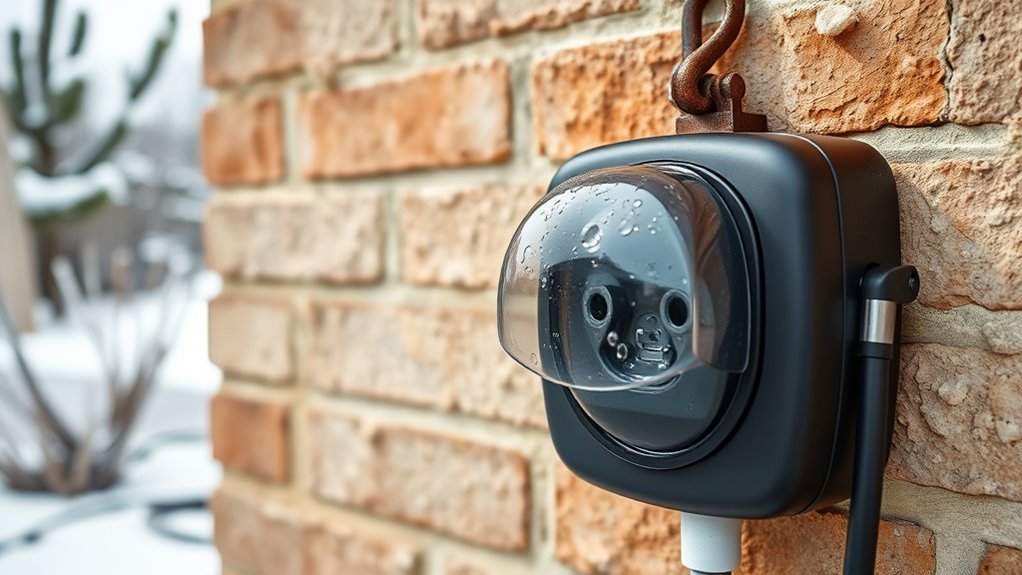
To keep your charger safe from water and snow, make sure it has a weatherproof enclosure rated for outdoor use. You should also install proper covers over the station to protect it during storms and harsh weather. Regular inspections of the equipment will help catch any damage early and guarantee it stays in good working condition. Additionally, choosing appropriate outdoor-rated equipment can further enhance your charger’s durability and safety. Ensuring the weatherproofing of your setup is essential for maintaining optimal performance in varying conditions. Proper installation techniques can also significantly improve the longevity and safety of your charging station. Incorporating water-resistant materials during installation can provide extra protection against moisture infiltration and extend the lifespan of your charger. Incorporating natural elements like landscaping can also help shield your charger from wind and elements, adding an extra layer of protection.
Weatherproof Enclosures Essential
Weatherproof enclosures are essential for protecting your outdoor EV charger from water and snow damage. They shield the equipment from moisture that could cause corrosion or short circuits, ensuring safe operation year‑round. To maximize protection, consider these key features:
- Ensure the enclosure has an IP65 or IP66 rating, preventing water ingress during heavy rain or snow.
- Use materials like weather-resistant plastics or metals designed for outdoor use.
- Seal all openings and cable entry points with waterproof gaskets or fittings.
- Install the enclosure in a shaded, sheltered spot to reduce direct exposure to snow and rain. Proper enclosure placement also plays a vital role in maintaining the integrity of your charger.
- Incorporate proper outdoor electrical safety measures such as grounding and surge protection to further safeguard your charger. Additionally, selecting enclosures with UV resistance can help prevent material degradation over time.
Proper Covering Installation
Installing a proper cover over your outdoor EV charger is essential to prevent water and snow from causing damage. Choose a weatherproof shelter that meets IP65 or IP66 standards to ensure it blocks rain, snow, and debris effectively. Make sure the cover is sturdy and securely anchored to withstand strong winds. The cover should extend beyond the charger to prevent water from seeping in during heavy rain or snowfall. Avoid using makeshift solutions like tarps, as they can blow off or allow moisture to reach the equipment. Regularly check that the cover remains intact and properly positioned. Proper covering not only safeguards your charger but also prolongs its lifespan and maintains safe operation in all weather conditions. Additionally, consider safe installation practices such as proper grounding and secure mounting to ensure electrical safety and durability. Proper weatherproofing techniques are vital for maintaining the functionality and safety of your outdoor charger over time. Incorporating advanced protective materials can further enhance weather resistance and extend the lifespan of your charging station. Ensuring your charging station has appropriate weatherproof accessories can provide an extra layer of protection against the elements. Employing quality weatherproof enclosures can also help shield your charger from harsh weather conditions and prolong its operational life.
Regular Equipment Inspections
Regular inspections of your EV charging equipment are essential for guaranteeing it remains protected against water and snow damage. Regular checks help catch issues early, preventing costly repairs or safety hazards. You are trained on data up to October 2023. Consumer safety is a key concern when maintaining outdoor electrical devices, so always prioritize proper inspection routines. Here are four key items to inspect: 1. Cables and Connectors – Look for fraying, cracks, or visible damage that could let water in or cause electrical faults. 2. Enclosures and Covers – Ensure weatherproof enclosures are intact and securely sealed to keep moisture out. 3. GFCI Devices – Confirm GFCIs are functioning properly and haven’t tripped due to water exposure. 4. Physical Debris – Clear away snow, ice, or debris around the charger to prevent water pooling and corrosion. Weatherproofing techniques can further enhance your charger’s protection in outdoor conditions. Regularly performing these inspection routines can extend the lifespan of your charger and prevent unexpected failures. Perform these inspections regularly, especially after storms or harsh weather, to keep your charger safe and operational.
tamper-resistant outdoor EV charging cable
As an affiliate, we earn on qualifying purchases.
As an affiliate, we earn on qualifying purchases.
Ensuring Safety With Proper Spacing and Fire Precautions

To prevent fire hazards at outdoor EV charging stations, maintaining proper spacing between units is essential. Keep chargers at least 5 to 6 feet apart to allow enough room for safe operation and fire suppression measures. Adequate spacing ensures that in case of sparks or small fires, firefighters can access and extinguish the flames quickly without obstruction. Install Class C fire extinguishers nearby for immediate response to electrical fires. Ensure overhead clearance is sufficient for fire sprinklers if installed. External emergency shut-off switches should be accessible and clearly marked, allowing you to disconnect power immediately if needed. Regularly inspect the area for debris or combustible materials that could fuel a fire, and abide by all National Electric Code (NEC) standards for safe installation.
Securing Your Charging Area Against Theft and Vandalism
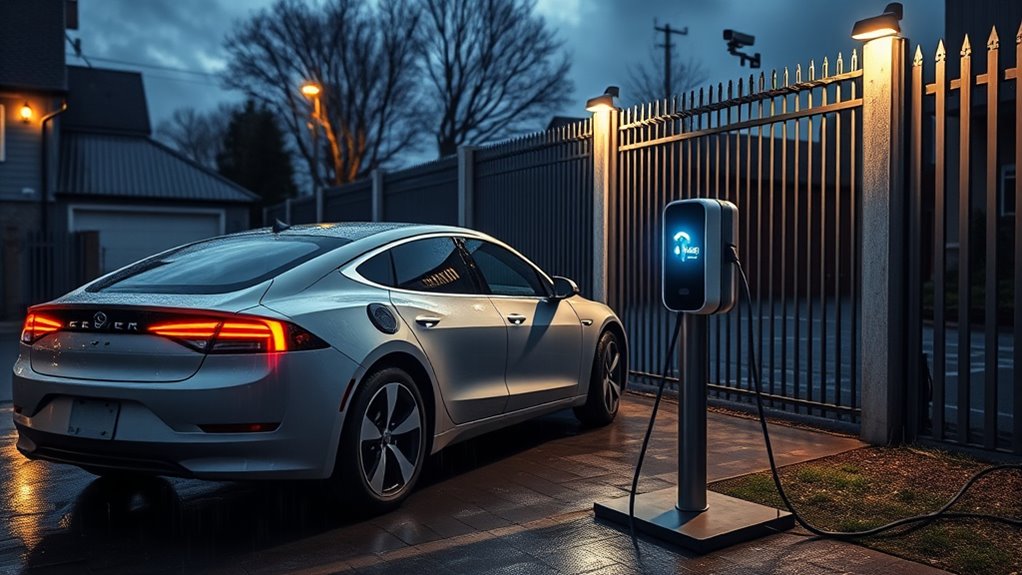
Securing your outdoor charging area from theft and vandalism starts with strategic placement and vigilant monitoring. You need to make it less attractive to criminals and easier for you to spot issues early. Here are four key tips:
- Position the charger in high-traffic, visible locations like in front of stores or near entrances.
- Install bright lighting to deter suspicious activity and improve surveillance.
- Incorporate security measures such as cameras or motion sensors to monitor the area.
- Use sturdy, tamper-resistant cables, and conduct regular inspections for signs of tampering or damage.
Taking these steps helps protect your investment, discourages theft, and ensures your EV charging station remains safe and functional.
Managing Wildfire Risks With Landscaping and Location Choices
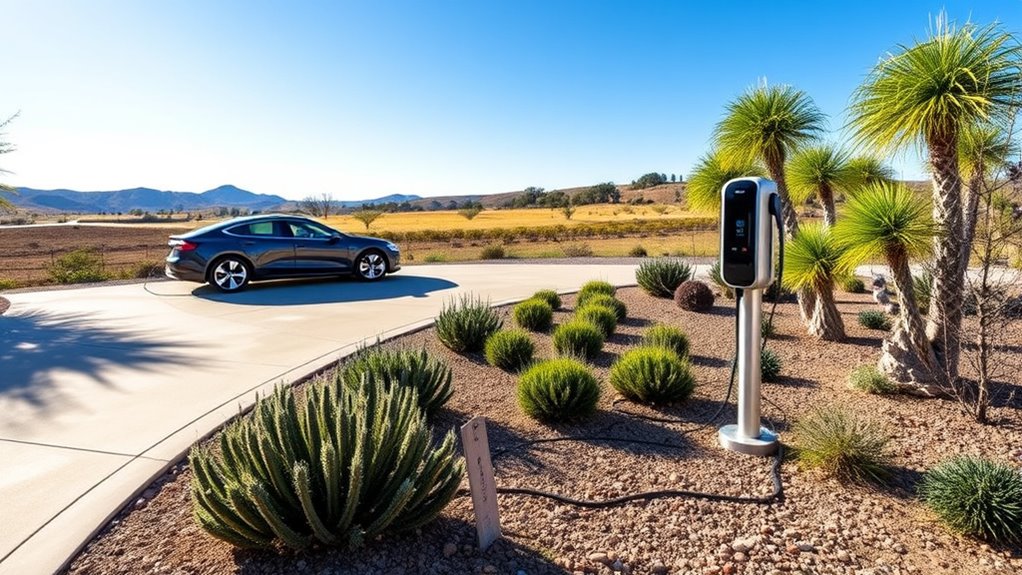
Wildfire risks can be substantially increased by improper landscaping and poor location choices for EV charging stations. If your station is near dry brush, dead leaves, or brittle vegetation, a spark or electrical malfunction could ignite a fire. To reduce this risk, maintain a defensible space of at least 100 feet around the station, removing all combustible materials and debris regularly. Avoid planting dry, flammable plants like cacti or ornamental grasses close to the equipment. Position your charging station away from structures and overhanging trees, which can act as fire bridges. Keep landscaping trimmed and green, especially during dry seasons. Proper placement and maintenance minimize fire hazards, protecting your property and ensuring safe, reliable EV charging in wildfire-prone areas.
Regular Inspection and Maintenance for Safe Charging
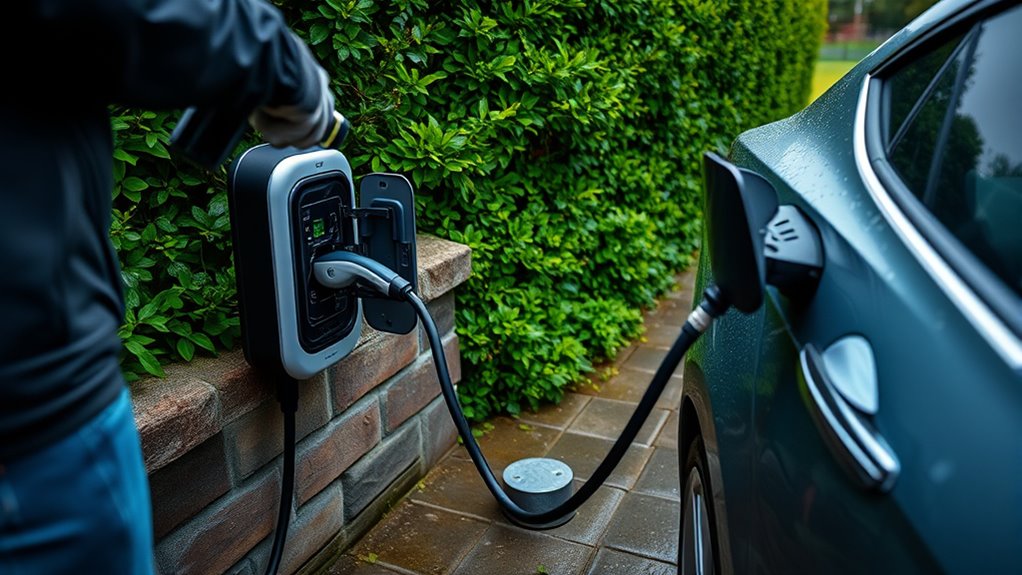
Regular inspection and maintenance are essential to guarantee your EV charging station remains safe and reliable. By staying proactive, you prevent potential hazards and ensure peak performance. Here are four key tasks to keep in mind:
Regular inspection and maintenance ensure your EV charging station stays safe, reliable, and ready when you need it.
- Check cables and connectors regularly for visible damage, fraying, or corrosion that could compromise safety.
- Inspect weatherproof enclosures to confirm they’re intact and sealing out moisture, especially after storms or harsh weather.
- Test GFCI outlets periodically to ensure they trip correctly and provide automatic protection against water contact.
- Update software and firmware as recommended by the manufacturer to fix vulnerabilities and improve functionality.
Performing these simple steps keeps your outdoor charging setup safe, efficient, and ready whenever you need it.
Emergency Measures and Safety Protocols for Outdoor Charging

In outdoor EV charging environments, having clear emergency measures and safety protocols in place is essential to prevent accidents and respond swiftly to unexpected incidents. First, familiarize yourself with the location of emergency shut-off switches and fire extinguishers nearby. Always ensure your equipment is connected correctly and regularly inspected for damage. In case of water exposure or electrical faults, disconnect the charger immediately and turn off the circuit breaker. Maintain clear access paths to exits and safety equipment. If a fire occurs, use a Class C extinguisher and evacuate the area if necessary. Keep emergency contact numbers handy for quick assistance. Regularly review safety procedures and stay alert to potential hazards, including weather changes or vandalism, to protect yourself and others.
Frequently Asked Questions
How Do I Verify My Outdoor Charger’s Weatherproof Certification?
You verify your outdoor charger’s weatherproof certification by checking its IP rating, guaranteeing it’s rated IP65 or IP66, which confirms resistance to weather elements like rain and snow. Look for labels or documentation from the manufacturer that specify these ratings. Additionally, confirm that the equipment is certified by a Nationally Recognized Testing Laboratory (NRTL). Always review the product specs and installation instructions to ensure compliance with outdoor use standards.
What Signs Indicate Water Damage on Outdoor EV Charging Equipment?
You spot a faint, musty smell near your charger, and the cables feel sticky or brittle—these are signs water might have seeped in. Look for corrosion or rust around connectors and inside the weatherproof enclosure. Discoloration or swelling on the equipment also hints at water damage. If you notice any of these, unplug the charger immediately, inspect it thoroughly, and get a professional to assess its safety before use.
Are There Specific Security Measures for High-Value Charging Stations?
Yes, you should implement specific security measures for high-value charging stations. Position them in well-lit, high-traffic areas to deter vandalism and theft. Use security cameras to monitor activity and schedule regular patrols. Install bollards or barriers to prevent vehicle collisions. Consider reinforced cables and locks, and make certain the station is protected by alarm systems. These steps help safeguard your investment and maintain reliable access for authorized users.
How Often Should Fire Extinguishers Be Inspected Near Outdoor Chargers?
You should inspect fire extinguishers near outdoor chargers monthly to make certain they’re fully functional. Check for any visible damage, ensure the pressure gauge is in the proper range, and verify the safety seal is intact. Regular inspections help you confirm they’re ready for emergency use. If you notice any issues, replace or service the extinguishers promptly. Keeping them in good condition is essential for safety and compliance with fire safety standards.
Can Landscaping Be Modified to Improve Wildfire Safety Around Charging Areas?
You can improve wildfire safety around charging areas by modifying the landscaping. Remove dry, brittle vegetation and keep a clear defensible space of at least 100 feet. Avoid planting combustible plants or shrubs close to the charging station, and regularly maintain the area by removing debris and dead foliage. Using non-flammable ground cover and keeping the area well-maintained reduces fire risk and creates a safer environment for outdoor EV charging.
Conclusion
Charging outdoors without a garage requires vigilance—your safety depends on it. While weatherproof equipment and secure setups protect your car and gear from water, snow, theft, or vandalism, neglecting these steps can turn a simple task into a hazard. Think of your outdoor space as both a shield and a vulnerability; with the right precautions, you create a safe haven for your EV. Without them, even the best intentions can lead to costly risks.
Fall Picks
fall essentials
As an affiliate, we earn on qualifying purchases.