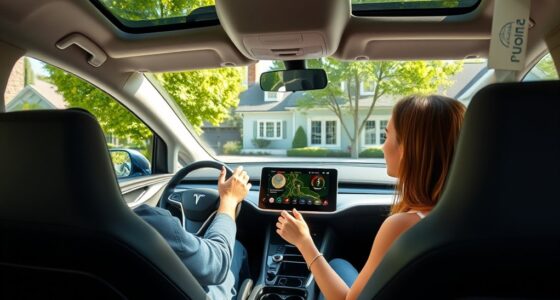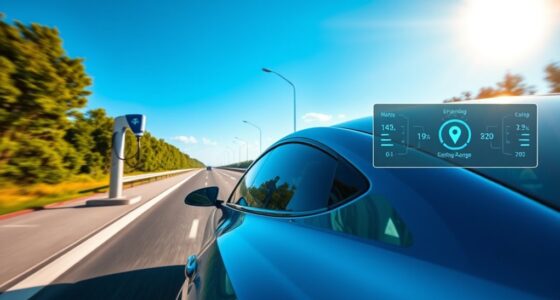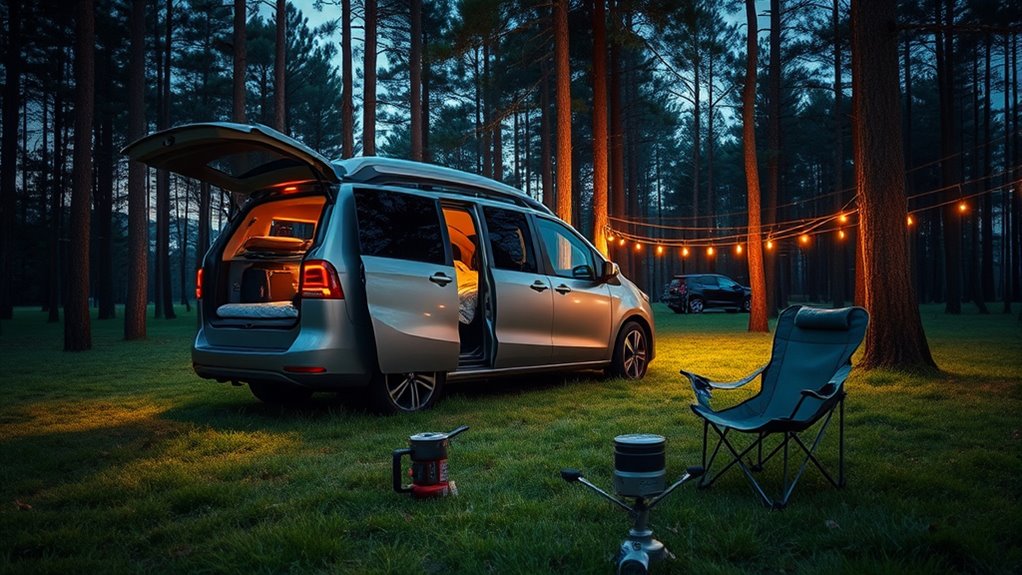

To sleep comfortably in your EV overnight, plan ahead by fully charging your vehicle and locating nearby charging stations and safe campsites. Keep the climate control moderate and pre-condition the cabin while plugged in to save energy. Use window shades, insulation, and ventilation to stay cozy and dry. Minimize electronics to conserve power, and select a flat, sheltered site away from wildlife or flooding risks. Want more tips for a smooth, eco-friendly car camping experience? Keep exploring!
Key Takeaways
- Pre-condition the cabin while plugged in to ensure comfort without draining the battery overnight.
- Use reflective blankets, foam mats, and insulation to keep the interior warm and moisture-free.
- Choose safe, sheltered campsites with nearby charging stations and avoid wildlife or flood-prone areas.
- Turn off unnecessary electronics and utilize vehicle sleep mode to conserve energy during sleep.
- Crack windows slightly or use ventilation to improve airflow and prevent condensation inside the vehicle.
Preparing Your Vehicle for Overnight Stays
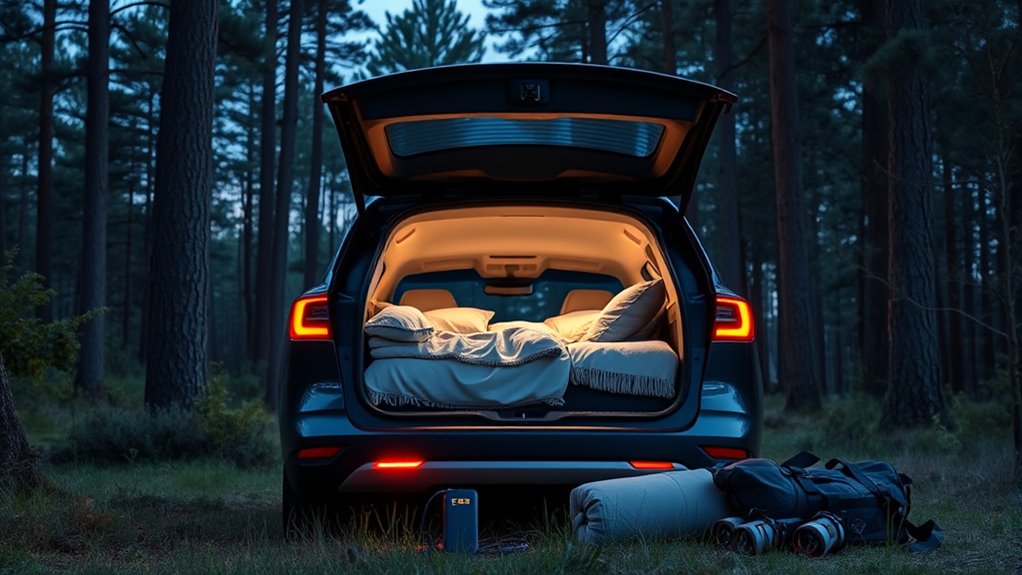
To guarantee a safe and comfortable overnight stay in your EV, start by thoroughly inspecting your vehicle’s key systems. Check your tire pressure with a gauge, ensuring it matches the PSI recommended on the driver’s door jam to optimize range and safety. Examine the tire tread, brakes, windshield wipers, and wiper fluid to ensure visibility and control. Remove unnecessary items from the trunk and interior to reduce weight, which extends your range. Avoid roof racks to minimize drag; instead, use aerodynamic cargo boxes or trailer hitches. Verify your emergency kit components are complete, including adapters for different charging stations. Finally, ensure your portable charger is functional and packed, providing backup power if needed. These steps help ensure a smooth, safe camping experience. Additionally, consider connected technology features in your EV that can monitor battery health and optimize charging while you sleep. Incorporating energy-efficient accessories can further reduce power consumption during your overnight stay. Regularly checking the vehicle’s electrical system can prevent unexpected issues during your trip, and staying informed about software updates can improve vehicle performance and safety features. Also, staying aware of charging station locations can save time and reduce frustration during your trip.
Ensuring Optimal Range and Charging Plans
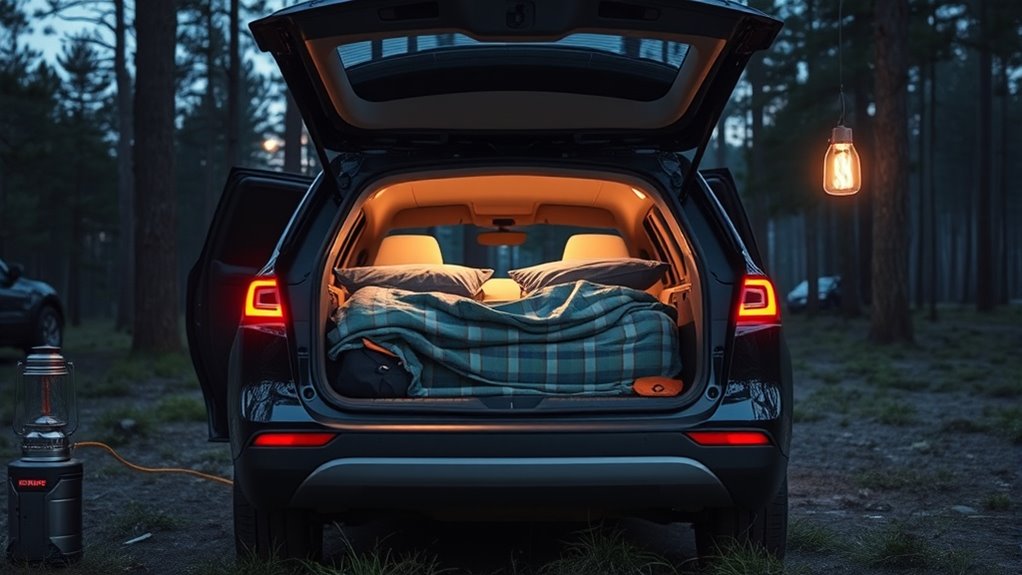
To make the most of your EV on a camping trip, you need to maximize your battery charge and plan your charging stops carefully. Knowing your vehicle’s range and identifying charging stations along your route can prevent surprises and delays. With a solid plan in place, you’ll enjoy a smoother, more reliable journey to your campsite. Understanding your vehicle’s charging capabilities can help you optimize your trip and avoid unexpected power issues. For instance, considering the charging infrastructure available in areas like the South or Florida can greatly influence your planning process. Being aware of charging network coverage can further help you identify optimal stops and reduce range anxiety during your trip. Additionally, reviewing the availability of fast chargers along your route ensures you can recharge quickly if needed, making your trip more convenient. Incorporating advanced charging technologies can also enhance your overall charging experience and efficiency.
Maximize Battery Charge
Maximizing your EV’s battery charge begins well before you hit the road. Start by fully charging your vehicle and reviewing your charging options along the route. Use apps or station maps to identify available chargers and plan your stops accordingly. Maintain ideal tire pressure to reduce rolling resistance and preserve range. Minimize unnecessary accessories or cargo that add weight, which can drain the battery faster. Temperature management also matters—precondition your vehicle while still plugged in to warm or cool the cabin efficiently. During the drive, moderate your speed and avoid rapid acceleration to conserve energy. Utilizing regenerative braking on downhill slopes helps recharge the battery. Energy efficiency techniques, such as optimizing driving habits, can further extend your range. Load calculations and proper energy management are essential for ensuring you have enough power for your overnight camping plans. By planning ahead and managing your vehicle’s energy use, you ensure a reliable charge for a smooth, worry-free camping experience. Power management strategies can further optimize your vehicle’s battery performance during overnight stays.
Plan Charging Stops
Planning your charging stops carefully guarantees you stay within your EV’s range and avoid unexpected delays. Use route planning apps or websites to identify charging stations along your path, prioritizing those with fast chargers. Know your vehicle’s range and factor in the terrain, weather, and load, which can reduce efficiency. Establish backup charging options in case stations are occupied or out of service. Schedule stops at convenient locations, like rest areas or campgrounds with charging facilities, to maximize time and convenience. Carry adapters and portable chargers to expand your options. Keep track of real-time station availability and charging times, so you can adjust your plan if needed. Proper planning keeps your trip smooth, avoids range anxiety, and ensures you’re ready for a restful overnight stay. Additionally, Free Floating features in some EVs can help optimize energy use, extending your range and making your overnight stay more comfortable. Understanding outdoor power management techniques can further improve your energy efficiency during overnight stays, especially when integrating auditory processing strategies to monitor your vehicle’s energy consumption. Incorporating real-time data from your vehicle and charging stations can further enhance your trip planning and energy management. Being aware of energy-efficient driving practices helps conserve battery life and prolongs your vehicle’s overnight readiness.
Managing Climate and Comfort Inside Your EV
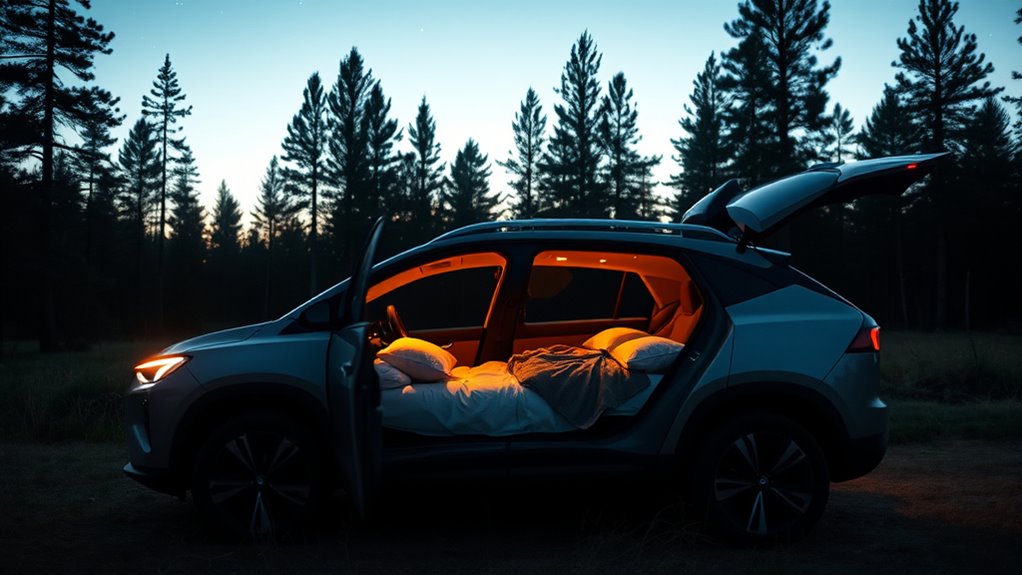
To stay comfortable inside your EV, you need to manage temperature effectively and make the most of insulation and ventilation. Using climate control features wisely helps conserve battery life while keeping the cabin cozy. Exploring techniques like adjusting vents and adding insulation can make a big difference in your camping experience. Incorporating air purifier technology can also improve air quality inside your vehicle, ensuring a healthier sleeping environment. Additionally, integrating smart home automation systems can help you remotely monitor and control climate settings for optimal comfort. Understanding temperature regulation options and their impact on energy use can further enhance your overnight camping experience. Employing proper ventilation methods can help prevent humidity buildup and maintain fresh air inside your EV. Being aware of energy-efficient climate control strategies can maximize comfort without draining your battery excessively.
Temperature Control Techniques
Maintaining a comfortable temperature inside your EV is essential for an enjoyable camping experience, especially when outdoor conditions fluctuate. Use your vehicle’s climate control settings to pre-condition the cabin while still plugged in, ensuring warmth or coolness before you settle in. During the night, rely on camping mode or eco-friendly climate options to conserve battery power while maintaining comfort. If your vehicle has heated seats or a heated steering wheel, use them to reduce the need for full cabin heating, saving energy. For cooling, crack a window slightly if safe, or use the vehicle’s ventilation system. Applying window shades or reflective sunshades can help keep the interior cooler during the day, making it easier to maintain a pleasant temperature overnight. Additionally, consider massaging chair comparisons and features that can enhance your comfort during long stays inside your EV. To further optimize energy efficiency, consider climate management techniques that balance comfort with battery conservation, especially on longer trips. Incorporating cultural symbols of strength into your vehicle’s decor or accessories can also create a calming atmosphere conducive to restful sleep.
Insulation and Ventilation
Effective insulation and ventilation are key to keeping your EV comfortable during camping trips. Good insulation helps retain heat during cold nights and keeps out drafts, making your sleeping area warmer. You can use reflective blankets or foam mats to add an extra layer of insulation around windows and doors. Ventilation is equally important to prevent condensation and ensure fresh air inside the vehicle. Crack a window slightly or use a vent fan to promote airflow without sacrificing warmth. Avoid blocking vents with bulky insulation, which can trap moisture. During winter, consider a portable heater or heated blankets, but always guarantee proper airflow to prevent carbon monoxide buildup. Balancing insulation and ventilation keeps your inside cozy and dry, creating a better sleeping environment.
Comfort Features Usage
Managing climate and comfort inside your EV is about making smart use of built-in features to create a cozy environment during your camping trip. Start by setting the climate control to a comfortable level before you settle in for the night, using your vehicle’s HVAC system efficiently. If your EV has a camping or sleep mode, activate it to maintain a warm interior without draining the battery quickly. Use heated seats and steering wheels if available—they provide comfort without exhausting the entire climate system. Keep windows slightly cracked for ventilation if needed, but avoid losing too much heat. Turn off unnecessary features like rear defrosters or cabin lighting to conserve energy. With these strategies, you’ll stay comfortable while maximizing your EV’s range for the adventure ahead.
Packing Essential Emergency and Camping Gear
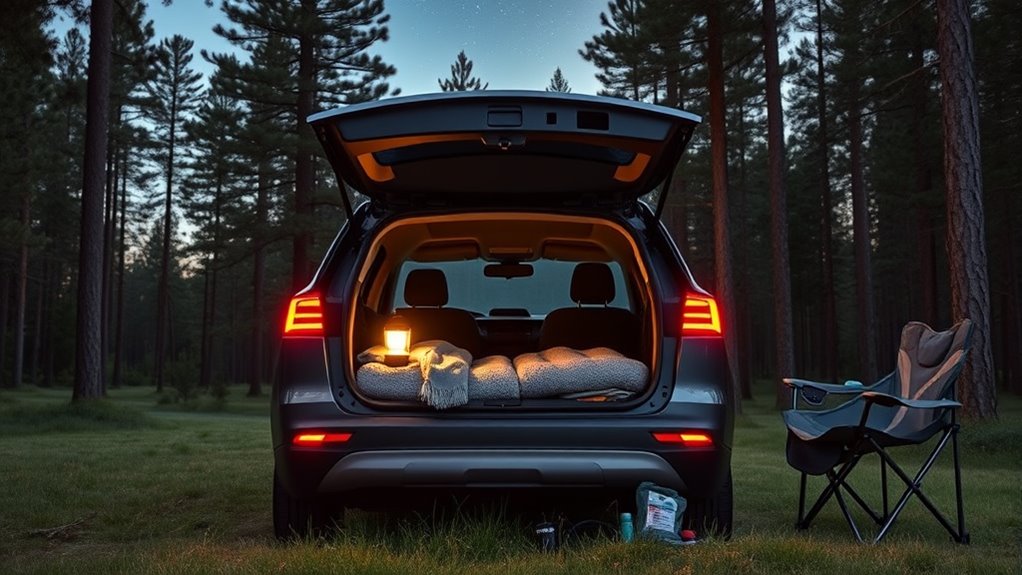
When packing for your camping trip in an EV, it is vital to include a well-rounded set of emergency and camping gear to handle unexpected situations. Start with a first aid kit, extra water, and non-perishable food to address basic needs if plans change. A heavy-duty extension cord and appropriate charging adapters ensure you can recharge at campsites with limited outlets. A tire repair kit and portable air pump help manage flat tires, while a portable power bank or solar charger provides backup energy for devices. Carry a flashlight, extra batteries, and blankets for warmth. Always verify that your emergency kit is complete and functional. Having these essentials on hand boosts safety, minimizes disruptions, and lets you enjoy your adventure with confidence.
Choosing a Safe and Suitable Campsite
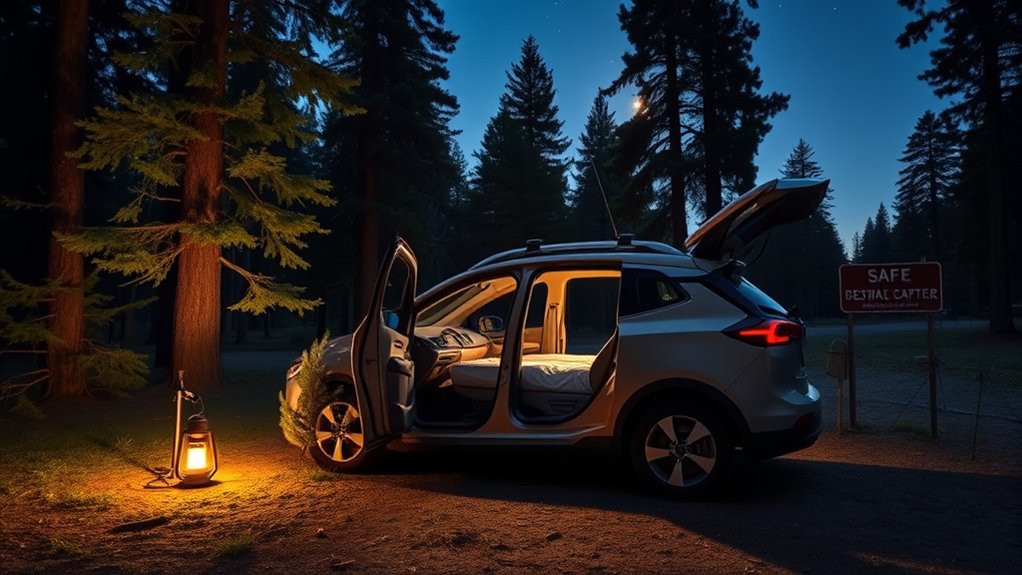
Choosing the right campsite is crucial for a safe and enjoyable EV camping experience. Look for designated campgrounds, national parks, or BLM lands that allow overnight parking and camping. Avoid isolated or poorly maintained sites, as they may lack safety or amenities. Consider proximity to charging stations or routes with reliable power sources, especially if you need to top off your battery. Check the weather forecast and select a flat, sheltered spot away from wildlife activity, flood-prone areas, or heavy winds. Guarantee there’s good cell reception or offline maps for navigation. Follow Leave No Trace principles by parking out of the way and minimizing environmental impact. A well-chosen site keeps you safe, preserves your vehicle, and enhances your overall camping experience.
Maximizing Energy Efficiency During the Night
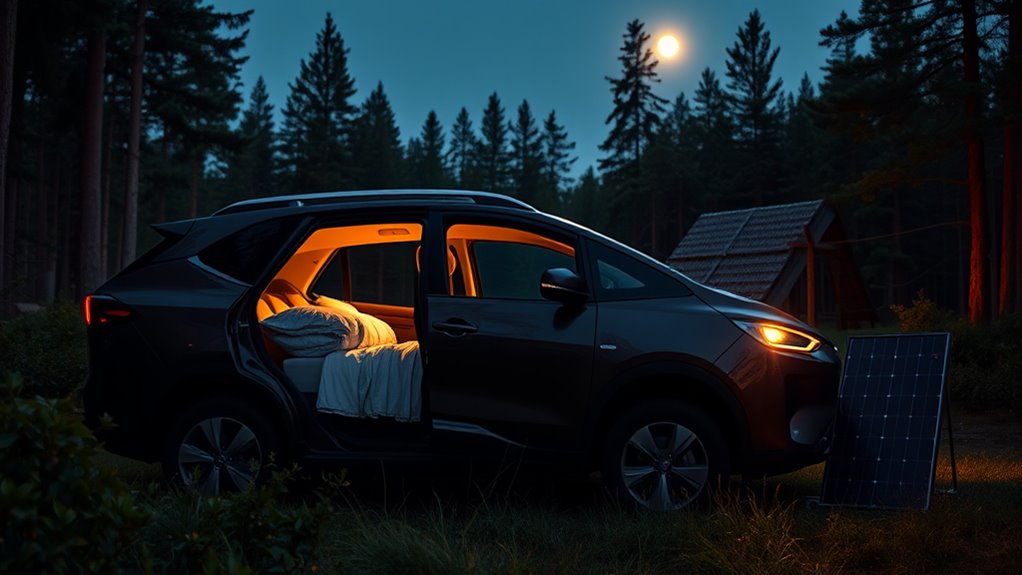
To maximize energy efficiency during the night, you should focus on minimizing power consumption from your vehicle’s systems while ensuring comfort. Start by turning off interior lights, infotainment, and unnecessary electronics. Use your vehicle’s sleep or energy-saving mode if available, which reduces power draw. Keep the climate control settings moderate; excessive heating or cooling consumes significant energy. If your EV has a camping mode, activate it to optimize battery use while maintaining warmth. Avoid using high-energy features like heated seats or defrosters unless necessary. Close all windows and vents to prevent heat loss. Monitoring your energy use through the vehicle’s display helps identify and reduce unnecessary power drain. These steps help preserve your battery, extending your range overnight.
Using Camping Mode and Other In-Vehicle Features

Activating your vehicle’s camping mode can substantially boost energy efficiency during overnight stays by optimizing battery use while maintaining comfort. This feature reduces unnecessary power drain from driving systems and minimizes climate control energy consumption. It typically keeps the cabin temperature steady without running the engine or other high-energy components. Use the climate controls to set a comfortable temperature before activating camping mode, then allow the system to maintain it efficiently. Many EVs also let you adjust lighting, seat heating, and ventilation through dedicated controls, helping conserve energy. Additionally, some models offer features like sleeping mode, which dims interior lights and disables distractions, providing a peaceful environment. Familiarize yourself with your vehicle’s manual to maximize these features and ensure a cozy, energy-smart overnight experience.
Staying Connected and Navigating Without Signal

Staying connected and maneuvering without signal requires careful preparation before your trip. Download offline maps of your route and nearby campsites or charging stations in advance, ensuring you have access even when offline. Save important contacts and emergency numbers on your device, and consider carrying a portable power bank to keep your phone charged. Download relevant navigation apps that function offline, like Google Maps or Maps.me, to help you find your way without signal. Keep a paper map as a backup in case your devices fail. Inform someone about your planned route and expected arrival times, so they can assist if needed. With these precautions, you’ll navigate confidently, even in areas with limited or no cell service, ensuring a safer and smoother camping experience.
Handling Weather Conditions and Unexpected Situations
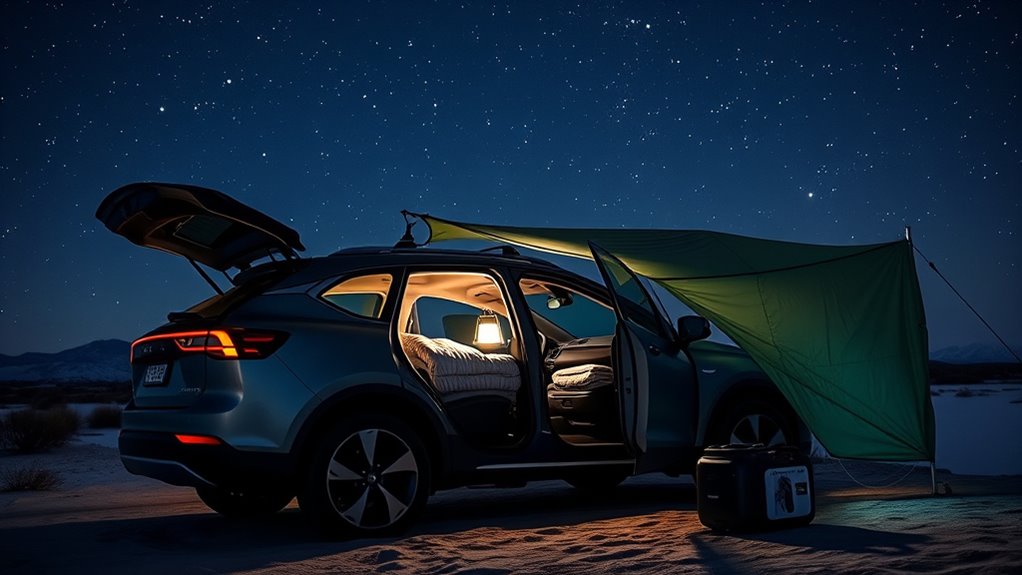
Weather can change unexpectedly, so choosing weather-resistant gear helps keep you comfortable and safe. Planning for emergencies means having backup supplies and knowing how to adapt to conditions like storms or cold nights. Being prepared guarantees you can handle surprises without risking your trip or safety.
Weather-Resilient Gear Choices
Because weather conditions can change unexpectedly during your trip, choosing resilient gear is essential for maintaining comfort and safety. To handle sudden shifts, pack versatile items that adapt to various conditions.
- All-weather clothing: Waterproof jackets, layered outfits, and thermal wear keep you warm and dry regardless of rain or cold nights.
- Insulated blankets or heated blankets: These provide extra warmth during chilly evenings or cold snaps, ensuring a good night’s sleep.
- Weather-resistant storage: Use waterproof bins or bags to protect gear, electronics, and food from rain or snow, preventing damage and keeping essentials accessible.
Emergency Planning Strategies
Are you prepared to handle unexpected weather changes or emergencies during your camping trip? Start by researching your route and campsite in advance. Know nearby emergency services, towing, and charging stations. Pack an emergency kit with first aid supplies, non-perishable food, water, and a portable power bank. Keep an eye on weather forecasts and be ready to adjust your plans if storms or cold fronts develop. Choose a safe, accessible campsite away from wildlife or flood-prone areas. Remember, never run the engine while sleeping in your vehicle to avoid carbon monoxide poisoning. Have backup plans for power, like portable chargers or solar panels. Stay informed with offline maps and maintain communication devices fully charged. Preparedness minimizes risks and ensures a safe, enjoyable camping experience.
Practicing Safety and Leave No Trace Principles
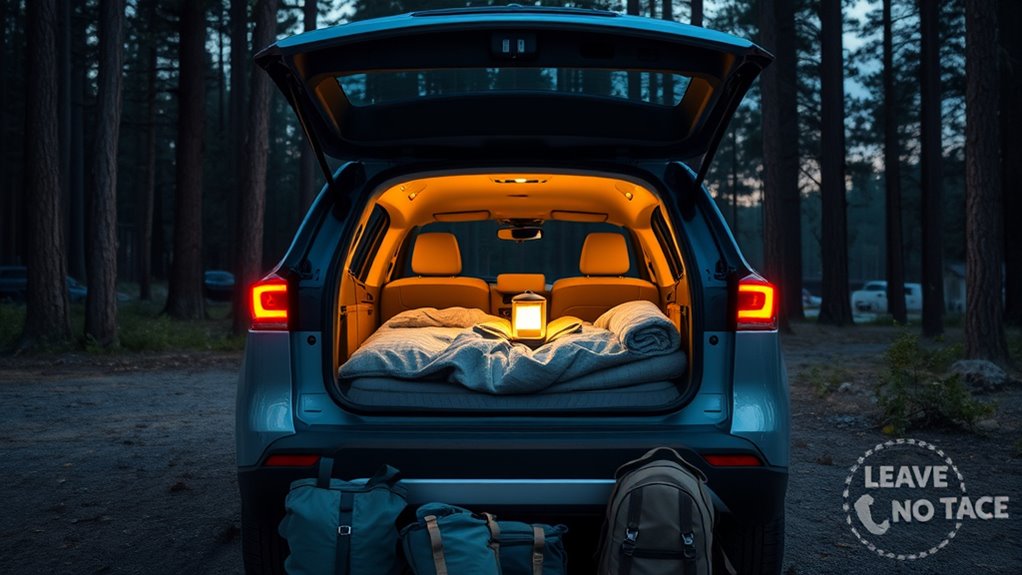
Practicing safety and Leave No Trace principles is essential for a responsible and enjoyable car camping experience. You must prioritize safety by following these steps:
- Always park out of the way, avoiding sensitive habitats and ensuring you’re not blocking access.
- Never sleep with the engine running to prevent carbon monoxide buildup.
- Familiarize yourself with local wildlife, weather, and regulations to avoid hazards.
Respect the environment by cleaning up thoroughly, minimizing your impact, and disposing of waste properly. Use designated camping areas when available, and carry out all trash. Protect the land for future visitors by staying on established trails and avoiding damage to vegetation. Practicing these principles keeps your trip safe and environmentally friendly.
Frequently Asked Questions
How Can I Extend My Ev’s Range During Overnight Camping Trips?
To extend your EV’s range overnight, you should reduce energy use by minimizing air conditioning and driving at moderate speeds. Use regenerative braking downhill, keep tires properly inflated, and remove unnecessary interior items to lower weight. Plan your route with backup charging options, carry a portable charger, and utilize camping mode if available. Staying in temperate weather and choosing flatter routes also helps conserve battery power for longer trips.
What Are the Best Practices for Charging My EV at Campgrounds?
You should always verify campground charging options before arriving. Use apps or websites to check station availability and compatibility. Carry the necessary adapters and extension cords for different outlets, like NEMA or TT-30. Plug in your EV during off-peak hours to save energy, and avoid unnecessary energy use while charging. If available, use your vehicle’s camping mode to conserve battery while keeping your cabin warm.
How Do I Prevent My Ev’s Battery From Freezing in Cold Weather?
To prevent your EV’s battery from freezing in cold weather, keep it warm by parking in a heated garage or a sheltered area if possible. Use a block heater or preheat your vehicle while plugged in to warm the battery before driving. Minimize battery drain by avoiding unnecessary accessories and driving gently. Also, consider using thermal blankets designed for EV batteries, which help insulate and retain heat during cold nights.
Which In-Vehicle Features Help Conserve Energy Overnight?
You can conserve energy overnight by activating the camping mode feature if your EV has it, which helps maintain comfort while reducing energy use. Use the vehicle’s climate control sparingly, and set it to a lower, comfortable temperature. Minimize the use of interior lights and turn off unnecessary electronics. Keep windows closed to retain heat or cool air, and avoid running the engine while sleeping to prevent unnecessary battery drain.
How Can I Safely Run My Vehicle’s Heater Without Draining the Battery?
You can safely run your EV’s heater by using your vehicle’s camping or eco mode, which conserves power. Keep the cabin temperature moderate to avoid rapid battery drain. Preheat your car while still plugged in, so the heater uses grid power instead of the battery. Also, utilize heated blankets or seat warmers, which use less energy, and monitor your battery levels closely to prevent unexpected power loss.
Conclusion
Camping in your EV is like settling into a cozy, portable home on wheels. By preparing ahead and using your vehicle’s features wisely, you’ll enjoy a safe, comfortable night under the stars. Remember to plan your route, pack essentials, and respect nature’s rules. With a little effort, overnighting in your electric car becomes as effortless as a peaceful night’s sleep. So, hit the road with confidence and turn your adventure into a memorable experience!