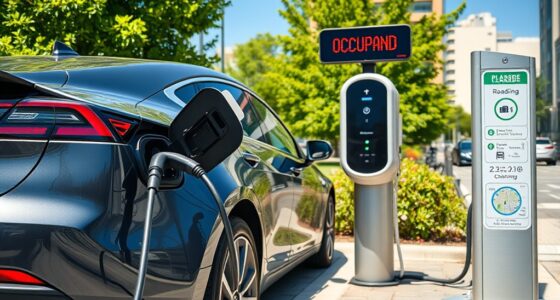

When driving an EV for the first time, embrace its quietness and stay alert, especially at low speeds. Establish a regular charging routine, preferably overnight, and plan routes with accessible chargers. Use smooth driving techniques and proper tire maintenance to maximize range. Keep safety in mind by alerting pedestrians and knowing emergency procedures. Using technology can enhance your experience, and staying aware of safety tips will boost confidence. Continue exploring for more tips to help you get comfortable behind the wheel.
Key Takeaways
- Familiarize yourself with the EV’s quiet operation and stay alert for pedestrians and cyclists.
- Plan your routes to include charging stations and avoid range anxiety during your first week.
- Develop a routine of monitoring battery levels and charging regularly, ideally around 80% for longevity.
- Practice smooth acceleration and braking to maximize efficiency and extend your vehicle’s range.
- Use headlights, signals, and horn proactively to enhance safety in the silent, low-speed environment.
Embrace the Quiet: Adjusting to the Calm of Electric Vehicles
Electric vehicles operate with almost no engine noise, which can be an unexpected change if you’re used to traditional gas-powered cars. At first, you might find the silence eerie or unsettling, especially at low speeds. This calm can make your driving experience feel smoother and more comfortable, but it also means you need to stay alert. Pedestrians and cyclists might not hear you coming, so you’ll need to use your lights and signals more intentionally. Pay extra attention to your surroundings, especially in residential areas or parking lots. Embracing this quiet helps you appreciate the tranquility of EV driving, but it also requires a new level of awareness. Recognizing how vehicle noise levels vary can further enhance your awareness and comfort during your drives. Additionally, understanding how soundproofing and acoustics influence your vehicle’s interior can help you optimize comfort and safety. Being aware of interior noise management can improve your overall driving experience and safety. Moreover, learning about acoustic design features can help you better tailor your vehicle’s environment to your preferences. Developing an understanding of interior acoustic customization can also contribute to a quieter and more pleasant cabin environment.
Establish a Charging Routine for Peace of Mind
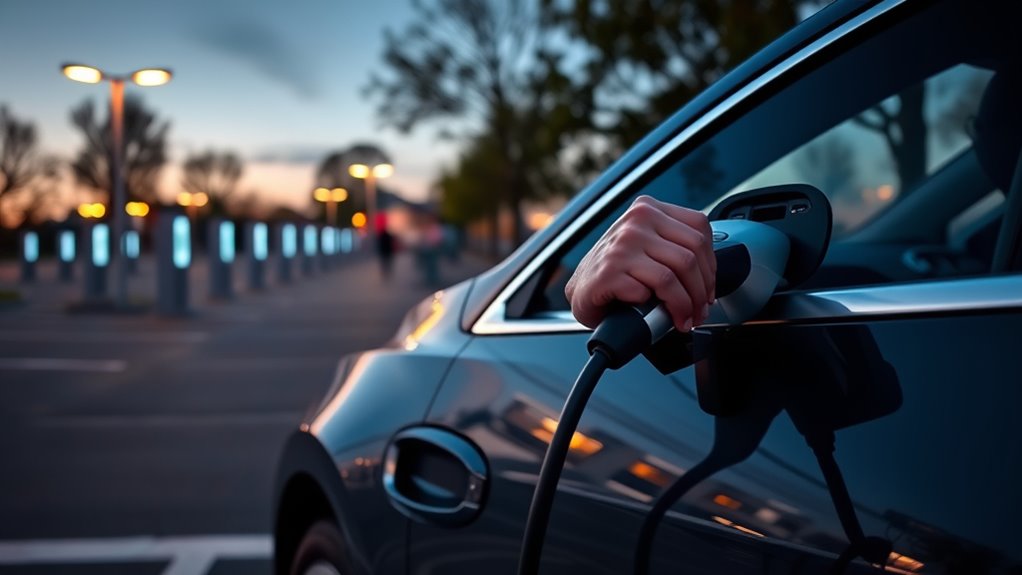
To guarantee your EV stays ready to go, make it a habit to check your battery regularly. Charging overnight at home is convenient and keeps your vehicle topped up without hassle. For ideal battery health, aim to keep your charge around 80%, avoiding frequent full charges. Additionally, understanding your vehicle’s battery management system can help you optimize charging habits and extend battery lifespan. Being aware of your battery temperature is also important, as extreme temperatures can affect battery performance and longevity. Monitoring your state of charge can help prevent unexpected depletion and ensure you always have sufficient range. Implementing a pilot shirt for men aviator can sometimes be a comfortable choice during long drives, especially in cooler weather. To further protect your battery, consider utilizing styling cream to prevent overheating during long drives in hot weather.
Check Battery Regularly
Checking your battery regularly is key to maintaining peace of mind and guaranteeing your EV stays ready to go. Make it a habit to monitor the battery level, especially before long trips or overnight. Consistent checks help you avoid unexpected low charge situations and extend battery life. Use your vehicle’s display or companion app to track charge status easily. Here’s a quick reference:
| Battery Level | Action | Recommended Frequency |
|---|---|---|
| 10-20% | Charge soon | Every 1-2 days |
| 20-80% | Maintain ideal range | Weekly |
| 80-100% | Avoid regular full charges | When necessary |
Staying vigilant ensures your EV remains reliable, efficient, and ready whenever you need it.
Charge Overnight at Home
Charging your EV overnight at home is one of the most convenient ways to keep your vehicle ready to go each day. Before bed, check your battery level to guarantee you have enough charge for the next day. Plug in your car as soon as you park, so it’s charging while you sleep. Most home chargers, especially Level 1 units, add 25-40 miles overnight, which is usually enough for daily commuting. Developing a routine helps you avoid the hassle of searching for charging stations and ensures your battery stays healthy. Remember, it’s best not to charge to 100% regularly; stopping at around 80% prolongs your battery’s lifespan. Smart charging schedules can help optimize energy use and reduce costs. Using charge management tools can further enhance your charging efficiency. Incorporating herbalism principles such as routine and moderation can also be applied to battery care, promoting longevity and optimal performance. Establishing a consistent charging routine can also help you monitor your battery health and identify any potential issues early. Additionally, monitoring your charging habits can help you adjust your routine for better battery longevity. With this simple habit, you’ll always wake up with a fully prepared vehicle.
Keep Charging at 80%
Maintaining your battery at around 80% instead of charging to 100% helps preserve its long-term health. Charging to 80% reduces stress on the battery, slowing capacity loss over time. It’s a simple habit that ensures your EV remains reliable and efficient for years. When you plug in, aim to disconnect once it hits 80%, especially if you’re not planning a long trip. This routine minimizes unnecessary wear and tear, extending your battery’s lifespan. If you need a full range for a longer journey, it’s okay to charge to 100%, but try to keep it at 80% for daily use. Establishing this consistent charging habit gives you peace of mind, knowing your battery stays healthy while providing sufficient range for most daily drives.
Plan Your Routes With Charging Stations in Mind

Planning your routes with charging stations in mind is crucial to guarantee a smooth and stress-free EV experience. Knowing where chargers are located helps you avoid range anxiety and keeps your trip on track. Use navigation apps to identify charging points along your route, especially for longer trips. Public fast chargers can add significant range quickly, so plan stops accordingly. Keep a list of reliable chargers in your area and download multiple EV apps for real-time updates. The table below highlights key charging options:
| Charger Type | Charging Time | Ideal For |
|---|---|---|
| Level 1 | Overnight | Home overnight charging |
| Level 2 | 4-8 hours | Daily top-ups |
| DC Fast Charger | 30 minutes | Long trips, quick top-ups |
Additionally, being aware of Vetted – Serat Nest options for charging stations can help you find trusted and efficient locations during your travels. Being familiar with charging station networks can further streamline your planning and ensure you’re never caught without power. Understanding the different charger types can help you select the most suitable options for various situations. Regularly updating your knowledge of charging infrastructure can also improve your overall experience on the road.
Learn How to Maximize Your EV’s Driving Range

To get the most out of your EV’s range, focus on driving smoothly and avoiding rapid accelerations. Keep your tires properly inflated to reduce resistance and improve efficiency. Small changes like these can considerably extend your driving distance on a single charge. Additionally, using efficient driving techniques can further optimize your vehicle’s performance and conserve energy. Implementing eco-driving habits like gentle braking and maintaining steady speeds can also make a notable difference in your overall range. For enhanced efficiency, consider utilizing smart navigation features that help you choose the most energy-efficient routes. Exploring innovative public art installations can inspire creative ways to think about sustainable transportation and urban mobility.
Gentle Driving Techniques
Ever wondered how your driving style impacts your EV’s range? Gentle driving conserves energy and extends your battery life. Accelerate gradually, avoid sudden stops, and use cruise control on highways. Keep a steady speed, especially at moderate levels, to reduce energy consumption. Use regenerative braking to recover energy during deceleration. Properly inflated tires also decrease rolling resistance, boosting efficiency. Maintaining proper tire inflation can further optimize your efficiency and extend your driving range. A good understanding of feature buddies can help drivers optimize their habits and improve efficiency. Being aware of energy-saving techniques enables you to maximize your EV’s performance and battery longevity.
Proper Tire Maintenance
Maintaining properly inflated tires is essential for maximizing your EV’s driving range. Underinflated tires create more rolling resistance, making your vehicle work harder and using more energy. Check your tire pressure regularly—at least once a month—and keep it within the manufacturer’s recommended range, which you can find on the driver’s door frame or in the owner’s manual. Properly inflated tires also improve handling, safety, and tire longevity. Use a reliable tire pressure gauge for accurate readings, especially before long trips. Don’t forget to inspect your tires for uneven wear or damage, which can affect performance and range. Maintaining ideal tire pressure is a simple step that considerably boosts efficiency and helps you get the most out of every charge.
Keep Your Battery Healthy With Proper Maintenance
Keeping your EV battery healthy requires regular attention and mindful habits. Start by avoiding deep discharges; recharge when your battery drops to 10-20%. For daily use, keep the charge around 80% to prolong battery life. Extreme temperatures can harm the battery, so precondition your vehicle in cold or hot weather when possible. Minimize unnecessary weight and heavy cargo, which can drain energy faster. Always follow your owner’s manual recommendations for maintenance and care. Avoid frequent full charges, as they can degrade the battery over time. Instead, plug in regularly, especially when parked for extended periods. Proper charging habits and temperature management help maintain ideal battery performance, ensuring your EV remains reliable and efficient for the long haul.
Stay Alert to Pedestrians and Other Road Users

Because EVs operate quietly, pedestrians and other road users may not notice your vehicle, especially at low speeds. Stay vigilant in residential areas, parking lots, and busy streets, where people might step out unexpectedly. Always use your horn or signals to alert others when turning or reversing, and make eye contact if possible. Reduce your speed in high foot traffic zones to give yourself more time to react. Watch for cyclists, skateboarders, and joggers who might be less predictable. Keep your headlights and turn signals on to increase visibility, even during the day. Remember, your quiet car can be a surprise, so proactively scanning your surroundings helps prevent accidents and keeps everyone safe.
Use Technology to Enhance Your Driving Experience
Using technology is one of the best ways to make your first EV driving experience smoother and more convenient. Many EVs come equipped with built-in navigation systems that include real-time charging station locations and route optimization. Downloading apps like PlugShare or ChargePoint helps you find nearby charging stations and check their availability. Use your vehicle’s dashboard displays and smartphone integrations to monitor battery status, range, and charging progress easily. Some models offer preconditioning features, allowing you to warm or cool the cabin before driving, saving energy. Voice-activated controls enable hands-free operation of navigation, calls, and music, keeping your focus on the road. Leveraging these technologies simplifies planning, enhances safety, and ensures a more comfortable, stress-free first week behind the wheel.
Know Emergency Procedures and Safety Tips
Being familiar with emergency procedures and safety tips is essential for a confident first-time EV driver. Knowing what to do in unexpected situations can prevent accidents and ensure your safety. Always carry your owner’s manual and emergency contact numbers. In case of a collision or breakdown, safely pull over, turn on your hazard lights, and disconnect the battery if needed. Use lights and signals to alert others, especially at low speeds. Familiarize yourself with the location of your vehicle’s emergency disconnect and charging port safety protocols. Remember, EVs operate quietly, so watch for pedestrians. Keep this quick-reference table handy:
| Emergency Situation | Safety Tip |
|---|---|
| Flat tire | Use spare or call roadside assist |
| Battery fire | Evacuate, call fire department |
| Power loss | Safely pull over, turn signals on |
| Charging station issue | Inspect connections, restart or seek help |
Frequently Asked Questions
How Do I Get Used to the Quiet Operation of an EV?
You get used to the quiet operation of an EV by staying extra alert, especially in residential areas and parking lots. Keep your eyes and ears open for pedestrians and cyclists who might not hear you approaching. Use your lights and signals consistently to alert others. Over time, you’ll naturally adjust, and this quietness will become a helpful feature, making for a peaceful, distraction-free driving experience.
Can I Charge My EV at Any Time Without Harming the Battery?
Yes, you can charge your EV anytime without harming the battery. Modern EVs are designed for frequent charging, so plugging in whenever you have the opportunity is fine. Just avoid charging to 100% regularly—keeping it around 80% helps prolong battery life. It’s best to charge when convenient, whether the battery is low or not, and use home or public chargers safely for ideal battery health.
What’s the Best Way to Plan Routes With Charging Stations?
To plan routes with charging stations effectively, you should use dedicated journey planning apps that show nearby charging points along your route. Always check the charging station’s type and availability before heading out. Incorporate stops at charging stations, especially on long trips, to avoid range anxiety. Download multiple EV navigation apps to get real-time updates and precondition your vehicle in extreme weather for ideal range.
How Can I Extend My Ev’s Driving Range Effectively?
To stretch your EV’s range like a pro, drive super gently—think of it as whispering to your car. Accelerate gradually, keep speeds steady, and avoid sudden stops. Use regenerative braking to recover energy, keep tires properly inflated, and stay in Eco mode whenever possible. Limit heavy cargo, avoid deep discharges, and don’t charge to 100%. These habits turn your EV into a fuel-efficient champion, maximizing every mile.
What Safety Precautions Should I Take for Pedestrians Around My EV?
You should always stay alert for pedestrians since your EV operates quietly, especially at low speeds. Use your lights and signals to make your presence known, and reduce speed in residential areas and parking lots. Make eye contact with pedestrians when possible, and listen carefully for foot traffic. Keep a safe distance and be prepared to stop suddenly if someone steps into your path. Staying vigilant keeps everyone safer.
Conclusion
Driving an EV for the first time can be exciting and a bit overwhelming, but with these tips, you’ll gain confidence quickly. Did you know that the average EV driver charges their vehicle just once every 3-4 days? Embrace the quiet, plan ahead, and stay safe, and you’ll enjoy a smooth, eco-friendly ride. Before long, you’ll wonder how you ever drove without the benefits of electric driving.