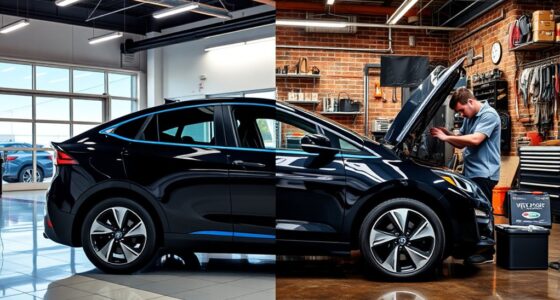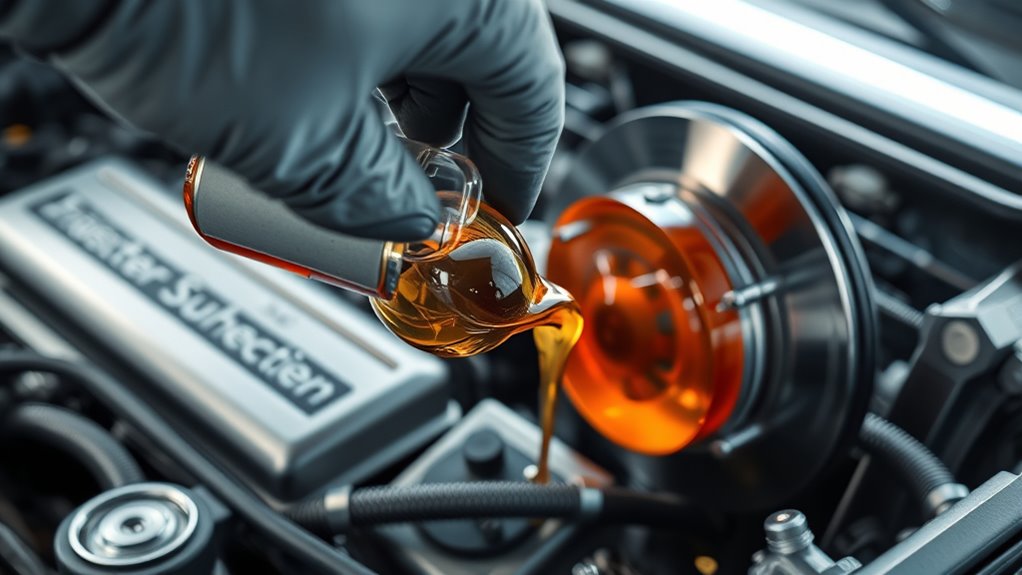
Maintaining fresh brake fluid on your EV is essential for safe, reliable braking and overall vehicle health. Over time, moisture can contaminate the fluid, leading to corrosion, system malfunctions, and reduced braking performance. Even with regenerative brakes, hydraulic systems need proper fluid to function smoothly, especially in emergency or slippery conditions. Usually, a fluid check every 2-3 years is recommended. Keep your EV safe—discover why this often-overlooked task is so important.

Get backup power and energy gear delivered free with Prime
- Fast, free delivery on millions of items
- Prime Video, Amazon Music and more included
- Member-only deals all year
Key Takeaways
- Regular brake fluid changes prevent moisture buildup, reducing corrosion and maintaining braking performance in EVs.
- Brake fluid degrades over time, impacting safety and responsiveness, making scheduled changes essential.
- Maintaining fresh brake fluid supports both hydraulic brakes and regenerative systems for optimal efficiency.
- Neglecting brake fluid maintenance can lead to costly repairs and compromise vehicle safety.
- Follow manufacturer recommendations, typically every 2-3 years, to ensure reliable braking and system longevity.
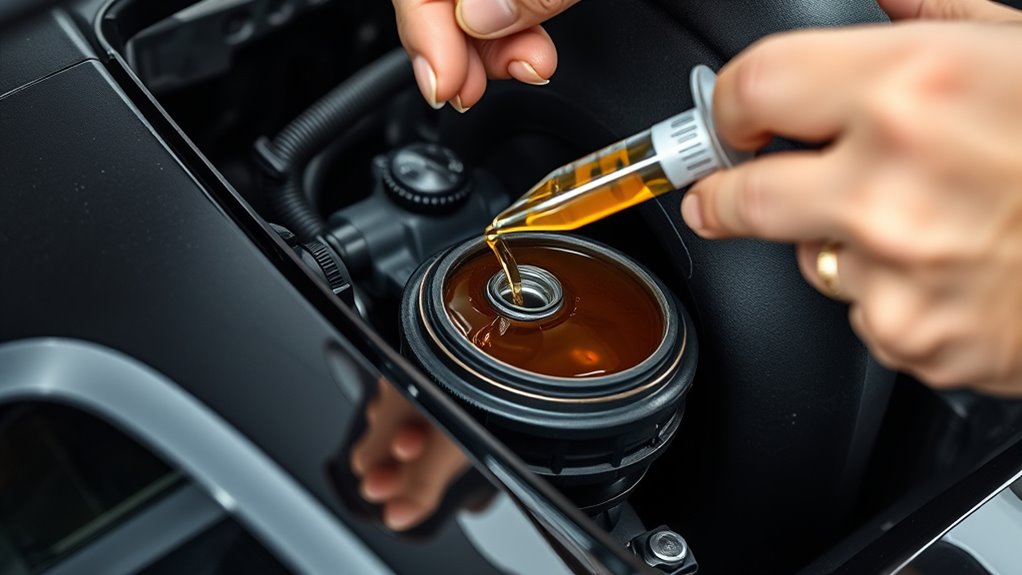
Electric vehicles (EVs) may not rely heavily on traditional braking systems, but maintaining the brake fluid is still essential for safe and reliable operation. Even with regenerative braking reducing wear on brake pads and discs, the hydraulic brake system remains vital for stopping power and safety. Over time, brake fluid can absorb moisture from the air, which diminishes its effectiveness and can lead to corrosion inside the brake components. Regular brake fluid changes help guarantee your braking system responds as intended, especially during emergency stops or in adverse conditions.
While regenerative braking handles much of the deceleration in EVs, it’s not a complete substitute for traditional brakes. When regenerative braking isn’t enough—such as during sudden stops or on slippery surfaces—the hydraulic brakes take over. If your brake fluid is contaminated or degraded, this shift won’t be as smooth, potentially affecting your safety. It’s essential to keep an eye on the condition of the brake fluid, even if you rarely notice any issues during normal driving. Most manufacturers recommend changing brake fluid every two to three years, but consult your vehicle’s manual for specific guidance.
Regenerative braking isn’t enough; regular brake fluid checks ensure safe, smooth stopping in all conditions.
In addition to safety, maintaining fresh brake fluid can indirectly protect your vehicle’s battery health. Modern EVs rely heavily on electronic systems, and any malfunction can impact overall efficiency. If the braking system isn’t functioning properly due to old or contaminated fluid, it can trigger warning lights or cause electronic control units to work harder, increasing power consumption. While regenerative braking helps conserve energy and extend your driving range, the hydraulic system still plays a supporting role. Properly maintained brake fluid ensures these systems operate seamlessly, preventing unnecessary strain on the vehicle’s electrical components. Regular maintenance is also crucial for preventing costly repairs****, as corrosion and damage from moisture-laden fluid can compromise critical brake components.
Moreover, neglecting brake fluid changes can lead to costly repairs. Corrosion from moisture-laden fluid can damage brake calipers, master cylinders, and ABS components, leading to expensive replacements down the line. Regularly scheduled maintenance is a small investment that pays off by keeping your braking system reliable and your vehicle running smoothly. Remember, even though EVs are more efficient and have fewer moving parts, the brake system remains a critical safety feature that deserves your attention.
Products Worth Considering

DEWALT 20V MAX Cordless 1/2-Inch Impact Wrench Kit (DCF900P1)

DEWALT 20V MAX 1/4-Inch Impact Driver Kit with Battery and Charger (DCF787D1)

Chemical Guys 16-Piece Arsenal Builder Car Wash Kit with Foam Cannon & Bucket
As an affiliate, we earn on qualifying purchases.
Frequently Asked Questions
How Often Should I Check Brake Fluid on My EV?
You should check your EV’s brake fluid every 12 months or every 12,000 miles, whichever comes first. Regular inspections help you spot issues with the brake system, like fluid leakage, before they worsen. Keep an eye on the fluid level and color, and top it off or replace it as needed. Proper maintenance guarantees your brakes work reliably and keeps your EV safe on the road.
Can I Use Regular Brake Fluid in My EV?
You can’t use regular brake fluid in your EV because of brake compatibility issues. For example, a vehicle owner used standard DOT 3 fluid, causing corrosion and brake failure. EVs require specific fluid types, usually DOT 4 or DOT 5.1, designed for high-performance braking systems. Always check your vehicle’s manual to guarantee you’re using the correct brake fluid to maintain safety and prevent damage.
What Are the Signs My Brake Fluid Needs Changing?
You’ll know your brake fluid needs changing if it turns dark or cloudy, indicating contamination. Check the brake fluid color—if it’s brown or black, it’s time for a flush. Also, pay attention to the smell; a burnt or acrid odor suggests the fluid has degraded. Regularly inspecting these signs helps maintain your EV’s braking performance and safety. If in doubt, have a mechanic evaluate the fluid’s condition.
Are Brake Fluid Changes Necessary for Electric Vehicles?
Think of your EV’s brake fluid as the oil in a well-oiled machine—crucial for smooth operation. Yes, brake fluid changes are necessary even for electric vehicles. Regenerative braking reduces wear, but brake fluid still has a lifespan and can absorb moisture over time, leading to corrosion. Regularly replacing it ensures your braking system stays responsive and safe, preventing costly repairs down the road.
How Does Brake Fluid Maintenance Differ From Combustion Engine Vehicles?
You’ll find that brake fluid maintenance for EVs mainly focuses on fluid compatibility and system health, unlike combustion vehicles. Since EV brake systems experience less heat and wear, you may not need to change fluid as often, but it’s still vital to check for contamination and moisture. Regularly inspecting the brake system ensures peak performance and safety, preventing corrosion and brake failure over time.
Conclusion
Don’t skip brake fluid changes on your EV—it’s a simple task that keeps your braking system reliable and safe. Some might think it’s unnecessary since EVs don’t have traditional brakes, but brake fluid still degrades over time, risking brake failure. Staying on top of this maintenance guarantees your brakes perform when you need them most. Trust me, a quick fluid change now can save you from costly repairs—or worse—in the future.