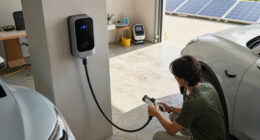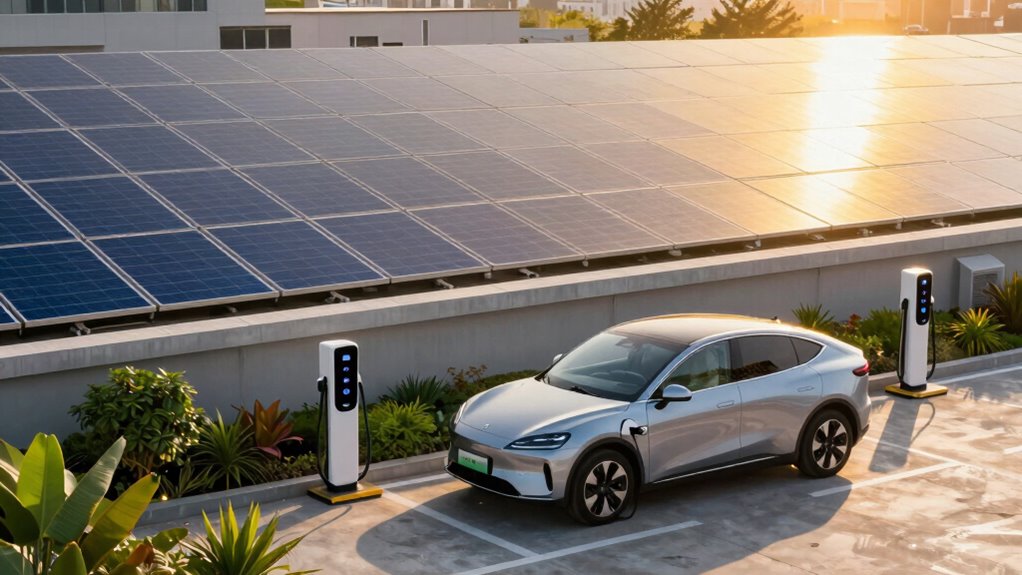

Think of your solar panels and EV charger as parts of one integrated system. During the day, solar generates excess power, which you can store in batteries or send back to the grid for credits. This stored or grid energy can power your EV, even when it’s cloudy or at night. Smart management coordinates energy flow, optimizing efficiency and costs. To discover how to make this system work best for you, explore further.

Get backup power and energy gear delivered free — and shop member deals
- Fast, free delivery on millions of items
- Access to Prime Big Deal Days deals on October 6–7
- Prime Video, Amazon Music and more included
Key Takeaways
- View solar panels, battery storage, and EV chargers as integrated components of a unified energy system.
- Prioritize system sizing to optimize solar generation, storage capacity, and EV charging needs.
- Use smart energy management to schedule charging during peak solar production or low-cost periods.
- Leverage grid interaction for surplus energy sales or credits, enhancing system value.
- Ensure seamless communication between components for reliable, efficient, and sustainable energy flow.
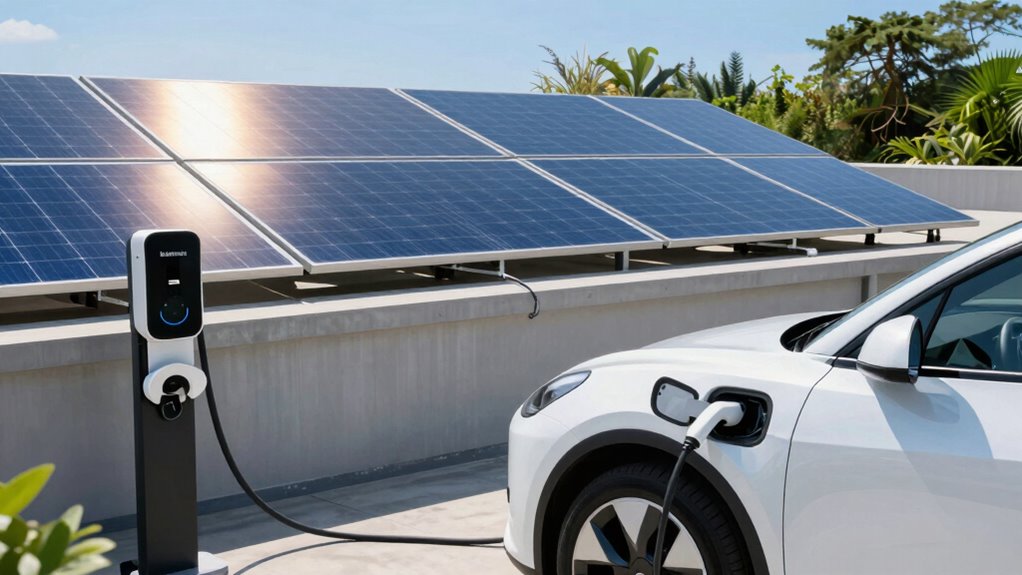
As more people consider switching to renewable energy, understanding how solar power and electric vehicle (EV) charging fit together is vital. These two systems can work seamlessly when you think of them as parts of a complete energy network. Central to this integration is battery storage, which allows you to capture excess solar energy generated during the day and use it when demand is high or sunlight is unavailable. With battery storage, you’re not just relying on the sun and your panels; you’re actively managing your energy supply, making your system more reliable and efficient. This setup reduces your dependence on the grid, but it also enhances grid integration, meaning your home can communicate effectively with the larger grid to buy or sell electricity as needed. When solar panels produce more power than you use, your system can send the surplus back to the grid, potentially earning you credits or income. Conversely, during cloudy days or at night, your stored energy or grid power ensures your EV can be charged without interruption. Additionally, understanding the importance of projector contrast ratio in home theater systems can help you create a more immersive viewing experience at home.
Thinking of solar and EV charging as one system means considering how they influence each other. For instance, if you plan to charge your EV overnight, your system should be designed to leverage stored solar energy or grid power efficiently. Smart chargers and energy management systems can schedule EV charging during times of peak solar production or when electricity rates are lowest, optimizing cost savings and energy use. This coordination also helps balance your energy load, preventing your system from overtaxing your home’s electrical capacity and avoiding costly upgrades. Battery storage becomes vital here, as it acts as a buffer, smoothing out fluctuations in supply and demand. Properly integrating energy management systems can further optimize your setup, ensuring that your renewable energy and EV charging work in harmony. Recognizing the role of system sizing in your setup can help you prevent over- or under-sizing components, which impacts performance and cost-effectiveness. Additionally, considering renewable energy integration strategies can help you maximize the benefits of your system and achieve greater energy independence. Integrating these components effectively can also help you take advantage of dynamic pricing and time-of-use rates, maximizing savings. It allows you to maximize your solar investment, ensuring that more of your renewable energy powers your home and vehicle, rather than being wasted or sent back to the grid.
solar panel with battery storage
As an affiliate, we earn on qualifying purchases.
As an affiliate, we earn on qualifying purchases.
Frequently Asked Questions
What Are the Long-Term Financial Benefits of Integrating Solar and EV Charging?
By integrating solar and EV charging, you’ll see long-term financial benefits through energy storage and system scalability. You’ll save on electricity costs as your solar system supplies power directly to your EVs, reducing reliance on grid energy. Plus, as your needs grow, scalable systems let you expand without major overhauls, ensuring ongoing savings and increased property value. Over time, these investments pay off with lower bills and greater energy independence.
How Does Weather Impact the Efficiency of Solar-Powered EV Charging Systems?
Weather patterns, especially cloud cover, markedly affect the efficiency of your solar-powered EV charging system. When skies are overcast, less sunlight reaches the solar panels, reducing energy production. However, panels can still generate power on cloudy days, just at lower levels. To maximize efficiency, consider installing systems with higher wattage capacity or energy storage options. Regularly monitoring weather impacts helps you optimize your charging schedule and maintain reliable power.
Are There Specific Incentives for Combined Solar and EV Infrastructure?
You can open massive savings with government grants and tax credits for your combined solar and EV infrastructure—it’s like hitting the jackpot! These incentives can cover a significant chunk of installation costs, making your eco-friendly dream a reality faster than you’d imagine. Don’t miss out on these incredible perks; they’re designed to boost your savings while you drive greener and power your home sustainably.
What Maintenance Is Required for a Hybrid Solar and EV Charging Setup?
You need to regularly inspect your hybrid solar and EV charging system, checking for battery health to guarantee peak lifespan and performance. Keep an eye on your inverter and wiring for any wear or damage. Additionally, plan for system upgrades as technology advances, which can improve efficiency and extend your setup’s lifespan. Proper maintenance helps maximize your investment, ensuring reliable power for your solar needs and EV charging.
Can Existing Home Electrical Systems Support Integrated Solar and EV Charging?
Your existing home wiring might support integrated solar and EV charging, but it depends on your system’s capacity. A standard setup may need system upgrades to handle increased power demands safely. You should have a professional evaluate your wiring and electrical panel to guarantee they can support the combined load. Upgrading your system may involve installing a dedicated circuit or panel upgrade to accommodate both solar energy and EV charging needs efficiently.
As an affiliate, we earn on qualifying purchases.
Conclusion
By viewing solar and EV charging as one integrated system, you’re not just saving money—you’re actively reducing your carbon footprint. Did you know that a typical EV owner can save over 4 tons of CO₂ annually by switching to solar-powered charging? That’s equivalent to planting around 100 trees each year. Embracing this approach empowers you to make a meaningful difference for the planet while enjoying cleaner, cheaper energy. It’s a smart, impactful choice you can make today.
As an affiliate, we earn on qualifying purchases.
As an affiliate, we earn on qualifying purchases.
Halloween Picks
halloween
As an affiliate, we earn on qualifying purchases.