Electric vehicles don’t need oil changes because they lack traditional engines and associated fluids. Instead, your main maintenance tasks include regular battery checks, inspecting brakes, rotating tires, maintaining the cooling system, and keeping software up to date. These simple upkeep routines help keep your EV running smoothly and safely. Want to know more about how to keep your EV in top shape? Keep going to discover essential maintenance tips.
Key Takeaways
- EVs lack combustion engines, so they do not require engine oil or oil change procedures.
- Electric motors are maintenance-free and sealed, eliminating the need for lubrication or oil replacements.
- Regular checks focus on battery health, electrical systems, and software updates instead of oil maintenance.
- Brake system inspections and tire maintenance are critical for safety, not oil-related tasks.
- Overall vehicle upkeep emphasizes fluid levels, system diagnostics, and software updates, with no oil change requirements.
Understanding the Maintenance Needs of Electric Vehicles

Have you ever wondered how electric vehicles (EVs) differ from traditional cars when it comes to maintenance? One key difference is the use of regenerative braking, which recovers energy during deceleration, reducing wear on brake components. Because of this system, your brakes typically last longer and need less frequent servicing. Another important aspect is tire pressure monitoring; maintaining proper tire pressure is vital for efficiency and safety since EVs tend to be heavier. Regularly checking and adjusting tire pressure ensures maximum range and minimizes tire wear. Unlike gas-powered cars, EVs have fewer moving parts, so routine maintenance focuses more on systems like battery health and software updates. Understanding these needs helps you keep your EV running smoothly with less downtime. Additionally, the contrast ratio in your vehicle’s display can impact how easily you can view information in different lighting conditions, which is especially useful during navigation or system monitoring. Being aware of the vehicle’s electrical system health is also crucial, as EVs rely heavily on sophisticated electronics that require periodic diagnostics. Proper maintenance of the battery management system is essential to ensure longevity and optimal performance of your electric vehicle. Regular checks of the thermal management system help prevent overheating and maintain battery efficiency, extending the vehicle’s lifespan. Maintaining the vehicle’s software through updates can also enhance safety features and overall functionality.
Why EVs Don’t Require Oil Changes

Since EVs don’t have traditional engines, you won’t need to change oil regularly. Their electric motors require minimal lubrication, reducing maintenance worries. Plus, they need fewer fluid replacements, making upkeep simpler and less costly. Additionally, EV owners benefit from low-maintenance care that emphasizes fewer routine tasks compared to conventional vehicles.
No Engine Oil Needed
Why do electric vehicles (EVs) skip the engine oil change? Unlike traditional gas-powered cars, EVs don’t have a combustion engine that relies on oil to lubricate moving parts. Instead, their electric motors operate without needing engine maintenance like oil changes. Since there’s no engine oil to break down or become contaminated, you won’t have to schedule regular oil changes or worry about oil leaks. This considerably reduces the maintenance tasks required for your vehicle. By eliminating the need for oil, EVs cut down on routine upkeep, saving you time and money. You can focus on other essential maintenance, knowing that your electric motor stays in top shape without the fuss of traditional engine oil procedures.
Electric Motor Lubrication
Electric motors in EVs operate smoothly without the need for traditional lubrication because they use sealed, maintenance-free components. This design eliminates the need for electric motor lubrication, reducing your maintenance tasks. Unlike internal combustion engines, EV motors don’t require drivetrain oil replacement since there’s no open gear system that depends on oil for lubrication. The sealed bearings and internal components are built to last, preventing wear and tear without additional fluids. This means you won’t need to check or top off oil levels, saving you time and money. As a result, electric motor lubrication is a non-issue for EV owners, making electric cars more convenient and less maintenance-intensive overall. Additionally, sealed components are engineered to withstand harsh conditions, extending the longevity of your vehicle’s drivetrain.
Fewer Fluid Changes
Because electric motors are sealed and maintenance-free, they don’t rely on traditional fluids like oil to keep running smoothly. This means you won’t need to schedule regular oil changes, saving you time and money. Without engine oil, there’s less risk of leaks or contamination, which helps maintain ideal fuel efficiency. Fewer fluid changes also contribute to emissions reduction, as EVs produce no tailpipe emissions and require fewer maintenance-related processes. This simplicity not only keeps your electric car running smoothly but also reduces the environmental impact associated with traditional vehicle maintenance. Additionally, understanding piercings and body jewelry for EVs highlights how their design minimizes the need for routine service, making ownership more convenient and eco-friendly. The streamlined design of EVs also reduces the number of service procedures required over their lifespan.
Regular Battery Checks and Maintenance

Regular battery checks are essential to guarantee your electric vehicle runs smoothly and reliably. Monitoring your battery helps maximize battery longevity and ensures it performs at its best. Follow proper charging protocols, avoiding frequent deep discharges and overcharging, to extend battery life. Regularly inspect for irregularities such as unusual temperature changes or swelling, which could indicate issues. Keep an eye on the battery management system alerts and consult your manual for recommended check intervals. Use a trusted charger and avoid fast charging excessively, as it may affect long-term health. Schedule professional battery diagnostics periodically to detect early signs of degradation and maintain peak performance. Proper maintenance not only prolongs battery life but also enhances safety and efficiency. Additionally, understanding automotive repair basics can help you recognize when professional intervention is necessary to prevent further damage. Being aware of your vehicle’s battery health status is crucial for early detection of potential problems and ensuring optimal operation. Regularly reviewing manufacturer guidelines ensures you follow the recommended maintenance practices tailored to your specific electric vehicle model. Engaging in preventive maintenance practices helps identify minor issues before they become costly repairs. Incorporating battery testing procedures into your routine can further assist in maintaining overall battery health and performance.
Brake System Inspection and Upkeep
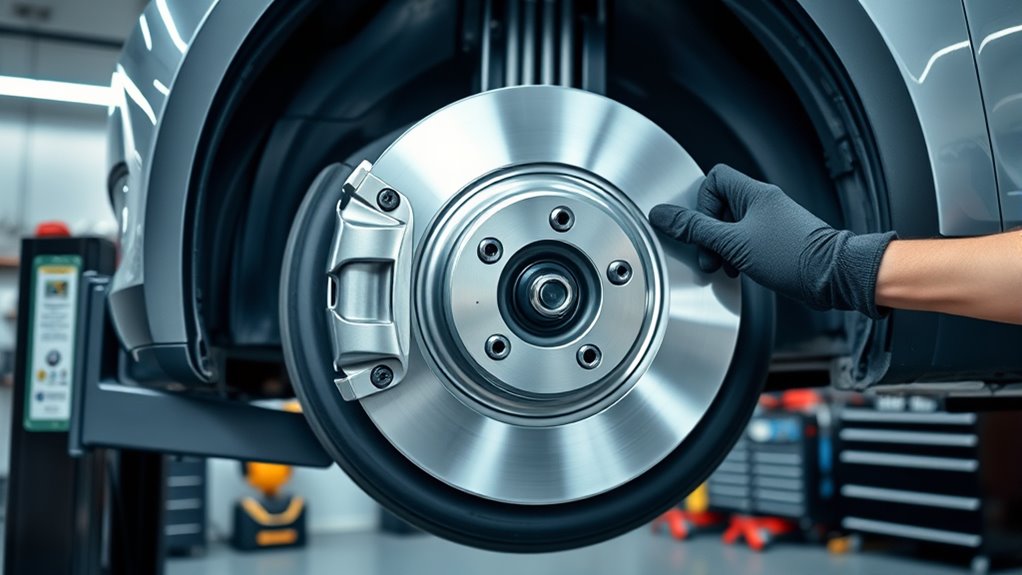
You need to regularly check your brake fluid levels to guarantee proper operation. Inspect your brake pads for wear and replace them when necessary to maintain stopping power. Finally, perform brake system testing to catch any issues early and keep your EV safe on the road. Additionally, understanding brake system nuances can help you recognize potential problems before they become serious. Staying informed about diagnostic techniques can further enhance your ability to maintain optimal brake performance. Regular maintenance routines should also include inspecting filtration components to prevent contamination and ensure consistent brake function. Being aware of performance cookies helps ensure your maintenance data is properly tracked for ongoing vehicle health. Monitoring fluid quality can also extend the lifespan of your brake system and improve safety.
Brake Fluid Levels
Maintaining proper brake fluid levels is essential for ensuring your vehicle’s braking system functions safely and effectively. You should regularly check the brake fluid reservoir, which is usually transparent or has a dipstick for easy inspection. If the fluid level drops below the minimum mark, top it up with the correct type of brake fluid recommended by your EV’s manufacturer. Over time, brake fluid can absorb moisture, reducing its effectiveness. That’s why fluid replacement is a critical maintenance task—typically every 2 to 3 years or as specified in your owner’s manual. Fresh brake fluid maintains proper hydraulic pressure, ensuring responsive braking performance. Regular inspections and fluid replacement help prevent brake system issues and keep your EV stopping safely.
Brake Pad Wear
Since brake pads are essential for stopping your vehicle safely, inspecting their wear regularly is crucial. Over time, brake pad wear can reduce braking effectiveness and increase stopping distances. During a brake system inspection, check the thickness of your brake pads and look for uneven wear or damage. If the pads are worn down to the indicator or less than 3mm thick, it’s time to replace them. Regular inspections help catch issues early, preventing more costly repairs later. Keep an eye out for squealing noises or reduced braking performance, which can signal that your brake pad wear has become excessive. Proper brake system upkeep, including inspection and maintenance, ensures your EV stops reliably and safely whenever you need it.
Brake System Testing
How can you guarantee your brake system remains reliable and effective? Regular brake system testing is essential, especially with regenerative braking reducing wear on traditional components. During inspections, check brake fluid, pads, and rotors, and ensure sensors function correctly. Pay attention to unusual noises or vibrations, which can indicate issues needing attention. Incorporating comprehensive sector performance evaluation can help identify potential weaknesses in your vehicle’s braking system.
Tire Care and Rotation Guidelines
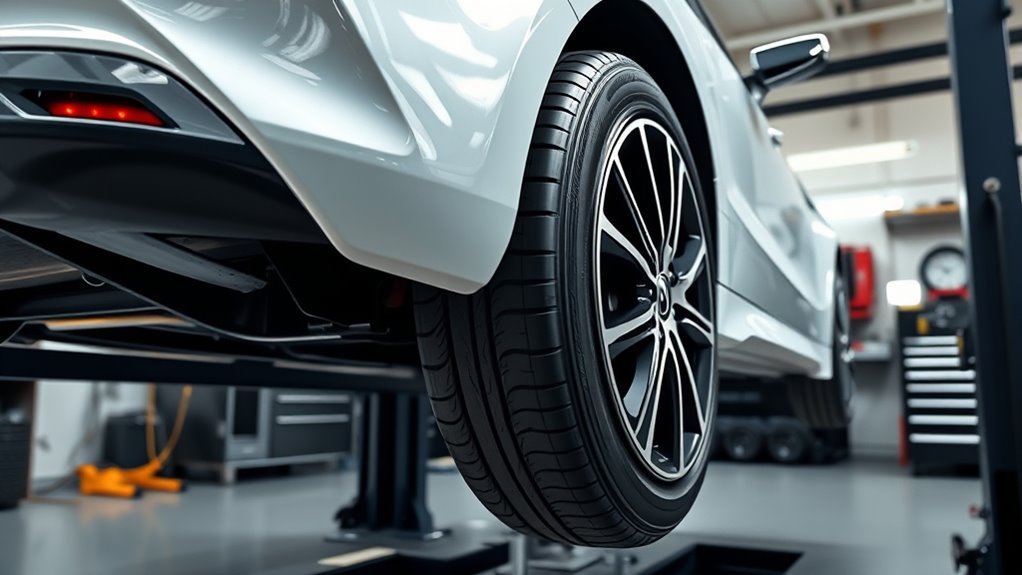
Regular tire care and rotation are essential for ensuring your vehicle handles safely and performs efficiently. Proper maintenance helps prevent uneven tread wear and maintains optimal tire pressure, which is vital for safety and efficiency. To keep your tires in top shape, consider these guidelines:
Regular tire care and rotation keep your EV safe, efficient, and long-lasting.
- Check tire pressure monthly to ensure it matches the recommended PSI, preventing uneven tread wear.
- Rotate your tires every 5,000 to 8,000 miles to promote even tread wear across all tires.
- Inspect tires regularly for cuts, punctures, or embedded debris to avoid sudden failure.
- Monitor tread depth; replace tires when they reach the minimum legal limit to maintain traction and safety.
Staying on top of these tasks guarantees your EV’s tires stay balanced, safe, and long-lasting.
Cooling System Maintenance for EVs

Did you know that maintaining your EV’s cooling system is crucial for peak performance and longevity? Regular cooling system maintenance helps prevent overheating and keeps your battery and motor running efficiently. One key task is coolant level monitoring—checking the coolant reservoir periodically ensures the system functions properly. If the coolant level drops, top it off with the recommended type for your vehicle. Over time, coolant can degrade or become contaminated, so it’s important to have it replaced according to your manufacturer’s schedule. Keeping the cooling system in good shape also involves inspecting hoses and connections for leaks or wear. By staying on top of these maintenance tasks, you’ll help extend your EV’s lifespan and maintain excellent performance without unnecessary repairs.
Software Updates and Electrical System Checks

Keeping your EV’s cooling system in good shape is essential, but it’s just one part of maintaining peak performance. Regular software updates ensure your vehicle runs smoothly, fixes bugs, and improves features. You should also schedule electrical system checks to catch potential issues early. Imagine these tasks like:
- Connecting your car to a Wi-Fi network for seamless software updates
- Monitoring battery management systems for maximum efficiency
- Inspecting wiring harnesses for wear or damage
- Running diagnostic scans to identify hidden electrical glitches
Frequently Asked Questions
How Often Should I Schedule Professional EV Inspections?
You should schedule professional EV inspections annually or every 12,000 to 15,000 miles, whichever comes first. Regular checkups help maintain your EV battery lifespan and guarantee charging station accessibility is ideal. During inspections, technicians evaluate battery health, electrical systems, and charging components. Staying on top of these visits prevents unexpected issues, extends your vehicle’s lifespan, and keeps charging options reliable, ensuring you enjoy smooth, worry-free driving.
What Signs Indicate a Need for Brake System Repairs?
If you notice squeaking, grinding noises, or reduced braking power, your brake system might need repairs. Check for excessive brake pad wear, which can cause damage, and pay attention to brake fluid condition, as old or contaminated fluid can impair braking performance. Regularly inspecting these signs guarantees your brakes stay reliable, keeping you safe on the road. Don’t ignore warning signs—they’re vital for timely brake system repairs.
Are There Specific Tire Brands Recommended for Electric Vehicles?
You should choose tire brands known for durability and low rolling resistance, which helps maximize your EV’s range. Regularly perform tire rotation to guarantee even wear, and get tire alignment checked to prevent uneven tread. These maintenance tasks help your tires last longer and improve safety. Stick with reputable brands like Michelin or Continental, and schedule tire rotation and alignment every 6,000 to 8,000 miles for ideal performance.
How Do I Monitor My Ev’s Coolant Levels Effectively?
You should regularly check your EV’s coolant levels to prevent issues like coolant leaks. Most electric vehicles have a dedicated dashboard display that provides real-time temperature monitoring, which helps you keep an eye on the coolant system. If you notice the temperature rising or suspect a coolant leak, schedule a service appointment promptly. Consistent coolant monitoring guarantees your EV runs efficiently and avoids overheating problems.
Can Software Updates Improve My Vehicle’s Performance?
Yes, software updates can enhance your vehicle’s performance. They often include battery calibration, which optimizes energy efficiency and range, and software optimization that enhances acceleration, braking, and overall driving experience. Regular updates guarantee your EV runs smoothly and stays up-to-date with the latest features and fixes. Keep your vehicle connected to receive these improvements automatically, helping you get the most out of your electric car.
Conclusion
Electric vehicles don’t need oil changes, but they still demand care. While you won’t be changing oil or replacing filters, you’ll focus on batteries, brakes, tires, and software updates. It’s a different kind of maintenance—less messy, more digital. Embrace these tasks, and your EV will run smoothly. The rhythm shifts from oil changes to battery checks, tire rotations, and system updates—each essential, each keeping your drive clean, efficient, and ready for the road ahead.